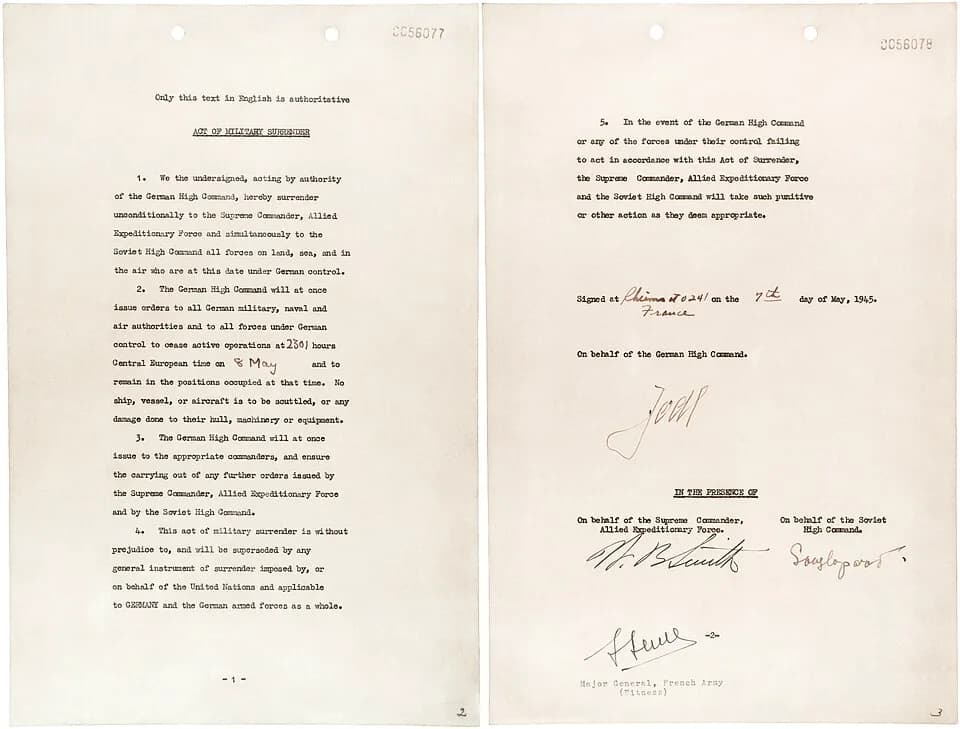
On May 8, 1945, Nazi Germany surrendered unconditionally, ending the war in Europe after nearly six years of conflict. This event, celebrated as Victory in Europe Day (V-E Day), marked the fall of the Third Reich and the beginning of a new geopolitical era.
By early 1945, the collapse of the Third Reich was inevitable. In the East, the Red Army had liberated Poland, Romania, Bulgaria, and Hungary, and launched the Vistula-Oder Offensive in January, bringing Soviet forces to within 70 kilometers of Berlin. In the West, the Allies had repulsed the last German offensive in the Ardennes in December 1944 and crossed the Rhine in March 1945; the bridge at Remagen, captured intact on March 7, provided an unexpected bridgehead. Germany was being bombed day and night by Allied air forces: cities lay in ruins, communication lines were destroyed, and fuel and ammunition were critically scarce. Hitler, entrenched in his bunker beneath the Reich Chancellery in Berlin, refused any capitulation and ordered fanatical resistance to the last man. He dismissed generals, ordered counterattacks with phantom divisions, and placed his hopes in miracle weapons that never materialized. The German civilian population endured immense suffering: millions of refugees fled the Soviet advance, cities were under siege, and the last reserves of the Volkssturm, the People's Militia, sent teenagers and elderly men into combat.
Events accelerated rapidly in April 1945. On April 16, the Red Army launched its final assault on Berlin with 2.5 million men. On April 25, American and Soviet troops met at Torgau on the Elbe River, cutting Germany in two. That same day, the Soviets completely encircled Berlin. The fighting in the capital was apocalyptically violent, as Soviet forces advanced street by street, house by house. Hitler married Eva Braun on April 29 and committed suicide the following day, April 30, in his bunker. His body was burned in the Chancellery garden in accordance with his instructions. Grand Admiral Doenitz succeeded him as head of state. On May 2, Berlin surrendered. On May 7, General Jodl signed the unconditional surrender of all German forces at Eisenhower's headquarters in Reims, to take effect on May 8 at 11:01 PM. Stalin demanded a second ceremony in Berlin: Field Marshal Keitel signed the instrument of surrender at Berlin-Karlshorst on the evening of May 8 before Marshal Zhukov.
The surrender ended a conflict that had claimed the lives of more than 40 million Europeans. Germany was devastated: its cities lay in ruins with 80 percent of Berlin destroyed, its economy annihilated, and 12 million refugees wandering the roads. The country was divided into four occupation zones, American, British, French, and Soviet, in accordance with the Yalta and Potsdam agreements. Berlin underwent the same partition. The Nuremberg Trials from November 1945 to October 1946 judged 22 Nazi leaders for war crimes, crimes against humanity, and conspiracy. Twelve were sentenced to death, including Goering, Ribbentrop, and Keitel. The discovery of the concentration and extermination camps, Bergen-Belsen, Buchenwald, Dachau, and Auschwitz, horrified the world and revealed the industrial scale of the Holocaust. May 8 became a public holiday in many countries. In France, it has been a permanent public holiday only since 1981. In Russia, May 9, known as Victory Day, is the most important national holiday, marked by the military parade on Red Square.
The unconditional surrender demanded by the Allies since the Casablanca Conference in 1943 had lasting consequences. Unlike the 1918 armistice, there was no ambiguity about Germany's total defeat, and no stab-in-the-back myth could emerge as it had after World War I. The division of Germany, intended as temporary, lasted 45 years and became the fault line of the Cold War. The Morgenthau Plan, which proposed reducing Germany to an agrarian country, was abandoned in favor of the Marshall Plan in 1948, which financed the reconstruction of Western Europe to contain communism. Denazification, ambitious in theory, remained incomplete in practice: many Nazi officials, industrialists, and scientists were recycled by both sides. Operation Paperclip in the United States and its Soviet equivalent recruited Nazi scientists, including Wernher von Braun, the rocket engineer who later led America's space program. The end of the war in Europe did not mean world peace: the war continued in the Pacific until August 1945, and the Cold War settled in almost immediately between the former allies.
The original instruments of surrender are preserved at the American National Archives for Reims and at the Russian military archives for Berlin-Karlshorst. The Nuremberg Trial archives, comprising more than 42 volumes of documents and testimonies, constitute an unparalleled historical source. The Fall of Berlin 1945 by Antony Beevor, published in 2002, is the definitive work on the last days of the war, drawing on Soviet archives declassified after 1991. Downfall by Ian Kershaw, published in 2011, analyzes the final months of the Third Reich and the regime's disintegration. The memoirs of Marshal Zhukov and the war diaries of German generals including Guderian, Speer, and Doenitz offer complementary perspectives from opposing sides. The German-Russian Museum at Berlin-Karlshorst, housed in the very building where the surrender was signed, preserves an exceptional collection of artifacts and documents. The filmed testimonies of the liberation of the camps, shot by Allied forces, remain visual documents of unequaled power and historical significance.
On May 7, 1945, General Alfred Jodl signed the unconditional surrender of all German forces at Eisenhower's headquarters in Reims, to take effect May 8 at 11:01 PM. Stalin demanded a second ceremony in Berlin: Field Marshal Wilhelm Keitel signed the instrument of surrender at Berlin-Karlshorst on the evening of May 8 before Soviet Marshal Georgy Zhukov. May 8, 1945, is celebrated as Victory in Europe Day (V-E Day).
On April 16, 1945, the Red Army launched the final assault on Berlin with 2.5 million men. On April 25, American and Soviet troops met at Torgau on the Elbe, cutting Germany in two. Entrenched in his bunker beneath the Berlin Chancellery, Hitler married Eva Braun on April 29 and committed suicide on April 30, 1945. His body was burned in the garden. Grand Admiral Karl Dönitz succeeded him as head of state and negotiated the surrender.
After the surrender on May 8, 1945, Germany was divided into four occupation zones (American, British, French, and Soviet). The Morgenthau Plan, which proposed reducing Germany to an agrarian country, was abandoned. In 1948, the United States launched the Marshall Plan to finance Western European reconstruction and contain communism. Berlin, also divided, became the fault line of the Cold War for 45 years until reunification in 1990.
Information cross-checked against Wikipedia and reference historical works.
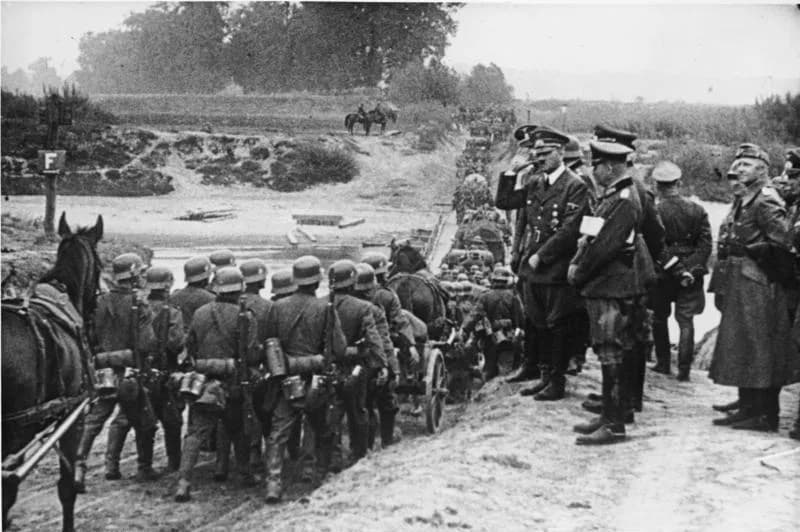
Invasion of Poland
The invasion of Poland by Nazi Germany on 1 September 1939 triggered World War II. In barely five weeks, German and then Soviet forces crushed the Polish army, applying the Blitzkrieg doctrine on a large scale for the first time. Britain and France declared war on 3 September.
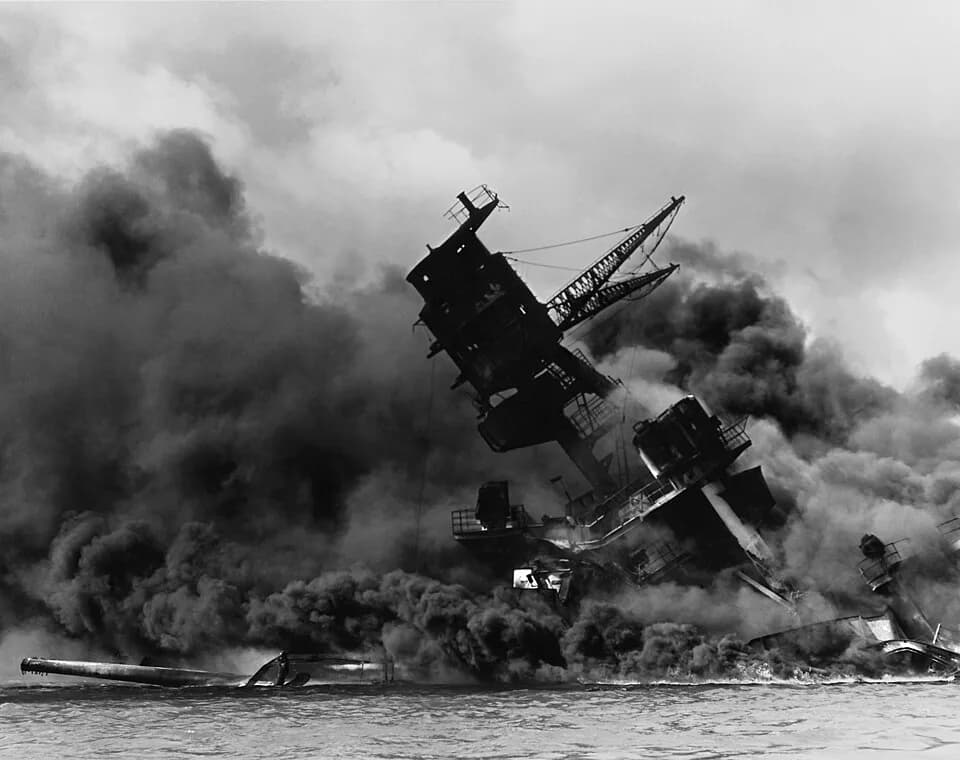
Attack on Pearl Harbor
The surprise Japanese attack on the American naval base at Pearl Harbor on December 7, 1941 triggered the United States' entry into the war. This event transformed an essentially European conflict into a true world war and ultimately sealed the fate of the Axis powers.
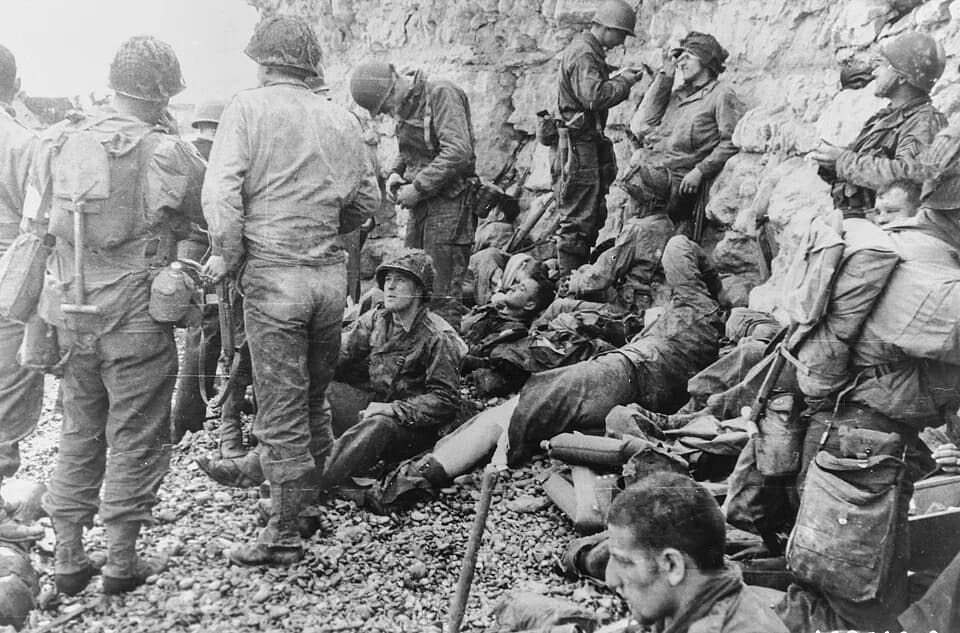
D-Day — Normandy Landings
On June 6, 1944, the largest amphibious operation in history landed 156,000 Allied soldiers on the beaches of Normandy. D-Day opened a second front in Western Europe and marked the beginning of the liberation of France and Western Europe from Nazi rule.
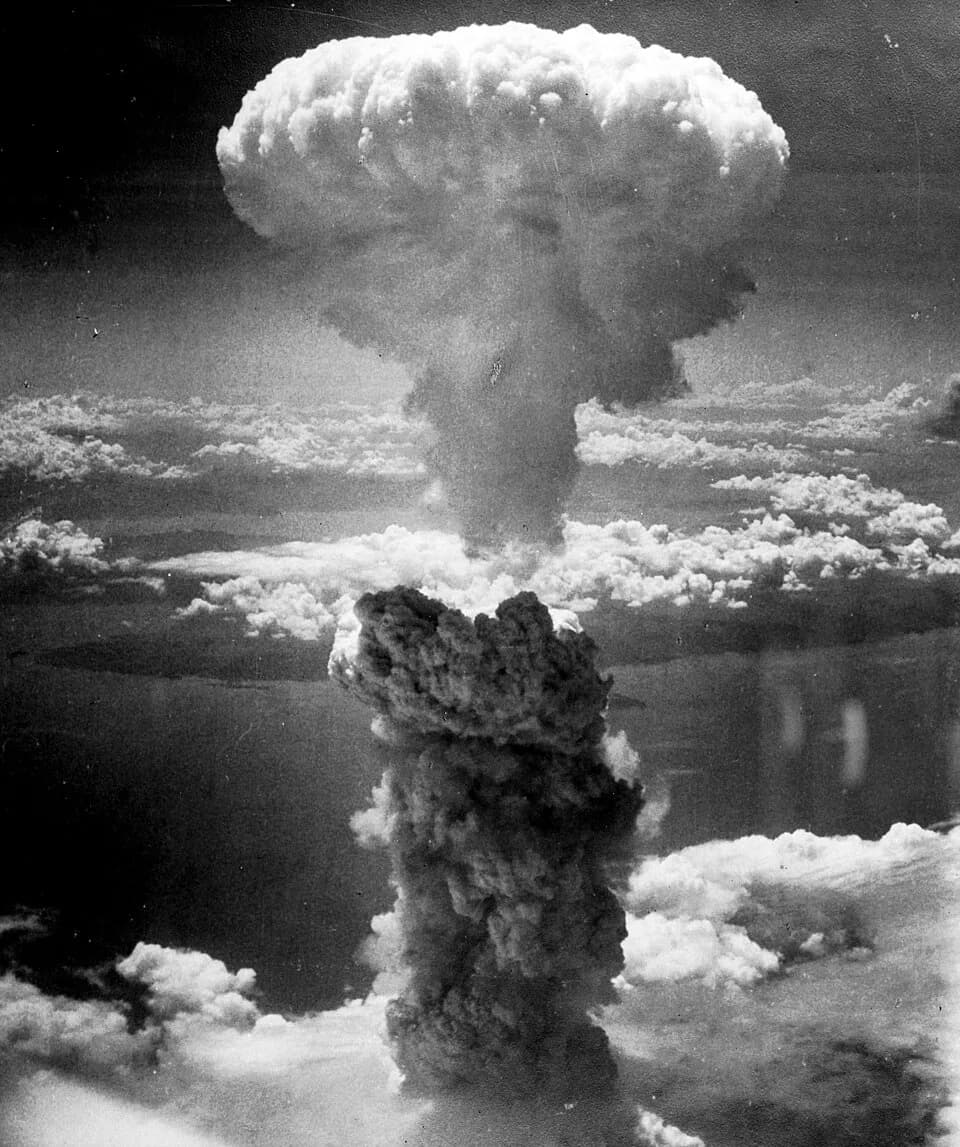
Atomic Bombings of Hiroshima and Nagasaki
The atomic bombings of Hiroshima (August 6) and Nagasaki (August 9, 1945) are the only uses of nuclear weapons in warfare. These attacks killed between 150,000 and 226,000 people and led to Japan's surrender, ending World War II while ushering in the nuclear age.
