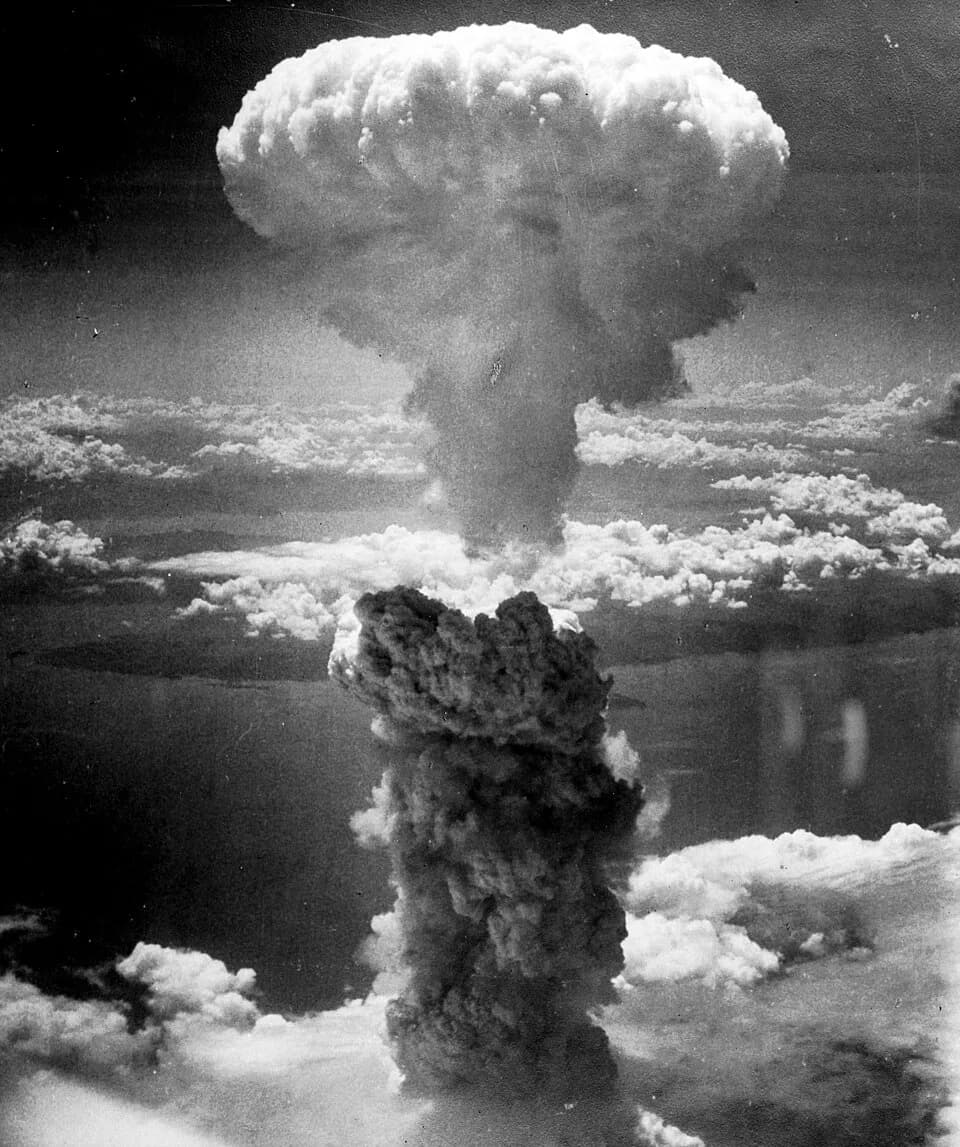
The atomic bombings of Hiroshima (August 6) and Nagasaki (August 9, 1945) are the only uses of nuclear weapons in warfare. These attacks killed between 150,000 and 226,000 people and led to Japan's surrender, ending World War II while ushering in the nuclear age.
By the spring of 1945, despite Japan's certain defeat, fighting in the Pacific remained ferociously intense. The Battle of Iwo Jima from February to March 1945 cost 6,800 American dead, and Okinawa from April to June 1945 claimed 12,000 American dead and over 100,000 Japanese dead, including many civilians. Kamikaze attacks terrorized the Allied navy. Plans for the invasion of the Japanese home islands, Operations Olympic and Coronet, projected Allied casualties estimated between 250,000 and one million dead, against a Japanese army of 2.3 million men and a civilian militia of 28 million. Meanwhile, the Manhattan Project, launched in 1942 under the scientific direction of J. Robert Oppenheimer, culminated in the first nuclear test at Trinity in New Mexico on July 16, 1945. President Truman, informed of the successful test during the Potsdam Conference, decided to use the bomb against Japan. The Potsdam Declaration of July 26 demanded Japan's unconditional surrender, threatening prompt and utter destruction. The Japanese government rejected the ultimatum.
On August 6, 1945 at 8:15 AM, the B-29 bomber Enola Gay, piloted by Colonel Paul Tibbets, dropped Little Boy, a 15-kiloton uranium bomb, on Hiroshima, a city of 350,000 inhabitants. The explosion produced a fireball 370 meters in diameter and a surface temperature of 4,000 degrees Celsius. A devastating blast wave leveled everything within a radius of 1.6 kilometers. Between 70,000 and 80,000 people died instantly, and tens of thousands more perished in the following days and weeks from burns and radiation sickness. The city was 70 percent destroyed. When Japan did not surrender, a second bomb, Fat Man, a 22-kiloton plutonium device, was dropped on Nagasaki on August 9 at 11:02 AM by the B-29 Bockscar. Nagasaki was not the primary target: Kokura, obscured by cloud cover, was spared. The explosion killed approximately 40,000 people immediately. That same day, the USSR declared war on Japan and invaded Manchuria. On August 15, Emperor Hirohito announced Japan's surrender in a historic radio address.
Japan's formal surrender was signed on September 2, 1945 aboard the USS Missouri in Tokyo Bay, officially ending the Second World War. The human toll of the two bombs was appalling: between 150,000 and 226,000 dead in total, including deaths from radiation exposure in the following months. The survivors, known as hibakusha, suffered from cancers, leukemia, and social discrimination for the rest of their lives. Both cities were rebuilt, but the medical and psychological effects persisted across multiple generations. Geopolitically, the atomic bombings inaugurated the nuclear age and the arms race between the United States and the USSR, which developed its own bomb in 1949. The doctrine of mutually assured destruction, known as MAD, shaped the Cold War for forty years. Japan, under American occupation until 1952, adopted a pacifist constitution with Article 9 renouncing war, and became an ally of the United States. Hiroshima and Nagasaki became universal symbols of peace and the dangers posed by nuclear weapons to all of humanity.
The debate over the necessity of the atomic bombings remains one of the greatest historical controversies of the twentieth century. Proponents of the decision, representing the majority view in American historiography, argue that the bombs prevented a ground invasion that would have cost hundreds of thousands of Allied and Japanese lives. Critics contend that Japan was already near surrender, that the surrender terms could have been softened by guaranteeing the imperial throne, and that the demonstration of power was aimed as much at the USSR as at Japan. Historian Tsuyoshi Hasegawa argues that it was the Soviet entry into the war, more than the bombs, that triggered the Japanese surrender by eliminating any hope of Soviet mediation. From a moral standpoint, the deliberate bombing of civilian populations raises fundamental questions about the ethics of warfare and the boundaries of military necessity. The destruction of Hiroshima and Nagasaki nonetheless had a paradoxically pacifying effect: the terror of nuclear weapons contributed to preventing a direct conflict between the superpowers throughout the Cold War.
The Manhattan Project archives, progressively declassified since the 1960s, document the development of the bomb and the decision to use it. The Enola Gay's flight log and mission reports are preserved at the National Archives. The Making of the Atomic Bomb by Richard Rhodes, published in 1986 and awarded the Pulitzer Prize, is the definitive work on the scientific development of nuclear weapons. Racing the Enemy by Tsuyoshi Hasegawa, published in 2005, offers a trilateral perspective encompassing American, Japanese, and Soviet viewpoints. The testimonies of hibakusha, collected by the Hiroshima Peace Memorial Museum and the Nagasaki Atomic Bomb Museum, constitute an invaluable heritage of memory. The US Strategic Bombing Survey report of 1946 evaluates the damage inflicted on both cities. Japanese archives, including the deliberations of the Supreme War Council, illuminate the decision-making process leading to the surrender. Each year, commemorative ceremonies in Hiroshima on August 6 and Nagasaki on August 9 remind the world of the consequences of nuclear weapons.
On August 6, 1945 at 8:15 AM, Colonel Paul Tibbets's B-29 Enola Gay dropped Little Boy, a 15-kiloton uranium bomb, on Hiroshima (population 350,000): between 70,000 and 80,000 instant deaths, the city 70 percent destroyed. On August 9 at 11:02 AM, the B-29 Bockscar dropped Fat Man, a 22-kiloton plutonium bomb, on Nagasaki: approximately 40,000 immediate deaths. In total, between 150,000 and 226,000 people died, including subsequent radiation deaths.
President Truman justified using the atomic bomb to avoid invading mainland Japan (Operations Olympic and Coronet), whose casualties were estimated between 250,000 and one million American deaths. This projection was directly extrapolated from the battles of Iwo Jima (6,800 Americans killed) and Okinawa (12,500 killed). The first nuclear test at Trinity (New Mexico) on July 16, 1945, validated the bomb; the Potsdam Declaration of July 26, rejected by Tokyo, preceded the bombings.
On August 15, 1945, Emperor Hirohito announced Japan's surrender in a historic radio address, six days after the bomb was dropped on Nagasaki. That same August 9, the USSR declared war on Japan and invaded Manchuria, eliminating any hope of Soviet mediation. The formal surrender was signed on September 2, 1945, aboard the battleship USS Missouri in Tokyo Bay, officially ending World War II.
Information cross-checked against Wikipedia and reference historical works.
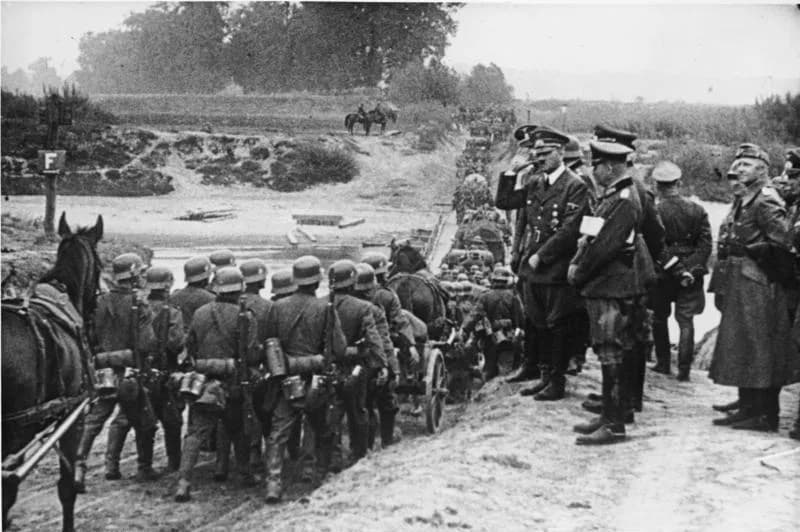
Invasion of Poland
The invasion of Poland by Nazi Germany on 1 September 1939 triggered World War II. In barely five weeks, German and then Soviet forces crushed the Polish army, applying the Blitzkrieg doctrine on a large scale for the first time. Britain and France declared war on 3 September.
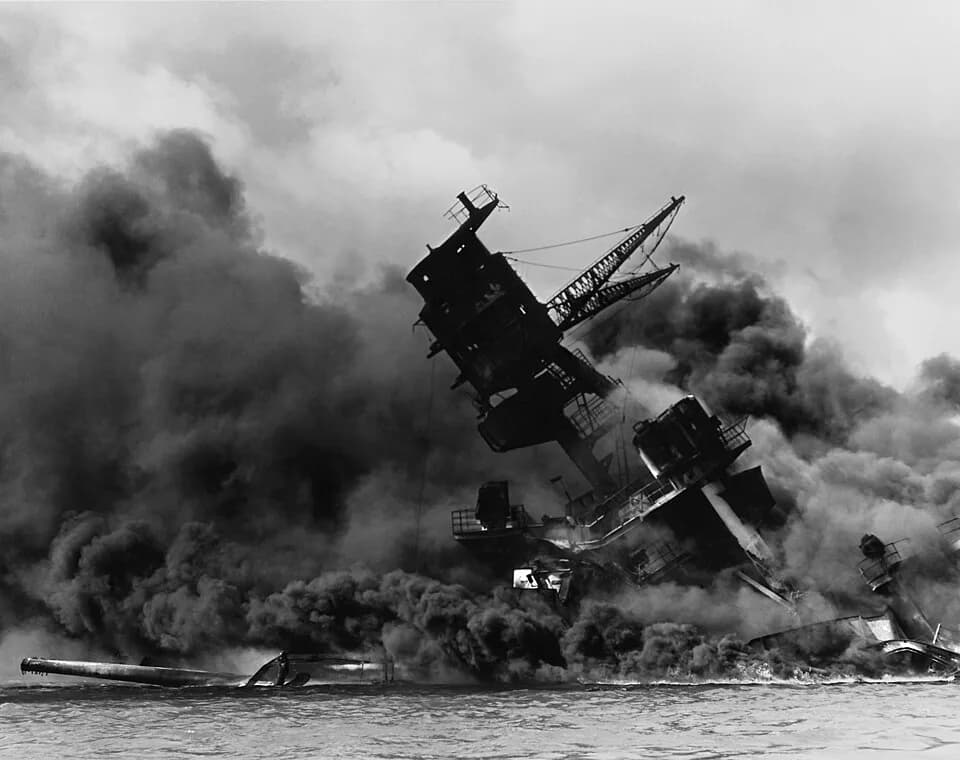
Attack on Pearl Harbor
The surprise Japanese attack on the American naval base at Pearl Harbor on December 7, 1941 triggered the United States' entry into the war. This event transformed an essentially European conflict into a true world war and ultimately sealed the fate of the Axis powers.
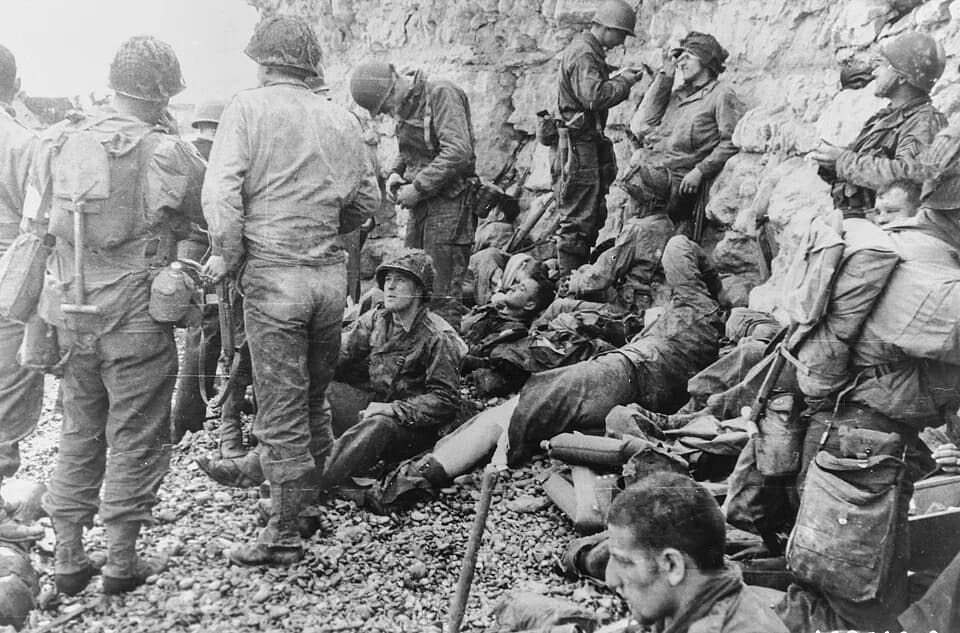
D-Day — Normandy Landings
On June 6, 1944, the largest amphibious operation in history landed 156,000 Allied soldiers on the beaches of Normandy. D-Day opened a second front in Western Europe and marked the beginning of the liberation of France and Western Europe from Nazi rule.
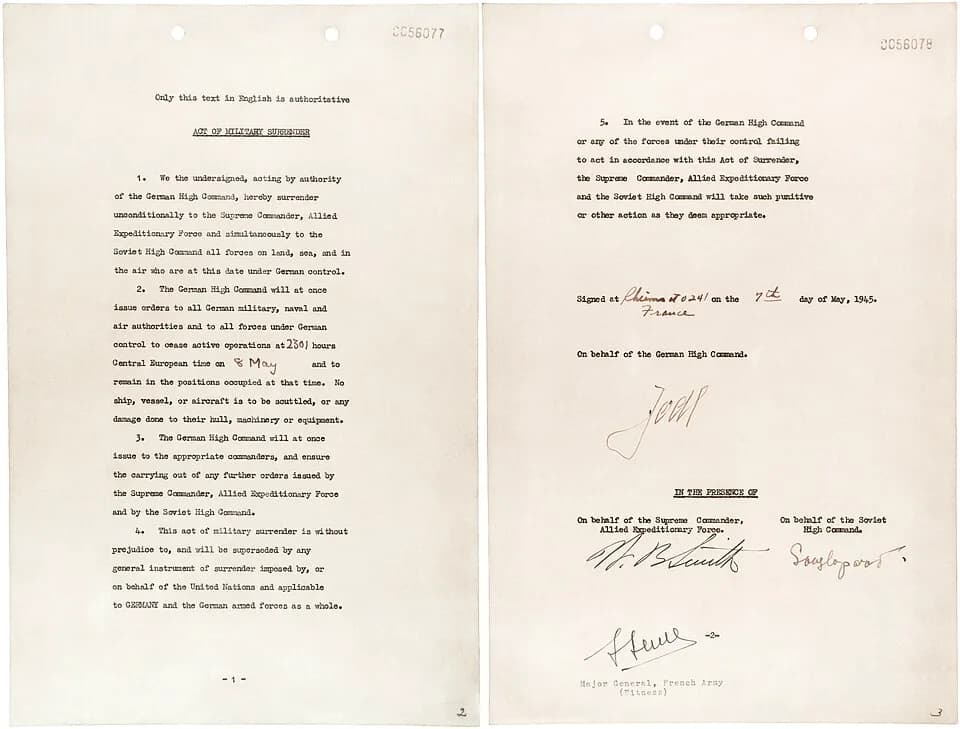
Surrender of Germany
On May 8, 1945, Nazi Germany surrendered unconditionally, ending the war in Europe after nearly six years of conflict. This event, celebrated as Victory in Europe Day (V-E Day), marked the fall of the Third Reich and the beginning of a new geopolitical era.
