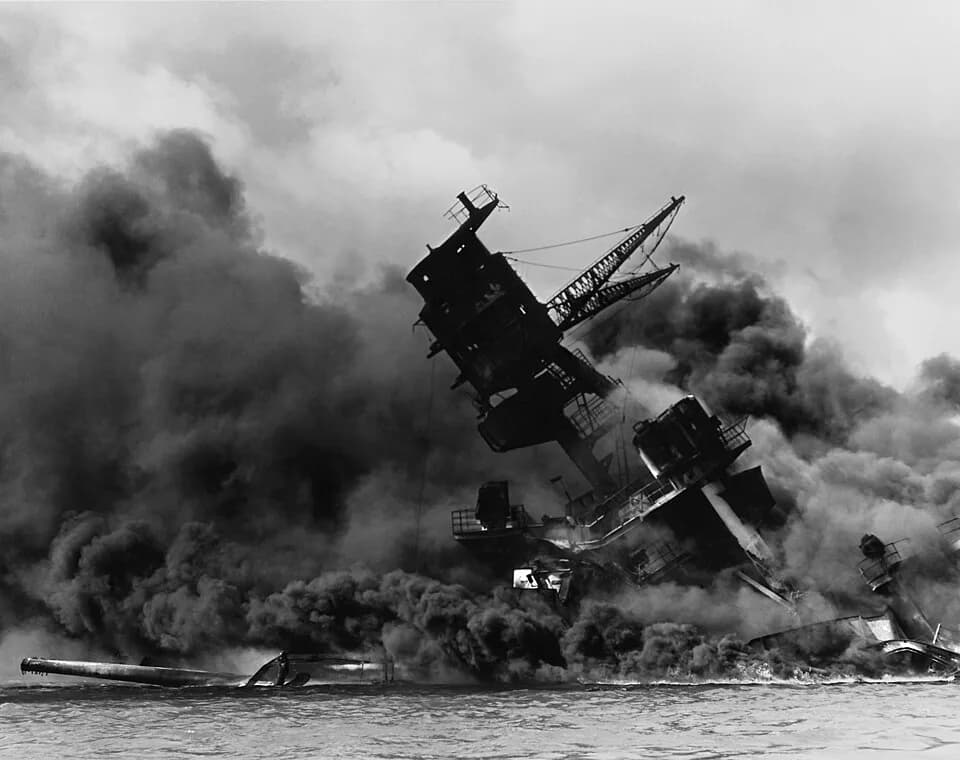
The surprise Japanese attack on the American naval base at Pearl Harbor on December 7, 1941 triggered the United States' entry into the war. This event transformed an essentially European conflict into a true world war and ultimately sealed the fate of the Axis powers.
Tensions between Japan and the United States had been building since the 1930s. Japanese expansion in China, including the invasion of Manchuria in 1931 and the Sino-Japanese War from 1937 onward, the occupation of French Indochina in 1940, and the signing of the Tripartite Pact with Germany and Italy in September 1940 deeply alarmed Washington. In response, the United States imposed an oil embargo on Japan in July 1941, threatening to paralyze the Japanese war machine which depended on American oil for 80 percent of its supply. Japan faced a stark dilemma: accept American demands to evacuate China and Indochina, or seize the oil resources of the Dutch East Indies by force. Admiral Yamamoto, commander of the Combined Fleet, devised a bold plan to neutralize the American Pacific Fleet through a surprise attack, buying time for the conquest of a vast defensive perimeter. Yamamoto knew the United States well, having studied at Harvard, and understood that Japan could not win a prolonged war. His gamble was that a shocked America would negotiate rather than wage a costly conflict across the Pacific.
On Sunday, December 7, 1941, at 7:48 AM local time, 353 Japanese aircraft launched from six aircraft carriers struck the naval base at Pearl Harbor on the island of Oahu, Hawaii. The attack came in two waves. The first wave of 183 aircraft targeted the battleships lined up along Battleship Row and the airfields. The USS Arizona exploded and sank after a bomb pierced its forward ammunition magazine, killing 1,177 sailors, nearly half of the total American casualties. The USS Oklahoma capsized after being struck by five torpedoes. In total, eight battleships were sunk or damaged, 188 aircraft destroyed on the ground, and 2,403 Americans killed. The second wave encountered more organized defenses but still inflicted considerable damage. However, the American aircraft carriers, the Enterprise, Lexington, and Saratoga, were absent from port that day, a stroke of luck that would prove decisive. The oil storage tanks and naval repair facilities, inexplicably spared, would allow the rapid restoration of several damaged vessels.
The effect of Pearl Harbor on American public opinion was electric. The country, deeply divided between isolationists and interventionists, united instantly. On December 8, Roosevelt delivered his famous Day of Infamy speech before Congress, which voted for war against Japan with only a single dissenting voice. Germany and Italy declared war on the United States on December 11, a catastrophic decision by Hitler who was not obligated to do so under the Tripartite Pact. The United States launched an unprecedented industrial and military mobilization: over four years, it would produce 300,000 aircraft, 86,000 tanks, 2 million trucks, and 6,500 warships. American industrial might, combined with 16 million mobilized men, radically shifted the global balance of power. In the Pacific, Japan exploited the early months to conquer the Philippines, Malaya, Singapore, the Dutch East Indies, and Burma. But at the Battle of Midway in June 1942, just six months after Pearl Harbor, the Japanese navy suffered a decisive defeat that reversed the course of the war in the Pacific theater.
Pearl Harbor was a tactical success but a colossal strategic failure for Japan. Tactically, the attack destroyed the Pacific battleship force, but the most important targets, the aircraft carriers, escaped destruction entirely. Yamamoto himself reportedly expressed his doubts: 'I fear all we have done is to awaken a sleeping giant and fill him with a terrible resolve.' This quote, though possibly apocryphal, perfectly captures the situation. The attack without a prior declaration of war, caused by a delay in transmitting the diplomatic message, transformed the event into an act of treachery in American eyes, fueling a rage that would make any negotiation impossible. On the naval level, Pearl Harbor paradoxically demonstrated the obsolescence of the battleship in the face of carrier-based aviation, a lesson both navies would apply for the remainder of the war. Conspiracy theorists claim Roosevelt knew and deliberately allowed the attack to justify entering the war; serious historians reject this theory while acknowledging that warning signals were misinterpreted or ignored by American intelligence services.
The sources on Pearl Harbor are extraordinarily rich and extensive. American investigative commissions, including the Roberts Commission of 1941-1942 and the Congressional inquiry of 1945-1946, produced 39 volumes of testimonies and documents. Japanese archives captured after the war include the aircraft carrier logbooks and Yamamoto's operational plans. The definitive reference work remains At Dawn We Slept by Gordon W. Prange, published in 1981, the product of 37 years of research including interviews with both Japanese and American participants. Pearl Harbor: The Verdict of History by the same author analyzes questions of responsibility and blame. The USS Arizona Memorial, visited by over one million people annually, preserves the sunken ship as a war grave. The photographic and film archives of the attack, taken by both Japanese and American forces, constitute a striking visual record. The National Archives in Washington and the Japanese Center for Asian Historical Records offer digital access to numerous primary documents.
The December 7, 1941 attack on Pearl Harbor killed 2,403 Americans and destroyed 188 aircraft on the ground. Eight battleships were sunk or damaged: the USS Arizona exploded after a bomb pierced its ammunition magazine, killing 1,177 sailors alone. The USS Oklahoma capsized. The aircraft carriers Enterprise, Lexington, and Saratoga were fortunately absent from port that day.
Admiral Yamamoto, commander of the Japanese Combined Fleet, planned the Pearl Harbor attack to neutralize the American Pacific Fleet and buy time to conquer the oil-rich Dutch East Indies. Japan depended on American oil for 80 percent of its supply, cut off by a US embargo in July 1941. Yamamoto, having studied at Harvard, understood that Japan could not win a prolonged war against the United States.
The Pearl Harbor attack was a tactical success but a strategic failure: the American aircraft carriers, the most valuable targets, were not in port and completely escaped destruction. Furthermore, the spared oil tanks and shipyards enabled rapid recovery. Most critically, the surprise attack instantly unified a divided America, triggering an industrial mobilization that would produce 300,000 aircraft and 6,500 warships in four years.
Information cross-checked against Wikipedia and reference historical works.
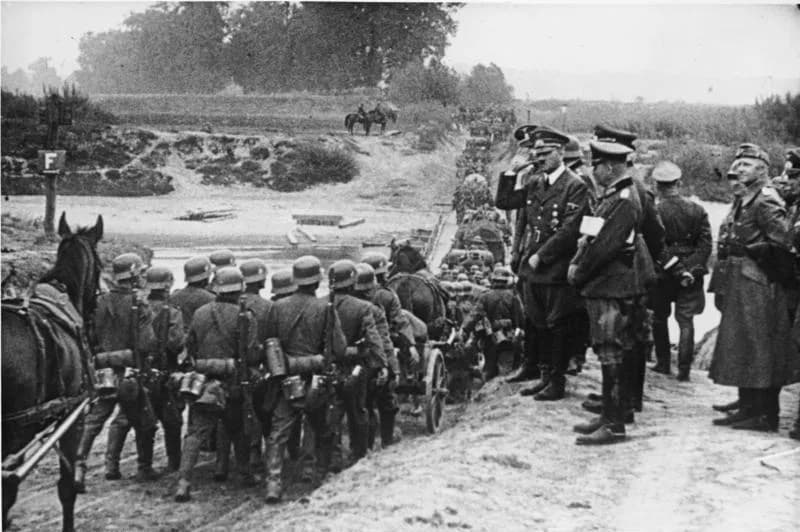
Invasion of Poland
The invasion of Poland by Nazi Germany on 1 September 1939 triggered World War II. In barely five weeks, German and then Soviet forces crushed the Polish army, applying the Blitzkrieg doctrine on a large scale for the first time. Britain and France declared war on 3 September.
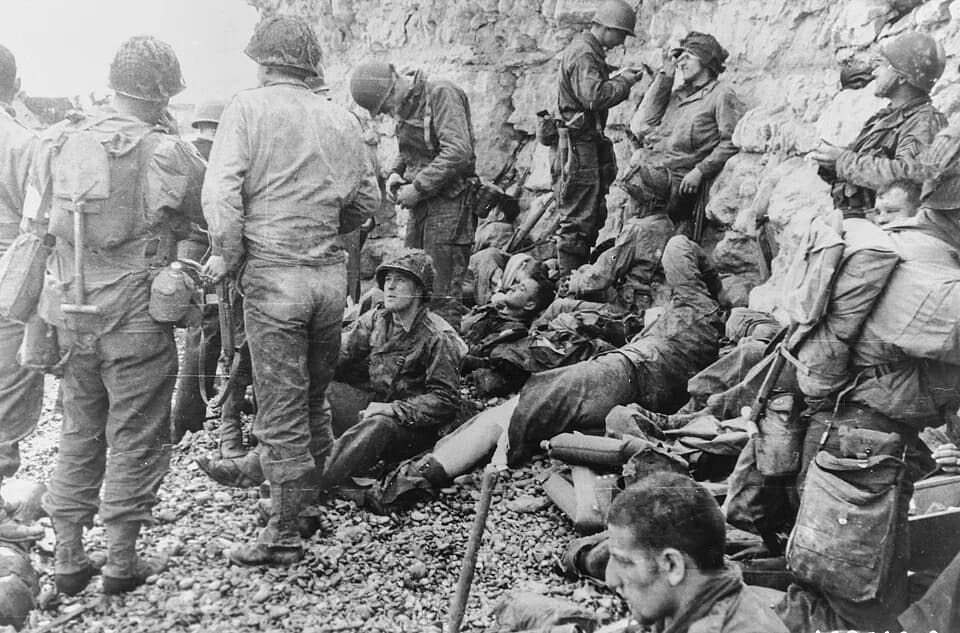
D-Day — Normandy Landings
On June 6, 1944, the largest amphibious operation in history landed 156,000 Allied soldiers on the beaches of Normandy. D-Day opened a second front in Western Europe and marked the beginning of the liberation of France and Western Europe from Nazi rule.
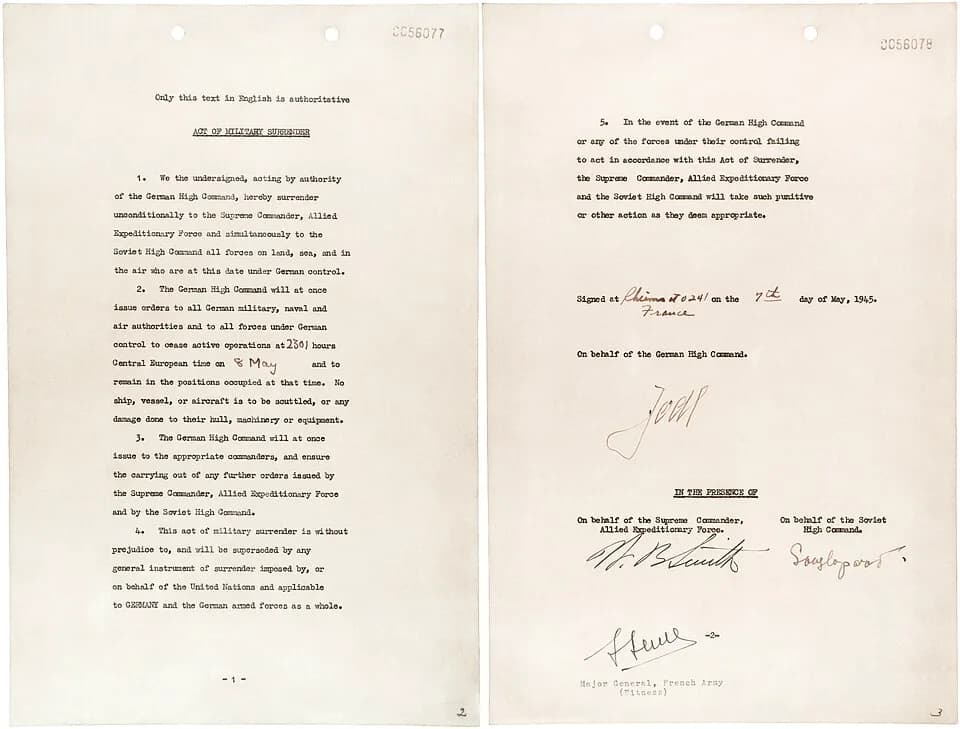
Surrender of Germany
On May 8, 1945, Nazi Germany surrendered unconditionally, ending the war in Europe after nearly six years of conflict. This event, celebrated as Victory in Europe Day (V-E Day), marked the fall of the Third Reich and the beginning of a new geopolitical era.
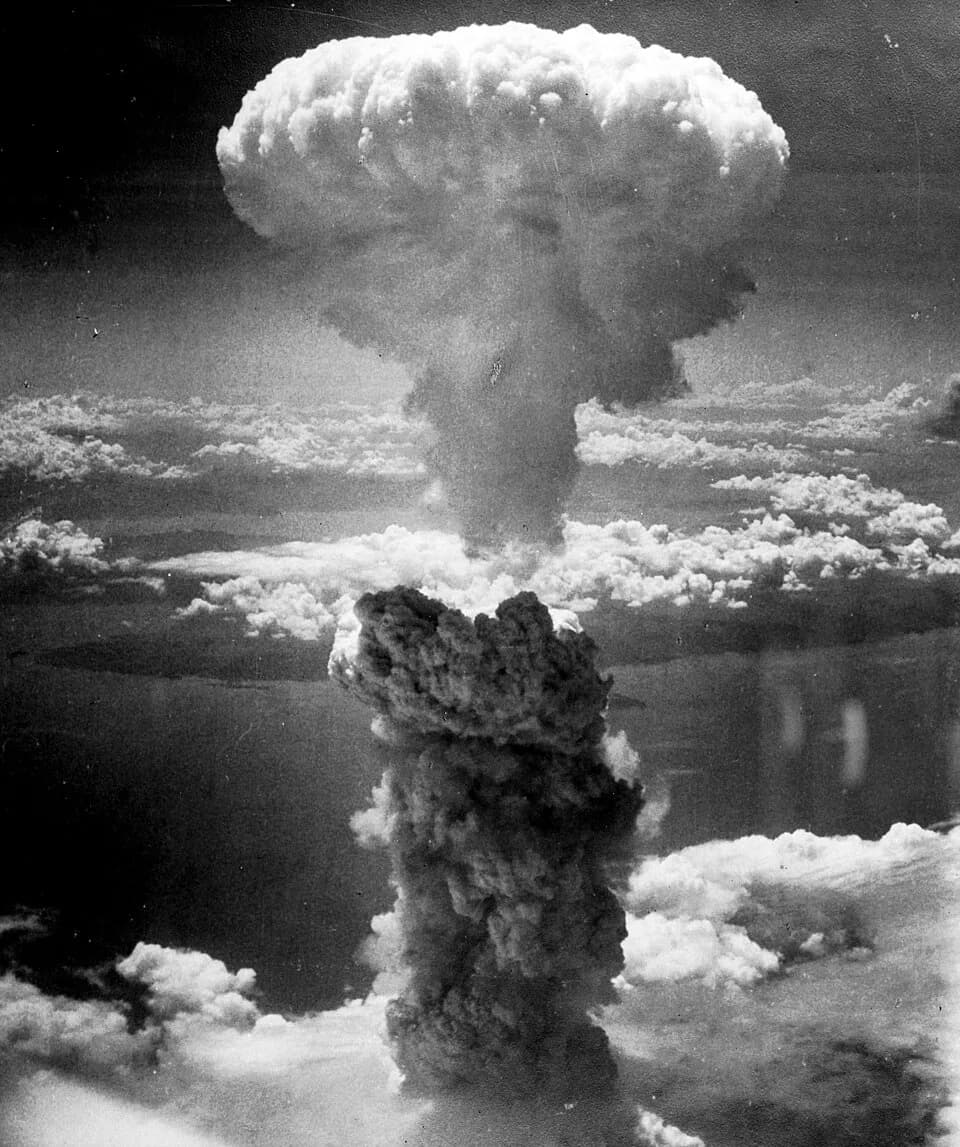
Atomic Bombings of Hiroshima and Nagasaki
The atomic bombings of Hiroshima (August 6) and Nagasaki (August 9, 1945) are the only uses of nuclear weapons in warfare. These attacks killed between 150,000 and 226,000 people and led to Japan's surrender, ending World War II while ushering in the nuclear age.
