
Anne Frank became the most recognised symbol of Holocaust victims through her diary, written while hiding from the Nazis in Amsterdam. Her personal story embodies the tragic fate of six million Jews exterminated during the Holocaust. Betrayed in August 1944, she died at Bergen-Belsen a few weeks before the camp was liberated.
Annelies Marie Frank was born on June 12, 1929, in Frankfurt am Main, Germany, into an assimilated middle-class Jewish family. Her father Otto Frank was a cultured businessman, her mother Edith a devoted homemaker. Her older sister Margot, three years her senior, was a brilliant and reserved student. With Adolf Hitler's rise to power in 1933 and the surge of Nazi antisemitism, the Frank family emigrated to Amsterdam in the Netherlands, where Otto founded a business dealing in pectin and spices. Anne quickly adapted to her new life, learned Dutch, and made many friends at her Montessori school. However, the German invasion of the Netherlands on May 10, 1940, caught up with the family. Anti-Jewish measures multiplied: mandatory wearing of the yellow star, bans from public transport, cinemas, and parks, special curfews. In July 1942, when Margot received a call-up notice for a labor camp in Germany, the family decided to go into hiding.
On July 6, 1942, the Frank family moved into the Secret Annex (Achterhuis), a concealed space behind a pivoting bookcase at 263 Prinsengracht, in Otto Frank's company offices. They were soon joined by the Van Pels family (Hermann, Auguste, and their son Peter) and dentist Fritz Pfeffer, making eight people living in a cramped space of approximately 50 square meters. Four of Otto's employees — Miep Gies, Jan Gies, Bep Voskuijl, and Johannes Kleiman — risked their lives daily to supply them with food, books, and news from the outside world. It was Miep Gies who brought the red-and-white checkered diary that Anne had received for her thirteenth birthday. During 25 months of hiding, Anne wrote her diary with remarkable maturity and literary talent for her age. She described daily life in the Annex, her conflicts with her mother, her first love with Peter Van Pels, her reflections on human nature, the war, and her aspirations as a writer. On August 4, 1944, the Gestapo, tipped off by an informant whose identity remains debated, raided the Annex.
After their arrest, the eight people in hiding were sent to the Westerbork transit camp in the Netherlands, then deported on September 3, 1944, on the last transport from Westerbork to Auschwitz-Birkenau, the largest Nazi concentration and extermination complex in occupied Poland. Upon arrival, men and women were separated. Otto Frank was the only one of the eight to survive the war. In October 1944, Anne and Margot were transferred to Bergen-Belsen camp in Germany, where conditions were appalling: extreme overcrowding, no food or clean water, typhus epidemics. The two sisters died of typhus in February or March 1945, just weeks before the camp's liberation by British troops on April 15, 1945. Edith Frank died at Auschwitz in January 1945. Hermann Van Pels was gassed at Auschwitz, Auguste Van Pels died during a transfer between camps, Peter Van Pels died at Mauthausen, and Fritz Pfeffer died at Neuengamme. Miep Gies had recovered Anne's diary from the Annex floor after the raid and kept it unread, hoping to return it to Anne after the war.
Otto Frank, sole survivor of the Annex, returned to Amsterdam after the liberation of Auschwitz and gradually learned the fate of each family member and the other people in hiding. When Anne's and Margot's deaths were confirmed, Miep Gies gave him the diary. Deeply moved by the literary talent and emotional depth of his daughter's writings, Otto decided to publish them. The Diary of Anne Frank was published in the Netherlands in 1947 under the title Het Achterhuis (The Annex), then translated into French in 1950 and English in 1952. The book achieved phenomenal worldwide success and has been translated into over 70 languages, becoming one of the most widely read books in the world with over 30 million copies sold. The 1955 theatrical adaptation won the Pulitzer Prize, and the 1959 film won three Academy Awards. The diary transformed public perception of the Holocaust by giving a human, individual face to the abstract statistic of six million victims.
Anne Frank's legacy extends far beyond World War II to become a universal symbol of the fight against intolerance and persecution. The Anne Frank House at 263 Prinsengracht in Amsterdam, converted into a museum in 1960, welcomes over 1.3 million visitors annually, making it one of the most visited museums in the Netherlands. The Anne Frank Foundation, established by Otto Frank in 1957, works for education against racism and antisemitism worldwide. The diary has become a fundamental text in school curricula in dozens of countries, introducing millions of young people to the history of the Holocaust. Anne's most famous quote — 'I still believe, in spite of everything, that people are truly good at heart' — resonates as a message of hope amid horror. Otto Frank devoted the rest of his life to honoring his daughter's memory and promoting tolerance, until his death in 1980 in Basel, Switzerland. The identification of the informant who betrayed the Annex remains the subject of ongoing research and historical controversy.
Anne Frank hid in the Secret Annex (Achterhuis) at 263 Prinsengracht in Amsterdam, behind a pivoting bookcase, from July 6, 1942 to August 4, 1944 — 25 months. Eight people lived in approximately 50 square meters: the Frank family, the Van Pels family, and dentist Fritz Pfeffer. The Gestapo raided on August 4, 1944 following a tip-off from an informant whose identity remains debated.
Anne Frank died of typhus at Bergen-Belsen concentration camp in Germany in February or March 1945, at age 15. She and her sister Margot had been transferred to Bergen-Belsen from Auschwitz-Birkenau in October 1944. Both sisters died just weeks before the camp's liberation by British troops on April 15, 1945. Their mother Edith had already died at Auschwitz in January 1945.
Miep Gies had recovered the diary from the Annex floor after the August 4, 1944 raid and kept it unread. She gave it to Otto Frank, the only survivor of the eight people in hiding. He had it published in the Netherlands in 1947 as Het Achterhuis. Translated into over 70 languages, the diary has sold more than 30 million copies. The 1955 theatrical adaptation won the Pulitzer Prize; the 1959 film won three Academy Awards.
Information cross-checked against Wikipedia and reference historical works.
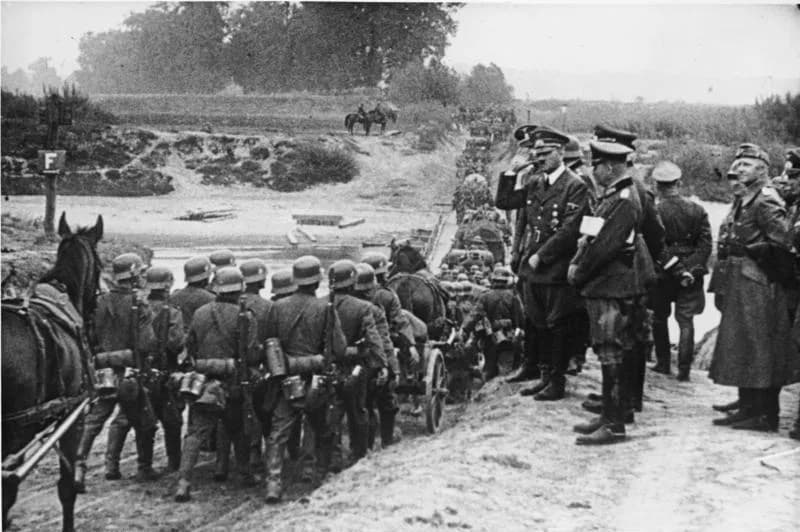
Invasion of Poland
The invasion of Poland by Nazi Germany on 1 September 1939 triggered World War II. In barely five weeks, German and then Soviet forces crushed the Polish army, applying the Blitzkrieg doctrine on a large scale for the first time. Britain and France declared war on 3 September.

Attack on Pearl Harbor
The surprise Japanese attack on the American naval base at Pearl Harbor on December 7, 1941 triggered the United States' entry into the war. This event transformed an essentially European conflict into a true world war and ultimately sealed the fate of the Axis powers.
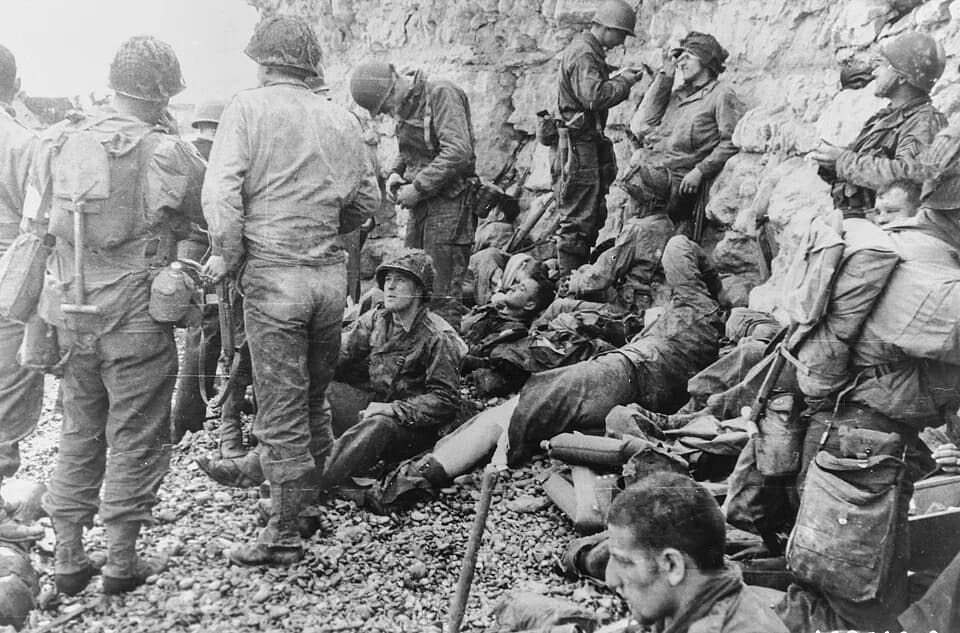
D-Day — Normandy Landings
On June 6, 1944, the largest amphibious operation in history landed 156,000 Allied soldiers on the beaches of Normandy. D-Day opened a second front in Western Europe and marked the beginning of the liberation of France and Western Europe from Nazi rule.
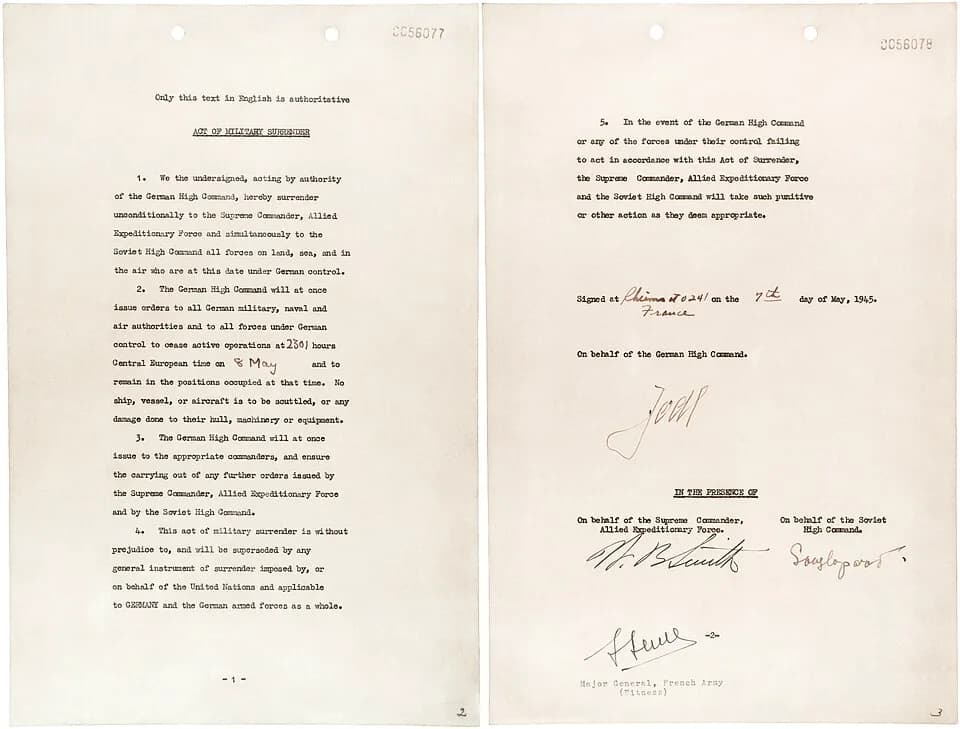
Surrender of Germany
On May 8, 1945, Nazi Germany surrendered unconditionally, ending the war in Europe after nearly six years of conflict. This event, celebrated as Victory in Europe Day (V-E Day), marked the fall of the Third Reich and the beginning of a new geopolitical era.
