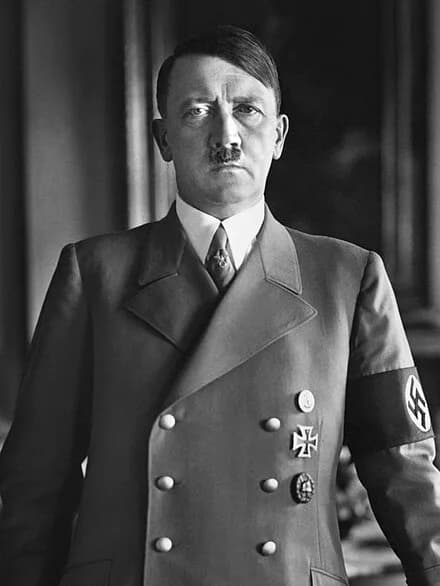
Dictator of Nazi Germany from 1933 to 1945, Adolf Hitler was the primary instigator of World War II and the Holocaust. His racist and expansionist ideology caused the deaths of tens of millions of people worldwide. Appointed chancellor on 30 January 1933, he had dismantled the Weimar Republic within eighteen months and taken absolute power.
Born on April 20, 1889, in Braunau am Inn in Austria-Hungary, Adolf Hitler grew up in a lower-middle-class family. His father Alois, a customs official, died in 1903. The young Adolf developed an early interest in the arts and twice attempted to gain admission to the Academy of Fine Arts in Vienna, without success. These failures left a deep mark on him. He subsequently spent several years living in poverty in Vienna, where he absorbed the antisemitic and pan-Germanic ideas circulating in the Austro-Hungarian capital. It was during this period of marginalization that the foundations of his worldview took shape. In 1913, he moved to Munich to avoid Austrian military service, but volunteered for the Bavarian army when World War I broke out in 1914. He served as a dispatch runner on the Western Front and received the Iron Cross First Class, a rare distinction for a mere corporal. The German defeat of 1918 and the Treaty of Versailles profoundly shook him. He embraced the "stab-in-the-back" theory, which held that Germany had been betrayed by civilian politicians, Marxists, and Jews rather than defeated militarily.
After the war, Hitler remained in the army and was tasked with monitoring small political parties in Munich. In September 1919, he joined the German Workers' Party (DAP), which he rapidly transformed into the National Socialist German Workers' Party (NSDAP). A charismatic and manipulative orator, he took control of the movement in 1921. In November 1923, he attempted a coup in Munich — the Beer Hall Putsch — which failed. Sentenced to five years in prison, he served only nine months, during which he wrote Mein Kampf, laying out his racist ideology and expansionist ambitions. After his release, he rebuilt the party by adopting a legalist strategy to gain power. The economic crisis of 1929 propelled the NSDAP to the forefront of German politics. On January 30, 1933, Hitler was appointed Chancellor by President Hindenburg. Within months, he dismantled the Weimar democracy: the Reichstag fire allowed him to obtain emergency powers, opposition parties were banned, and the Night of the Long Knives in June 1934 eliminated his internal rivals. Upon Hindenburg's death in August 1934, he combined the offices of Chancellor and President under the title of Fuhrer.
Hitler launched World War II on September 1, 1939, by invading Poland. His Blitzkrieg strategy delivered lightning victories: Poland fell in a month, Denmark and Norway in April 1940, then France in six weeks in May-June 1940. Only the United Kingdom held out, thanks to the RAF's victory during the Battle of Britain. In June 1941, Hitler committed what many consider his fatal mistake by launching Operation Barbarossa against the Soviet Union, opening a colossal Eastern Front. The first months were triumphant, but the German army became bogged down before Moscow during the winter of 1941-1942. After declaring war on the United States in December 1941, Germany faced a global coalition. The turning point came at Stalingrad (1942-1943), where the German 6th Army was annihilated. Simultaneously, Hitler ordered the implementation of the "Final Solution," the systematic genocide of Europe's Jews, which would claim six million victims in extermination camps. On the military front, he increasingly interfered with operational decisions, refusing any strategic retreat and dismissing his best generals.
Hitler's decisions shaped the course of the war in a disastrous manner for Germany. The invasion of the USSR, launched without adequate winter preparation along a front stretching over 2,900 kilometers, fatally dispersed German forces. His declaration of war on the United States after Pearl Harbor, when nothing obligated him to do so, united the two greatest industrial powers in the world against him. At Stalingrad, his obstinate refusal to authorize the retreat of General Paulus's 6th Army led to the encirclement and destruction of 300,000 soldiers. His obsession with "miracle weapons" — the V1, V2, and early jet aircraft — diverted precious resources from conventional production. The "scorched earth" directive (Nero Decree) of March 1945 ordered the destruction of all German infrastructure, reasoning that the German people did not deserve to survive defeat. Albert Speer, his armaments minister, secretly sabotaged this order. On the Western Front, his interference in the Battle of Normandy, forbidding the movement of armored divisions without his personal authorization, fatally delayed the German counterattack on June 6, 1944.
Adolf Hitler committed suicide on April 30, 1945, in his bunker in Berlin as Soviet troops encircled the capital. His legacy is one of the most massive destruction in human history: between 70 and 85 million dead, including six million Jews exterminated in the Holocaust, entire cities reduced to ashes, and a devastated continent. The Nuremberg Trials (1945-1946) established the concept of crimes against humanity and judged the surviving Nazi leaders. Germany was divided into four occupation zones and then into two states (West Germany and East Germany) for over forty years. Nazism left a civilizational trauma that profoundly transformed international law, leading to the creation of the United Nations and the Universal Declaration of Human Rights in 1948. The Holocaust accelerated the creation of the State of Israel in 1948 and remains a fundamental reference point in global collective memory. In Germany, denazification and the duty of remembrance (Erinnerungskultur) became pillars of the postwar national identity. Hitler's story serves as a permanent warning against the dangers of totalitarianism, demagoguery, and institutionalized racism.
This article draws on historical works, military archives and recognized academic publications.
Adolf Hitler was appointed German Chancellor on January 30, 1933, by President Hindenburg amid a severe economic crisis. He exploited the Reichstag fire to obtain emergency powers, banned opposition parties, and eliminated rivals during the Night of the Long Knives (June 1934). Upon Hindenburg's death in August 1934, he merged the offices of Chancellor and President under the title of Führer.
In June 1941, Hitler launched Operation Barbarossa against the Soviet Union, opening an Eastern Front stretching over 2,900 kilometers without adequate winter preparation. The German army stalled before Moscow in the winter of 1941-1942. The decisive turning point came at Stalingrad (1942-1943), where General Paulus's 6th Army — 300,000 soldiers — was encircled and destroyed after Hitler refused any retreat.
Adolf Hitler died by suicide on April 30, 1945, in his bunker in Berlin as Soviet troops encircled the capital. He was 56 years old. His death marked the end of the Third Reich. The Nuremberg Trials (1945-1946) subsequently judged the surviving Nazi leaders and established the concept of crimes against humanity in international law.
Information cross-checked against Wikipedia and reference historical works.
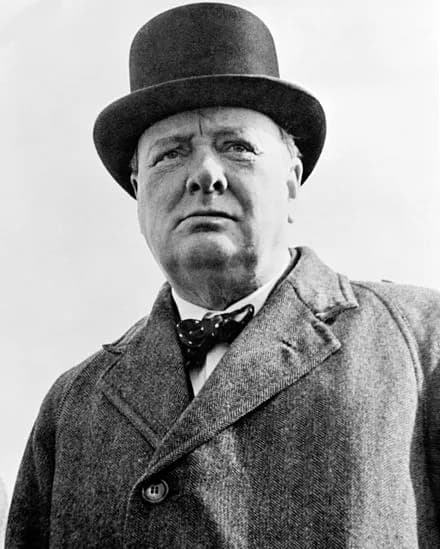
Winston Churchill
Prime Minister of the United Kingdom from 1940 to 1945, Winston Churchill embodied British resistance to Nazi Germany. His rousing speeches and unwavering leadership were instrumental in sustaining British morale through the darkest hours of the war. He refused any negotiated peace after the fall of France.
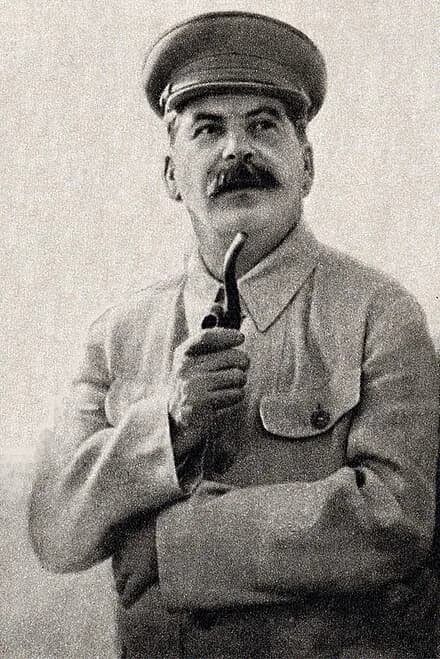
Joseph Stalin
Leader of the Soviet Union from 1924 to 1953, Joseph Stalin transformed the USSR into an industrial and military superpower. His leadership during the Great Patriotic War was decisive in defeating Nazi Germany, but his totalitarian regime caused millions of deaths among his own people.
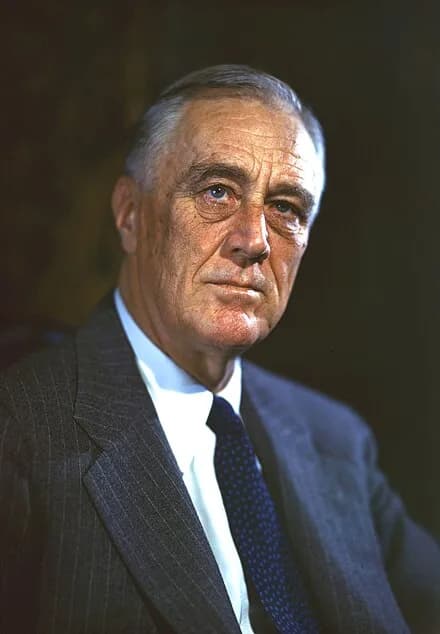
Franklin D. Roosevelt
32nd President of the United States, Franklin D. Roosevelt led the country through the Great Depression and most of World War II. His Lend-Lease program and diplomacy with Churchill and Stalin were decisive in the Allied victory, though he died just weeks before Germany's surrender.
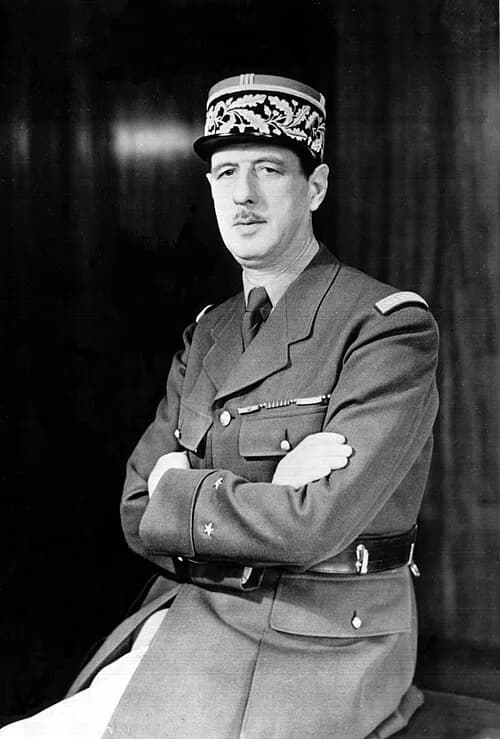
Charles de Gaulle
Leader of Free France from London starting June 1940, Charles de Gaulle refused capitulation and embodied French resistance. Through his determination and political skill, he succeeded in having France recognized as a victorious power at the war's end, preserving its place among the great nations.
