Wonambi
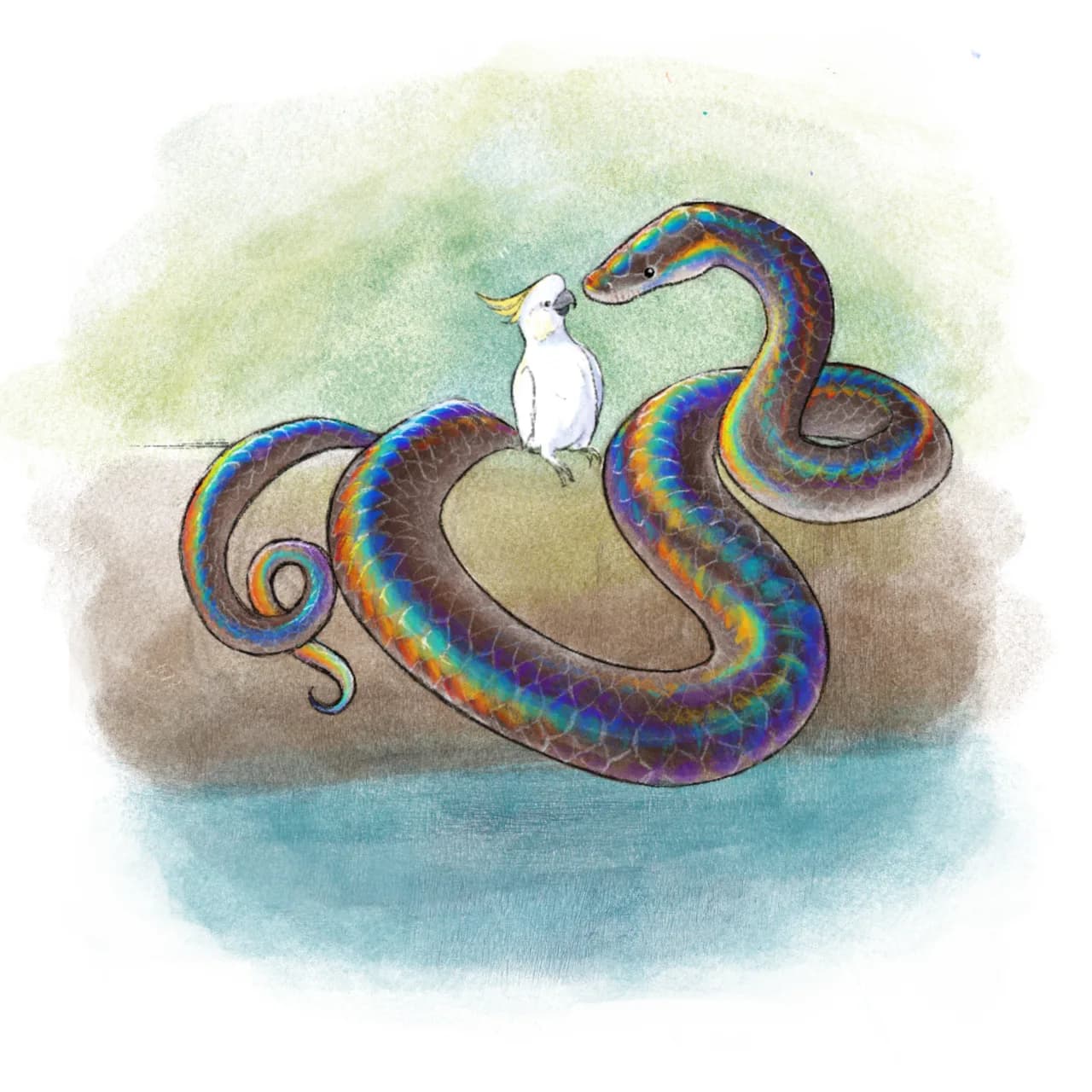
Wonambi naracoortensis was the last survivor of the madtsoiids, a snake family a hundred million years old. Five to 6 metres long and 50 to 80 kilograms, it held on in South Australia until 50,000 years ago. Its name takes up that of the rainbow serpent of Aboriginal mythology, whose stories may keep a trace of the animal.
Wonambi naracoortensis lived during the Pleistocene, approximately 1.6 million to 50,000 years ago, making it one of the last representatives of the archaic Madtsoiidae family — a lineage of giant constricting snakes that had survived since the Cretaceous. Wonambi's extinction coincides with the arrival of the first humans in Australia about 50,000 years ago, though climate change also played a role. This Australian anaconda was the last survivor of a 100-million-year lineage, a Cretaceous living fossil that went extinct in the time of the first Aboriginal peoples.
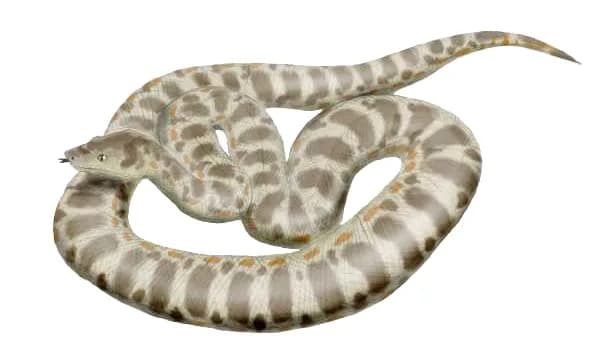
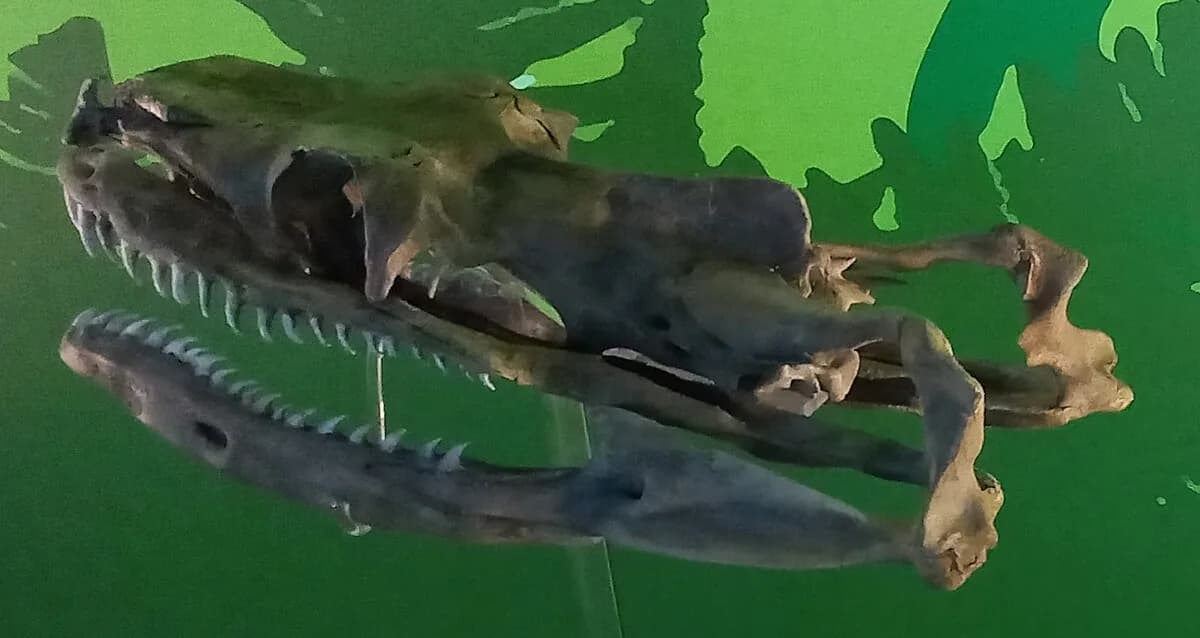
Wonambi naracoortensis measured between 5 and 6 meters in total length, making it the largest snake in Pleistocene Australia and one of the largest members of Australian megafauna. Its body was massive and muscular, adapted for constriction of large prey. Its body diameter could reach 30 centimeters. Compared to modern Australian snakes (the largest, the amethystine python, rarely reaches 5 m), Wonambi was a true giant. Its skull, relatively small compared to the body, differed from pythons by the absence of heat-sensing labial pits.
Wonambi was an ambush constrictor that hunted large marsupials and other animals of the Pleistocene Australian megafauna. Its probable prey included wallabies, giant wombats (juvenile Diprotodon), kangaroos, and large birds. Lurking near water sources in caves or rocky areas, it waited for prey to approach before seizing and suffocating them by constriction. Marsupial bones found in the same deposits as Wonambi in the Naracoorte Caves show traces compatible with predation by a large constrictor.
Wonambi inhabited southern Australia, primarily in the semi-arid regions and open forests of the Pleistocene. The main discovery site is the Naracoorte Caves network in South Australia, a UNESCO World Heritage site for its richness in megafauna fossils. These caves served as natural traps where animals and predators fell or ventured in. The Pleistocene Australian climate alternated between wetter periods and drier glacial phases, and Wonambi probably adapted to both conditions by using caves as thermal refuges.
Wonambi's anatomy reveals its membership in the extinct Madtsoiidae family, distinct from modern pythons and boas. Unlike modern Australian pythons, Wonambi did not possess heat-sensing labial pits — those infrared sensors that allow pythons to detect the body heat of their prey in darkness. Its skull was more rigid and less mobile than modern snakes, with a more limited gape capacity. Its vertebrae were robust and its ribs powerful, adapted for constricting large prey. The body musculature must have been considerable to crush medium-sized marsupials.
Wonambi was likely an ambush predator associated with water sources and cave entrances. It positioned itself at strategic locations where marsupials and other animals came to drink or shelter, then struck with lightning speed to seize prey and suffocate them. This behavior is similar to modern South American anacondas. The concentration of its fossils in the Naracoorte Caves suggests it used these cavities as permanent ambush sites. It was probably solitary and territorial, with each individual controlling a water source or cave entrance.
Wonambi naracoortensis was described in 1976 by Smith from fossils discovered in the Naracoorte Caves (Victoria Fossil Cave) in South Australia. The name Wonambi derives from an Aboriginal word for the rainbow serpent, a central creature of Australian Aboriginal mythology, which may be inspired by ancestral memory of this large snake. The Naracoorte Caves have yielded numerous specimens, including partial skeletons and isolated vertebrae. In 2000, Scanlon reclassified Wonambi in the Madtsoiidae and demonstrated that it represented the last survivor of this ancient family. Wonambi's extinction approximately 50,000 years ago coincides with the arrival of Aboriginal peoples in Australia.
| Period | Pléistocène / Pleistocene |
| Era | Cénozoïque / Cenozoic |
| Age | 1.6 Ma - 50,000 ans |
| Location | Australie (Naracoorte, Australie-Méridionale) / Australia (Naracoorte, South Australia) |
| Length | 5-6 m |
| Height | N/A |
| Weight | ~50-80 kg (estimé / estimated) |
| Diet | Carnivore |
| Discovery | 1976 |
Wonambi naracoortensis measured between 5 and 6 meters in length with an estimated weight of 50 to 80 kilograms, with a body diameter reaching 30 centimeters — the largest snake in Pleistocene Australia. Unlike modern Australian pythons, Wonambi belonged to the Madtsoiidae and lacked heat-sensing labial pits. Its skull was more rigid, with a more limited gape capacity.
The extinction of Wonambi naracoortensis coincides with the arrival of the first Aboriginal peoples in Australia, approximately 50,000 years ago. Direct hunting or habitat disturbance through fire are likely causes. Pleistocene climate change, with the progressive drying of the continent, also played a role. Wonambi was the last survivor of a Madtsoiidae snake lineage 100 million years old.
Wonambi is an Aboriginal term for the rainbow serpent, a central creature in Australian mythology. Paleontologist Smith used it in 1976 when describing Wonambi naracoortensis, discovered in the Naracoorte Caves (South Australia). Some researchers suggest that ancestral memory of this large, vanished constricting snake may have inspired and enriched Aboriginal oral traditions.
Wonambi naracoortensis life reconstruction
Wikimedia Commons