Tuojiangosaure
Tuojiangosaurus multispinus was a herbivorous stegosaur from China, described in 1977 from fossils in Sichuan and dated to around 160 million years ago. At 7 metres and 2.8 tonnes, it is the best-known stegosaur in Asia. Its back plates are sharper than those of Stegosaurus, and its name means lizard of the Tuo river.
Tuojiangosaurus lived during the Late Jurassic period, approximately 163 to 157 million years ago, during the Oxfordian stage, in what is now Sichuan Province, China. This era corresponds to a period of great stegosaur diversity worldwide, with species present on every continent. The Late Jurassic in China was characterized by a warm and humid climate, favorable for the development of vast forests of conifers and ferns. Tuojiangosaurus is the best-known stegosaur from Asia and one of the first discovered outside North America and Europe, demonstrating the worldwide distribution of this dinosaur family.
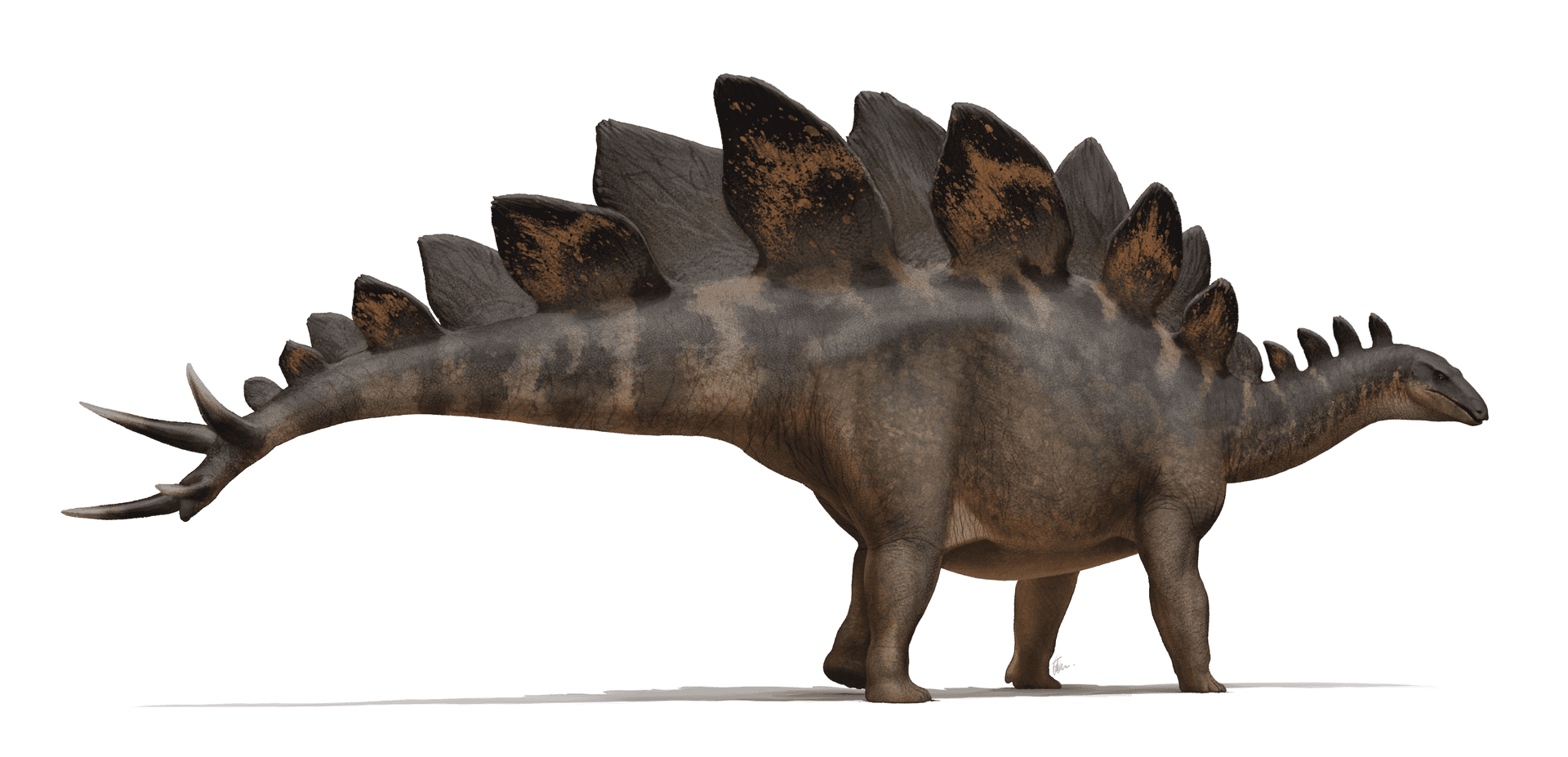
Tuojiangosaurus measured approximately 7 meters in length and weighed about 2.8 tonnes, making it a medium-sized stegosaur. Its height at the back, including the dorsal plates, could reach approximately 2.5 meters. Its massive, stocky body was supported by four robust legs, the hind legs being considerably longer than the forelegs, giving the back the arched silhouette characteristic of stegosaurs. Its head was small relative to the body, approximately 40 centimeters in length, with a narrow snout ending in a horny beak. These proportions are typical of stegosaurids, medium-sized herbivores that compensated for their low intelligence with impressive defensive armament.
Tuojiangosaurus was a strict herbivore feeding on low vegetation. Its horny beak and small leaf-shaped teeth were adapted for plucking and chewing low-growing plants, primarily ferns, horsetails, and cycads. Unlike contemporary sauropods that browsed the canopy, stegosaurs like Tuojiangosaurus fed at ground level, their heads barely exceeding one meter in height. The limited chewing capacity of its simple dentition suggests it needed to consume enormous quantities of vegetation to meet its energy needs. It may have swallowed gastroliths (stomach stones) to help grind plant matter in its stomach, as some modern birds do.
Tuojiangosaurus lived in the alluvial plains and river valleys of the Sichuan Basin in central China. The Upper Shaximiao Formation, where its fossils were discovered, represents an environment of vast floodplains bordered by dense forests of conifers, ginkgoes, and tree ferns. The climate was warm and humid, with abundant rainy seasons. The Late Jurassic ecosystem of Sichuan was rich in dinosaurs: the sauropods Mamenchisaurus and Omeisaurus dominated the canopy, the theropod Yangchuanosaurus was the primary predator, and other herbivores like small ornithopods completed the fauna. Rivers and lakes provided fresh water and vegetation-rich wetlands.
Tuojiangosaurus anatomy displays all the classic characteristics of stegosaurids. Its back bore two rows of 15 pairs of pointed, triangular bony plates, narrower and sharper than the large rounded plates of North American Stegosaurus. These alternating plates extended from the neck to the tail base. The tail tip was armed with two pairs of large bony spines (the thagomizer), forming a formidable defensive weapon capable of inflicting severe injuries on predators. The small, elongated skull housed a proportionally tiny brain, one of the smallest relative brains among all dinosaurs. The myth of the second brain in the hip, popular in the 19th century, has been abandoned by modern science.
Tuojiangosaurus behavior was probably similar to other stegosaurs: a slow, peaceful herbivore that moved in small groups across the plains. Its primary defense against predators like Yangchuanosaurus was its thagomizer — the tail spines it could swing with considerable force. Biomechanical studies show that stegosaur tails could move with enough power to break a predator's bones. The dorsal plates probably served thermoregulatory and display functions: richly vascularized, they could help dissipate or absorb heat, and their distinctive shape allowed species and individual recognition. It is possible that the plates changed color with blood flow, serving as a visual signal.
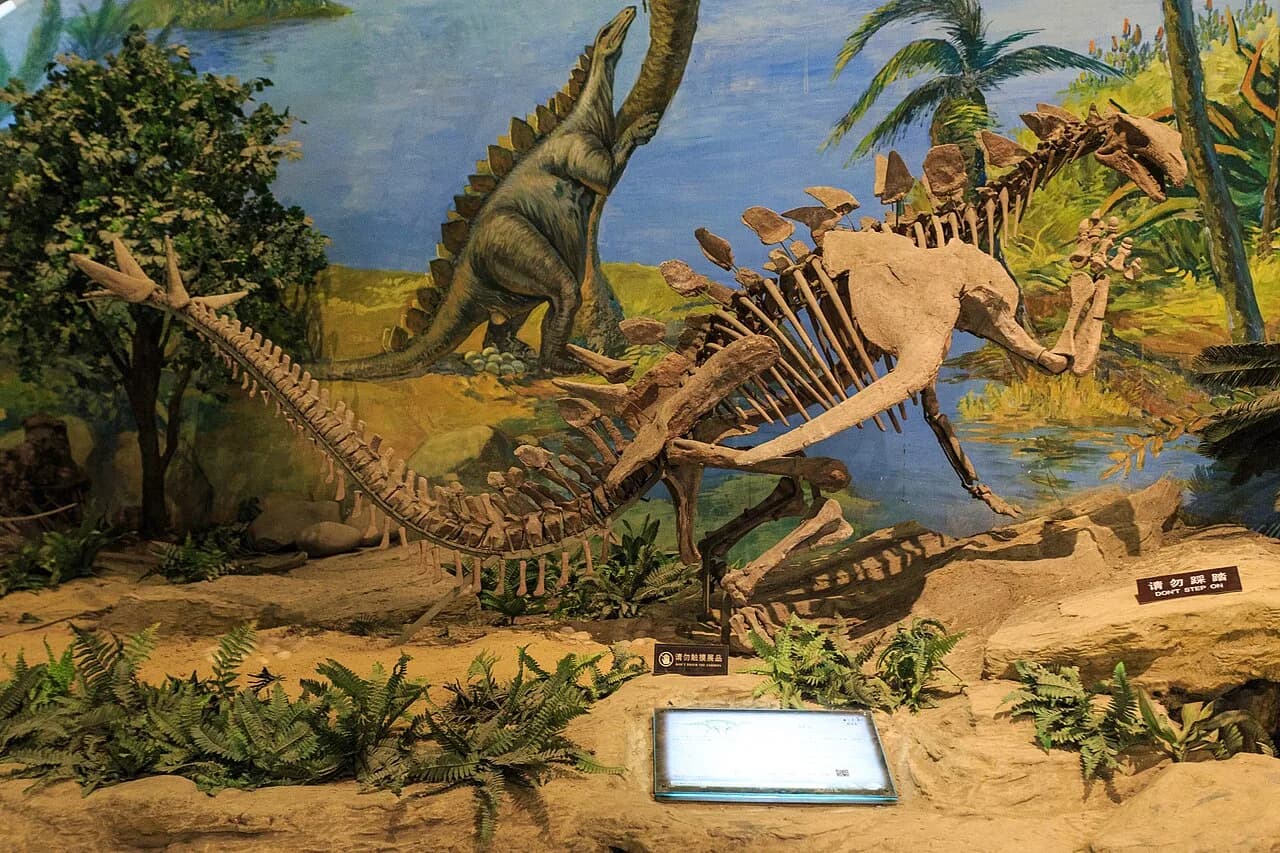
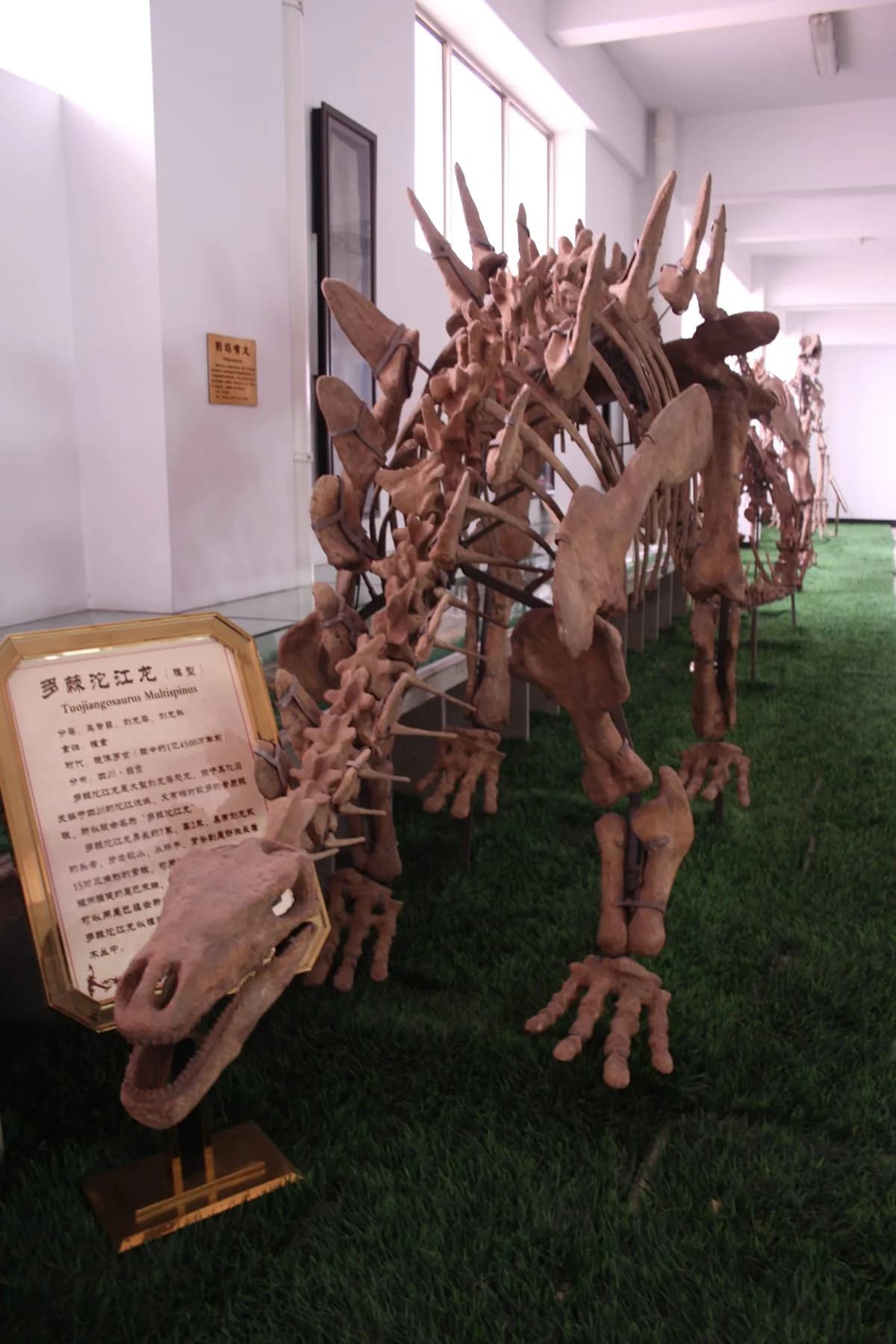
Tuojiangosaurus was described in 1977 by Dong Zhiming and colleagues from fossils discovered in the Upper Shaximiao Formation in Quxian County, Sichuan Province, China. The name means lizard of the Tuo River, referring to the Tuo River, a tributary of the Yangtze. The holotype comprises a nearly complete skeleton including the skull, vertebrae, limbs, and dorsal plates, making it one of the most complete stegosaurs from Asia. A mounted skeleton is displayed at the Zigong Municipal Museum in Sichuan, one of China's most important paleontological museums. Other specimens have been discovered in the same geological formation, confirming its presence in the Jurassic ecosystem of Sichuan. Tuojiangosaurus is often compared with Stegosaurus to understand stegosaurid diversity and biogeography.
| Period | Jurassique supérieur / Late Jurassic |
| Era | Mésozoïque / Mesozoic |
| Age | ~160 millions d'années / ~160 million years ago |
| Location | Sichuan, Chine / Sichuan, China |
| Length | ~7 m |
| Height | ~2.5 m (avec plaques) |
| Weight | ~2.8 tonnes |
| Diet | Herbivore |
| Discovery | 1977 |
Tuojiangosaurus multispinus bore two rows of 15 pairs of bony plates that were narrower and sharper than the large rounded plates of North American Stegosaurus. These triangular, pointed plates extended from the neck to the tail base. Like those of Stegosaurus, they were likely richly vascularized and served thermoregulatory and visual display functions between individuals.
Tuojiangosaurus multispinus measured approximately 7 meters in length with an estimated weight of 2.8 tonnes. It lived approximately 163 to 157 million years ago (Oxfordian, Late Jurassic) in present-day Sichuan Province, China. Described in 1977 by Dong Zhiming, its holotype is one of the most complete stegosaurs from Asia and is displayed at the Zigong Municipal Museum.
The primary defensive weapon of Tuojiangosaurus multispinus was its thagomizer — the two pairs of large bony spines at the tail tip. Biomechanical studies on stegosaurs show the tail could move with enough force to break the bones of a predator like Yangchuanosaurus, which shared its Sichuan ecosystem. The dorsal plates also provided visual and possibly physical protection.
Mounted skeleton of Tuojiangosaurus
Wikimedia Commons
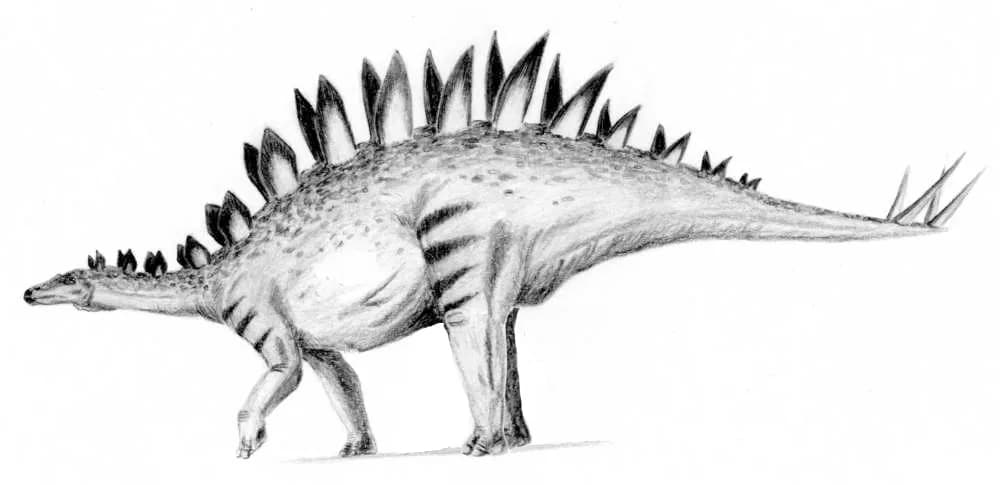
Reconstruction of Tuojiangosaurus multispinus
Wikimedia Commons