Thescélosaure
Thescelosaurus neglectus owes its species name to an oversight: its fossil sat for years in an unopened crate at the Smithsonian. From 2.5 to 4 metres and 80 to 300 kilograms, described in 1913, it lived 68 to 66 million years ago. The specimen « Willo » caused a stir with a supposed fossilised four-chambered heart, an interpretation now disputed.
Thescelosaurus lived in the Late Cretaceous, approximately 68 to 66 million years ago, during the Maastrichtian stage. It is one of the very last non-avian dinosaurs to have existed, contemporary with Tyrannosaurus rex and Triceratops just before the Cretaceous-Paleogene mass extinction. Thescelosaurus belongs to the basal Ornithopoda (sometimes classified in Thescelosauridae), a group of small to medium bipedal herbivores that persisted successfully throughout the Cretaceous without evolving toward the large sizes of hadrosaurs. Despite its relative anatomical simplicity compared to more derived ornithopods, Thescelosaurus represents a lineage that endured for tens of millions of years. Its survival until the very end of the Cretaceous testifies to the effectiveness of its ecological strategy as a small generalist herbivore.
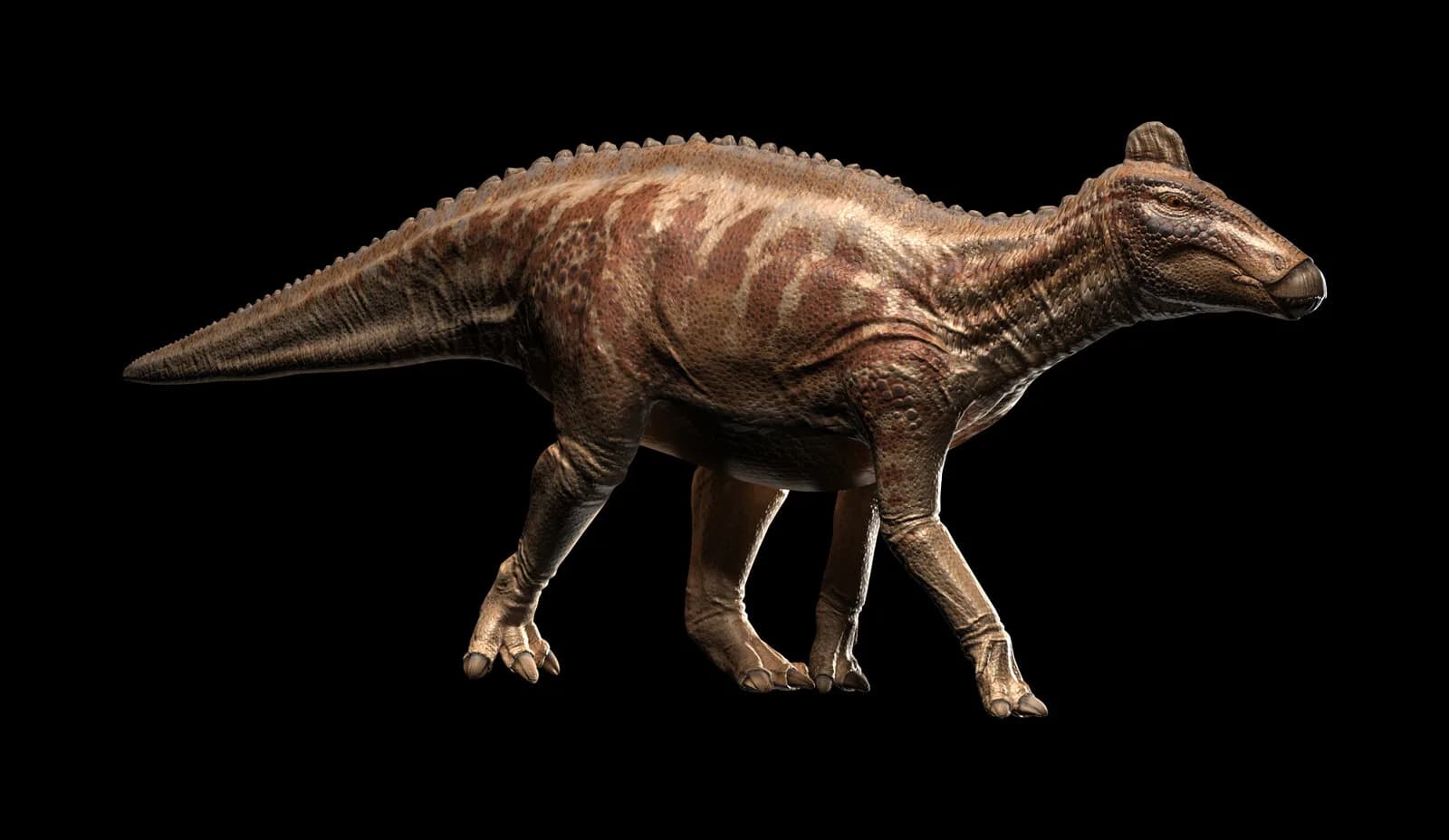
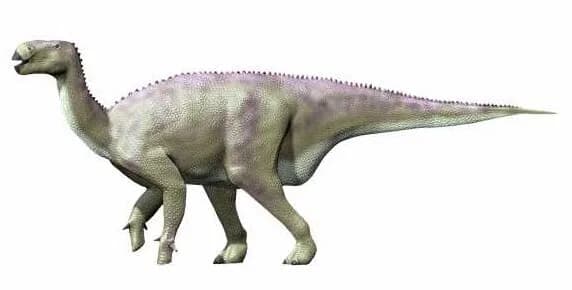
Thescelosaurus measured approximately 2.5 to 4 meters in length, with a height of about 1 to 1.2 meters at the hips and an estimated weight between 80 and 300 kilograms depending on the species. It was a modestly sized dinosaur, comparable to a large emu or a small horse. Its build was robust for an ornithopod of this size, with powerful but relatively short hindlimbs and functional forelimbs equipped with five fingers. The long, rigid tail served as a counterweight during bipedal locomotion. Its skull was small and triangular, with large eyes and a toothless beak at the front followed by small teeth in the jaws. Osteoderms (small bony plates in the skin) have been identified on some specimens, an unusual characteristic for an ornithopod.
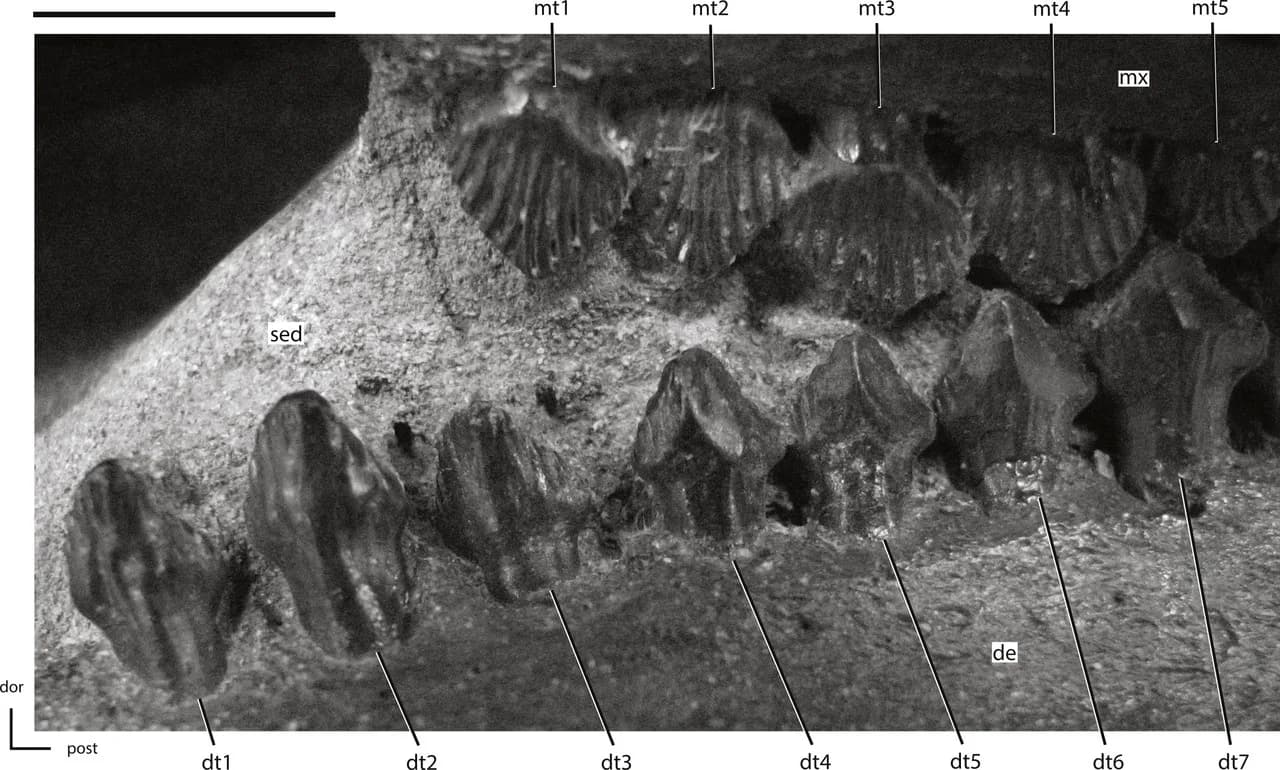
A strict herbivore, Thescelosaurus fed on the low vegetation of the Late Cretaceous, including ferns, herbaceous plants, and the rapidly diversifying angiosperms. Its horny beak at the front of the jaw could selectively pick leaves and fruits, while the small leaf-shaped teeth at the rear of the jaws provided rudimentary food grinding. Unlike hadrosaurs that possessed sophisticated dental batteries for processing large quantities of fibrous vegetation, Thescelosaurus had simpler dentition suggesting selective feeding on more tender, nutritious plant parts. Its bipedal stance and modest size allowed it to browse at varied heights, from ground level to about 1.5 meters. It probably supplemented its diet with seeds and fruits from early flowering plants.
Thescelosaurus inhabited the coastal plains and forests of western North America, in present-day Montana, South Dakota, Wyoming, Colorado, and the Canadian provinces of Alberta and Saskatchewan. The Maastrichtian environment in this region was characterized by a warm temperate climate with mixed forests of conifers and angiosperms, wetlands, and rivers feeding vast floodplains. The Hell Creek Formation and Lance Formation are the main fossil sources. Thescelosaurus coexisted with the giants of the late Cretaceous — Tyrannosaurus rex, Triceratops, Edmontosaurus, and Ankylosaurus — occupying the ecological niche of small herbivores in the understory. Its small size allowed it to take refuge in dense vegetation to escape large predators.
Thescelosaurus anatomy reveals a robust ornithopod well adapted to an active terrestrial life. Its postcranial skeleton is remarkably solid for an animal of this size, with thick, well-mineralized limb bones. The hindlimbs, longer than the forelimbs, were adapted for bipedal locomotion, although an occasional quadrupedal posture during browsing is probable. The feet possessed four functional toes. The presence of osteoderms (small dermal bone plates) along the back and flanks is a very unusual characteristic for an ornithopod, suggesting a light protective armor. The relatively small skull housed large eyes, indicating good vision probably adapted to the low-light conditions of the forest understory. The tail, long and stiffened by ossified tendons, served as a balancer during running.
Thescelosaurus was probably a solitary animal or lived in small groups, roaming the understory of late Cretaceous forests. Its survival strategy relied primarily on rapid flight, with its muscular hindlimbs allowing it to reach estimated speeds of 30-40 km/h to escape predators. Its large eyes suggest possible activity in low-light conditions, perhaps at dawn and dusk, a strategy to avoid large diurnal predators like T. rex. The osteoderms offered additional protection against small predators and flank attacks. The famous discovery of a specimen nicknamed 'Willo' with what appeared to be a fossilized heart sparked intense debate — although the interpretation as a true heart is now contested, it popularized this species with the general public.
Thescelosaurus neglectus was first described in 1913 by Charles W. Gilmore, from a specimen discovered in the Lance Formation in Wyoming. The generic name means 'wondrous lizard' and the epithet 'neglectus' (neglected) refers to the fact that the specimen had sat in an unopened crate for several years at the Smithsonian National Museum of Natural History in Washington before being studied. Since then, numerous specimens have been discovered in the Hell Creek, Lance, and Horseshoe Canyon Formations. The most famous specimen is 'Willo' (NCSM 15728), discovered in 1993 in South Dakota, which presented a structure in the thoracic cavity initially interpreted as a fossilized four-chambered heart — a world first. Although this interpretation is now contested (probably a mineral concretion), the discovery attracted considerable media attention to this species often overshadowed by its more spectacular neighbors.
| Period | Crétacé supérieur / Late Cretaceous |
| Era | Mésozoïque / Mesozoic |
| Age | 68-66 Ma |
| Location | Amérique du Nord (Montana, Dakota, Wyoming, Alberta) / North America (Montana, Dakota, Wyoming, Alberta) |
| Length | 2.5-4 m |
| Height | ~1.2 m |
| Weight | 80-300 kg |
| Diet | Herbivore |
| Discovery | 1913 |
Thescelosaurus neglectus takes its epithet from the fact that the holotype specimen, discovered in the Lance Formation of Wyoming, sat unopened in a crate at the Smithsonian National Museum of Natural History for several years before being studied. Charles W. Gilmore finally described it in 1913. The generic name means 'wondrous lizard' — a pointed contrast with its history of neglect in a storage room.
Specimen NCSM 15728, nicknamed 'Willo', discovered in 1993 in South Dakota, presented a structure in its thoracic cavity initially interpreted in 2000 as a fossilized four-chambered heart — a world first for a dinosaur. Subsequent studies reinterpreted this structure as a ferruginous mineral concretion rather than an actual organ. The controversy nonetheless popularized Thescelosaurus neglectus with the general public.
Osteoderms (small dermal bone plates) have been identified on some Thescelosaurus neglectus specimens along the back and flanks — an extremely unusual feature for an ornithopod, a group generally lacking armor. These plates provided light protection against small predators and flank attacks. The evolutionary reason for this development specific to this lineage remains an open question in paleontological research.
Thescelosaurus neglectus life reconstruction
Wikimedia Commons
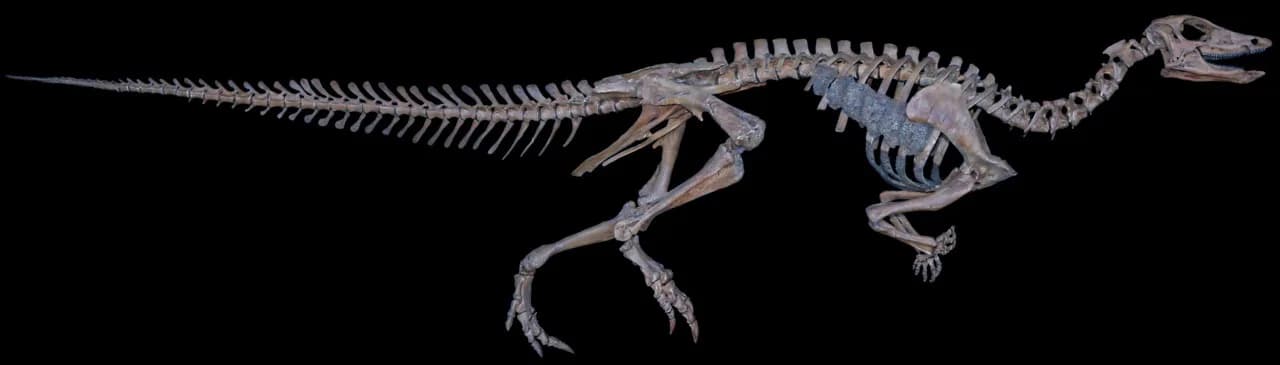
Mounted Thescelosaurus skeleton
Wikimedia Commons