Supersaure
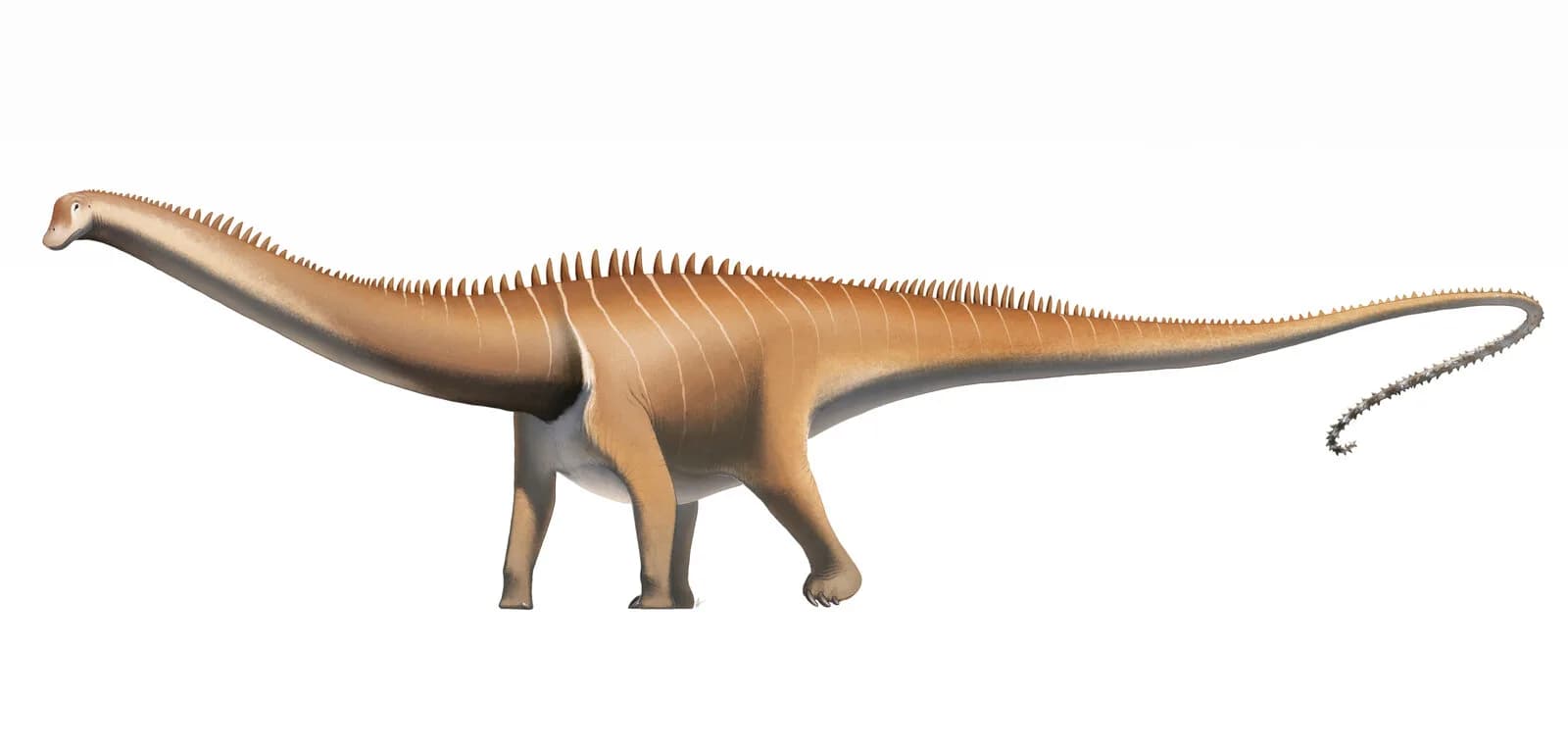
Supersaurus vivianae was a herbivorous sauropod from North America, described in 1972 from fossils in Colorado and Wyoming, around 153 million years old. At 33 to 42 metres and 35 to 40 tonnes, it ranks among the longest dinosaurs ever described — longer than a basketball court. Its whip tail could crack faster than sound.
Supersaurus lived in the Late Jurassic, approximately 153 million years ago, during the Kimmeridgian stage. It was part of the rich fauna of the Morrison Formation, famous for its exceptional deposits of giant dinosaurs in western North America. This period corresponds to the peak of diplodocoid sauropod diversity, with genera like Diplodocus, Apatosaurus, and Barosaurus coexisting in the same ecosystem. The Late Jurassic climate was warm and relatively humid, favoring lush vegetation of conifers, ginkgos, and tree ferns. Supersaurus represents one of the pinnacles of diplodocid evolution in terms of size, illustrating the race toward gigantism that characterizes this family.
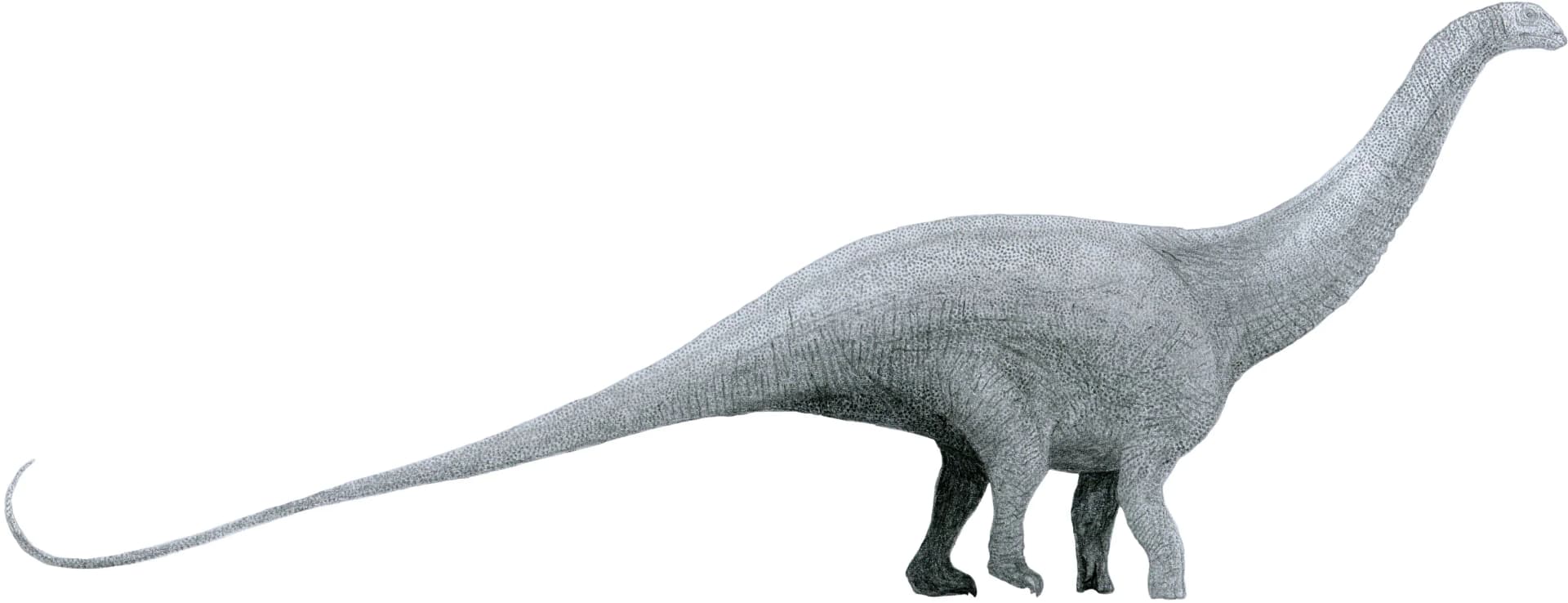
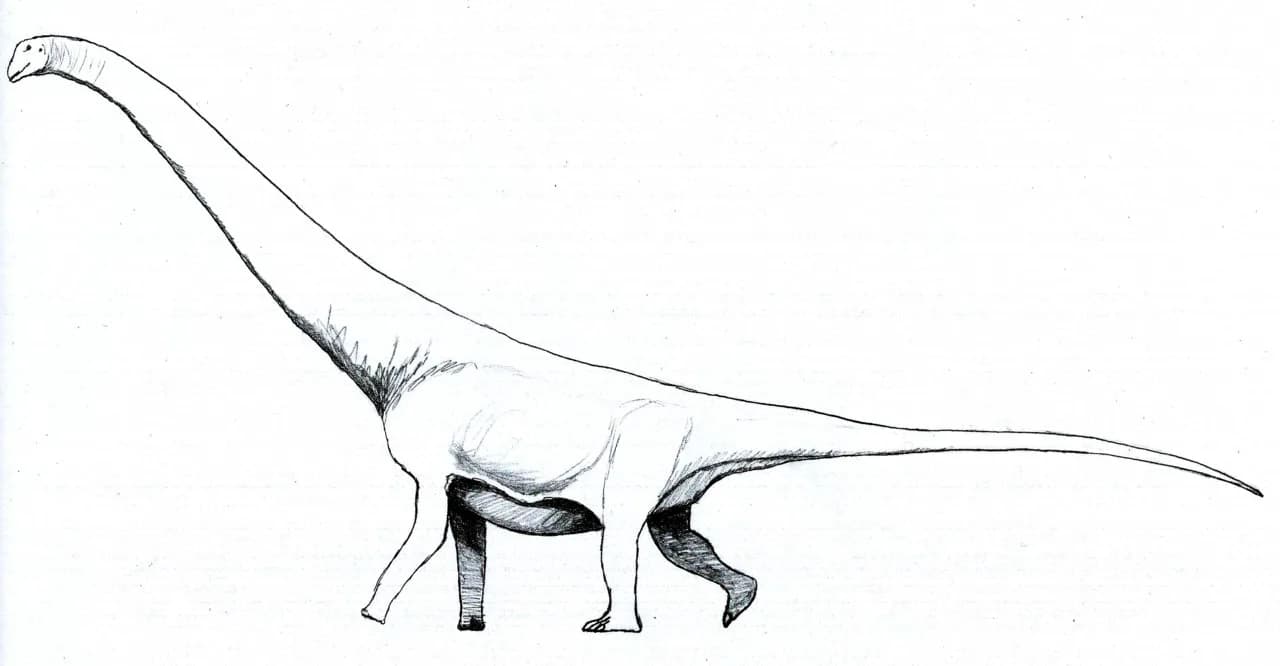
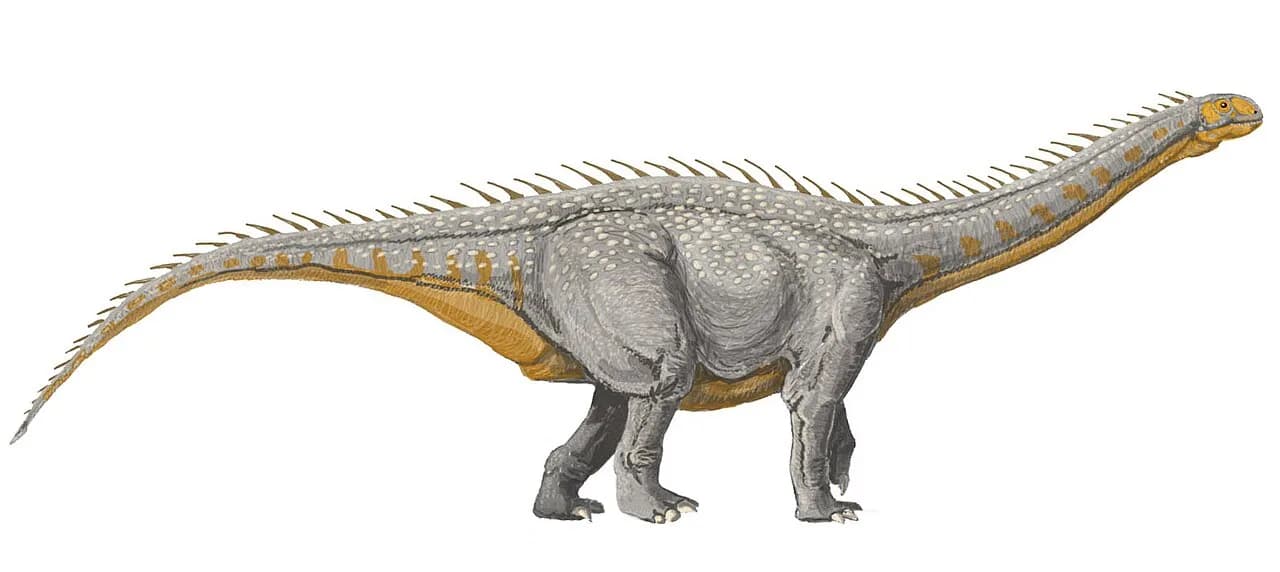
Supersaurus is one of the longest dinosaurs ever discovered, with an estimated length of 33 to 42 meters according to the most recent reconstructions. Its weight is estimated between 35 and 40 tonnes, making it an animal of considerable mass but relatively light for its length compared to titanosaurs. The majority of this extraordinary length comes from its immensely elongated neck and tail, characteristics typical of diplodocids. A single dorsal vertebra measures approximately 1.4 meters tall. Its shoulder height reached about 5 to 6 meters, and when it raised its neck, it could probably reach over 15 meters. The whip-like tail was composed of dozens of vertebrae that gradually tapered.
A strict herbivore, Supersaurus fed primarily on low to medium vegetation, unlike brachiosaurids which exploited the canopy. Its dentition, composed of pencil-shaped teeth arranged only at the front of the jaw, was adapted for stripping leaves from branches rather than chewing. Like other diplodocids, it probably used a combing motion with its teeth to strip branches of their foliage. Its extraordinarily long neck allowed it to cover a vast feeding area without moving its massive body, thus saving precious energy. It is estimated that an adult had to consume between 200 and 400 kilograms of plant matter daily to maintain its body mass.
Supersaurus inhabited the semi-arid plains and riparian zones of western North America, primarily in the Morrison Formation extending from Colorado to Wyoming. The environment was characterized by alternating dry and wet seasons, with seasonal rivers bordered by forests of conifers, ginkgos, and ferns. The main discovery site, the Dry Mesa Quarry in Colorado, was situated in an ancient riverbed where dinosaur carcasses naturally accumulated. Supersaurus coexisted with a diverse fauna including other giant sauropods like Diplodocus and Apatosaurus, as well as formidable predators like Allosaurus and Torvosaurus. The vegetation had to be sufficiently abundant to feed this assembly of giant herbivores.
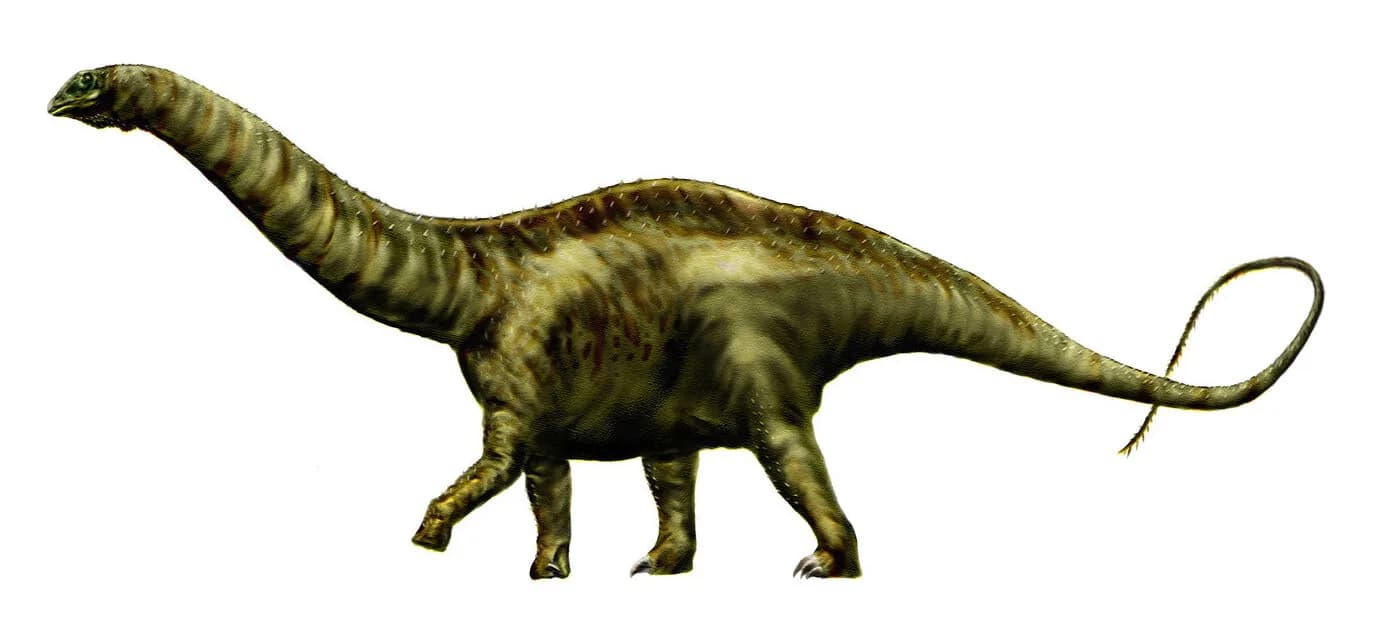
Supersaurus anatomy is typical of diplodocids but taken to the extreme in terms of dimensions. Its skull, probably similar to that of Diplodocus, was relatively small and elongated compared to its body size, with nostrils positioned upward. The cervical vertebrae were heavily pneumatized, containing internal air pockets that considerably lightened the neck weight while maintaining its structural strength. The vertebral column featured the bifurcated spinous processes characteristic of diplodocids, serving as attachment points for the powerful muscles and ligaments supporting the neck and tail. The limbs were columnar and robust, adapted to support a weight of several dozen tonnes. The tail ended in a thin whip capable of producing sonic cracks exceeding the speed of sound.
Supersaurus probably moved in small groups or loose herds, roaming the plains in search of vegetation-rich areas. Its colossal adult size rendered it virtually invulnerable to predators, even to a large Allosaurus. Juveniles, however, were vulnerable prey and probably had to stay in the center of the group to benefit from adult protection. The whip-like tail probably served both as defense against predators and as a means of communication, capable of producing sonic cracks audible from great distances. Biomechanical studies suggest a walking speed of approximately 5 to 8 km/h. The long neck allowed grazing over a wide area without moving, an energetically efficient adaptation for an animal of this size.
Supersaurus was discovered in 1972 by Vivian Jones at the Dry Mesa Quarry in Mesa County, Colorado. Paleontologist James Jensen initially described the remains in 1985, naming the species Supersaurus vivianae in honor of its discoverer. The initial discovery was confusing because bones from several giant dinosaurs were mixed at the site, including remains attributed to 'Ultrasaurus' and 'Dystylosaurus,' which were later recognized as belonging to Supersaurus or other genera. In 1996, a much more complete specimen (WDC DMJ-021, nicknamed 'Jimbo') was discovered in Wyoming by the Western Dinosaur Company, revolutionizing our understanding of this animal. This specimen, approximately 30% complete, confirmed that Supersaurus was indeed a giant diplodocid and not a brachiosaurid as Jensen had initially suggested.
| Period | Jurassique supérieur / Late Jurassic |
| Era | Mésozoïque / Mesozoic |
| Age | ~153 Ma |
| Location | Amérique du Nord (Colorado, Wyoming) / North America (Colorado, Wyoming) |
| Length | 33-42 m |
| Height | ~5-6 m |
| Weight | 35-40 tonnes |
| Diet | Herbivore |
| Discovery | 1972 |
Supersaurus vivianae is estimated at 33-42 meters long and 35-40 tonnes, making it one of the longest dinosaurs ever discovered. Unlike Diplodocus (25-27 m), Supersaurus reached extreme dimensions while sharing the same diplodocid body plan: hyper-elongated neck and tail, small skull, pencil-shaped teeth. Both coexisted in the Morrison Formation during the Late Jurassic (around 153 Ma).
Supersaurus vivianae was discovered in 1972 by Vivian Jones at the Dry Mesa Quarry in Mesa County, Colorado. Paleontologist James Jensen described the remains in 1985 and named the species in the discoverer's honor. The initial find was complex because bones from several giants were mixed at the site. A second specimen (WDC DMJ-021, nicknamed 'Jimbo') found in Wyoming in 1996 confirmed it was a giant diplodocid.
Biomechanical studies modeled that the whip-like tail of diplodocids like Supersaurus vivianae could, when rapidly deployed, crack its thin tip at speeds exceeding 340 m/s (the speed of sound), producing a sonic crack. This hypothesis remains debated — some researchers argue biomechanical constraints limited actual speed — but remains one of the most plausible explanations for the defensive and communicative use of the tail.
Supersaurus vivianae life reconstruction
Wikimedia Commons
Mounted Supersaurus skeleton at museum
Wikimedia Commons