Siats
Siats meekerorum fills a thirty-million-year gap in the North American fossil record: between the large carcharodontosaurids and the rise of the tyrannosaurs, no one knew who ruled. Nine to 12 metres long and 4 to 6 tonnes, found in Utah, it hunted around 98 million years ago. Its name comes from a cannibal monster in Ute mythology.
Siats lived during the Late Cretaceous period, approximately 98 million years ago, during the Cenomanian stage. This period corresponds to a pivotal time in the evolution of North American ecosystems, preceding tyrannosaur dominance. Siats is one of the last known large carcharodontosaurids in North America, a group that dominated before the rise of tyrannosaurids. Its existence fills a 30-million-year gap in the fossil record of large North American theropods, between Acrocanthosaurus (about 110 Ma) and the first large tyrannosaurids (about 80 Ma). The Cenomanian climate in North America was warm and humid, with high sea levels that flooded much of the continent's interior.
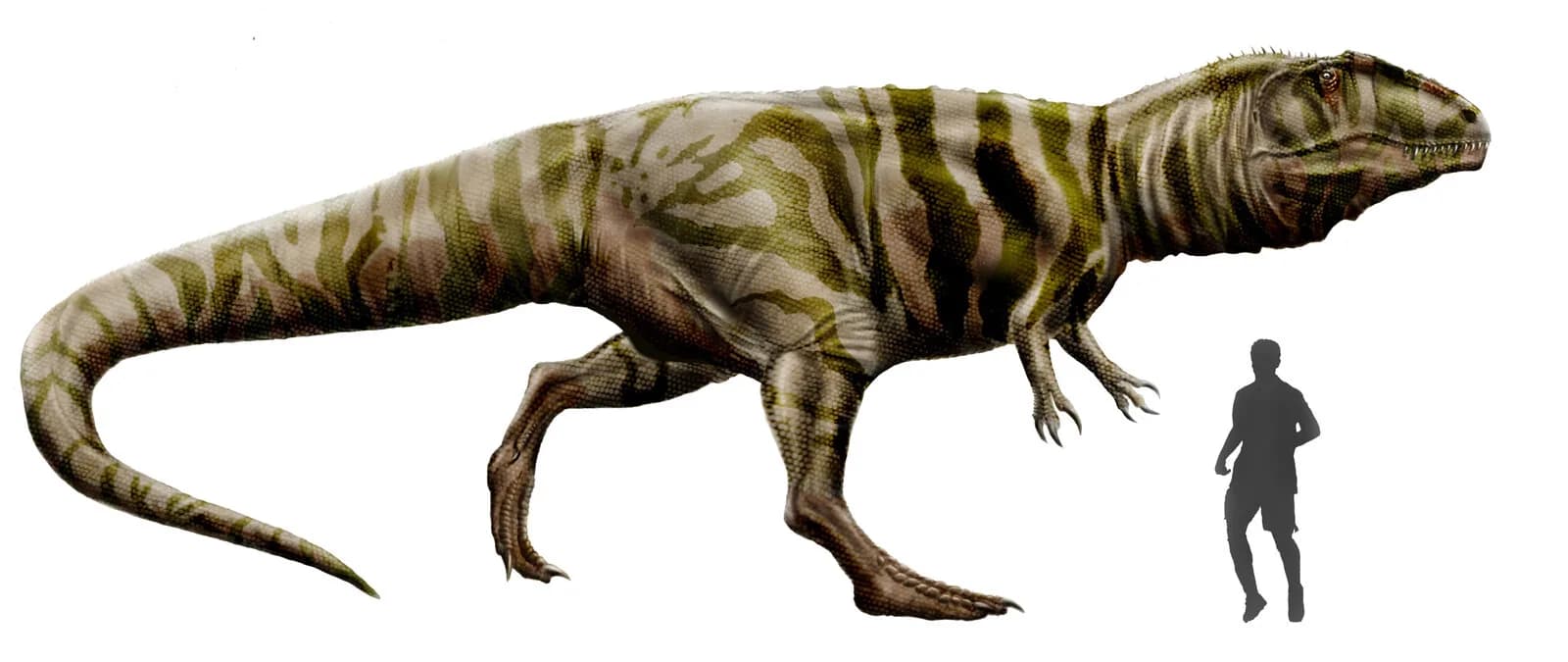
Siats was a massive theropod, estimated at approximately 9 to 12 meters in length and weighing between 4 and 6 tonnes, making it one of the largest terrestrial predators of its time in North America. The holotype individual is considered a subadult, meaning that adults could have been even larger. Its hip height was estimated at approximately 3 meters. These dimensions place it among the largest theropods to have lived in North America, rivaling Acrocanthosaurus and the later largest tyrannosaurs. Its skull, though poorly preserved, was probably long and narrow like that of other carcharodontosaurids, adapted for slashing bites.
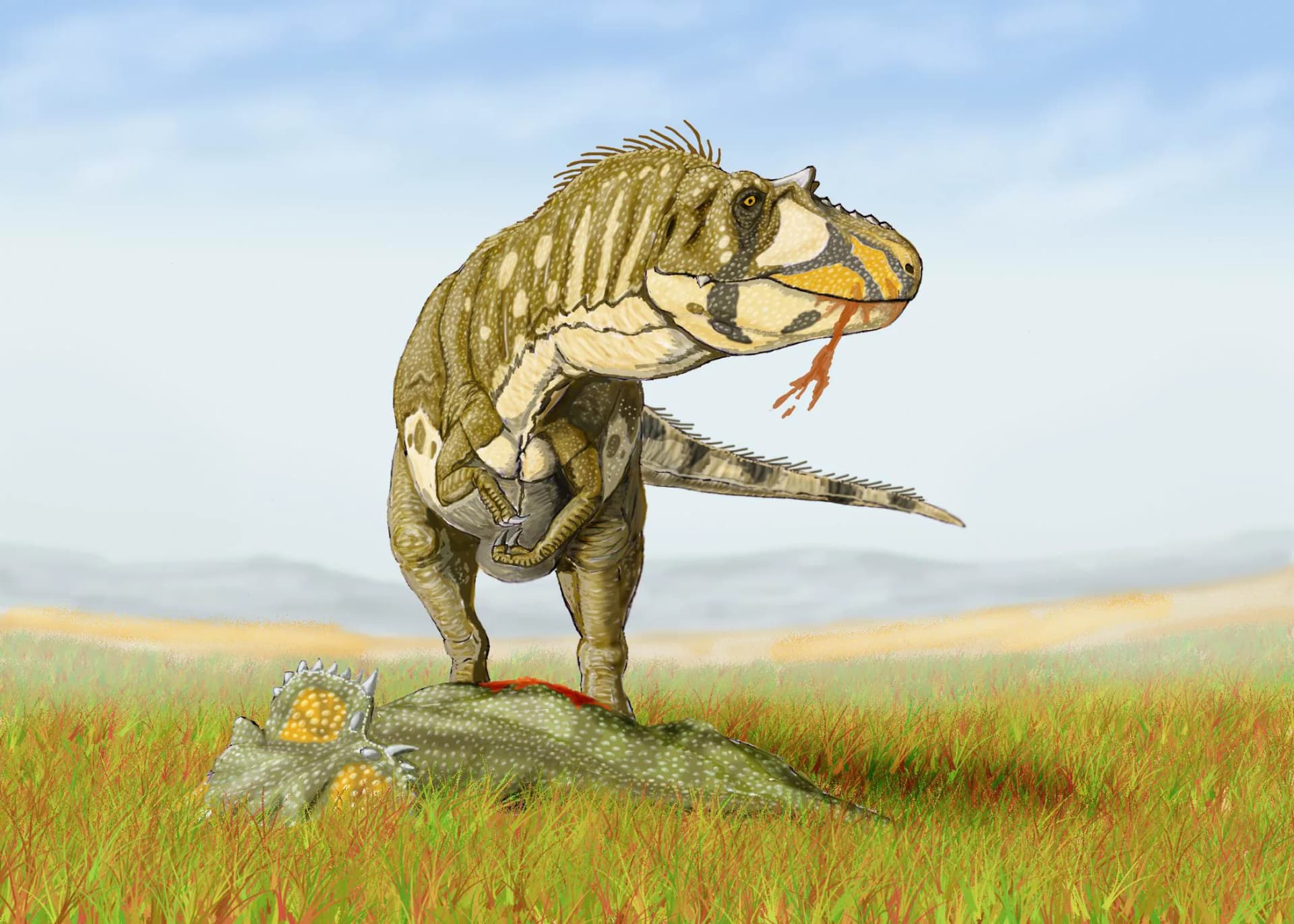
Siats was a carnivorous apex predator sitting atop the food chain of its ecosystem. Its sharp teeth, typical of carcharodontosaurids, were adapted for slicing flesh rather than crushing bones, unlike tyrannosaurs. It likely hunted the large herbivores of its environment, including sauropods and ornithopods. Its apex predator position means it likely had no natural predators as an adult. The young tyrannosaurs coexisting with Siats were relegated to the role of medium-sized mesopredators, a situation that would change radically after the extinction of North American carcharodontosaurids, allowing tyrannosaurs to fill the apex predator niche.
Siats inhabited the alluvial plains and coastal environments of the Western Interior Seaway of western North America, in what is now Utah. The Cedar Mountain Formation, where its fossils were discovered, represents an environment of flood plains traversed by rivers and deltas. The climate was tropical to subtropical, significantly warmer than today, with high sea levels that divided North America into two landmasses. Vegetation was dominated by conifers, tree ferns, and early angiosperms. The ecosystem included a diverse fauna of dinosaurs, crocodilians, and primitive mammals sharing this warm and productive environment.
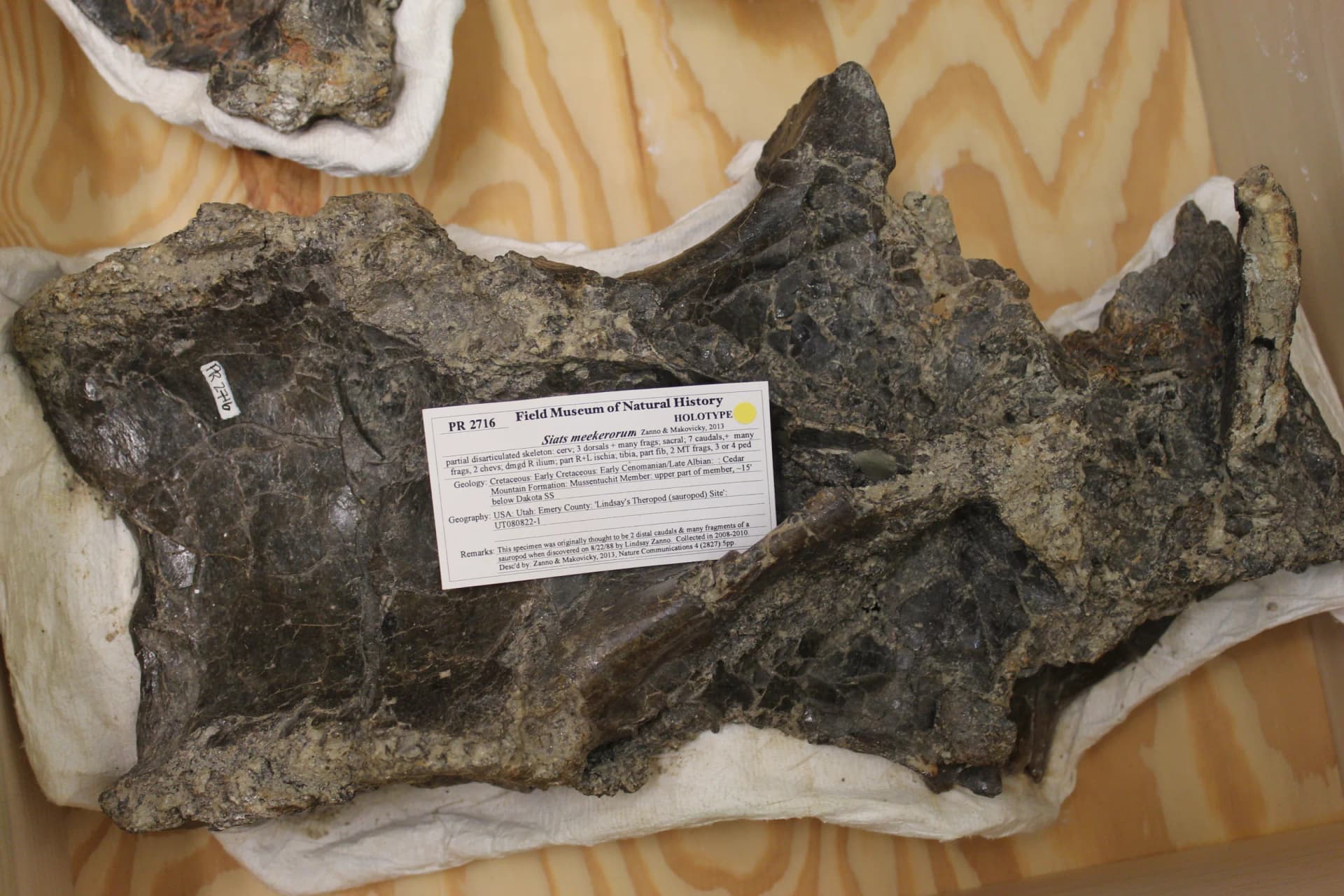
Siats anatomy is known primarily from postcranial elements, including vertebrae, hindlimb bones (tibia, fibula, metatarsals), and pelvic fragments. The material shows a robustly built animal with relatively gracile proportions for its size, characteristic of carcharodontosaurids. The caudal vertebrae are large and strongly pneumatized, which reduced the animal's weight. The tibia displays diagnostic features distinguishing it from contemporary tyrannosaurs. By comparison with close relatives like Giganotosaurus and Carcharodontosaurus, Siats likely possessed longer and more functional arms than tyrannosaurs, with three clawed fingers capable of grasping prey during attacks.
Siats behavior is inferred from its ecological position and comparison with its close carcharodontosaurid relatives. As an apex predator, it dominated an ecosystem where tyrannosaurs were still only modest-sized predators. This ecological dominance explains why tyrannosaurs only reached giant sizes after the extinction of carcharodontosaurids in North America. Siats probably hunted alone, using its imposing size and relative speed to capture large prey. Growth marks on its bones indicate rapid growth during the early years of life, similar to other large theropods. Its name comes from a cannibalistic monster in Ute mythology, reflecting the fearsome nature of this apex predator.
Siats was described in 2013 by Lindsay Zanno and Peter Makovicky of the Field Museum in Chicago, a major discovery that filled a significant gap in the North American fossil record. The holotype (FMNH PR 2716) was discovered in the Mussentuchit Member of the Cedar Mountain Formation, in Emery County, Utah, United States. The discovery site is located in the badlands of the Colorado Plateau, a region rich in Cretaceous fossils. Although the material is fragmentary, it is sufficiently diagnostic to establish a new genus and species. The generic name Siats comes from a mythological creature of the Ute people, a man-eating monster, while the specific name meekerorum honors the Meeker family, philanthropists who supported paleontological research. The discovery of Siats fundamentally changed understanding of the transition between carcharodontosaurids and tyrannosaurs in North America.
| Period | Crétacé supérieur / Late Cretaceous |
| Era | Mésozoïque / Mesozoic |
| Age | ~98 millions d'années / ~98 million years ago |
| Location | Utah, États-Unis / Utah, United States |
| Length | 9-12 m |
| Height | ~3 m |
| Weight | ~4-6 tonnes |
| Diet | Carnivore |
| Discovery | 2008 |
Siats meekerorum, described in 2013 by Lindsay Zanno and Peter Makovicky, filled a 30-million-year gap in the North American large theropod fossil record. Between Acrocanthosaurus (about 110 Ma) and the first large tyrannosaurids (about 80 Ma), no large apex predator was known. Siats, living ~98 Ma ago in Utah, proves that carcharodontosaurids still dominated North America at that time.
Siats meekerorum is estimated at 9 to 12 meters long weighing 4 to 6 tonnes. The holotype (FMNH PR 2716) is considered a subadult based on bone growth marks, meaning fully grown adults could have reached even greater dimensions. Hip height is estimated at about 3 meters, comparable to the large tyrannosaurs that would dominate the continent 20 million years later.
Siats meekerorum belonged to the carcharodontosaurids, which occupied the apex predator niche in North America. As long as these giants dominated, the tyrannosaurs coexisting with them — such as species found in the same Cedar Mountain deposits — remained modest-sized mesopredators. Only after the disappearance of North American carcharodontosaurids could tyrannosaurs evolve to giant sizes, filling the vacated ecological niche.
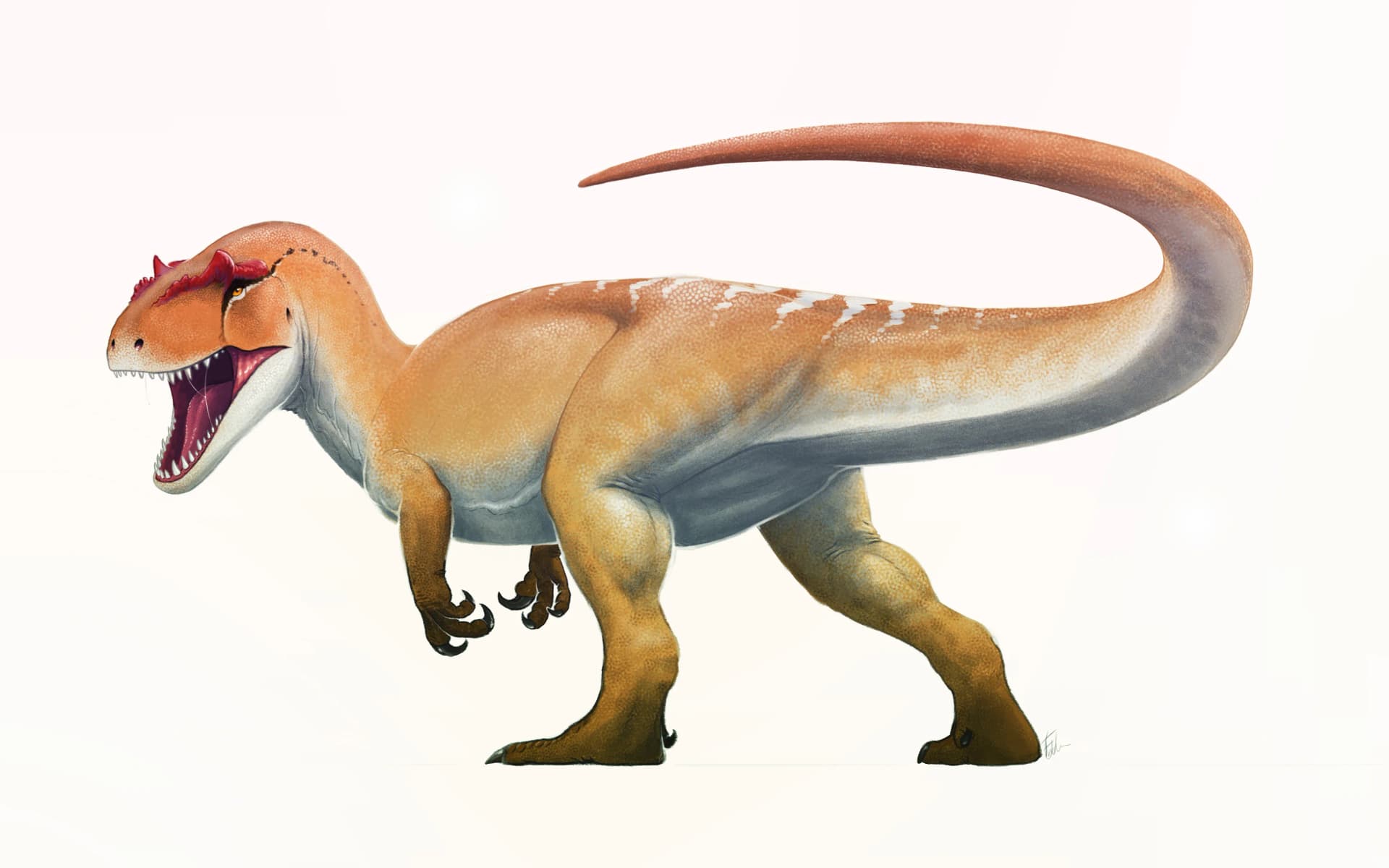
Reconstruction of Siats meekerorum
Wikimedia Commons
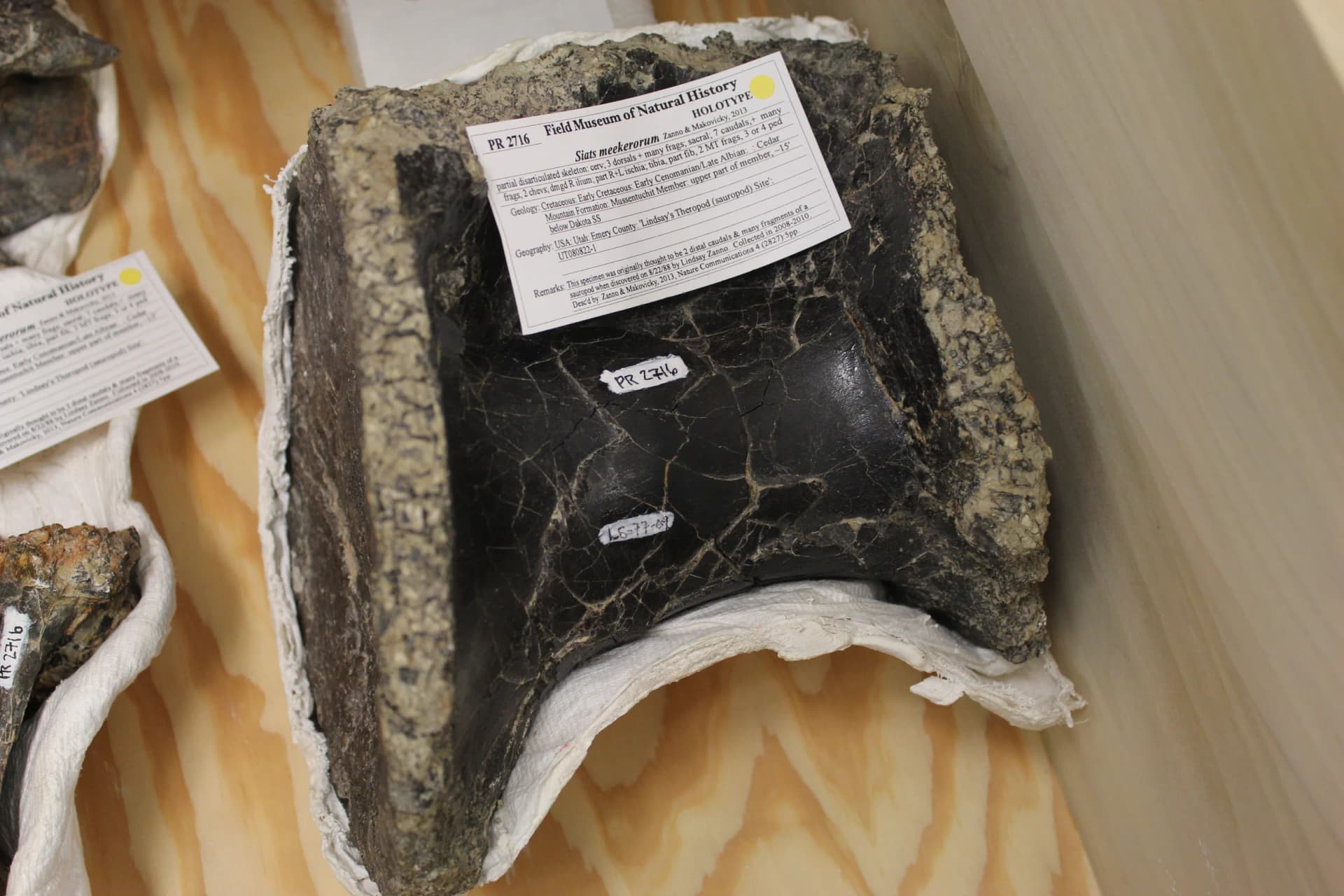
Partial skeleton of Siats
Wikimedia Commons