Seymouria
Seymouria baylorensis looks like a reptile and walked like a reptile, but bred like an amphibian: gilled larvae have been assigned to it in Europe, evidence of laying in water. Around sixty centimetres long and 2 to 5 kilograms, described in 1939, it lived 290 to 272 million years ago in Texas and central Europe.
Seymouria baylorensis lived during the Early Permian (Cisuralian), approximately 290 to 272 million years ago. This reptiliomorph is a perfect example of a transitional form between amphibians and reptiles, although it appeared too late to be the direct ancestor of reptiles (which already existed in the Carboniferous). Seymouria belongs to Seymouriamorpha, a group of basal tetrapods that possessed a noteworthy mix of amphibian and reptilian characteristics. It lived in the same ecosystems as Dimetrodon, sharing the Permian floodplains of Texas.
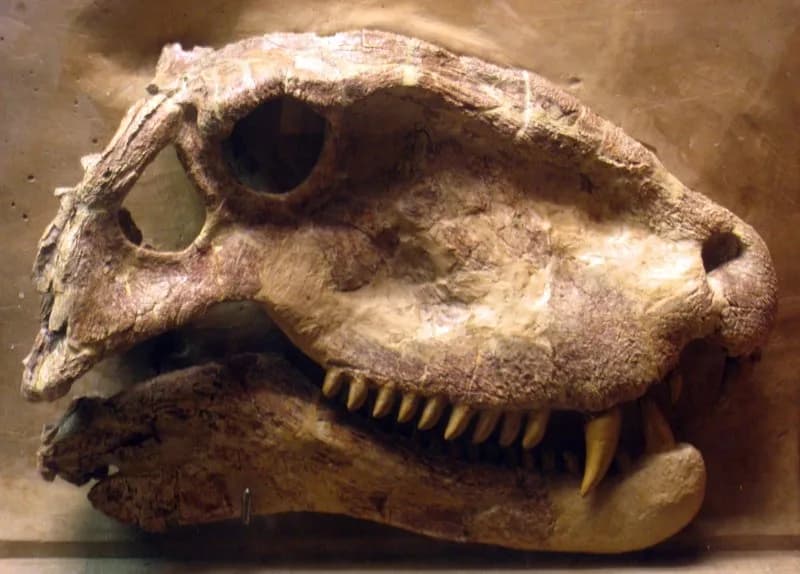
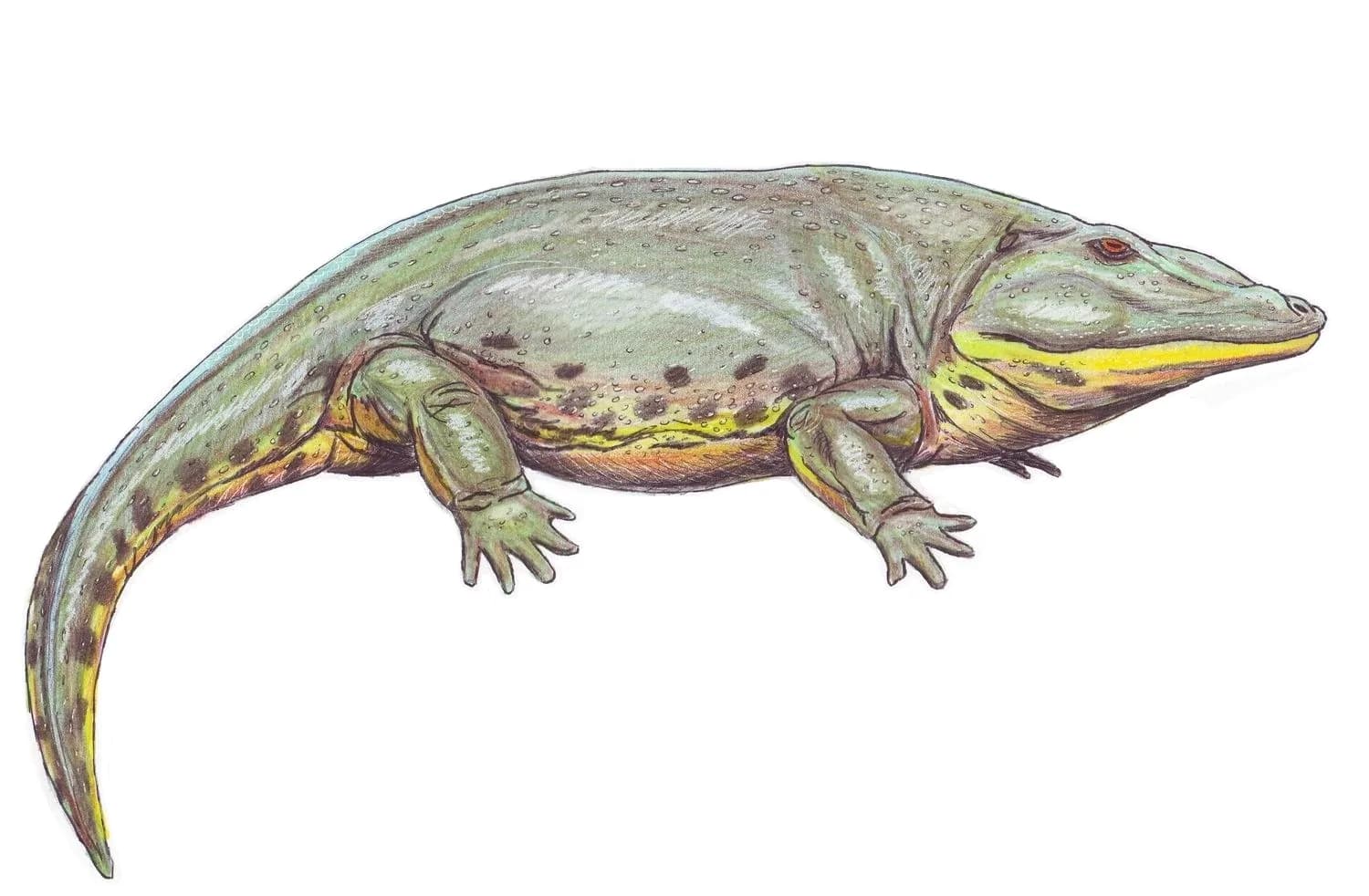
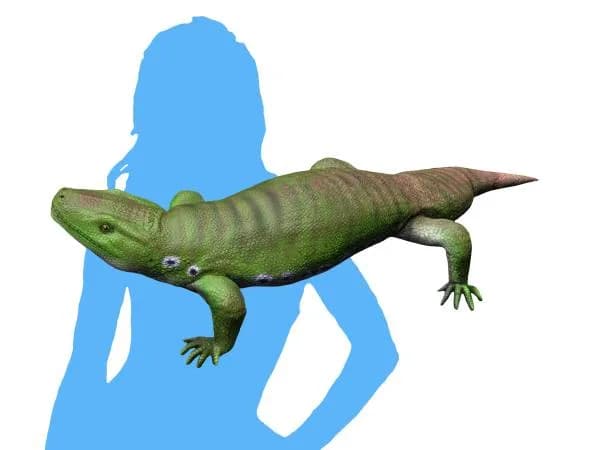
Seymouria baylorensis measured approximately 60 centimeters in total length, making it a modestly sized animal comparable to a large modern lizard. Its body was compact and robust, carried on four well-developed limbs in a semi-erect posture. The skull measured about 8 to 10 centimeters long, solid and triangular. Its limbs were proportionally longer and more robust than those of similarly sized amphibians, indicating efficient terrestrial locomotion. Estimated weight was approximately 2 to 5 kilograms.
Seymouria was a terrestrial carnivore-insectivore that fed primarily on insects, spiders, small amphibians, and other terrestrial invertebrates on the Permian plains. Its robust dentition with pointed conical teeth was adapted for capturing and crushing hard-shelled prey such as insects and arthropods. Its efficient terrestrial posture allowed it to actively hunt prey on the ground, unlike more primitive amphibians limited to aquatic environments. It occupied the ecological niche of a small generalist terrestrial predator.
Seymouria inhabited the semi-arid alluvial plains of the Early Permian in what is now central Texas. Fossils come primarily from the Permian 'red beds' in the Seymour area (Baylor County), the same geological formations that yielded Dimetrodon and Eryops. The climate was seasonal with wet and dry periods. Seymouria was more terrestrial than most amphibians of its time but likely returned to water to reproduce. Fossils of aquatic larvae with external gills have been discovered in Europe, confirming an amphibian life cycle.
Seymouria's anatomy is a remarkable mix of amphibian and reptilian characters. Its skull possessed a solidly ossified cranial roof with a well-developed otic (tympanic) notch, suggesting aerial hearing. The vertebrae were gastrocentrous — an advanced trait toward the reptilian condition. Limbs were robust with well-formed joints allowing efficient terrestrial locomotion. However, amphibian characters persisted: juvenile lateral line sensory grooves and, crucially, the discovery of larvae with external gills prove that reproduction involved an aquatic stage.
Seymouria was probably a semi-terrestrial animal that spent most of its adult life on land but returned to water to lay its eggs. Its aquatic larvae, equipped with external gills, grew in ponds and streams before metamorphosing into terrestrial adults — a life cycle similar to modern salamanders. Adults were diurnal and active, hunting invertebrates on the ground. Their semi-erect posture allowed faster and more energy-efficient movement than amphibians with more sprawling postures. The presence of many specimens in the same deposits suggests possibly gregarious behavior.
Seymouria was first described in 1939 by White from fossils discovered near the town of Seymour in Baylor County, Texas — hence both genus and species names. The Permian 'red beds' of this region have yielded numerous complete specimens, making Seymouria one of the best-known reptiliomorphs. In 1990, a crucial discovery was made in Germany and the Czech Republic: fossil larvae of Discosauriscus, a close seymouriamorph, possessing clearly preserved external gills. This discovery definitively proved that these animals, despite their reptilian appearance, still had an amphibian life cycle with aquatic larvae.
| Period | Permien inférieur / Early Permian |
| Era | Paléozoïque / Paleozoic |
| Age | 290-272 Ma |
| Location | États-Unis (Texas), Europe (Allemagne, République tchèque) / USA (Texas), Europe (Germany, Czech Republic) |
| Length | ~60 cm |
| Height | ~15 cm |
| Weight | 2-5 kg (estimé / estimated) |
| Diet | Insectivore / Carnivore |
| Discovery | 1939 |
Seymouria baylorensis was a reptiliomorph — neither a reptile nor an amphibian in the strict sense, but a basal tetrapod of the Seymouriamorpha group positioned at the evolutionary junction between the two. Despite its adult anatomy resembling reptiles (gastrocentrous vertebrae, semi-erect posture, developed aerial hearing), the discovery of its aquatic larvae with external gills in Europe proved it reproduced like an amphibian.
Seymouria baylorensis measured approximately 60 centimeters long with an estimated weight of 2 to 5 kilograms — comparable to a large modern lizard. It inhabited the semi-arid alluvial plains of the Early Permian (290–272 Ma) in Texas, in the same 'red bed' geological formations as Dimetrodon and Eryops. Adults lived primarily on land and returned to water only to reproduce.
In 1990, fossil larvae of Discosauriscus — a seymouriamorph closely related to Seymouria baylorensis — were discovered in Germany and the Czech Republic. These larvae clearly preserved external gills, definitively proving that these animals had an amphibian life cycle with an aquatic larval stage, despite their adult reptilian appearance. This discovery was critical for understanding their phylogenetic classification.
Seymouria baylorensis life reconstruction
Wikimedia Commons