Sauroposéidon
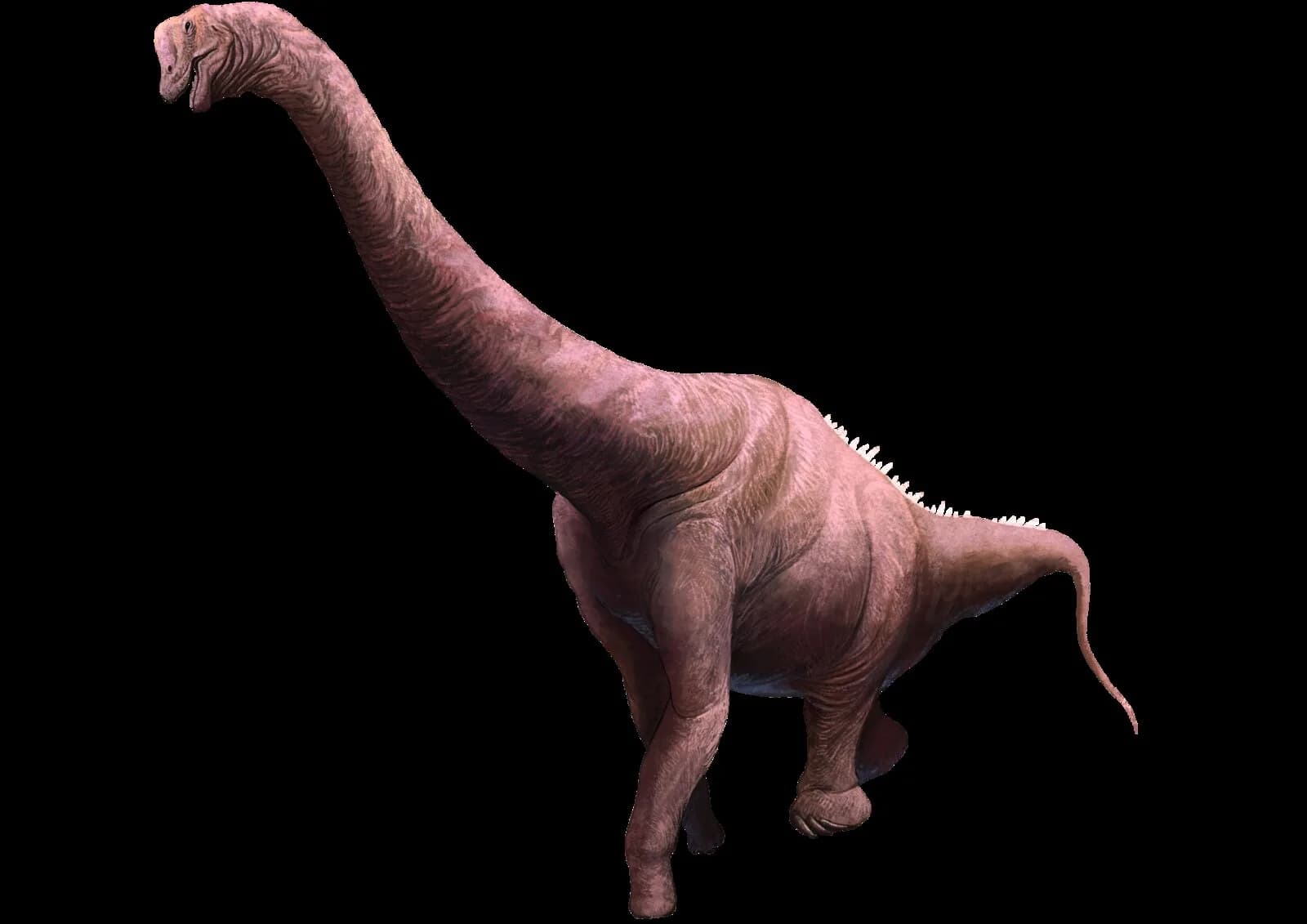
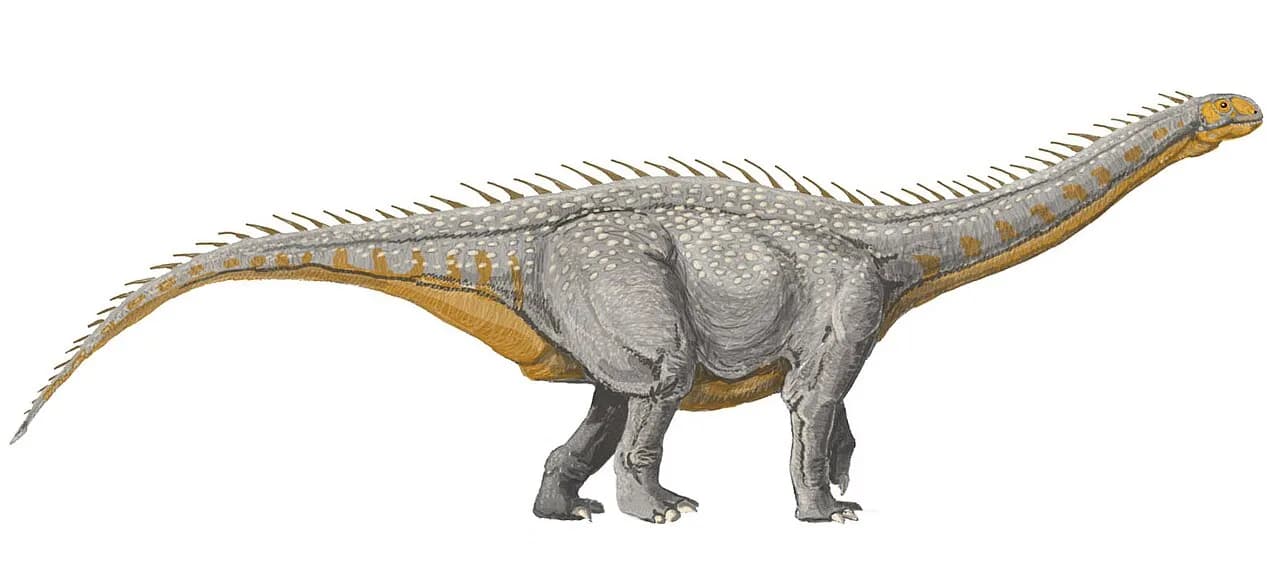
Sauroposeidon proteles could raise its head 18 metres off the ground, the height of a six-storey building. Its neck vertebrae were so large that they were first taken for fossilised tree trunks. Twenty-seven to 34 metres long and 40 to 60 tonnes, described in 1994 in Oklahoma and Texas, it lived around 112 million years ago.
Sauroposeidon lived in the Early Cretaceous, approximately 112 million years ago, during the Albian stage. This period corresponds to a time when North America was still partially divided by the Western Interior Seaway, which was beginning to expand. The climate was warm and humid, with dense forests of conifers and tree ferns. Sauroposeidon is one of the last great North American sauropods, representing the end of a lineage that had dominated terrestrial ecosystems during the Jurassic. It belongs to the family Somphospondyli, a group of titanosauriforms that includes some of the largest dinosaurs ever to have existed. Its existence proves that giant sauropods persisted in North America long after the apparent decline of this lineage on the continent.
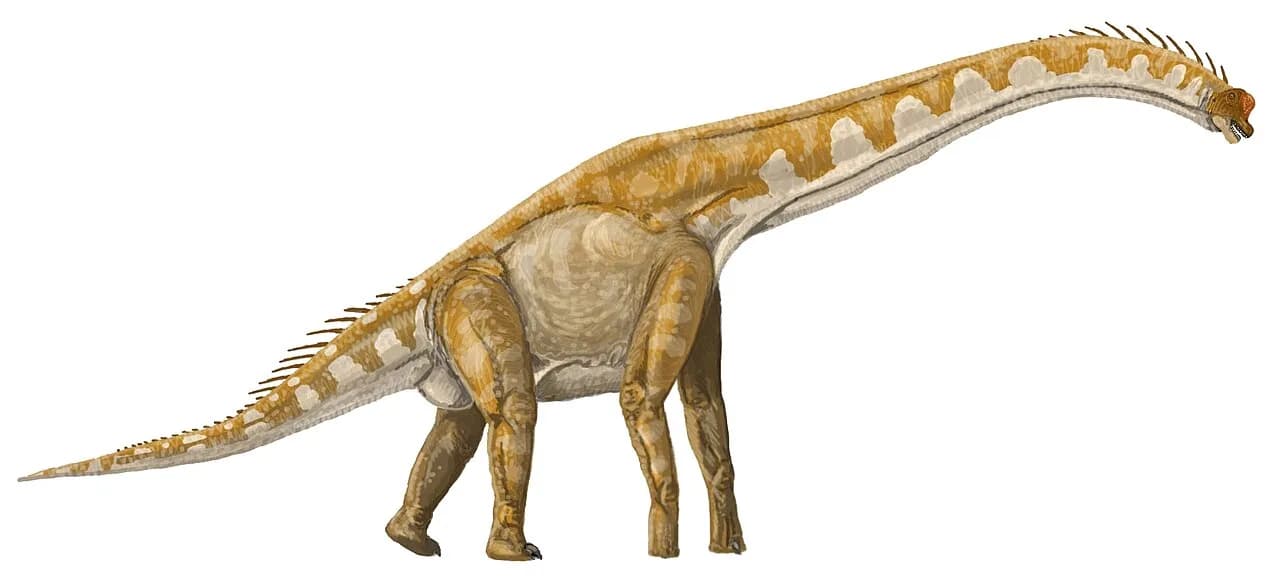
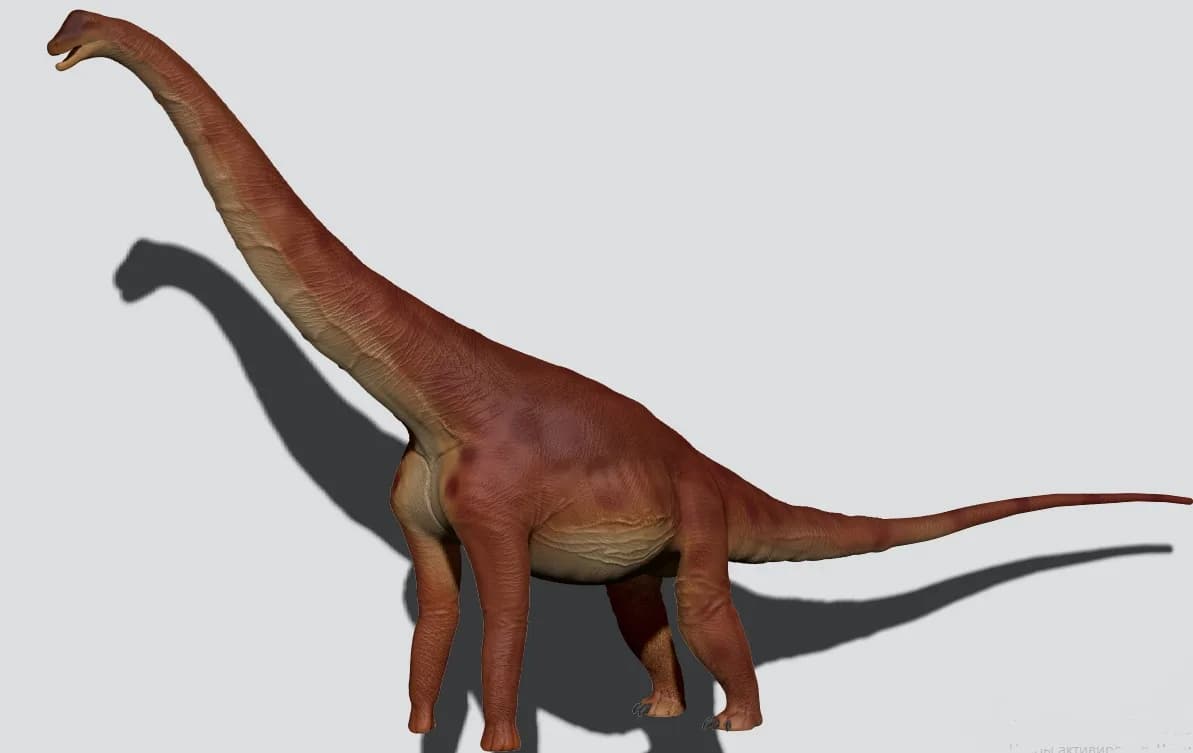
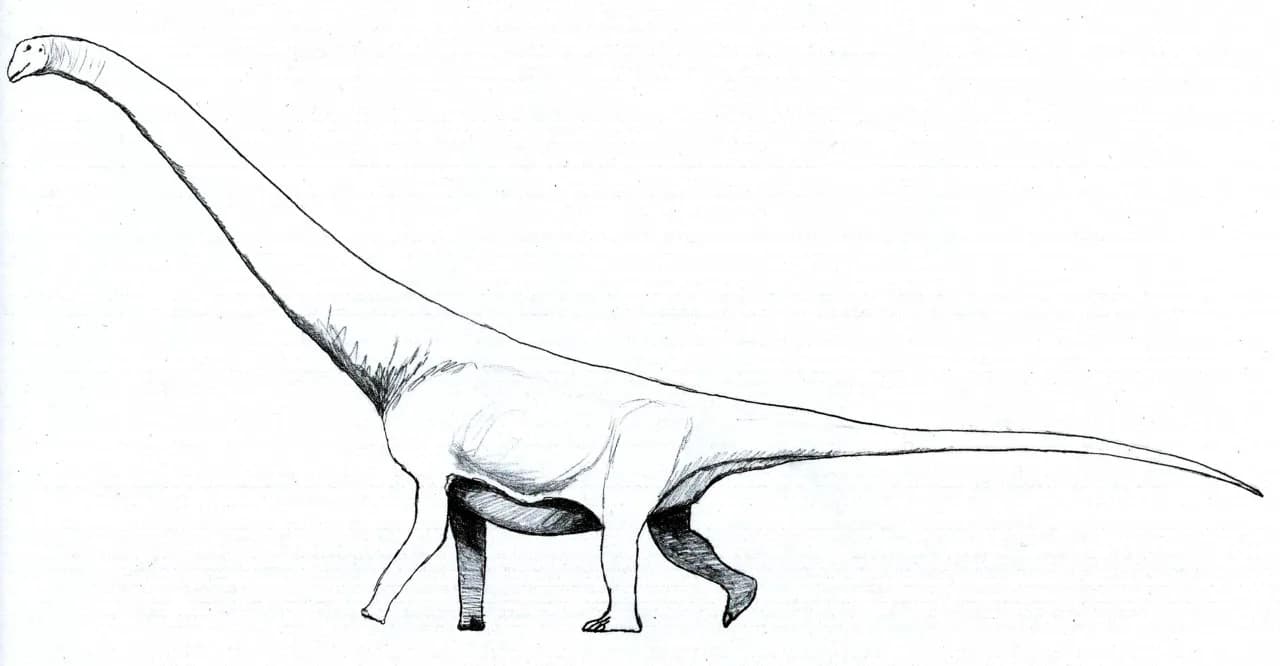
Sauroposeidon was one of the largest dinosaurs ever to have existed, with an estimated length of 27 to 34 meters and a height that could reach 18 meters when it raised its neck vertically — the equivalent of a six-story building. Its weight is estimated between 40 and 60 tonnes, making it one of the most massive land animals of all time. Its cervical vertebrae are among the longest ever discovered in a dinosaur: a single vertebra measures approximately 1.4 meters long. The entire neck must have measured between 11 and 12 meters, giving it an exceptional feeding reach. Compared to Brachiosaurus, from which it likely descended, Sauroposeidon was about 20% longer and significantly taller.
A strict herbivore, Sauroposeidon fed on the canopy of Early Cretaceous conifer forests, exploiting a dietary niche inaccessible to any other herbivore of its time. Thanks to its extraordinarily long neck, it could reach foliage situated more than 15 meters above the ground, a height that even the tallest modern giraffes could never approach. Its dentition, typical of brachiosaurids, was composed of spatulate teeth adapted for stripping leaves and conifer needles. It is estimated that an adult had to consume between 200 and 500 kilograms of plant matter per day to maintain its colossal body mass. The digestive system must have been immense, with prolonged bacterial fermentation to extract nutrients from tough plant fibers.
Sauroposeidon inhabited the coastal plains and river deltas of southern North America, in what today corresponds to Oklahoma and Texas. The Early Cretaceous environment in this region was characterized by a warm, humid subtropical climate, with dense forests of conifers, tree ferns, and primitive angiosperms lining sinuous waterways. The Antlers Formation in Oklahoma, where the holotype was discovered, represents an ancient deltaic environment with rich fluvial sediments. Remains attributed to Sauroposeidon have also been found in Texas in the Twin Mountains Formation and in Wyoming. This swampy, forested habitat offered abundant vegetation capable of supporting these giant herbivores.
Sauroposeidon's anatomy is remarkable for the extreme pneumatization of its cervical vertebrae. Each vertebra contained vast internal air pockets that significantly reduced neck weight — up to 60% of bone mass was replaced by air, a system similar to the air sacs of modern birds. Without this adaptation, the neck would have been far too heavy to lift. The internal structure of the vertebrae features a complex network of bony trabeculae that maintained structural strength despite the mass reduction. The forelimbs were longer than the hindlimbs, as in Brachiosaurus, giving the body a rearward-sloping posture that naturally oriented the neck upward. The heart must have been extraordinarily powerful to pump blood to the brain situated nearly 18 meters above the ground.
Sauroposeidon was probably a relatively solitary animal or lived in small family groups, roaming the coastal forests in search of rich feeding areas with tall vegetation. Its colossal adult size rendered it virtually invulnerable to predators, though juveniles and elderly or sick individuals remained potential targets for the large theropods of the time such as Acrocanthosaurus. Biomechanical studies suggest that Sauroposeidon could not move quickly, with its maximum speed estimated between 5 and 10 km/h. Growth must have been rapid during the first years of life to reduce the period of vulnerability to predators. Adults probably spent the majority of their day feeding to satisfy their immense caloric needs.
Sauroposeidon was discovered in 1994 in Atoka County, Oklahoma, by Dr. Richard Cifelli and his team from the Oklahoma Museum of Natural History. The holotype (OMNH 53062) consists of four exceptionally well-preserved articulated cervical vertebrae discovered in the Antlers Formation dating to the Albian. Initially, the fossils were mistaken for fossilized tree trunks due to their extraordinary size. It was not until 1999 that Matt Wedel and colleagues identified these remains as belonging to a giant sauropod, publishing the official description in 2000. The name Sauroposeidon means 'earthquake god lizard,' a reference to the Greek god Poseidon due to the tremors its footsteps must have caused. Additional remains have been found in Texas and Wyoming since the original discovery.
| Period | Crétacé inférieur / Early Cretaceous |
| Era | Mésozoïque / Mesozoic |
| Age | ~112 Ma |
| Location | Amérique du Nord (Oklahoma, Texas) / North America (Oklahoma, Texas) |
| Length | 27-34 m |
| Height | ~18 m |
| Weight | 40-60 tonnes |
| Diet | Herbivore |
| Discovery | 1994 |
Sauroposeidon proteles is estimated at 27 to 34 meters long with a weight of 40 to 60 tonnes. Its neck measured 11 to 12 meters and could rise to about 18 meters above ground. Each cervical vertebra measured up to 1.4 meters long and contained internal air pockets reducing bone weight by nearly 60 percent, analogous to modern bird air sacs, making the enormous neck liftable despite its dimensions.
Sauroposeidon proteles was discovered in 1994 in Atoka County, Oklahoma, by Dr. Richard Cifelli. The four articulated cervical vertebrae of the holotype (OMNH 53062) were initially mistaken for fossilized tree trunks due to their extraordinary size. It was not until 1999 that Matt Wedel and colleagues identified them as belonging to a giant sauropod, publishing the official description in 2000 in the Journal of Vertebrate Paleontology.
Sauroposeidon proteles ranks among the largest known dinosaurs, but the title of heaviest likely belongs to Patagotitan mayorum (roughly 70 tonnes) or Argentinosaurus (estimated up to 80 tonnes). Sauroposeidon was most notable for its exceptional height — about 18 meters — making it probably the tallest land animal of all time, surpassing every other Early Cretaceous North American herbivore in vertical reach.
Sauroposeidon proteles life reconstruction
Wikimedia Commons
Sauroposeidon holotype cervical vertebrae
Wikimedia Commons