Alamosaure
Alamosaurus sanjuanensis was a herbivorous sauropod from New Mexico and Texas, described in 1922 and dated to around 69 million years ago. At 21 to 30 metres and 30 to 80 tonnes, it may be the largest animal ever to live in North America. Its name comes not from the Alamo battle but from a geological formation; it lived alongside Tyrannosaurus rex.
Alamosaurus lived during the Late Cretaceous period, approximately 69 to 66 million years ago, during the Maastrichtian stage, in what is now the southwestern United States. It is one of the very last sauropods to have walked on North American soil before the mass extinction at the end of the Cretaceous. After a 30-million-year absence of sauropods in North America, Alamosaurus represents a spectacular return of these giants, probably through migration from South America via a temporary land bridge. It coexisted with Tyrannosaurus rex and Triceratops in the final Cretaceous ecosystems, just before the Chicxulub asteroid impact.
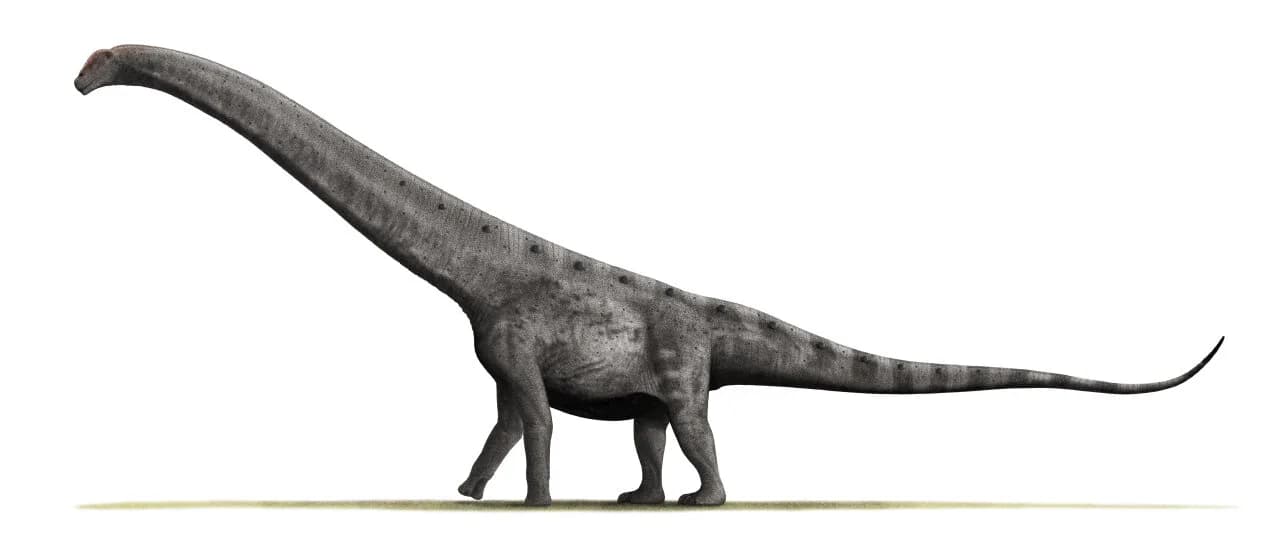
Alamosaurus was one of the largest dinosaurs in North America, with size estimates varying considerably. Conservative estimates place it at approximately 21 meters in length and 30 tonnes, but recent discoveries of larger specimens suggest it could reach 30 meters and weigh up to 60 to 80 tonnes, rivaling the largest South American titanosaurs like Argentinosaurus. A 1.9-meter femur discovered in New Mexico belongs to a colossal individual. Its height at the top of the back could reach 7 to 8 meters. These dimensions potentially make it the largest animal to have ever lived in North America, surpassing even the largest Jurassic sauropods of the continent.
Alamosaurus was a giant herbivore feeding on vast quantities of vegetation. Its long neck allowed it to reach the canopy of conifers and the first flowering plants that dominated Late Cretaceous forests. Like other titanosaurs, it possessed peg-like teeth adapted for stripping leaves and branches rather than chewing. Food was probably swallowed whole and ground in a powerful gizzard with the help of gastroliths. To maintain its enormous body mass, Alamosaurus had to consume hundreds of kilograms of plant matter per day, spending the majority of its time feeding. Angiosperms, undergoing rapid diversification at this time, probably constituted a significant part of its diet alongside the traditional conifer and fern fare.
Alamosaurus inhabited the alluvial plains and coastal environments of the southwestern United States, in present-day New Mexico, Texas, and Utah. The Naashoibito Formation and the Javelina Formation, where its fossils are most abundant, represent floodplain environments with meandering rivers and lush vegetation. The terminal Cretaceous climate in this region was subtropical, warm, and humid, with pronounced seasons. The ecosystem included a diverse fauna featuring Tyrannosaurus rex as the apex predator, Triceratops and other ceratopsians, hadrosaurs, and various small dinosaurs. The Western Interior Seaway that had divided North America was progressively retreating, opening new lands for large sauropods to colonize.
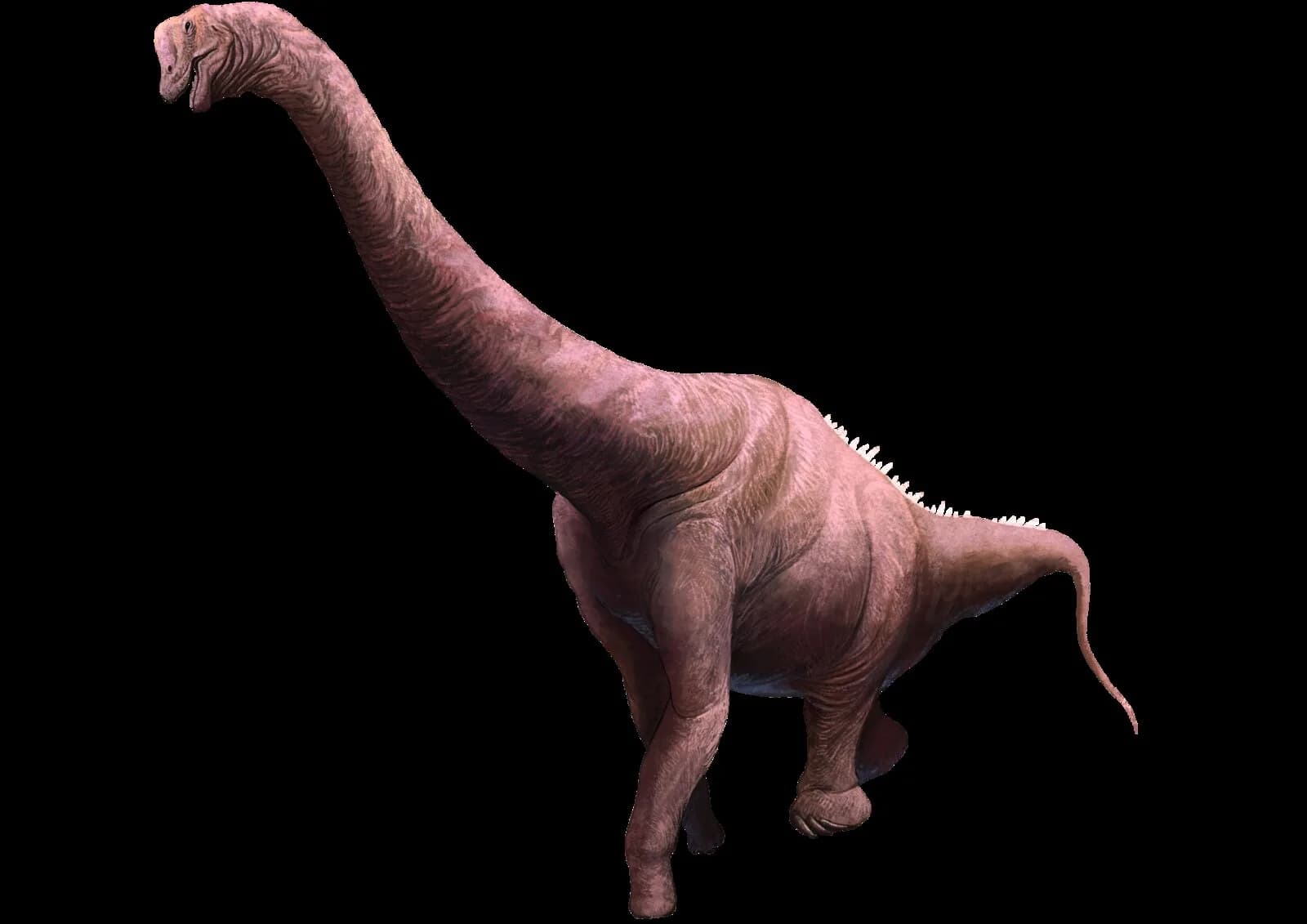
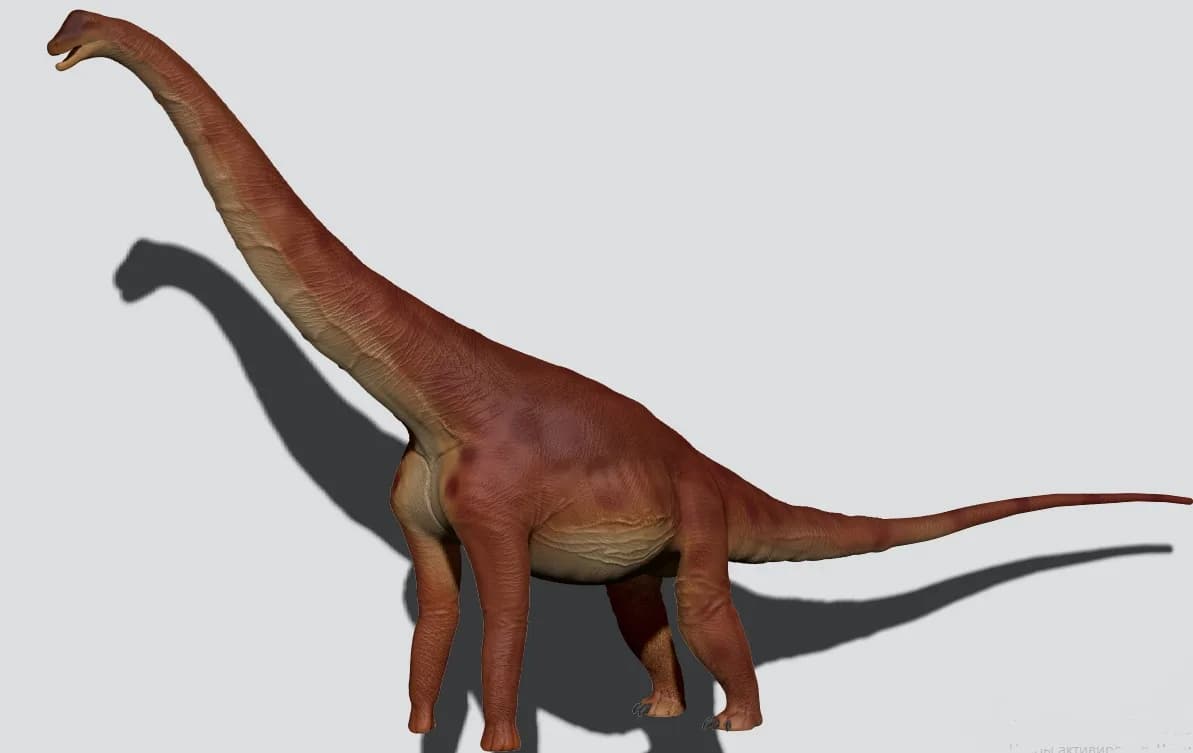
Alamosaurus anatomy is that of a typical titanosaur: massive body, long neck, long tail, pillar-like legs. Its dorsal vertebrae were deeply pneumatized with complex air chambers, reducing the animal's weight while maintaining structural strength. The air sac system, similar to that of modern birds, improved respiratory efficiency in this giant animal. Limb bones were extremely robust and solid, adapted to support a weight of several tens of tonnes. Like other titanosaurs, its skin was probably covered with osteoderms — small bony plates that provided some protection against predators. Metacarpals and metatarsals show extreme graviportal adaptations, with short, massive bones forming a cylindrical pillar structure. The skull, still poorly known, was probably small relative to the body.
Alamosaurus probably moved in herds, as suggested by accumulations of fossils of multiple individuals at the same site. This gregarious behavior offered protection against predators, even ones as formidable as Tyrannosaurus rex. An adult T. rex would have had difficulty attacking a healthy adult Alamosaurus, instead targeting juveniles, sick individuals, or those separated from the herd. Herds probably moved seasonally to follow food resources, covering great distances across the southwestern plains. Alamosaurus growth was rapid during the early years of life, reaching adult size in 15 to 20 years. Females probably laid eggs in ground nests like other titanosaurs, and juveniles were vulnerable to predators during their first years.
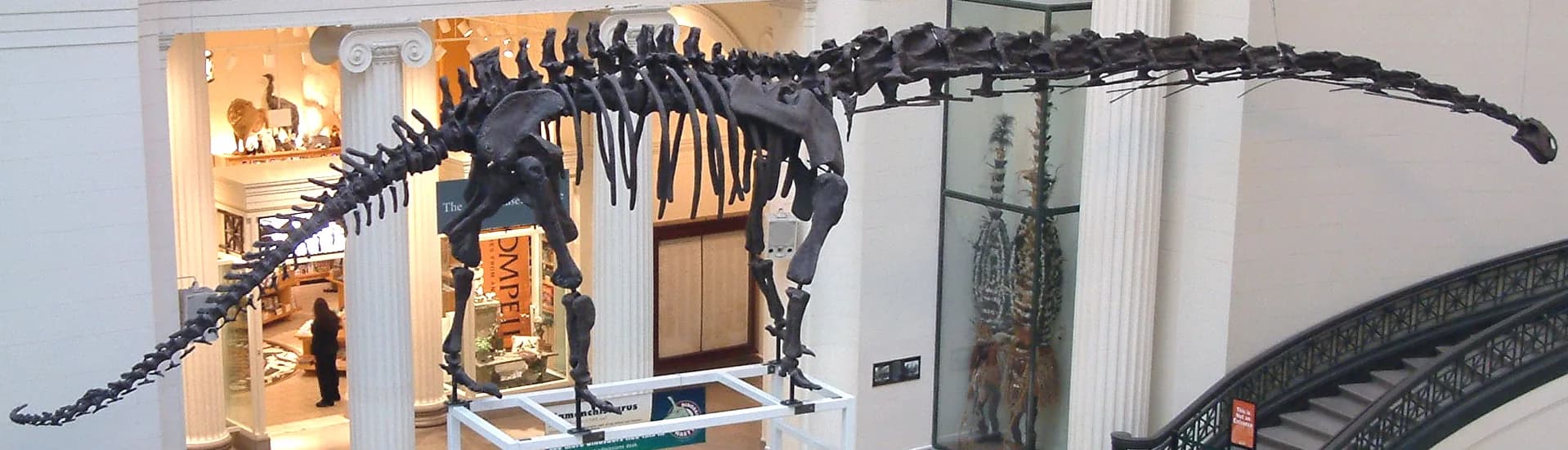
Alamosaurus was described in 1922 by Charles W. Gilmore from a scapula and ischium discovered in the Ojo Alamo Formation (now Naashoibito) in New Mexico. The name does not refer to the Battle of the Alamo in Texas but to the Ojo Alamo geological formation. Since the original description, numerous additional fossils have been discovered in Texas, New Mexico, and Utah, including vertebrae, ribs, limb bones, and a giant 1.9-meter femur. Sites like Big Bend National Park in Texas have yielded concentrations of Alamosaurus fossils suggesting gregarious behavior. Isotopic studies of Alamosaurus teeth have provided information about its diet and physiology. Alamosaurus phylogenetic position among titanosaurs suggests a South American origin, with migration to North America in the terminal Cretaceous via an ephemeral land bridge.
| Period | Crétacé supérieur / Late Cretaceous |
| Era | Mésozoïque / Mesozoic |
| Age | ~69 millions d'années / ~69 million years ago |
| Location | Nouveau-Mexique, Texas / New Mexico, Texas |
| Length | 21-30 m |
| Height | ~7-8 m |
| Weight | ~30-80 tonnes |
| Diet | Herbivore |
| Discovery | 1922 |
Alamosaurus sanjuanensis is potentially the largest animal to have lived in North America. Described in 1922 by Gilmore, recent estimates suggest up to 30 meters and 60-80 tonnes for the largest individuals. A 1.9-meter femur discovered in New Mexico belongs to a colossal specimen rivaling South American titanosaurs like Argentinosaurus.
Alamosaurus sanjuanensis represents a spectacular sauropod return to North America during the Maastrichtian (69-66 Ma), after 30 million years of absence. Its phylogenetic position among titanosaurs suggests migration from South America via a temporary land bridge, as the Western Interior Seaway progressively retreated. This allowed it to coexist with Tyrannosaurus rex and Triceratops.
An adult Alamosaurus sanjuanensis of 30-80 tonnes represented a very difficult adversary for Tyrannosaurus rex. Like other titanosaurs, its skin was likely covered with osteoderms (protective bone plates). Fossil accumulations at Big Bend National Park, Texas, suggest herd behavior providing additional protection, with T. rex mainly targeting juveniles or isolated individuals.
Reconstruction of Alamosaurus sanjuanensis
Wikimedia Commons
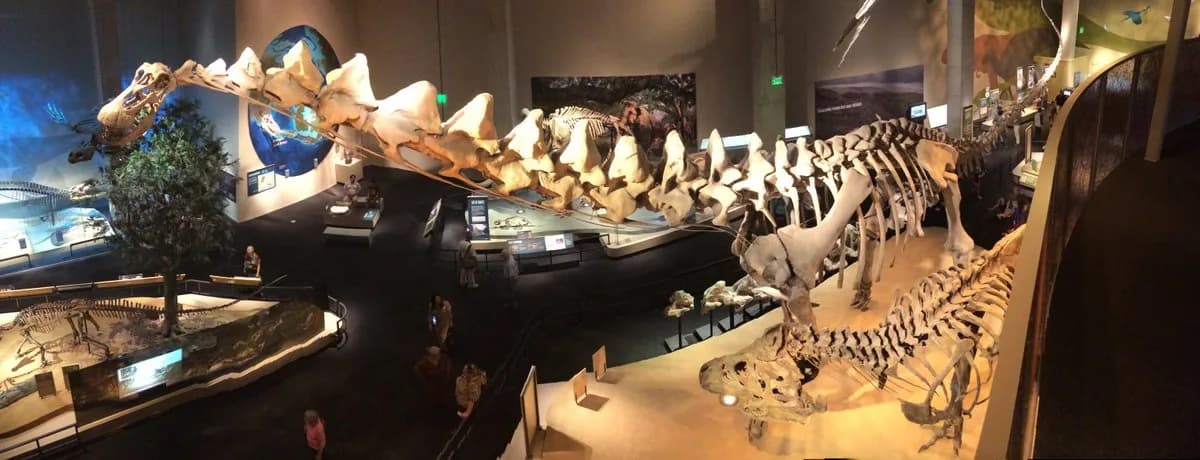
Partial skeleton of Alamosaurus
Wikimedia Commons