Quinkana
Quinkana fortirostrum hunted on dry land, unlike every living crocodilian: its long legs let it chase prey at a run. Its blade-like teeth, called ziphodont, recall those of carnivorous dinosaurs more than of crocodiles. Three to 6 metres long and 200 to 500 kilograms, it ranged Australia between 24 million and 40,000 years ago.
Quinkana lived from the Late Miocene to the Pleistocene, approximately 24 million to 40,000 years ago. This terrestrial Australian crocodilian belongs to the family Mekosuchidae, an endemic group of Australo-Oceanian crocodilians now entirely extinct. Mekosuchids represent a unique adaptive radiation of crocodilians that occupied unusual ecological niches for the group, including terrestrial, arboreal, and even dwarf insular forms. Quinkana is the most famous of these Australian terrestrial crocodilians, surviving until the Late Pleistocene and coexisting with the first Aboriginal Australians for perhaps millennia.
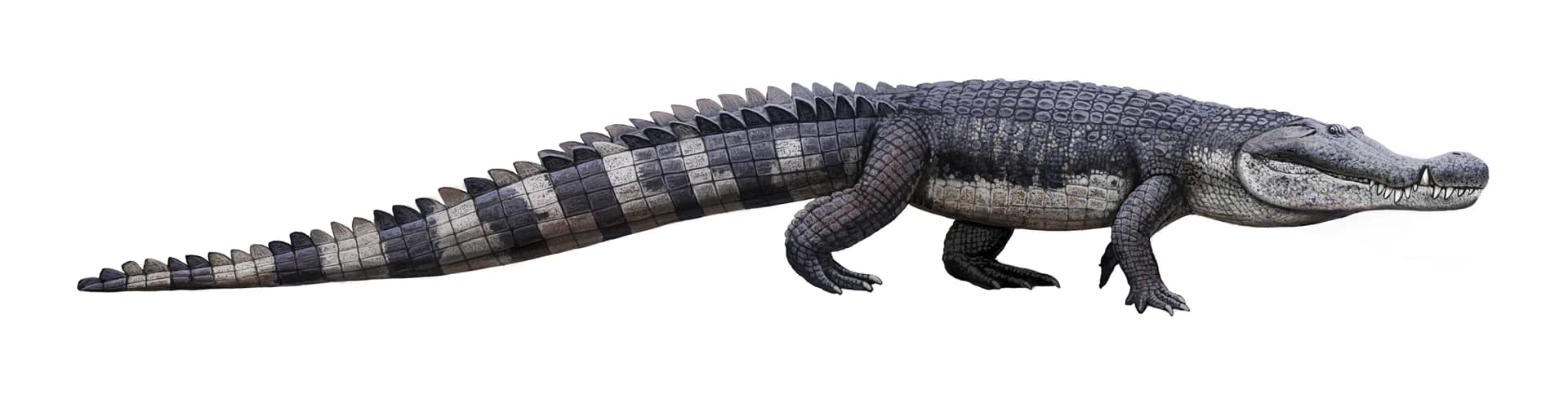
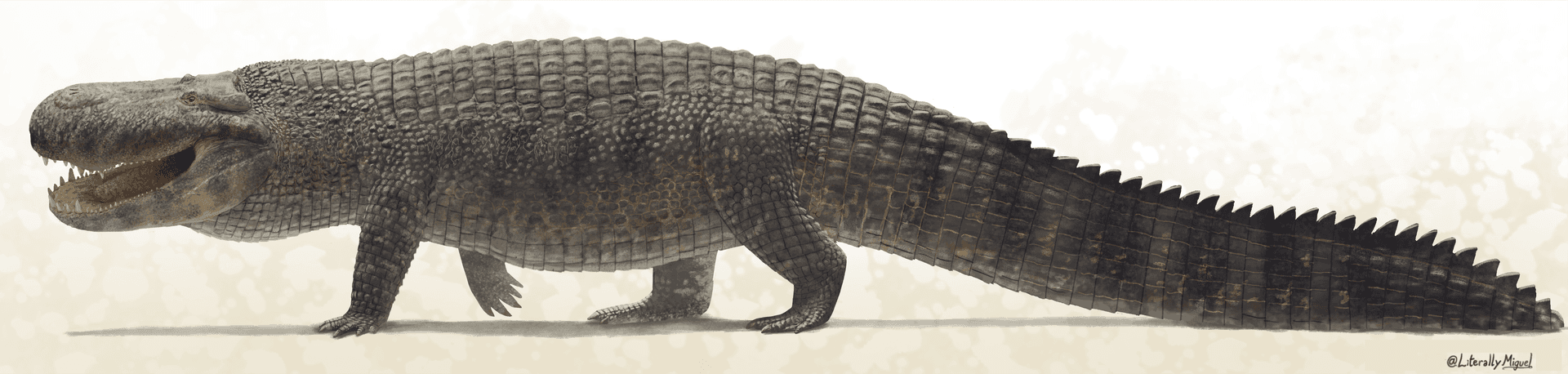
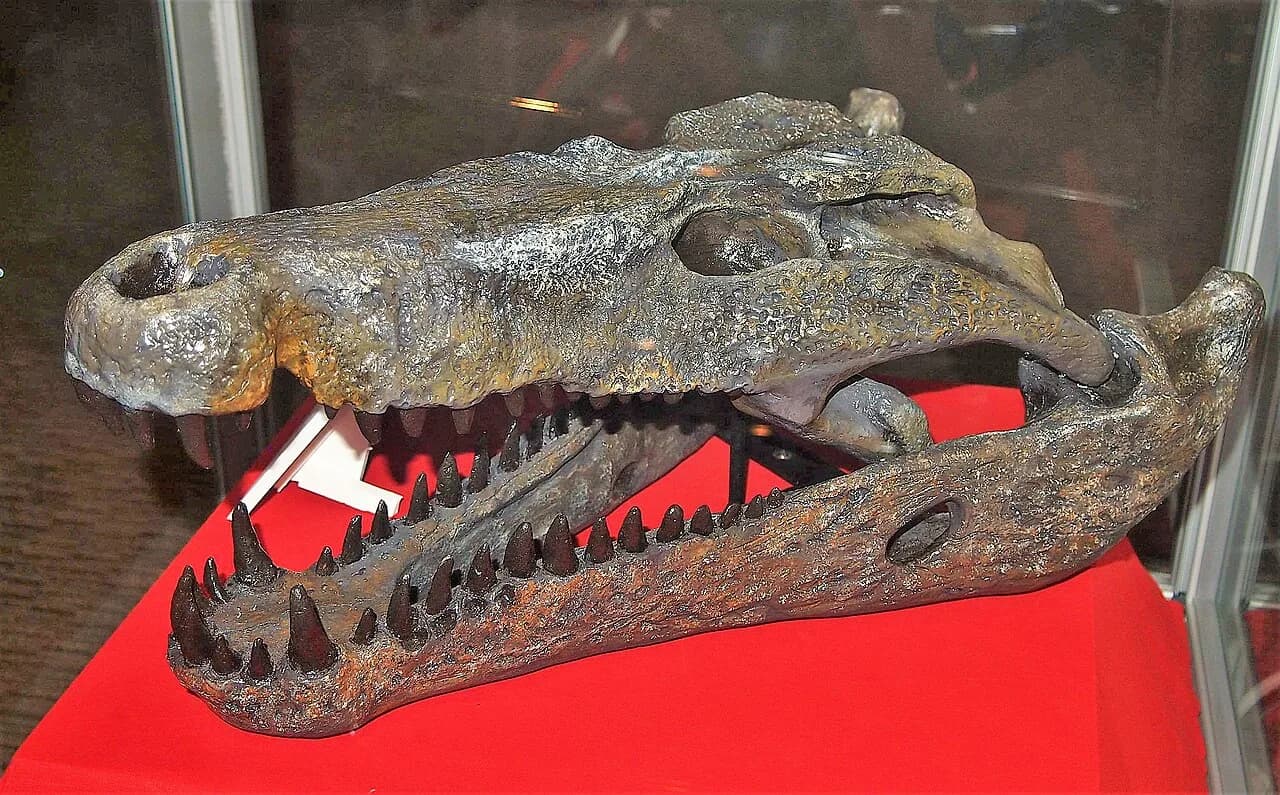
Quinkana fortirostrum, the largest species, could reach approximately 5 to 6 meters in total length. Its weight is estimated between 200 and 500 kilograms depending on the individual. Its skull, comparatively tall and narrow relative to modern semi-aquatic crocodilians, measured approximately 40 to 60 centimeters long with a distinctly laterally compressed profile. Its limbs were notably longer and straighter than those of modern crocodiles, giving it a more erect posture specifically adapted for terrestrial running and active pursuit of prey. Other species in the genus were smaller, with Q. timara from the Miocene measuring approximately 3 meters in length.
Quinkana was an active terrestrial predator, fundamentally different from modern semi-aquatic ambush crocodilians. Its laterally compressed, slightly curved teeth bearing blade-like cutting edges — called 'ziphodont' — were specifically designed for slicing flesh rather than grasping and drowning prey in water. This distinctive dentition is remarkably similar to that of theropod dinosaurs and monitor lizards, indicating a terrestrial predator diet involving actively hunting mammals, large birds, and reptiles across the Australian landscape. It probably hunted Pleistocene Australian megafauna, including large marsupials like the massive Diprotodon and giant kangaroos of the genus Procoptodon.
Quinkana inhabited terrestrial environments across Australia, from Queensland's tropical forests to the more open environments of central and southern Australia. Its fossils have been discovered primarily in Queensland (Riversleigh caves for Miocene and Pliocene species, and various Pleistocene sites), but also in New South Wales and the Northern Territory. Ancient Miocene species lived in the rainforests that then covered much of Australia, while more recent Pleistocene species had adapted to the more arid environments resulting from the continent's progressive drying.
Quinkana anatomy reflects its adaptation to terrestrial predation. Its skull is tall and laterally compressed — very different from the wide, flat skull of semi-aquatic crocodilians. Its ziphodont teeth, laterally compressed with cutting carinae, are unique among modern crocodilians and recall those of theropod dinosaurs. Its limbs are proportionally longer and straighter than those of modern crocodilians, with joints allowing a more erect 'parasagittal' posture adapted for running. Its feet bear blunt claws rather than the webbed claws of aquatic species. Its tail, while still powerful, was not as laterally compressed as in aquatic species.
Quinkana was an active terrestrial hunter that pursued prey on dry land, in total contrast to modern crocodilians that ambush from water. Its semi-erect posture and elongated limbs allowed rapid movement over long distances. It probably used a combination of ambush running from vegetative cover and active pursuit on open terrain. Its ziphodont dentition indicates it killed prey through biting and tearing rather than drowning. It coexisted with the first humans in Australia approximately 40,000 to 50,000 years ago, and some researchers speculate that human hunting may have contributed to its extinction.
Quinkana was described in 1981 by paleontologists Molnar and Holt. The generic name derives from the 'Quinkans,' reptilian spirits from Aboriginal mythology in Queensland — creatures inhabiting rock crevices. Four species are recognized: Q. fortirostrum (type, Pleistocene), Q. timara (Miocene), Q. meboldi (Pliocene), and Q. babarra (Miocene). Fossils from Riversleigh in Queensland, a UNESCO World Heritage site, have provided some of the best-preserved specimens. Quinkana's extinction in the Late Pleistocene, around 40,000 years ago, coincides with the arrival of humans in Australia and the general extinction of Australian megafauna.
| Period | Miocène – Pléistocène / Miocene – Pleistocene |
| Era | Cénozoïque / Cenozoic |
| Age | 24 Ma – 40 000 ans / 24 Ma – 40,000 years |
| Location | Australie (Queensland, NSW, NT) / Australia (Queensland, NSW, NT) |
| Length | 3-6 m |
| Height | 0.7 m |
| Weight | 200-500 kg |
| Diet | Carnivore |
| Discovery | 1981 |
No. Quinkana fortirostrum was a terrestrial crocodilian of the family Mekosuchidae, an entirely extinct Australo-Oceanian endemic group. Its long legs and semi-erect posture allowed it to run on dry land. Its ziphodont teeth (laterally compressed, blade-like) resembled those of theropod dinosaurs, adapted for tearing prey rather than drowning it.
Quinkana fortirostrum, the largest species, reached 5 to 6 meters long weighing 200 to 500 kilograms. It hunted Australian Pleistocene megafauna: large marsupials like Diprotodon and giant kangaroos of the genus Procoptodon. It coexisted with the first Aboriginal Australians until its extinction approximately 40,000 years ago, likely through a combination of human hunting and climate change.
Quinkana was described in 1981 by paleontologists Molnar and Holt. The name comes from the 'Quinkans,' terrifying reptilian spirits from Aboriginal mythology in Queensland. Four species are recognized: Q. fortirostrum (Pleistocene), Q. timara, Q. meboldi, and Q. babarra (Miocene). The best fossils come from Riversleigh (Queensland), a UNESCO World Heritage site.
Quinkana reconstruction in its Australian habitat
Wikipedia Commons
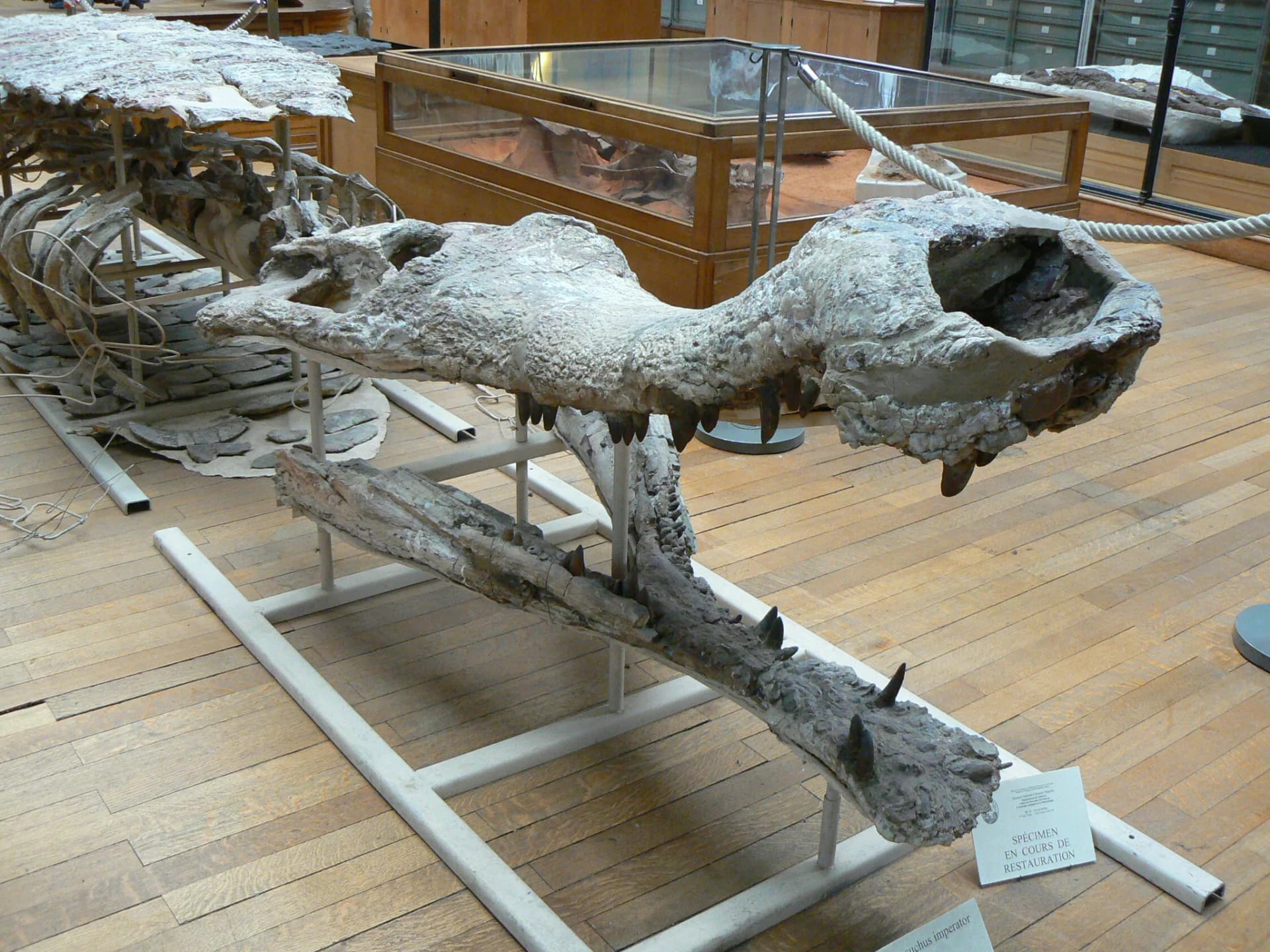
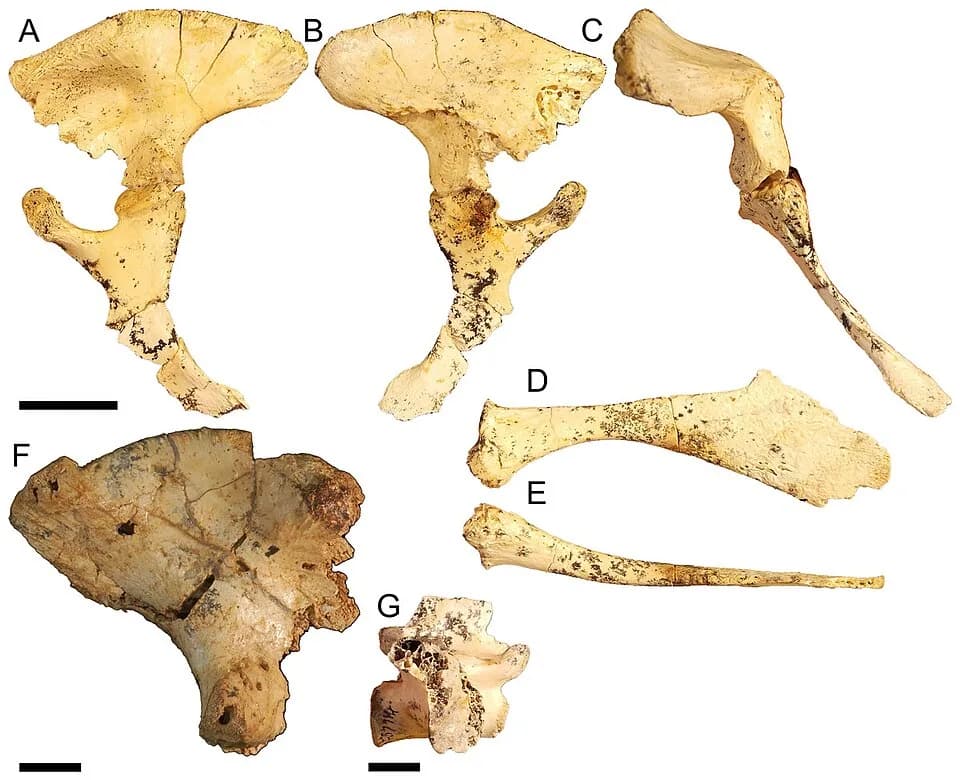
Quinkana holotype specimens
Wikipedia Commons