Prognathodon
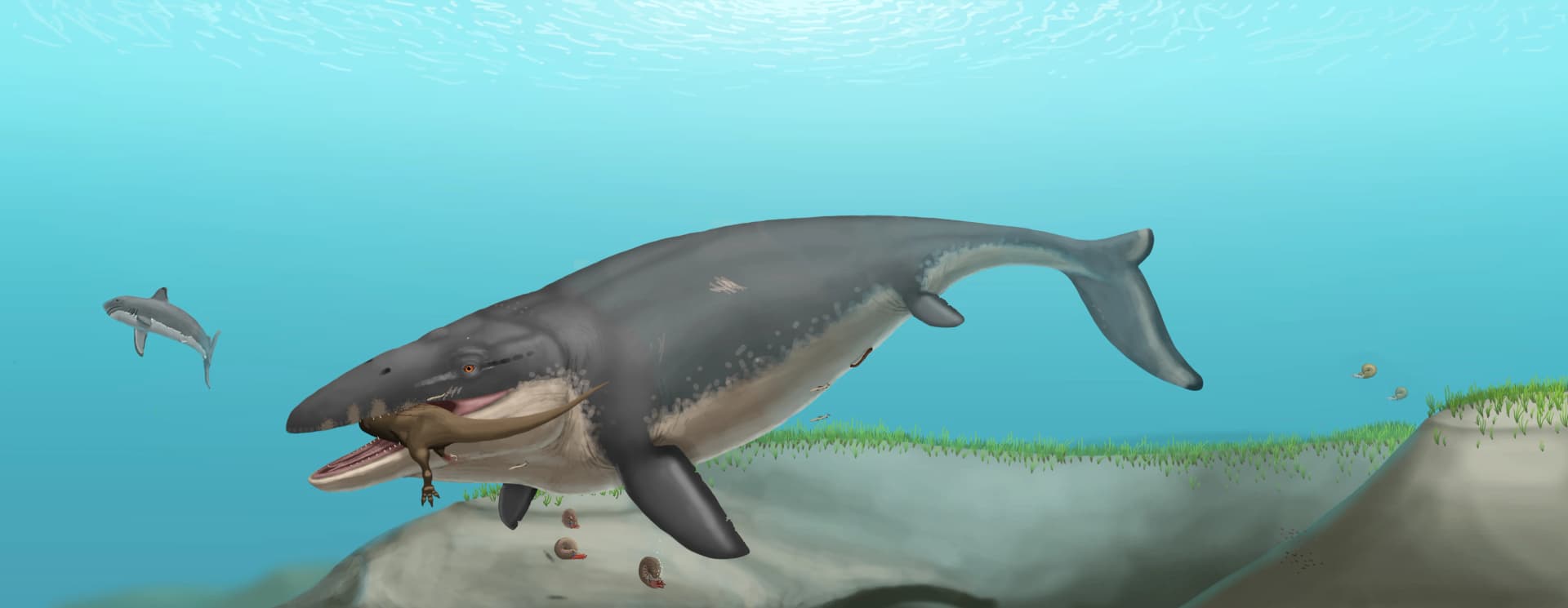
Prognathodon saturator stands apart from other mosasaurs with rounded rather than blade-like teeth, built to crush turtle shells and ammonite shells. Ten metres long and 2 to 3 tonnes, it hunted 70 to 66 million years ago, across nearly every ocean on the globe, right up to the final million years of the Cretaceous.
Prognathodon saturator lived during the Late Cretaceous, approximately 70 to 66 million years ago, during the Maastrichtian, the very last stage of the Mesozoic before the mass extinction. This giant mosasaur is one of the last and most powerful representatives of the mosasaurids, the marine lizards that dominated the oceans of the Late Cretaceous after the decline of ichthyosaurs and plesiosaurs. Prognathodon was distinguished from other mosasaurs by its massive jaws and robust crushing teeth, allowing it to tackle hard-shelled prey that other mosasaurs could not exploit. The genus is known from multiple continents, including Europe, North Africa, the Middle East, and North America, attesting to a worldwide distribution. It disappeared with all other mosasaurs during the K-Pg extinction event 66 million years ago.
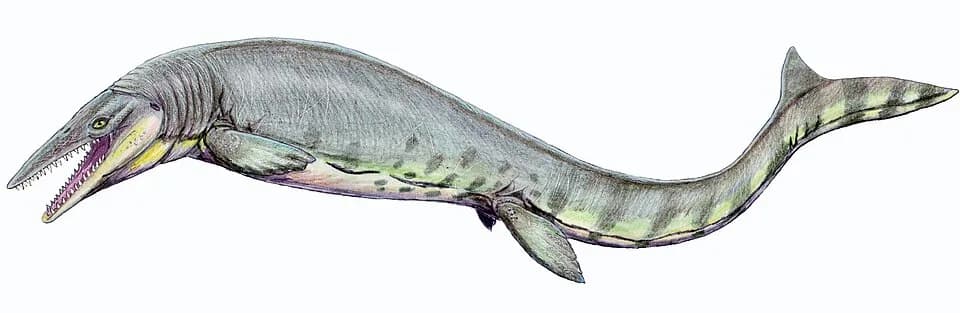
Prognathodon saturator was a large mosasaur, with an estimated length between 10 and 14 meters depending on the species. P. saturator, the European species, reached approximately 10 to 12 meters, while P. currii from Morocco could approach 14 meters. Its estimated weight ranged between 5 and 10 tonnes. The skull was massive and robust, measuring about 1 meter long, with jaws wider and more powerful than those of most other mosasaurs. The teeth were highly characteristic: rather than the sharp, conical teeth typical of piscivorous mosasaurs, Prognathodon possessed robust, rounded, and blunt teeth perfectly adapted for crushing hard-shelled prey. The body was powerful and hydrodynamic, with a laterally compressed tail bearing a caudal fin.
Prognathodon was distinguished from other mosasaurs by its durophagous diet — specialized in hard-shelled or armored prey. Its robust, blunt, bulbous pterygoid teeth could exert considerable crushing pressure, adapted for crushing ammonite shells, sea turtle carapaces, giant bivalve shells, and possibly crustacean shells. This dietary specialization is unique among large mosasaurs and allowed it to exploit food resources inaccessible to mosasaurs with cutting teeth like Mosasaurus or Tylosaurus. However, Prognathodon was not exclusively durophagous: some specimens show mixed dentition also allowing the capture of fish. Turtle remains with broken carapaces and bite marks matching Prognathodon teeth directly confirm predation on chelonians.
Prognathodon inhabited the warm epicontinental seas of the terminal Cretaceous, during the Maastrichtian. Its remarkably wide geographic distribution — Belgium, the Netherlands, Morocco, Israel, Jordan, and North America — indicates a cosmopolitan animal adapted to diverse marine environments. In Europe, fossils come from the famous Maastricht chalks in the Netherlands and Belgium, shallow marine sediments deposited in a warm sea covering parts of Northern Europe. In Morocco, the phosphates of the Oulad Abdoun basin have yielded numerous specimens associated with an extraordinary diversity of mosasaurs, sharks, fish, and marine reptiles. The Maastrichtian seas were among the most marine-biodiverse of the entire Mesozoic, with a diversified mosasaur fauna comprising up to a dozen sympatric species.
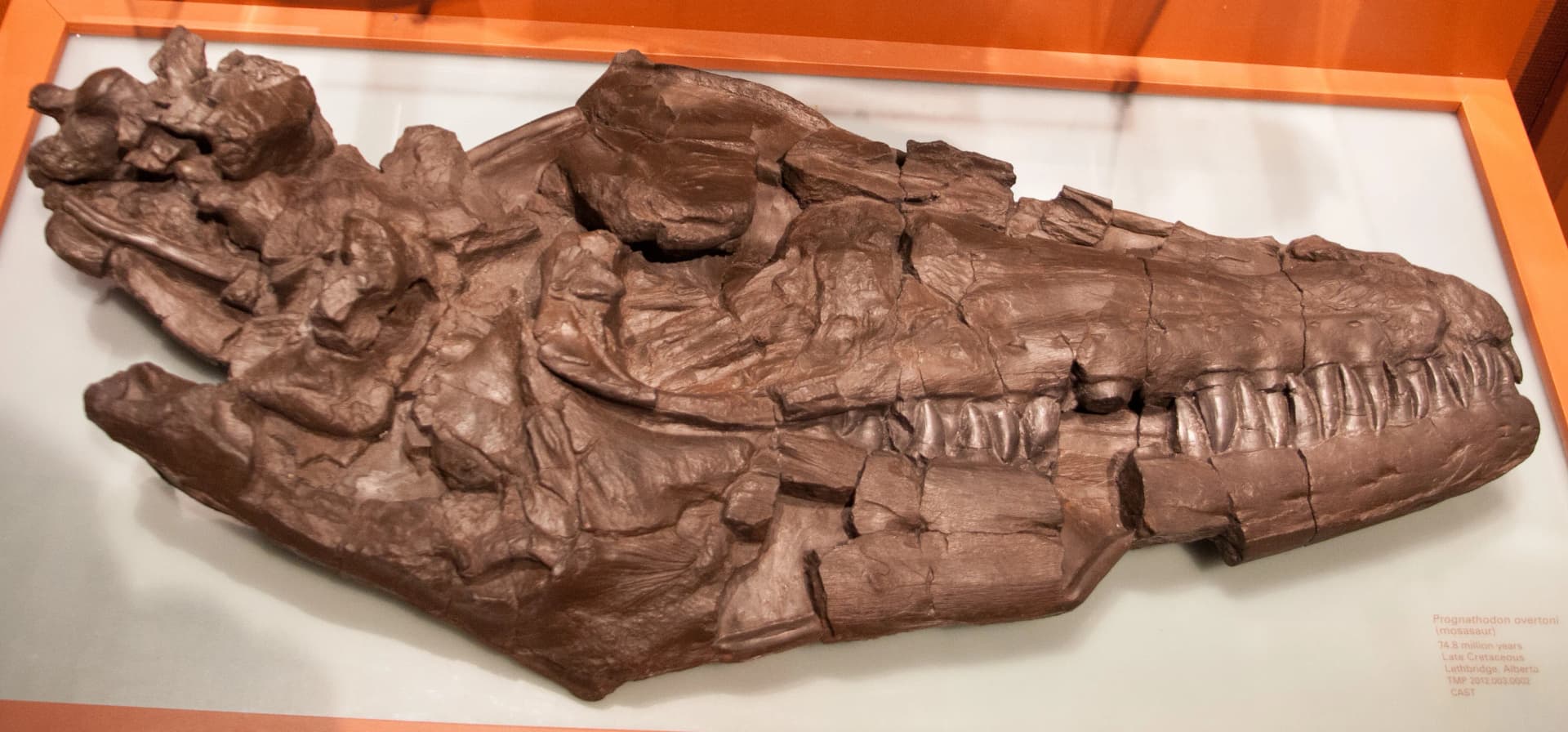
Prognathodon anatomy reflected its specialization for crushing hard-shelled prey. The skull was proportionally shorter, wider, and more massive than that of other large mosasaurs, with reinforced zygomatic arches providing anchorage for powerful masticatory muscles. The pterygoid teeth (on the palate) were particularly robust, forming a secondary crushing surface in addition to the marginal teeth. The marginal teeth were rounded and bulbous rather than conical and sharp, optimized for compressive pressure rather than penetration. The mandible was massive with a tall coronoid process indicating exceptional bite force. The body followed the standard mosasaurian plan: elongated and hydrodynamic, with limbs transformed into short, webbed flippers. The laterally compressed tail bore a bilobed caudal fin similar to that of sharks.
Prognathodon was a specialized predator exploiting a unique ecological niche among mosasaurs. Its durophagous specialization allowed it to avoid direct competition with piscivorous mosasaurs like Mosasaurus and Tylosaurus by targeting entirely different prey. It probably patrolled the shallow sea floors and reef environments, seeking sea turtles, ammonites, and large mollusks. Its powerful jaws allowed it to crush turtle carapaces and ammonite shells that other predators simply could not exploit. Like other mosasaurs, Prognathodon was probably viviparous, giving birth to live young at sea rather than laying eggs on land. The Maastrichtian seas harbored exceptional mosasaur diversity occupying distinct ecological niches, forming a complex marine ecosystem brutally destroyed by the Chicxulub asteroid impact 66 million years ago.
Prognathodon was first described in 1889 by Louis Dollo from fossils discovered in the Maastrichtian chalks of Belgium. The name means 'prognathous tooth' or 'prominent jaw' (Greek: pro 'forward' + gnathos 'jaw' + odous 'tooth'). The species P. saturator was named in 2002 by Dortangs et al. from a spectacular skull found in the Netherlands, the species name meaning 'the one who satiates.' Fossils of Prognathodon are known from numerous countries: Belgium and the Netherlands (Maastrichtian chalks, the type locality of the Maastrichtian stage), Morocco (phosphates of the Oulad Abdoun basin), Israel and Jordan, and North America. Some of the finest specimens are displayed at the Teylers Museum in Haarlem and the Natural History Museum of Maastricht.
| Period | Crétacé supérieur (Maastrichtien) / Late Cretaceous (Maastrichtian) |
| Era | Mésozoïque / Mesozoic |
| Age | 70 - 66 Ma |
| Location | Mondial (Belgique, Pays-Bas, Maroc, Israël, USA) / Worldwide (Belgium, Netherlands, Morocco, Israel, USA) |
| Length | 10 m |
| Height | ~1.5 m |
| Weight | 2-3 tonnes |
| Diet | Carnivore |
| Discovery | 1889 |
No. Prognathodon saturator was a mosasaur, a marine lizard of the family Mosasauridae, distinct from dinosaurs. It lived during the Maastrichtian (70–66 Ma) in global epicontinental seas, before disappearing at the Chicxulub impact 66 million years ago. Mosasaurs are more closely related to modern monitor lizards than to marine reptiles like plesiosaurs.
Prognathodon saturator had robust, rounded, blunt teeth — very different from the sharp, conical teeth of piscivorous mosasaurs like Mosasaurus. These bulbous teeth, including the pterygoid teeth on the palate, allowed crushing sea turtle carapaces, ammonite shells, and giant bivalves. Broken turtle shells with matching bite marks have been discovered.
Prognathodon fossils are known from four continents: Europe (Belgium, Netherlands — type locality of the Maastrichtian stage), North Africa (Morocco, Oulad Abdoun basin), the Middle East (Israel, Jordan), and North America. The finest specimens are displayed at the Teylers Museum in Haarlem and the Natural History Museum of Maastricht, in the Netherlands.
Prognathodon, a massive mosasaur
Wikimedia Commons
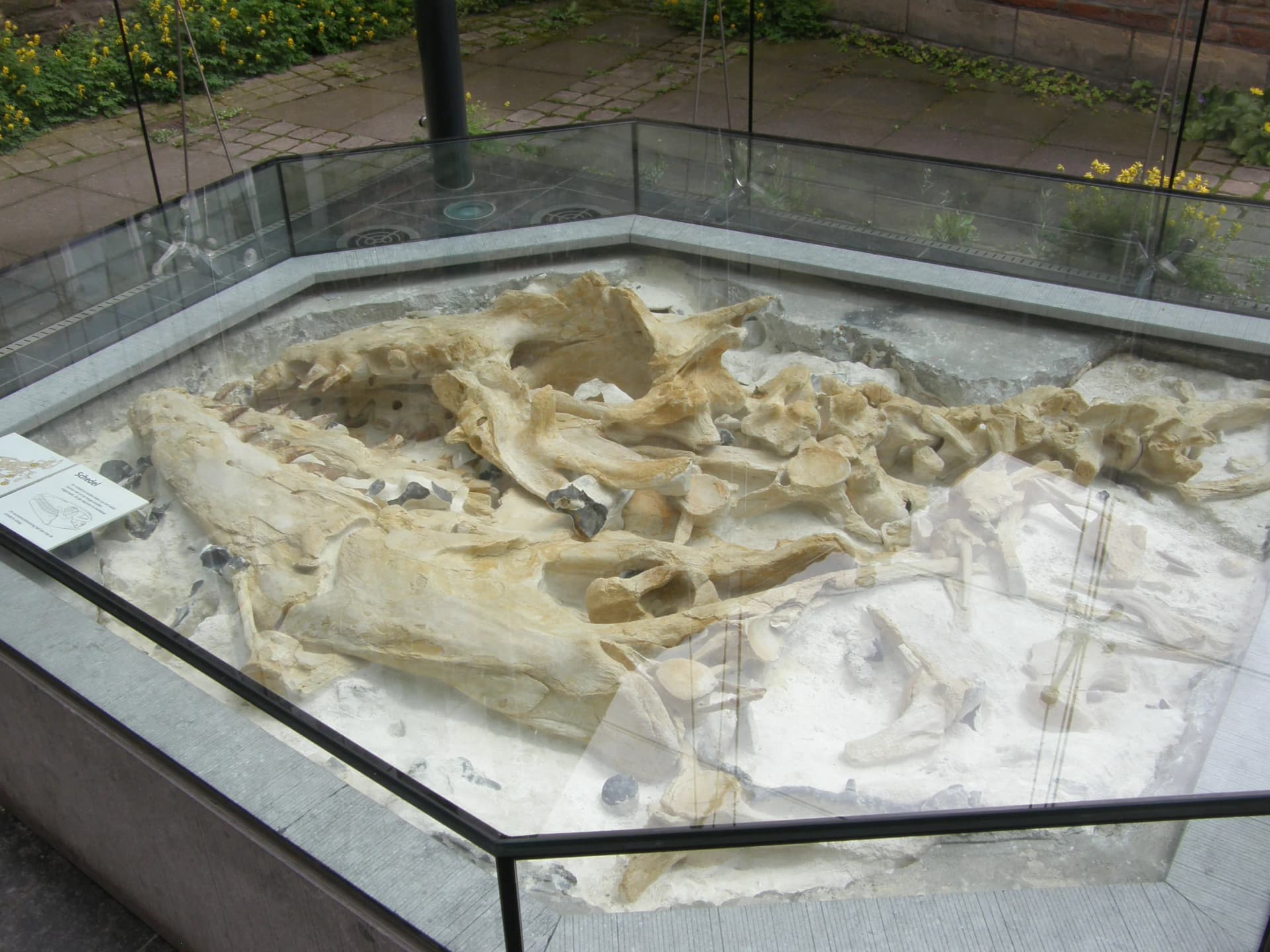
Prognathodon saturator, a shell-crushing mosasaur
Wikimedia Commons