Pliosaure
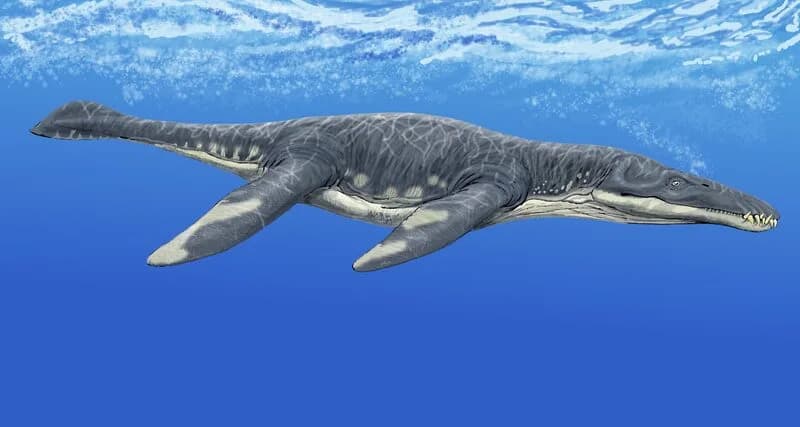
Pliosaurus funkei was nicknamed « Predator X » when found on Svalbard, above the Arctic Circle. Its teeth exceed 30 centimetres, among the largest ever recorded in a marine predator, and its bite rivalled that of Tyrannosaurus rex. Ten to 13 metres long and 10 to 15 tonnes, it hunted 150 to 145 million years ago.
Pliosaurus funkei lived during the Late Jurassic, approximately 150 to 145 million years ago, during the Kimmeridgian and Tithonian ages. This giant pliosaurid is one of the largest marine predators of the Mesozoic era, nicknamed 'Predator X' upon its publicized discovery in 2006. Pliosaurus belongs to the plesiosauria, specifically the pliosaurid suborder characterized by a massive skull, short neck, and powerful jaws. Discovered in Norway's Svalbard archipelago in Late Jurassic marine sediments, P. funkei lived in the boreal waters of the epicontinental sea that covered part of northern Europe.
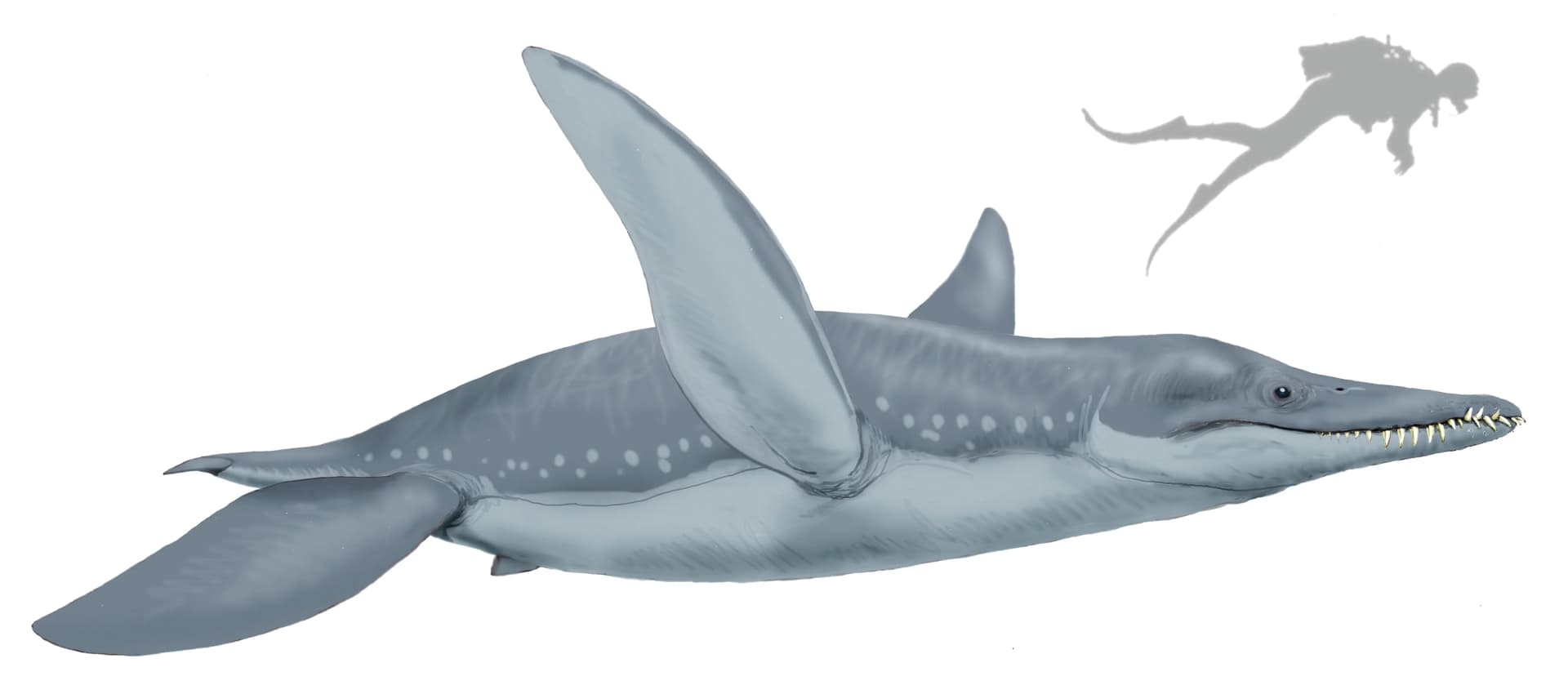
Pliosaurus funkei was a marine predator of colossal dimensions. Estimates based on the fragmentary skull and postcranial elements suggest a total length of 10 to 13 meters, though earlier generous estimates proposed up to 15 meters. Its skull measured approximately 2 to 2.5 meters long, one of the largest predator skulls known. Its estimated weight ranged between 10 and 45 tonnes depending on estimation methods, with the most recent figures around 10 to 15 tonnes. Its jaws bore massive, conical, ridged teeth that could measure over 30 centimeters long, among the largest marine predator teeth known.
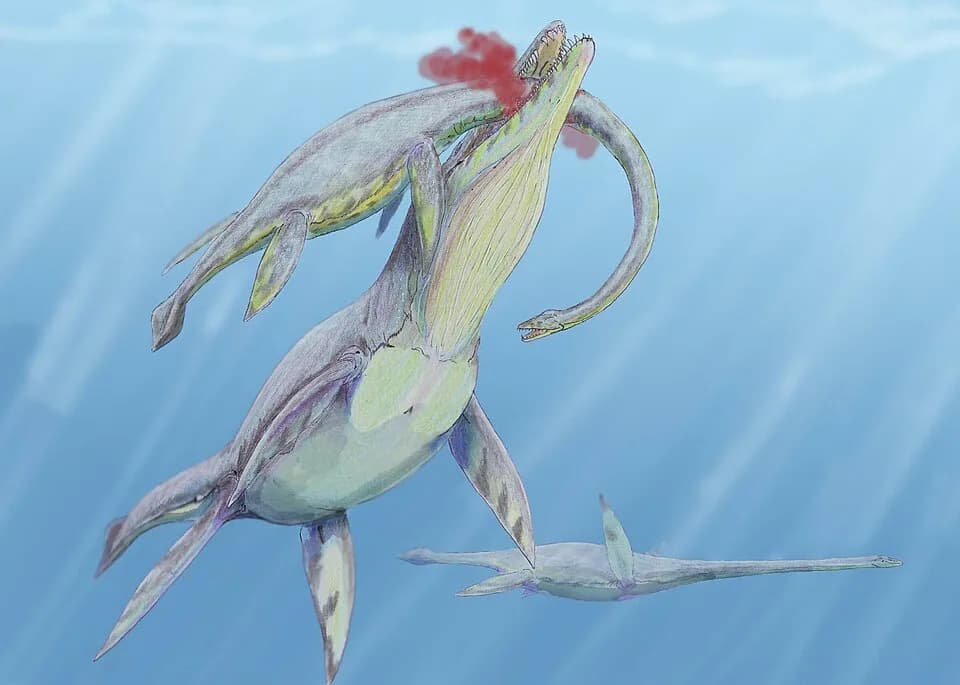
Pliosaurus was a hypercarnivore at the top of the Late Jurassic marine food chain. The biomechanics of its massive jaws and giant teeth indicate exceptional bite force, estimated at several times that of the largest modern crocodilians and comparable to Tyrannosaurus rex. This masticatory power allowed it to attack virtually any prey in its environment: large fish, sharks, giant squid, ichthyosaurs, and possibly other plesiosaurs. Bite marks attributed to large pliosaurids have been found on bones of other marine reptiles, confirming active predation on other large predators.
Pliosaurus funkei lived in the boreal seas of the Late Jurassic, in the region now corresponding to Norway's Svalbard archipelago, well above the Arctic Circle. However, during the Jurassic, Svalbard was at lower latitudes (approximately 50°N) and enjoyed a temperate to subtropical climate with no polar ice caps. The waters were rich in marine life thanks to ocean currents favoring biological productivity. The seafloor preserved in Svalbard sediments reveals a relatively deep open-sea environment with a diverse fauna including ammonites, belemnites, fish, ichthyosaurs, and plesiosaurs. Other Pliosaurus species are known from England and France, indicating distribution across European epicontinental seas.
Pliosaurus anatomy was that of a marine predator designed for brute power. The skull, proportionally one of the largest among marine reptiles, was massive and robust. The teeth, triangular in cross-section with sharp keels, were designed to penetrate the flesh and bone of large prey. The neck was short and powerful, typical of pliosaurids. The four flippers were similarly sized and massive, each supported by a system of elongated phalanges forming broad hydrofoil paddles. Locomotion relied on alternate or synchronized beating of all four flippers, producing both thrust and maneuverability. The tail was relatively short and tapered, serving as a rudder rather than propulsion organ.
Pliosaurus behavior can be reconstructed by analogy with modern large marine predators like orcas and great white sharks. As the absolute apex predator, adult Pliosaurus had no natural predators. Its colossal bite force and body mass allowed it to dominate any confrontation with other marine predators. Biomechanical studies of its flippers suggest powerful but not extremely fast cruising, compensated by explosive acceleration capability for surprise attacks. Binocular vision, suggested by the frontal eye position, indicates an active predator rather than a scavenger.
Pliosaurus was initially described in 1841 by Richard Owen from fragmentary English fossils, but P. funkei's discovery at Svalbard in 2006-2012 propelled the genus into the media spotlight as 'Predator X.' The Norwegian expedition led by Jørn Hurum discovered remains on Spitsbergen Island. The holotype specimen comprises a fragmentary skull over 2 meters, vertebrae, pectoral and pelvic girdle elements, and flippers. The species was officially named in 2012 in honor of Bjorn and May-Liss Funke, volunteer participants in the excavations.
| Period | Jurassique supérieur / Late Jurassic |
| Era | Mésozoïque / Mesozoic |
| Age | 150 - 145 Ma |
| Location | Europe (Norvège, Angleterre, France) / Europe (Norway, England, France) |
| Length | 10-13 m |
| Height | ~2 m |
| Weight | 10-15 tonnes |
| Diet | Carnivore |
| Discovery | 1841 |
No. Pliosaurus funkei was a marine reptile of the order Plesiosauria, suborder Pliosauridae — unrelated to dinosaurs. This Late Jurassic pliosaurid (150–145 Ma) inhabited the boreal seas of what is now Svalbard. Like all marine reptiles, it breathed air at the surface and was likely viviparous.
Pliosaurus funkei measured 10 to 13 meters and weighed between 10 and 15 tonnes. Its fragmentary skull reached 2 to 2.5 meters. Its teeth could exceed 30 centimeters, among the largest marine predator teeth known. Its bite force was estimated comparable to Tyrannosaurus rex, earning it the nickname 'Predator X' upon its publicized discovery in 2006.
Pliosaurus funkei was discovered on Spitsbergen Island in Svalbard (Norway) between 2006 and 2012, during expeditions led by Jørn Hurum of the Natural History Museum in Oslo. The species was officially named in 2012 after Bjorn and May-Liss Funke, volunteers who participated in the excavations. The genus Pliosaurus had been described as early as 1841 by Richard Owen from English fossils.
Pliosaurus, a fearsome marine predator
Dmitry Bogdanov / Wikimedia Commons
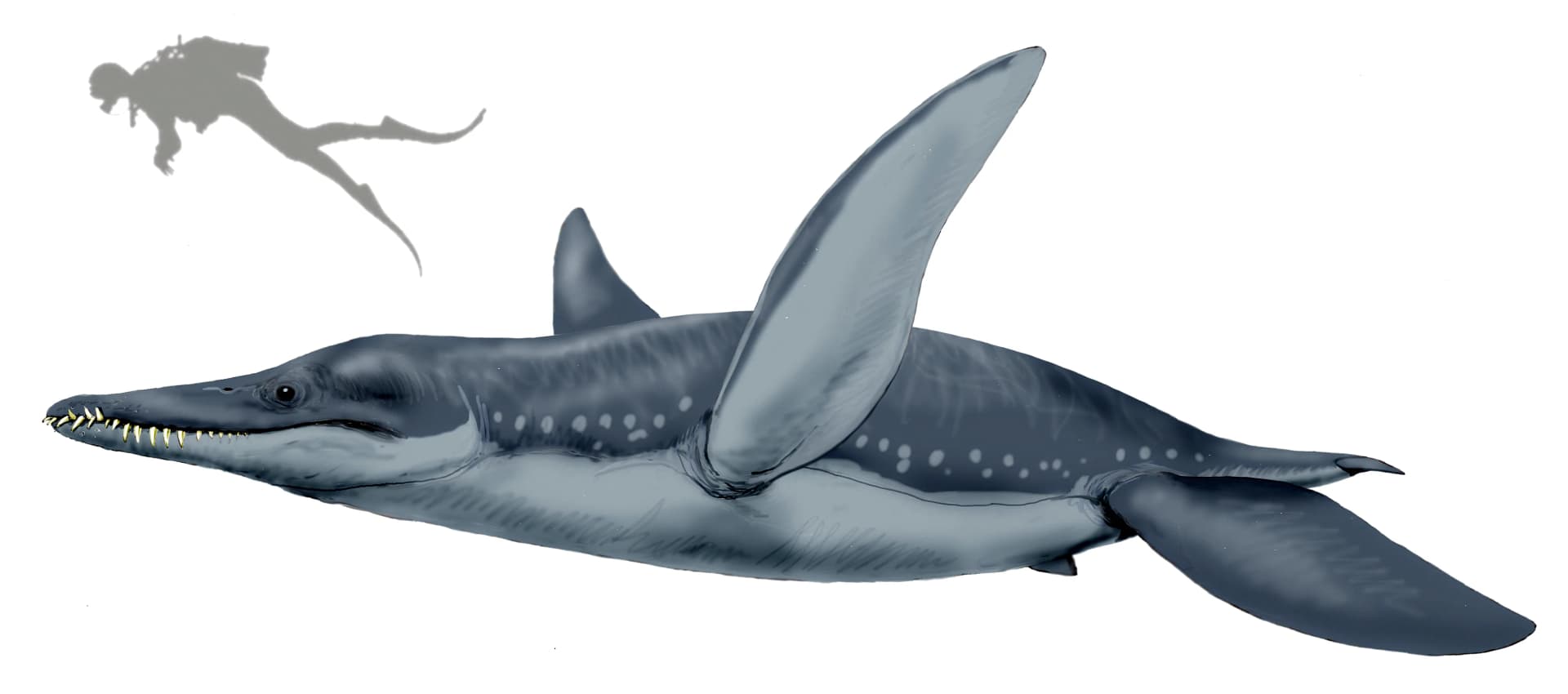
Pliosaurus funkei, a pliosaurus with terrifying jaws
Dmitry Bogdanov / Wikimedia Commons