Pentacératops
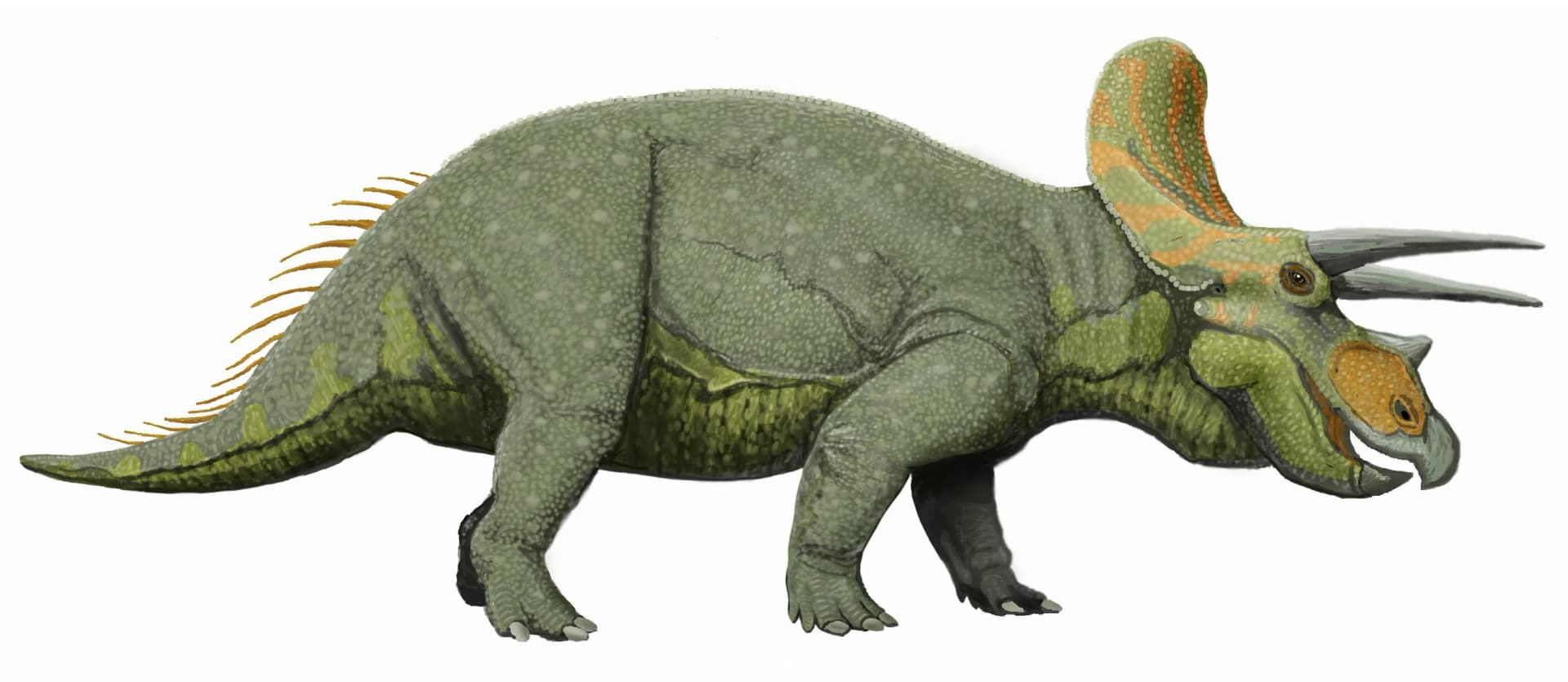
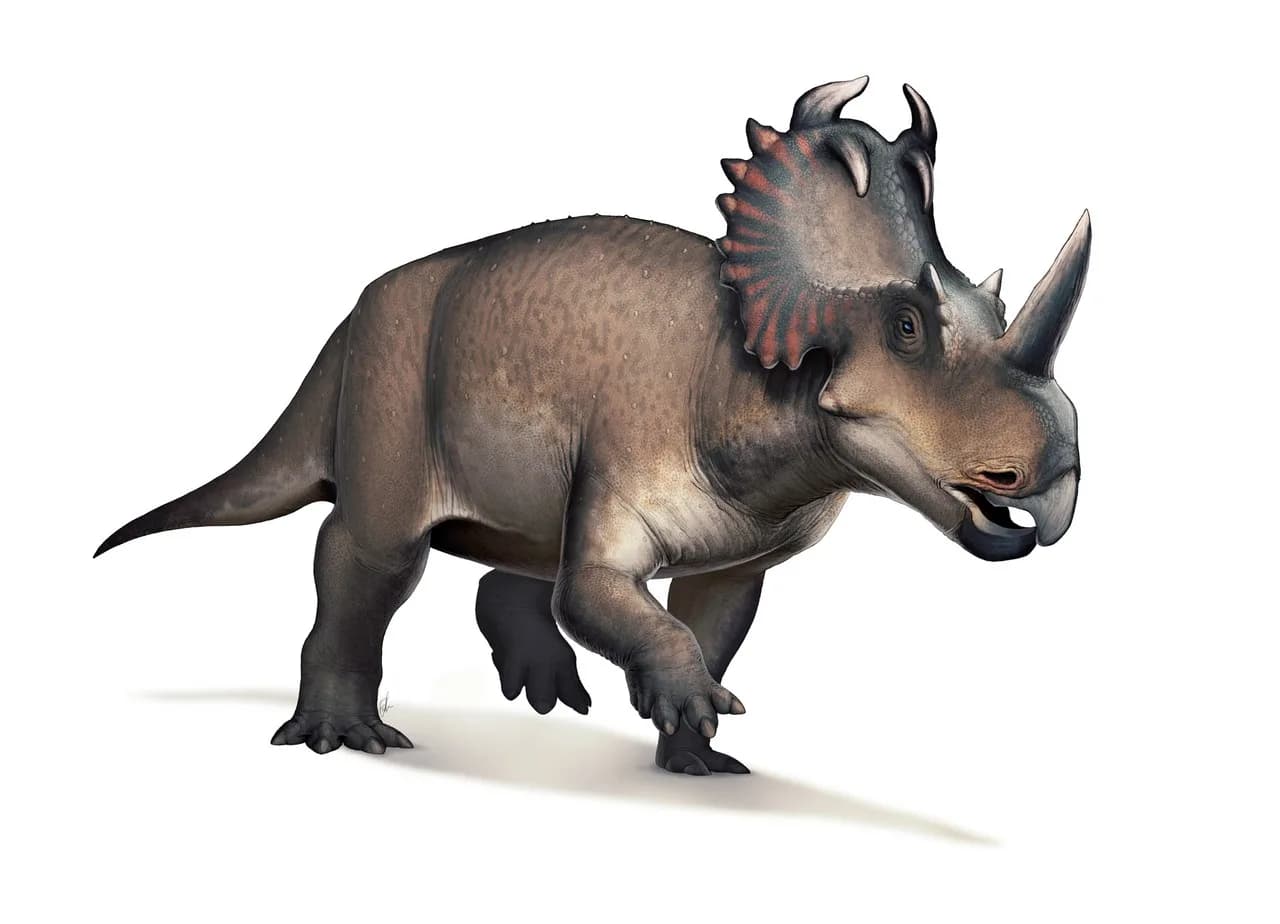
Pentaceratops sternbergi was a herbivorous ceratopsian from New Mexico, described in 1923 and dated to 76 to 73 million years ago. At 6 to 8 metres and 2.5 to 5 tonnes, it carried a skull over 3 metres long — among the largest of any land animal. Its name promises five horns but it has only three: the other two are pointed cheekbones.
Pentaceratops lived in the Late Cretaceous, approximately 76 to 73 million years ago, during the Campanian stage. This period corresponds to the golden age of chasmosaurine ceratopsian diversity in North America, well before the appearance of Triceratops. Pentaceratops belongs to the subfamily Chasmosaurinae, a group characterized by long frills and well-developed brow horns. It lived in southwestern North America, in what is now New Mexico, a region that harbored a dinosaur fauna distinct from that of the northern continent. The climate of the time was warm and semi-arid, with marked seasons and vegetation adapted to relatively dry conditions.
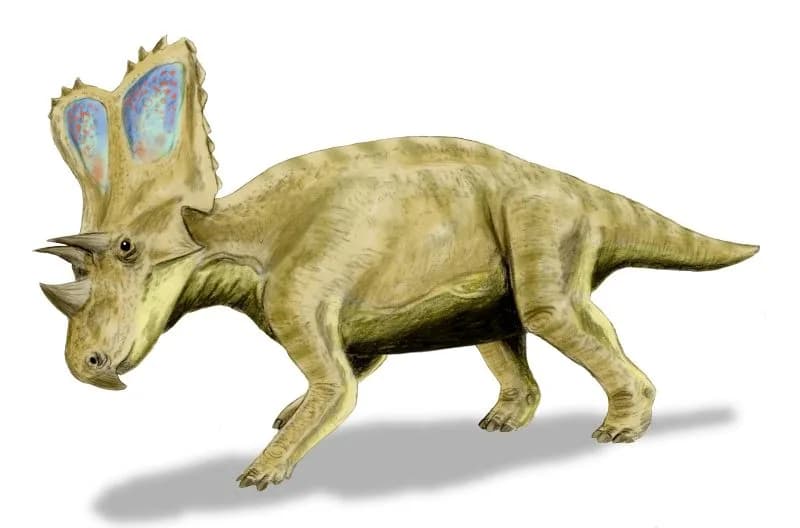
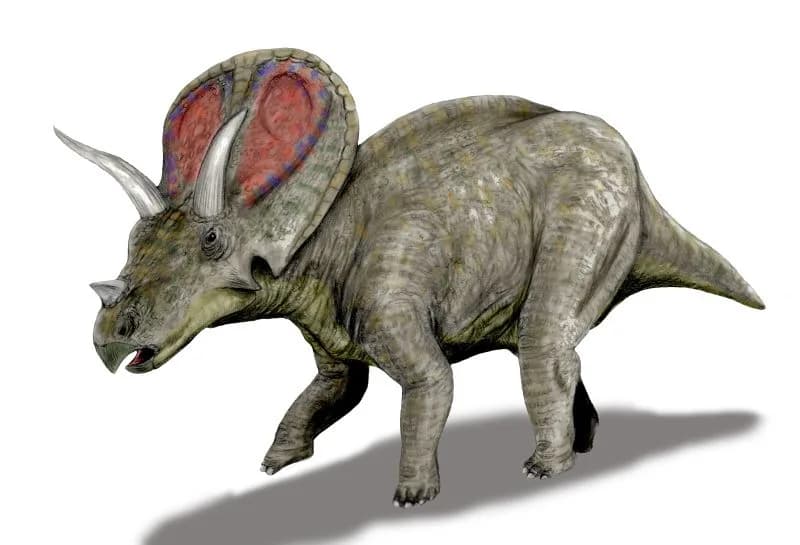
Pentaceratops was a large ceratopsian, measuring approximately 6 to 8 meters in length with an estimated weight between 2.5 and 5 tonnes. Its hip height reached about 2.5 meters. The most impressive characteristic of Pentaceratops is the size of its skull: some specimens possess one of the largest skulls of any terrestrial animal that ever existed, reaching over 3 meters in total length including the frill. This parietal-squamosal frill, fenestrated (pierced by two large openings), was adorned with small marginal spines and extended well beyond the back of the skull. Despite its impressive size, the frill was relatively lightweight thanks to its parietal fenestrae.
A strict herbivore, Pentaceratops fed on the low, fibrous plants of the Late Cretaceous, including ferns, cycads, conifers, and the early angiosperms that were beginning to diversify. Its powerful horny beak at the front of the jaw could section the toughest stems with remarkable efficiency. The dental batteries at the rear of the jaw, composed of hundreds of teeth stacked in columns and continuously replaced, ensured efficient vertical shearing of plant fibers. The low position of its head naturally predisposed it to grazing on near-ground vegetation. Its semi-arid habitat suggests it was adapted to drier, tougher vegetation than that consumed by ceratopsians in wetter coastal regions.
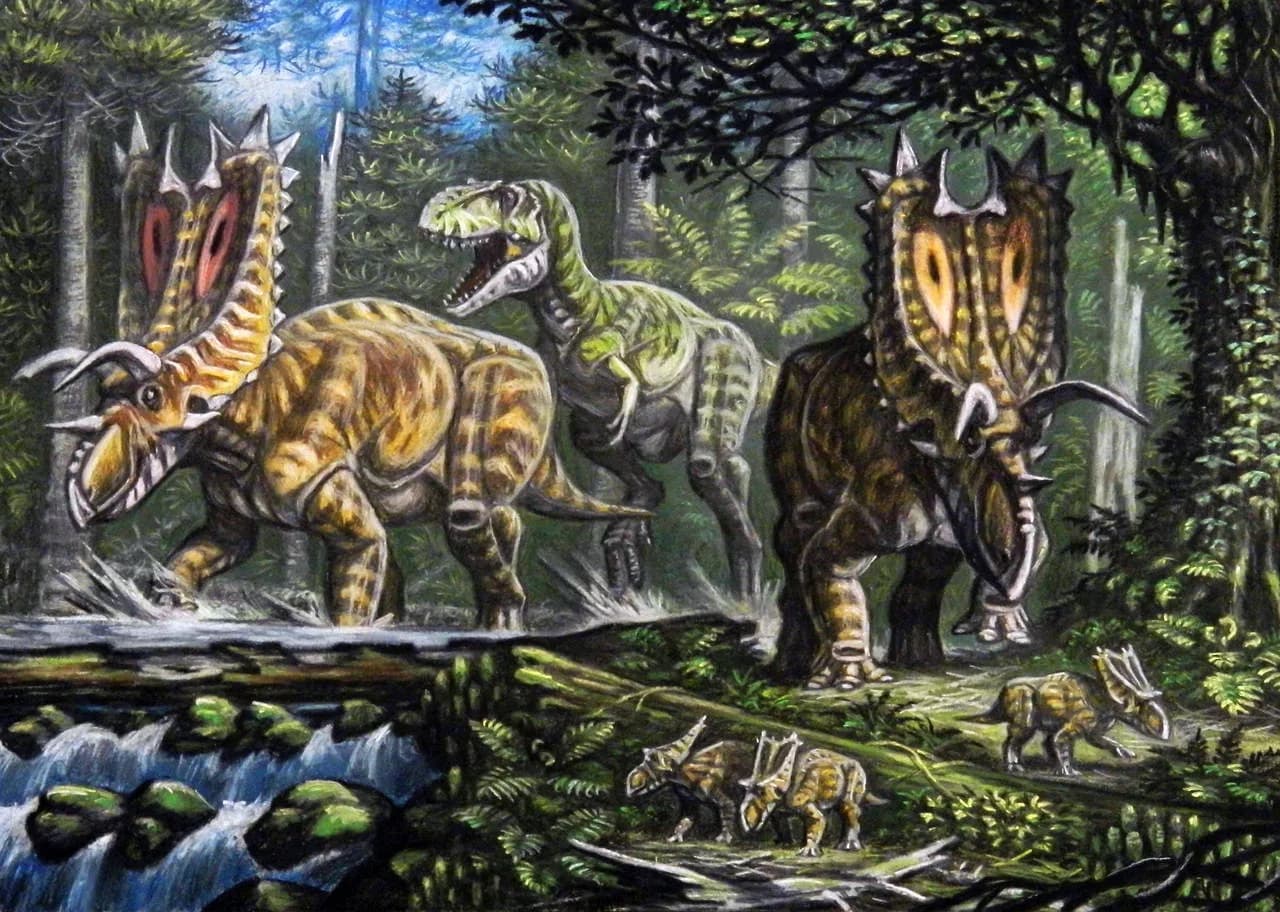
Pentaceratops inhabited the semi-arid interior plains of southwestern North America, in what today corresponds to New Mexico. The Campanian environment in this region was characterized by a warm climate with marked dry seasons, seasonal rivers, and chaparral-type vegetation mixed with riparian forests along waterways. The Kirtland Formation and Fruitland Formation, where the fossils were discovered, represent fluvial and floodplain environments. Pentaceratops coexisted with hadrosaurs like Parasaurolophus and Kritosaurus, ankylosaurs like Nodocephalosaurus, and theropods including primitive tyrannosaurs. This southwestern fauna was distinct from that of the north (Montana, Alberta), illustrating the faunal provincialism of Cretaceous North America.
Pentaceratops anatomy is dominated by its spectacular skull. Despite its name meaning 'five-horned face,' it actually possesses only three true horns: two long brow horns above the eyes and a shorter nasal horn. The two additional 'horns' are actually pointed extensions of the jugal bone (cheekbones), present in all ceratopsids but particularly developed in this species. The frill is one of the largest known, fenestrated by two large parietal openings that considerably lightened the structure. The body was massive and quadrupedal, with forelimbs slightly shorter than the hindlimbs. The feet were equipped with small hooves adapted for terrestrial locomotion. The cervical musculature must have been extraordinarily developed to support a skull of such size.
Pentaceratops was probably a gregarious animal, living in herds that roamed the semi-arid plains in search of grazing areas. Its massive frill and imposing horns likely served during courtship displays and ritualized combat between males for mate access, similar to modern deer or ibex. The large frill also served as a visual signal for recognition between individuals and between species, an important function in an ecosystem where several ceratopsid species coexisted. When facing predators like tyrannosaurs, adults probably adopted a defensive posture by lowering the head, presenting their horns and frill as a shield. Juveniles remained protected at the center of the herd during movements.
Pentaceratops sternbergi was discovered and named in 1923 by Henry Fairfield Osborn, from fossils found in the Fruitland Formation in New Mexico by Charles H. Sternberg. The species honors the famous Sternberg family, prolific fossil collectors who made major contributions to North American paleontology. The holotype (AMNH 6325) is a partial skull housed at the American Museum of Natural History in New York. Since the original discovery, numerous specimens have been unearthed in the San Juan Basin of New Mexico, including nearly complete skulls and postcranial elements. A controversial specimen (OMNH 10165), a gigantic skull first attributed to Pentaceratops, was later reclassified into a distinct genus, Titanoceratops, in 2011 by Nicholas Longrich, although this reclassification remains debated by some specialists.
| Period | Crétacé supérieur / Late Cretaceous |
| Era | Mésozoïque / Mesozoic |
| Age | 76-73 Ma |
| Location | Amérique du Nord (Nouveau-Mexique) / North America (New Mexico) |
| Length | 6-8 m |
| Height | ~2.5 m |
| Weight | 2.5-5 tonnes |
| Diet | Herbivore |
| Discovery | 1923 |
No, Pentaceratops sternbergi had only three true horns: two long brow horns and a shorter nasal horn. The two additional 'horns' that inspired its name are pointed extensions of the jugal bone (cheekbones), present in all ceratopsids but particularly developed in this Campanian species from New Mexico.
Some Pentaceratops sternbergi specimens have skulls exceeding 3 meters long, including frill — among the largest of any land animal. The parieto-squamosal frill, fenestrated by two large openings, could extend well beyond the head. A giant specimen (OMNH 10165) was even reclassified into a distinct genus, Titanoceratops, in 2011, though this reclassification remains debated.
Pentaceratops sternbergi lived in southwestern North America (Kirtland and Fruitland Formations, New Mexico), a semi-arid ecosystem distinct from humid Alberta. It coexisted with Parasaurolophus, Kritosaurus, Nodocephalosaurus, and primitive tyrannosaurs — a provincial fauna different from those of Montana or Alberta, illustrating the faunal provincialism of Cretaceous North America.
Pentaceratops sternbergi life reconstruction
Wikimedia Commons
Mounted Pentaceratops skull at Sam Noble Museum
Wikimedia Commons