Pachyrhachis
Pachyrhachis problematicus reopened one of palaeontology's most stubborn quarrels: do snakes descend from marine lizards or from burrowing land lizards? This snake, about a metre long and still bearing reduced hind legs, was described in 1979 in the Middle East and dated to some 98 million years ago. Its name means « thick spine ».
Pachyrhachis problematicus lived during the Late Cretaceous (Cenomanian), approximately 98 million years ago. This primitive marine snake is one of the oldest known snakes with vestiges of hind limbs. Discovered in marine limestones of the Middle East, it played a central role in the debate over the marine versus terrestrial origin of snakes. Pachyrhachis lived in the warm, shallow seas of the Tethys, a vanished ocean that separated Laurasia from Gondwana. Its discovery fueled the hypothesis that snakes may have evolved from varanid marine lizards.
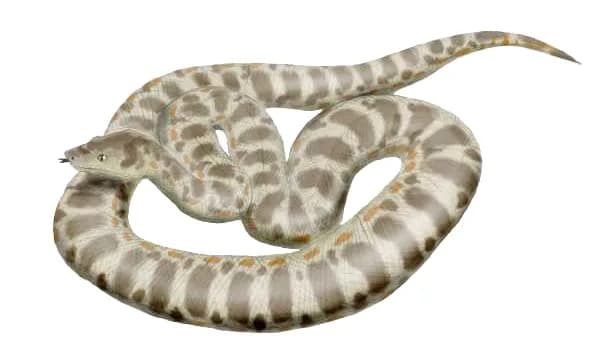
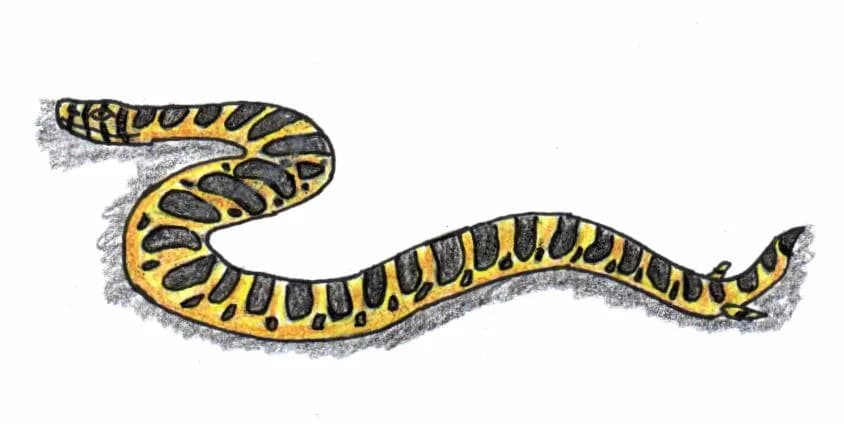
Pachyrhachis problematicus measured approximately 1 meter in total length, making it a relatively small snake. Its body was elongated and slightly laterally compressed, adapted for swimming in a marine environment. It possessed small vestigial hind limbs, reduced but still visible in the fossil skeleton, attesting to its status as a primitive snake in evolutionary transition. The skull was proportionally small and elongated, with intermediate characteristics between aquatic lizards and modern snakes.
Pachyrhachis was a marine predator that likely fed on small fish, cephalopods, and marine invertebrates in the shallow waters of the Tethys. Its pointed, slightly recurved dentition was adapted for capturing slippery prey in water. Like modern sea snakes, it probably swallowed its prey whole after seizing them. Its modest size limited its prey to small animals, and it occupied an ecological niche as an intermediate marine predator in reefs and shallow seafloors.
Pachyrhachis inhabited the warm, shallow seas of the Tethys during the Late Cretaceous, in the region that corresponds today to Israel and the Palestinian territories. The Cenomanian marine limestones in which it was found indicate a shallow continental shelf environment rich in marine life. The clear, warm waters harbored reefs, fish, and a diversity of marine invertebrates. This tropical marine environment was very different from the arid terrestrial settings where its cousin Najash lived in Patagonia.
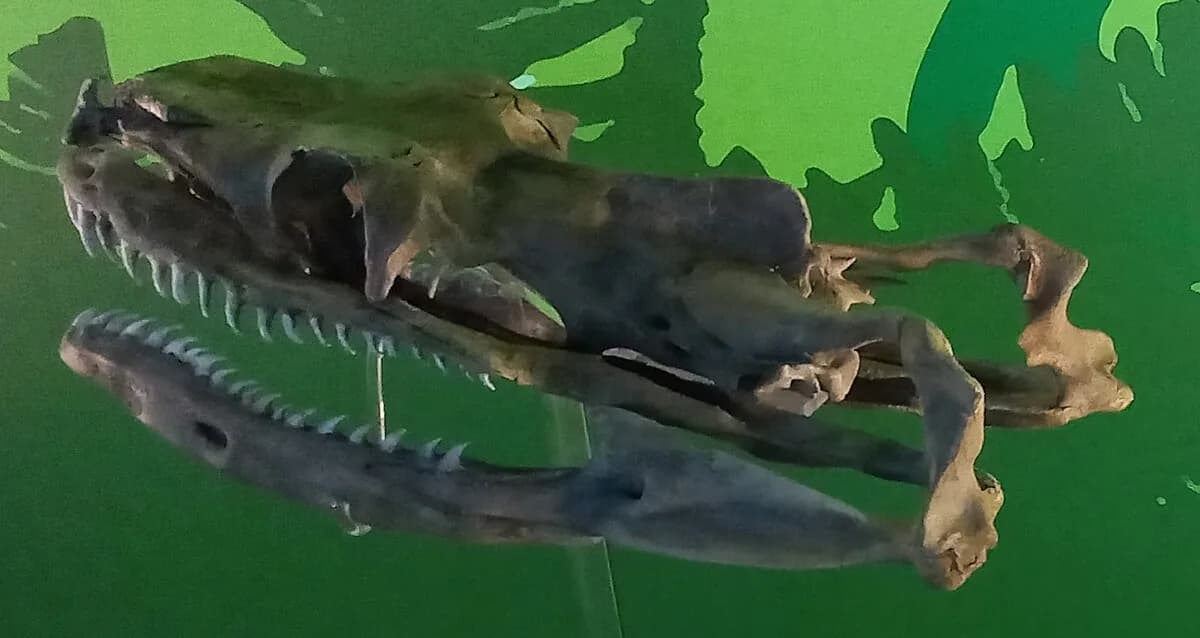
Pachyrhachis's anatomy presents a striking mosaic of primitive and derived characters. It possessed small vestigial hind limbs with a femur and possibly a reduced tibia, articulated to a rudimentary pelvis. Its skull already showed the characteristic mobility of snakes (cranial kinesis) but retained certain bones present in lizards. The vertebral column contained numerous vertebrae with ribs, giving the body its typically serpentine elongated shape. The exact phylogenetic position of Pachyrhachis remains debated: some place it among the most basal snakes, others among alethinophidians (advanced snakes).
Pachyrhachis was a fully aquatic snake that spent its life in marine waters. Its locomotion relied on lateral undulation of the body, similar to modern sea snakes. Its vestigial limbs probably no longer served for locomotion but may have played a role during mating. It likely hunted by ambush among rocks and corals on shallow seafloors, watching for fish and invertebrates passing within range. Its activity was probably diurnal, taking advantage of light to spot prey in the clear waters.
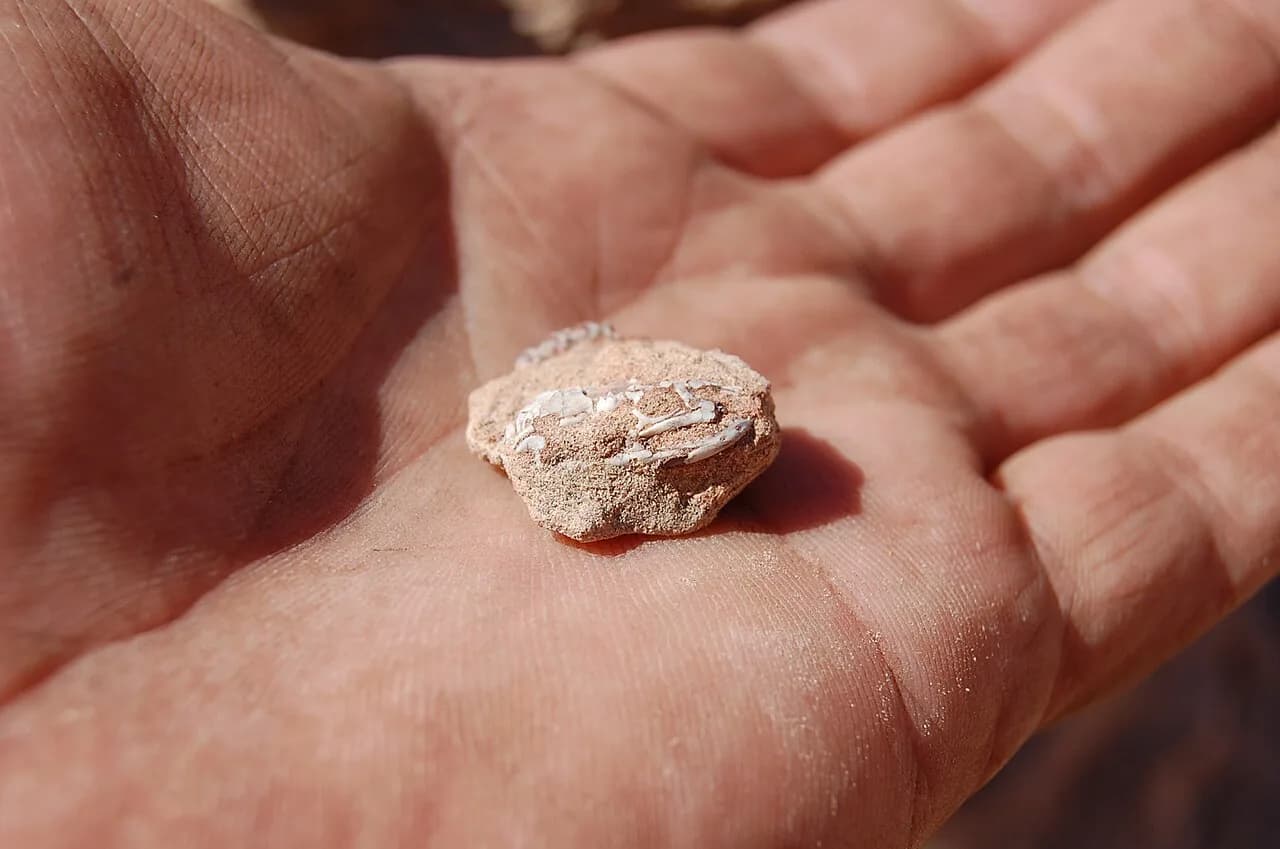
Pachyrhachis problematicus was described in 1979 by Haas from fossils discovered in Cenomanian limestones at Ein Yabrud, near Ramallah, in the Palestinian territories. The name means 'thick spine' (Greek pachys = thick, rhachis = spine), referring to the robustness of its vertebrae. In 2000, a study by Tchernov et al. described a remarkably complete second specimen, reigniting the debate on snake origins. Pachyrhachis's position in the snake phylogenetic tree remains controversial, with some placing it very low in the tree (very primitive snake) and others among more derived snakes that secondarily retained limbs.
| Period | Crétacé supérieur / Late Cretaceous |
| Era | Mésozoïque / Mesozoic |
| Age | ~98 Ma |
| Location | Moyen-Orient (Israël, Territoires palestiniens) / Middle East (Israel, Palestinian territories) |
| Length | ~1 m |
| Height | N/A |
| Weight | ~0.5-1 kg (estimé / estimated) |
| Diet | Carnivore |
| Discovery | 1979 |
Pachyrhachis problematicus was neither a dinosaur nor a marine reptile like mosasaurs. It was a primitive snake — a squamate — that lived approximately 98 million years ago in the Tethys seas. Its unique feature is the presence of vestigial hind limbs (reduced femur), evidence of the evolutionary transition of snakes from their four-limbed ancestors.
Pachyrhachis problematicus supported the marine origin hypothesis for snakes, but the debate is not settled. Its phylogenetic placement is controversial: some classify it among the most basal snakes, others among advanced snakes. Its terrestrial cousin Najash (Patagonia, Cenomanian) supports the terrestrial hypothesis. The question of snake origins remains open as of 2024.
Pachyrhachis problematicus measured approximately 1 meter in length with an estimated weight of 0.5–1 kg. Fully aquatic in the Tethys marine waters 98 million years ago, it likely hunted by ambush among corals and rocks on shallow seafloors, capturing small fish and invertebrates with its slightly recurved conical dentition.
Pachyrhachis problematicus life reconstruction
Wikimedia Commons