Miragaia
Miragaia longicollum carries at least seventeen cervical vertebrae, a record among stegosaurids and more than many early sauropods. At 5.5 to 6 metres and 1.5 to 2 tonnes, it browsed Portugal 150 to 145 million years ago. Its name comes from the parish of Miragaia, where its fossils were freed from the Lourinhã Formation, and it was only described in 2009.
Playable in Path of Titans
See Miragaia longicollum's stats, abilities and role on our survival server.
Miragaia longicollum lived in the Late Jurassic, spanning the Kimmeridgian to Tithonian stages, approximately 150 to 145 million years ago. This period marks the peak diversity of stegosaurids across Europe and North America, when genera like Stegosaurus and Dacentrurus occupied plains and coastal forests. Late Jurassic Portugal consisted of islands or peninsulas along the western margin of Laurasia, surrounded by shallow seas. The climate was warm and seasonal, with dense vegetation of ferns, cycads, and primitive conifers sustaining a diverse fauna of herbivorous dinosaurs and theropods.
The Lourinhã Formation of Portugal is one of Europe's richest Late Jurassic fossil deposits. The partial remains of this stegosaurid were recovered in the parish of Miragaia, in the district of Torres Vedras, giving the genus its name — a standard practice in European paleontology to geographically anchor new taxa. The species was formally described in 2009 by Octávio Mateus, Susannah Maidment, and Nicolai Christiansen in a paper published in the Proceedings of the Royal Society B. The type species, M. longicollum, takes its epithet from the Latin longi- (long) and collum (neck), directly referencing the animal's most striking anatomical feature.
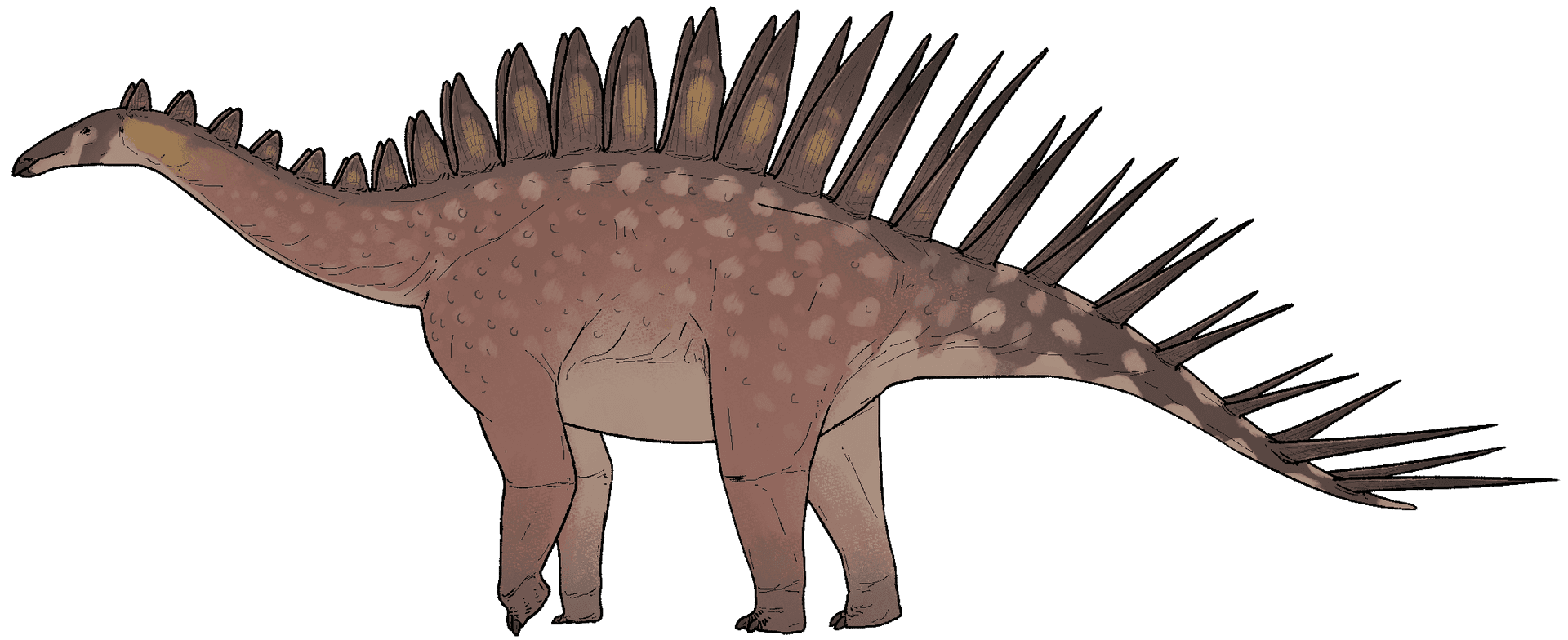
Miragaia measured approximately 5.5 to 6 meters in total length with an estimated mass of 1,500 to 2,000 kg, placing it among medium-to-large stegosaurids, comparable to Dacentrurus. Its general body plan followed the stegosaurid pattern: massive torso, elevated hips, shorter forelimbs than hindlimbs. The standout feature is the neck: with at least 17 cervical vertebrae documented on the holotype specimen, Miragaia holds the record for the longest neck of any known stegosaur, exceeding even some basal sauropods which typically count 12 to 15 cervicals. This extraordinary neck length likely allowed it to browse at shoulder height or slightly above, a feeding advantage in an environment shared with large herbivores.
A strict herbivore like all stegosaurids, Miragaia fed on low-to-mid-height vegetation in the forests and floodplains of the Lourinhã Formation. Its toothless beak cropped soft plant matter — ferns, cycad fronds, low conifer shoots — while small leaf-shaped teeth in the back of the jaw roughly processed plant material before swallowing. The elongated neck relative to other stegosaurids suggests it may have accessed a slightly different vegetation layer than contemporaries, potentially reducing interspecific food competition. A voluminous hindgut fermentation system, typical of large herbivores, completed the processing of the tough plant fibers it ingested daily.
Miragaia inhabited coastal environments and river floodplains of the Lourinhã Formation, in what is now the Torres Vedras region of Portugal. During the Late Jurassic, this zone sat along the Laurasian shoreline, with islands and shallow sea arms separating forested landmasses. Sediments from the Lourinhã Formation indicate floodplain, delta, and riparian forest environments, with episodes of seasonal drought. Miragaia coexisted with other dinosaurs from the same formation, including the theropod Torvosaurus tanneri — one of the largest carnivores of the European Jurassic — as well as sauropods like Lusotitan and the ornithopod Draconyx. The Lourinhã Formation has yielded dinosaur embryos, trackways, and multiple new species described since the 1990s, cementing Portugal as a world-class Jurassic site.
The major anatomical contribution of Miragaia is demonstrating that neck elongation evolved independently within the stegosaur lineage, paralleling the well-documented phenomenon in sauropods. The 17 cervical vertebrae identified on the holotype — likely more on a complete individual — represent an absolute record for stegosaurs, most of which count around 12. Each cervical vertebra is proportionally elongated, with reduced neural spines that facilitated vertical neck mobility. Like its cousins, Miragaia bore osteodermic plates along its back and likely caudal spines (thagomizer) at the tail tip, serving as a defensive weapon against theropods in its community. The right humerus is one of the best-preserved elements of the type specimen; its robust architecture reflects the powerful shoulder-forearm musculature required to support the extra load that an elongated neck places on the anterior body.
Like most stegosaurids, Miragaia was probably a solitary or small-group animal, without the large migratory herds documented for some sauropods and ornithopods. Its thagomizer — the long, pointed caudal spines at the tail tip — provided the primary defense against giant theropods like Torvosaurus that shared its geological formation. Defensive behavior likely involved presenting the flank or hindquarters toward a predator to deploy the armed tail, while shielding the vulnerable head and long neck. Miragaia's neck morphology raises questions about its habitual posture: carried upright, at an oblique angle, or nearly horizontal? Biomechanical analysis of the vertebrae suggests a moderate S-curve posture, allowing the animal to shift from ground-level to shoulder-height browsing as feeding opportunities arose. The dorsal plates, as in Stegosaurus, may have played a role in thermoregulation or intraspecific signaling.
Miragaia belongs to the order Ornithischia, the clade Thyreophora, and the family Stegosauridae. Its description in 2009 by Mateus, Maidment, and Christiansen established it as a distinct genus within Stegosauridae, possibly close to Dacentrurus — another large stegosaurid known mainly from Portugal and Spain. The original publication already noted the close anatomical resemblance between Miragaia and Dacentrurus, flagging that certain distinguishing characters might fall within intraspecific or ontogenetic variability. In 2019, Costa and Mateus reassessed the material and proposed that Miragaia could be a junior synonym of Dacentrurus armatus — meaning both names might refer to the same animal. Other researchers maintain the generic separation pending more complete material allowing a direct comparison of both taxa. The debate remains open as of 2026: Miragaia is recognized as a valid genus by part of the specialized literature, while others subsume it under Dacentrurus in their phylogenetic analyses. No consensus exists, and the question largely hinges on the availability of new material from either taxon.
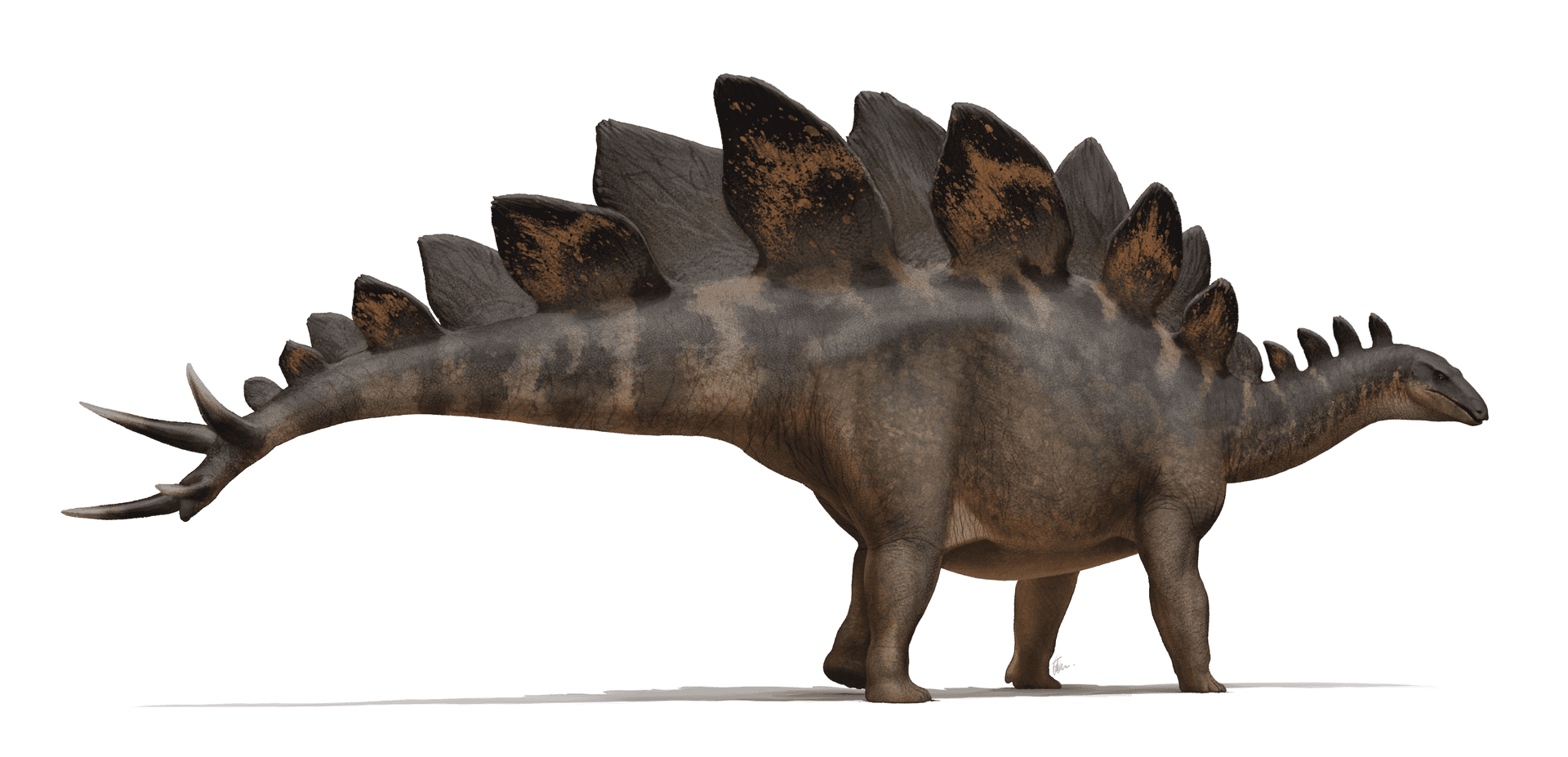
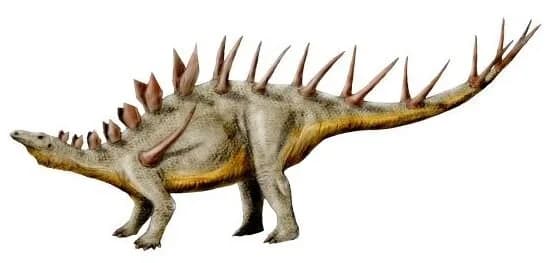
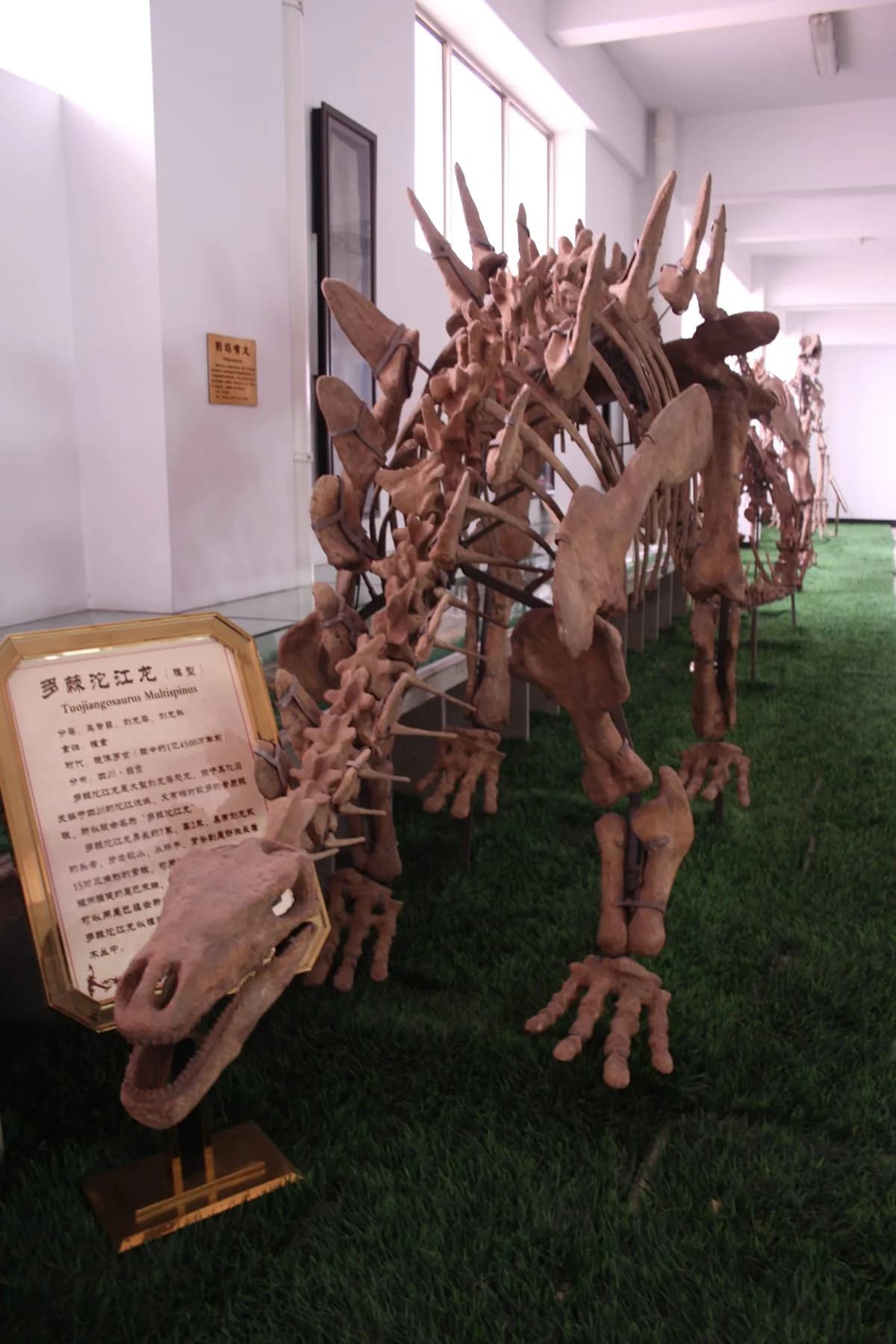
Among stegosaurids, Miragaia stands out primarily for the exceptional length of its neck — a character without parallel in the group. Stegosaurus stenops, the best-known North American species, has only 12 cervical vertebrae and a short, rigid neck. East African Kentrosaurus aethiopicus shares with Miragaia the Late Jurassic setting and a defensive arrangement of caudal spines, but its neck is equally short and its anterior region less specialized. Chinese Tuojiangosaurus multispinus presents a general morphology close to North American Stegosaurus, with no notable cervical elongation. Dacentrurus armatus, Miragaia's closest taxonomic relative and likely synonym according to Costa and Mateus (2019), is known from scattered remains in Portugal and Spain that do not yet allow a vertebra-by-vertebra comparison of the neck. Miragaia illustrates a convergent evolutionary trend — cervical elongation — found across distantly related lineages from sauropods to modern giraffes, suggesting that access to elevated vegetation layers constitutes a recurring selective advantage.
The type material of Miragaia longicollum consists of a partial specimen (ML 433) housed at the Museu da Lourinhã in Portugal, including the cervical and anterior dorsal region, the right forelimb, and several osteoderms. This specimen provided the 17 cervical vertebrae and allowed the formal description of the species in 2009. The Lourinhã Museum is the reference institution for Portuguese Jurassic paleontology, also housing dinosaur eggs and embryos as well as remains of Torvosaurus and Lusotitan. Additional material attributed to Miragaia or Dacentrurus has been recovered from the same formation in subsequent decades, but no articulated complete skeleton has yet been described for either taxon. The fossilization conditions of the Lourinhã Formation — rapid fluvial sediments that occasionally covered entire carcasses — leave open the possibility of more complete material being found in the years ahead.
Miragaia has a limited presence in mainstream popular culture, unlike Stegosaurus or Ankylosaurus which have dominated mass media for a century. Its status as a recent discovery (2009) and the ongoing taxonomic debate over its generic validity have slowed its spread beyond specialist circles. Within the paleontological community, it is primarily cited as the most striking example of cervical elongation in stegosaurs — an evolutionary paradox that conference talks and popular-science articles regularly invoke to illustrate convergent evolution. Portugal has positioned itself since the 2000s as one of the world's leading countries for Late Jurassic paleontology, and Miragaia contributes to that growing profile alongside Torvosaurus gurneyi and the famous Lourinhã eggs. Skeletal reconstructions and life restorations of Miragaia circulate in online paleo communities, particularly following the detailed skeletal diagram published in the original description paper. It is not currently a playable dinosaur in paleosimulation games such as The Isle or Path of Titans.
| Period | Jurassique supérieur / Late Jurassic |
| Era | Mésozoïque / Mesozoic |
| Age | 150–145 Ma |
| Location | Europe / Europe (Portugal) |
| Length | 5.5–6 m |
| Height | ~2 m |
| Weight | 1 500–2 000 kg |
| Diet | Herbivore |
| Discovery | 2009 |
Miragaia longicollum had at least 17 cervical vertebrae on the holotype (ML 433), an absolute record among stegosaurs, most of which count only 12. This exceptionally long neck — comparable to some basal sauropods — allowed it to browse at shoulder height. This evolution parallel to sauropods is a classic example of convergent evolution. Described in 2009 by Mateus, Maidment, and Christiansen.
The status of Miragaia longicollum remains debated as of 2026. Costa and Mateus (2019) proposed that Miragaia is a junior synonym of Dacentrurus armatus, both names referring to the same animal. Other researchers maintain the generic separation. Without articulated complete skeletons of both taxa for direct comparison, consensus is impossible. Phylogenetic analyses diverge depending on the authors.
Miragaia longicollum lived in the Lourinhã Formation (Portugal), 150 to 145 million years ago, in coastal floodplains and riparian forests of Laurasia. It shared habitat with Torvosaurus tanneri — one of the largest carnivores of the European Jurassic — as well as the sauropod Lusotitan and the ornithopod Draconyx. Late Jurassic Portugal was then a series of islands or peninsulas on the edge of a shallow sea.
Information on this page is based on peer-reviewed scientific publications.
Life reconstruction of Miragaia longicollum
Connor Ashbridge (Ddinodan), CC BY-SA 4.0, via Wikimedia Commons
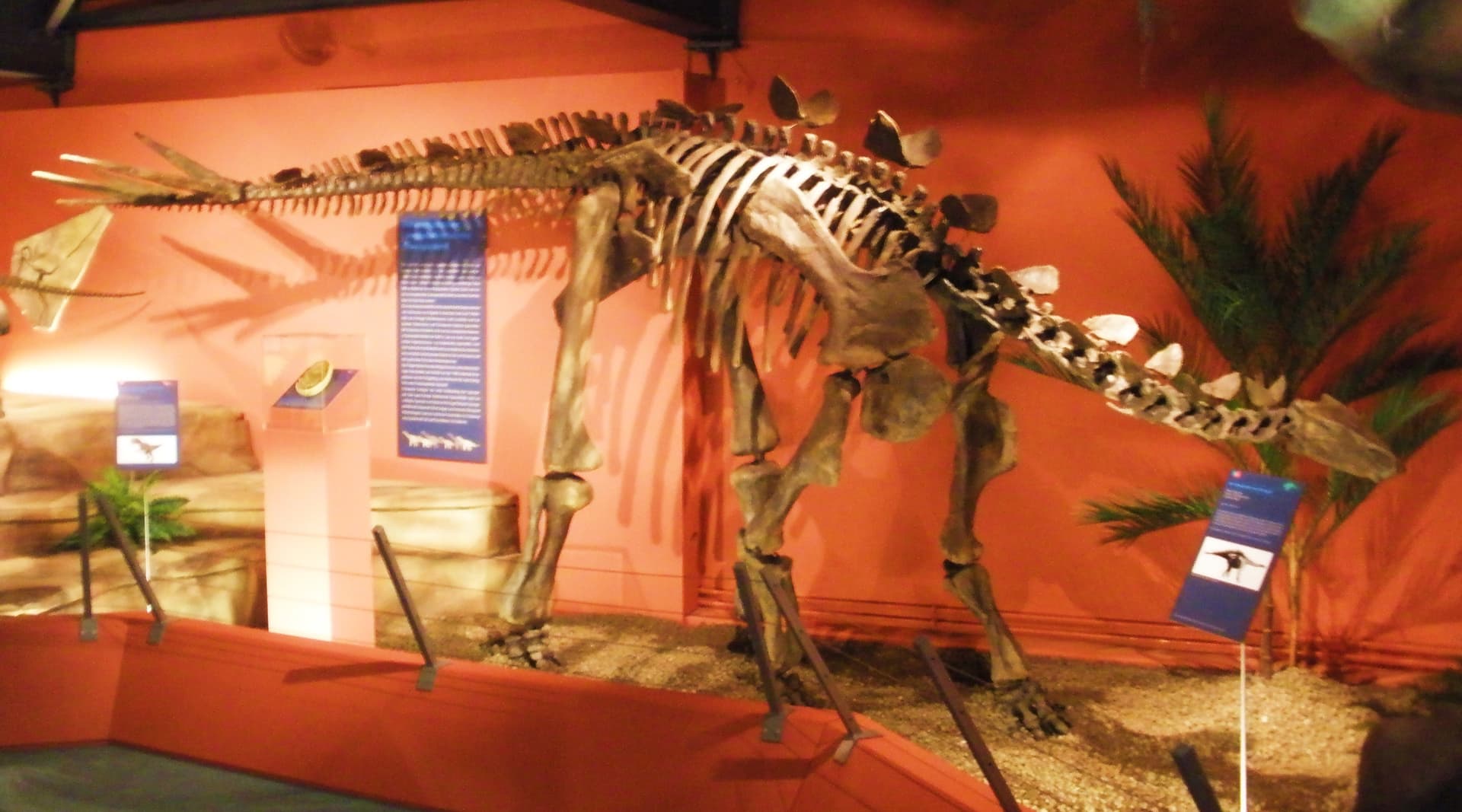
Miragaia longicollum fossil
Ghedoghedo, CC BY-SA 3.0, via Wikimedia Commons