Métoposaurus
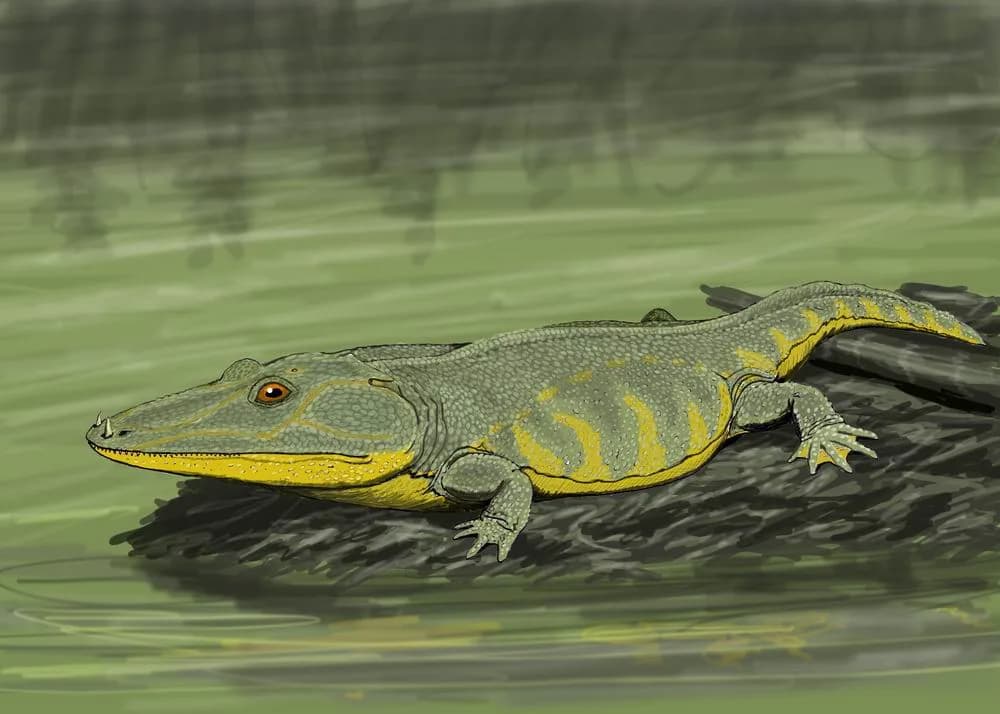
Metoposaurus diagnosticus had its eyes set on top of the skull, like a hippopotamus: it could watch for prey while staying almost fully submerged. This amphibian, 3 metres long and 100 to 200 kilograms, lived 230 to 215 million years ago. In Poland, hundreds of individuals were found dead together in a dried-up lake.
Metoposaurus diagnosticus lived during the Late Triassic (Carnian-Norian), approximately 230 to 215 million years ago. This large temnospondyl belonged to the Metoposauridae family, a group of flat-headed giant aquatic amphibians that dominated the lakes and waterways of the Late Triassic across Pangaea. Metoposaurids were among the last great temnospondyls before their final decline. Metoposaurus coexisted with the first dinosaurs and phytosaurs, occupying the ecological niche of aquatic ambush predator.
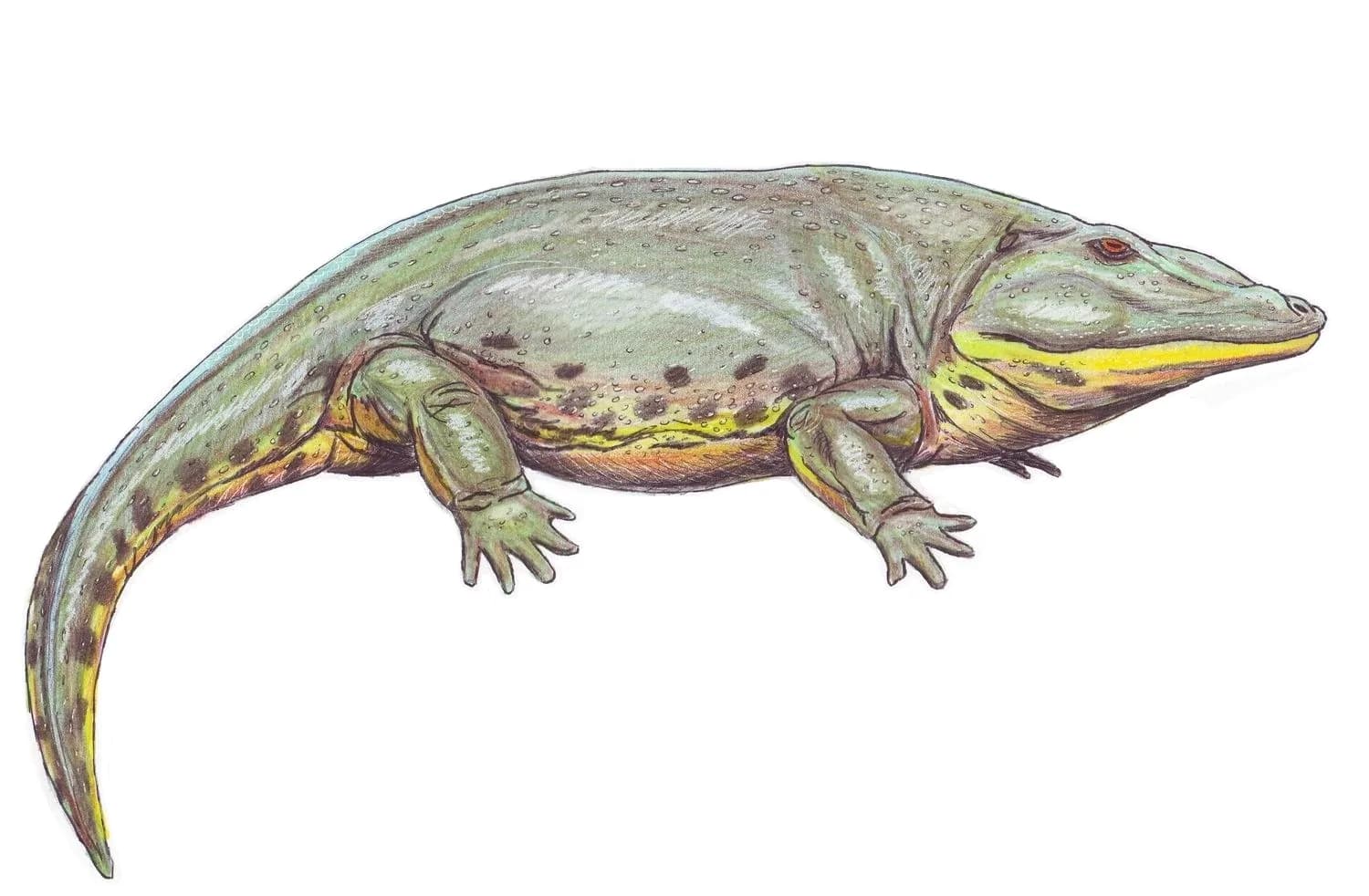
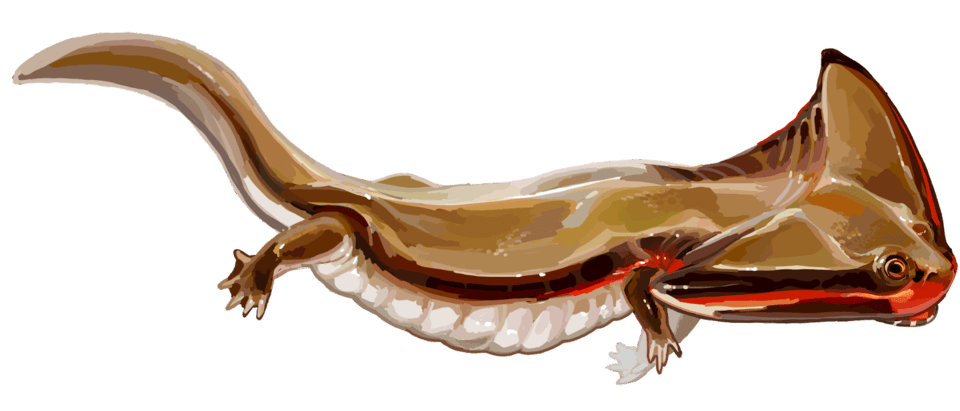
Metoposaurus diagnosticus measured approximately 3 meters in total length, making it an imposing amphibian but smaller than its cousin Mastodonsaurus. Its flattened, triangular skull measured about 50 to 65 centimeters long. The body was elongated and relatively dorsoventrally flattened, with a broad, laterally compressed tail adapted for swimming. The limbs were short and weak, indicating a primarily aquatic lifestyle. Estimated weight ranged between 100 and 200 kilograms depending on specimens.
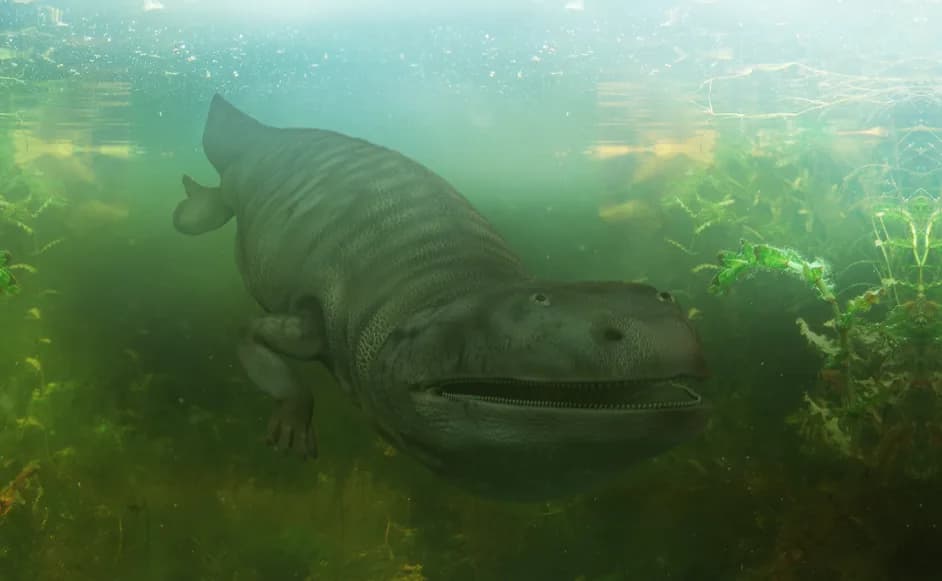
Metoposaurus was an aquatic predator that fed primarily on fish. Its broad, flat mouth functioned as a snap trap: positioned at the bottom of lakes, it suddenly opened its jaw to engulf fish and small amphibians through a suction effect. The orbits positioned on top of the skull allowed it to watch for prey while remaining almost entirely submerged, crocodile-fashion. Its dentition, composed of numerous small conical teeth, was adapted for seizing and retaining slippery prey rather than tearing.
Metoposaurus inhabited seasonal lakes and rivers of the Late Triassic alluvial plains. Its fossils have been found in Poland, Portugal, Germany, and North Africa, testifying to a widespread distribution across Pangaea. The Triassic climate was hot and semi-arid with seasonal monsoons creating cycles of flooding and drought. Metoposaurus was entirely dependent on the presence of water and vulnerable to prolonged droughts. Mass death sites in Poland and Portugal show dozens of individuals dying together during catastrophic drying events.
The Metoposaurus skull is characteristic of metoposaurids: very wide, flat, and triangular, with orbits positioned dorsally (on top) rather than laterally. This eye position is typical of an ambush predator observing from the water surface. The palate bore numerous small teeth in addition to marginal teeth. Lateral line sensory grooves covered the skull, indicating a developed aquatic sensory system. The body bore ventral osteoderms. The broad, muscular tail served as the main propulsion in water, while the short limbs only allowed limited terrestrial movement.
Metoposaurus was a gregarious animal that lived in groups in lakes and water bodies. Mass mortality sites discovered in Poland (Krasiejów) and Portugal reveal dozens, even hundreds of individuals trapped together during the desiccation of their habitat. This gregarious behavior is rare in large modern amphibians but recalls modern hippopotami gathering in the last pools during the dry season. Metoposaurus was vulnerable to droughts because it could not move effectively on land. These mass mortality events created exceptional bonebeds for paleontologists.
Metoposaurus diagnosticus was first described in 1842 by H. von Meyer from fossils found in Germany. The name means 'forehead lizard' (Greek metopon = forehead, sauros = lizard), referring to the frontal position of the orbits. The most spectacular sites are at Krasiejów in Poland, where an exceptional bonebed yielded hundreds of individuals preserved together in an ancient dried lake. In 2015, Brusatte et al. described Metoposaurus algarvensis from Portugal, a new species from a similar deposit. These mass mortality sites provide unique information about population biology and ecological catastrophes of the Triassic.
| Period | Trias supérieur / Late Triassic |
| Era | Mésozoïque / Mesozoic |
| Age | 230-215 Ma |
| Location | Europe (Pologne, Portugal, Allemagne), Afrique du Nord / Europe (Poland, Portugal, Germany), North Africa |
| Length | ~3 m |
| Height | ~30 cm |
| Weight | 100-200 kg (estimé / estimated) |
| Diet | Piscivore |
| Discovery | 1842 |
No. Metoposaurus diagnosticus was a temnospondyl, a giant aquatic amphibian of the family Metoposauridae, not a dinosaur. This amphibian group predates dinosaurs and belongs to a distinct lineage. Metoposaurus lived during the Late Triassic (230–215 Ma) in the lakes and rivers of Pangaea, coexisting with the first dinosaurs but unrelated to them.
The Krasiejów site (Poland) yielded hundreds of Metoposaurus diagnosticus individuals preserved together in ancient lake sediments. This exceptional bonebed likely resulted from catastrophic seasonal droughts: entirely dependent on water, these amphibians gathered in the last shrinking pools, like modern hippopotami, and died en masse when the water body finally dried up completely.
Metoposaurus diagnosticus was an aquatic ambush predator. Its orbits positioned on top of its flattened skull allowed it to watch for prey from the surface while remaining almost entirely submerged. Its broad jaws functioned as a snap trap: sudden opening created a suction effect drawing in fish and small amphibians. Its numerous small conical teeth retained slippery prey without crushing them.
Metoposaurus diagnosticus digital reconstruction
Wikimedia Commons