Mégapnosaure
Megapnosaurus rhodesiensis carries one of palaeontology's least flattering names: « big dead lizard », given by entomologists rather than palaeontologists. This theropod, 1.5 to 2 metres and 15 to 30 kilograms, lived around 200 million years ago in Zimbabwe and Arizona. Dozens of specimens found together suggest gregarious behaviour.
Megapnosaurus lived during the Early Jurassic period, approximately 200 to 190 million years ago, during the Hettangian-Sinemurian stages. This period closely follows the great end-Triassic extinction, which eliminated many reptile groups and paved the way for dinosaur dominance. The Early Jurassic was a transitional time when early dinosaurs began diversifying their forms and occupying ecological niches left vacant by the extinction. Pangaea was beginning to fragment, creating new environments and migration corridors. Megapnosaurus is one of the earliest well-documented theropods from southern Africa.
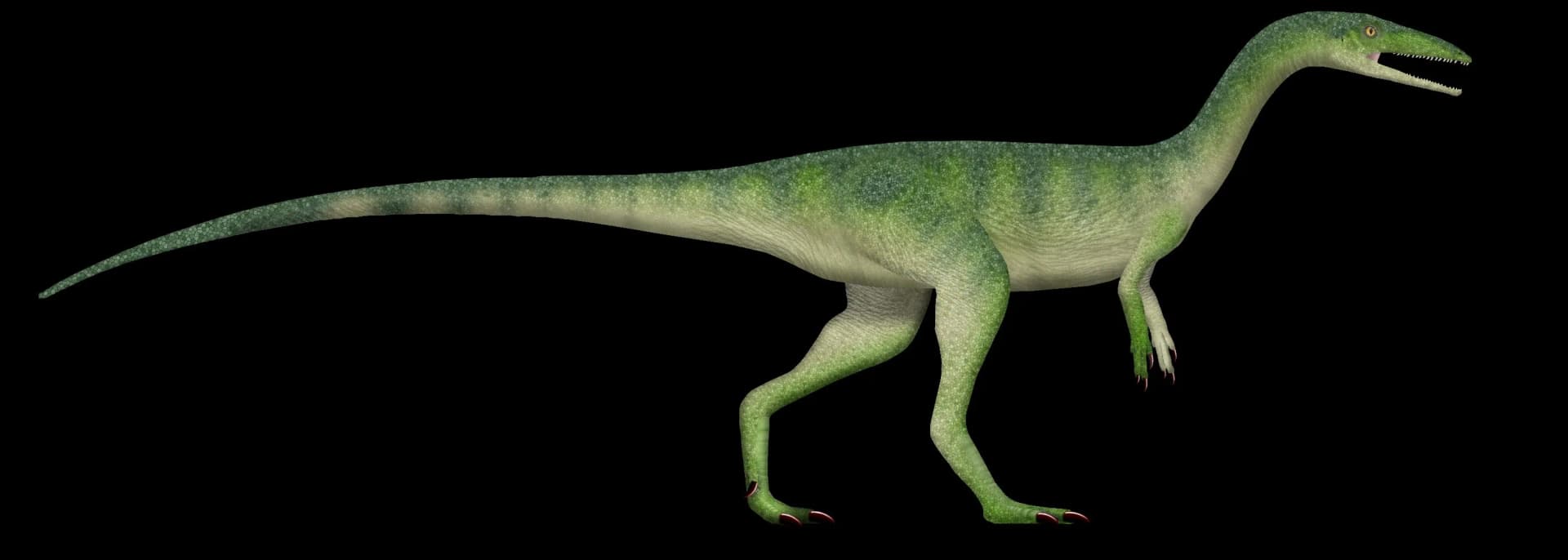
Megapnosaurus was a small, agile theropod measuring approximately 1.5 to 2 meters in length and weighing an estimated 15 to 30 kilograms. Its hip height was approximately 50 centimeters. It was a dinosaur roughly the size of a large dog, but of slender and light build, adapted for fast running. Its long, rigid tail served as a counterbalance during running. Compared to its close relative Coelophysis, Megapnosaurus was similar in size but showed subtle anatomical differences, particularly in the structure of its skull and cervical vertebrae. Its small size made it a predator of small to medium-sized prey items.
Megapnosaurus was an active carnivore that hunted prey smaller than itself: small reptiles, amphibians, insects, and primitive mammals. Its fine, sharp dentition was adapted for seizing and cutting agile prey. Fossil remains found in the abdominal cavity of Coelophysis specimens (its close relative) have shown the presence of small reptiles and even juveniles of its own species, suggesting occasional cannibalism. The elongated, narrow snout of Megapnosaurus was probably adapted for catching fast prey with precision, much like a heron catches fish. It likely supplemented its diet with opportunistic scavenging when the opportunity presented itself.
Megapnosaurus inhabited the semi-arid environments of southern Africa and possibly North America (Arizona). In Africa, its fossils have been found in the Forest Sandstone Formation in Zimbabwe, representing an environment of sandy plains with seasonal rivers and sparse vegetation of conifers and ferns. The Early Jurassic climate in this region was warm and dry with pronounced seasons. The supercontinent Pangaea had not yet completely fragmented, explaining the presence of similar dinosaurs on different continents. The ecosystem included other primitive dinosaurs, crocodylomorphs, and the last representatives of Triassic reptilian groups.
Megapnosaurus possessed typical coelophysid anatomy: a slender and light body, a long flexible neck, an elongated skull with numerous small sharp teeth, and long hind limbs adapted for bipedal running. Its arms were relatively long for a theropod, with three functional clawed fingers capable of grasping prey. Its long, stiff tail, reinforced by ossified tendons, served as a counterweight during rapid locomotion. The bones were hollow and lightweight, a characteristic theropod adaptation that reduced weight while maintaining structural strength. Some specimens show a bony crest on the snout, whose function remains debated: sexual ornament, thermoregulation, or intraspecific recognition.
Discoveries of multiple Megapnosaurus and close relative Coelophysis specimens at the same sites suggest gregarious behavior. Massive fossil accumulations, such as the famous bone bed at Ghost Ranch in New Mexico for Coelophysis, indicate these small theropods probably lived in groups, perhaps for collective hunting or mutual protection from larger predators. Pack hunting behavior would have allowed capturing prey larger than a single individual could handle. Visual communication through nasal crests and courtship displays were probably important in the social life of these gregarious dinosaurs, as evidenced by dimorphic crest variations.
Megapnosaurus was initially described as Syntarsus rhodesiensis by Michael Raath in 1969, from fossils discovered in the Forest Sandstone Formation in Zimbabwe (then Rhodesia). The name Syntarsus had to be changed in 2001 because it was already used for a beetle genus, and entomologists Ivie, Ślipiński, and Wegrzynowicz proposed the replacement name Megapnosaurus (great dead lizard), a choice many paleontologists found unfortunate. Additional fossils have been found in Arizona, United States (M. kayentakatae), expanding the genus's geographic distribution. Zimbabwean fossils include dozens of specimens of different ages, offering a rare glimpse into growth and individual variability in a primitive dinosaur. Some paleontologists consider Megapnosaurus a synonym of Coelophysis.
| Period | Jurassique inférieur / Early Jurassic |
| Era | Mésozoïque / Mesozoic |
| Age | ~200 millions d'années / ~200 million years ago |
| Location | Zimbabwe, Arizona / Zimbabwe, Arizona |
| Length | 1.5-2 m |
| Height | ~0.5 m |
| Weight | ~15-30 kg |
| Diet | Carnivore |
| Discovery | 1969 |
Megapnosaurus rhodesiensis was originally described in 1969 by Michael Raath as Syntarsus rhodesiensis. In 2001, this name had to be replaced because Syntarsus was already in use for a beetle genus, which takes priority under nomenclature rules. Entomologists Ivie, Ślipiński, and Wegrzynowicz proposed Megapnosaurus ('great dead lizard'), a choice considered unfortunate by many paleontologists but nomenclaturally valid.
Megapnosaurus rhodesiensis measured 1.5 to 2 meters in length with an estimated weight of 15 to 30 kilograms — roughly the size of a large dog. This coelophysid from the Early Jurassic (200–190 Ma) inhabited the semi-arid environments of the Forest Sandstone Formation in Zimbabwe (former Rhodesia), with a possible distribution extending to Arizona (M. kayentakatae). Its slender build and hollow bones indicate an agile runner.
The question remains debated. Some paleontologists consider Megapnosaurus rhodesiensis a synonym or close relative of Coelophysis bauri, given their very similar anatomies. Others maintain the two as distinct genera due to subtle anatomical differences in skull structure and cervical vertebrae. Zimbabwean fossils include dozens of specimens of different ages, offering a rare glimpse into growth in a primitive dinosaur.
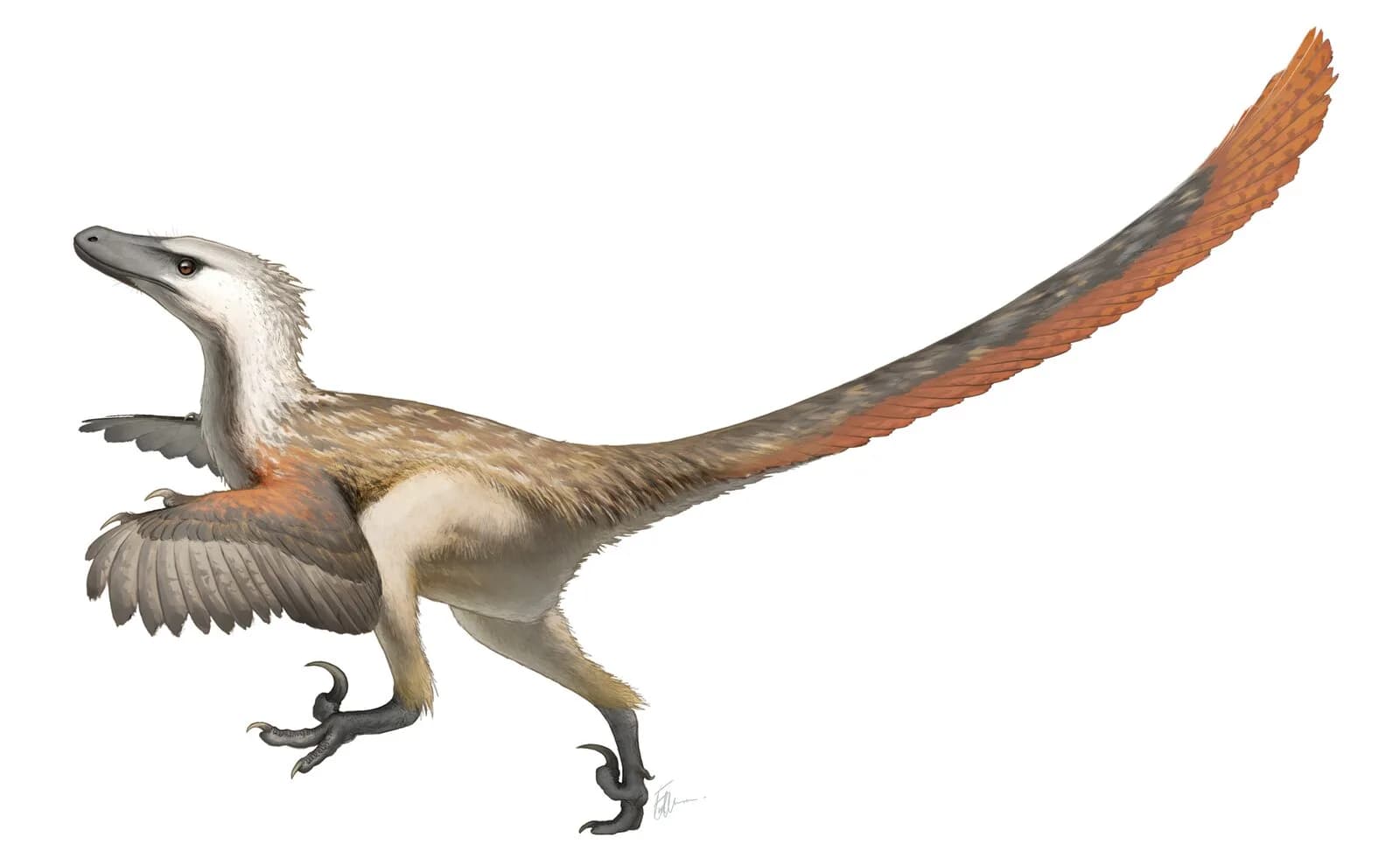
Reconstruction of Megapnosaurus
Wikimedia Commons
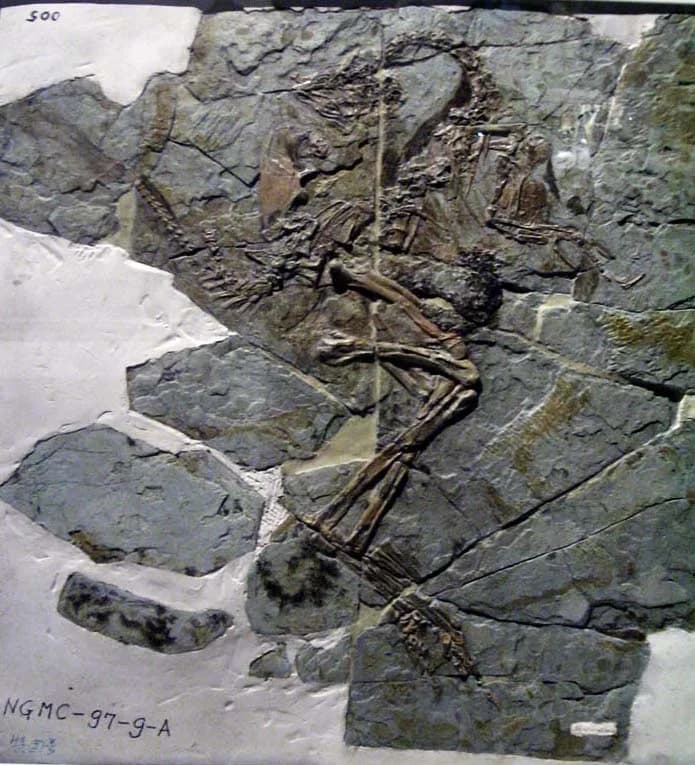
Megapnosaurus rhodesiensis skeleton
Wikimedia Commons