Hurdia
Hurdia victoria was a Cambrian arthropod from British Columbia, described in 1912 and dated to around 508 million years ago. At 20 to 50 centimetres and close to 500 grams, it was mistaken for three separate animals — a shrimp, a crustacean and a jellyfish — for 97 years, until reunified in 2009. Its H-shaped carapace remains unique.
Hurdia lived during the Middle Cambrian, approximately 508 million years ago (Wuliuen). This large anomalocarid inhabited the warm, shallow seas covering what is now British Columbia, Canada. The Middle Cambrian marks the famous 'Cambrian explosion,' an unprecedented period of biological innovation when the majority of modern animal body plans appeared. Hurdia was among the largest predators in its ecosystem within the Burgess Shale, a world-renowned fossil site.
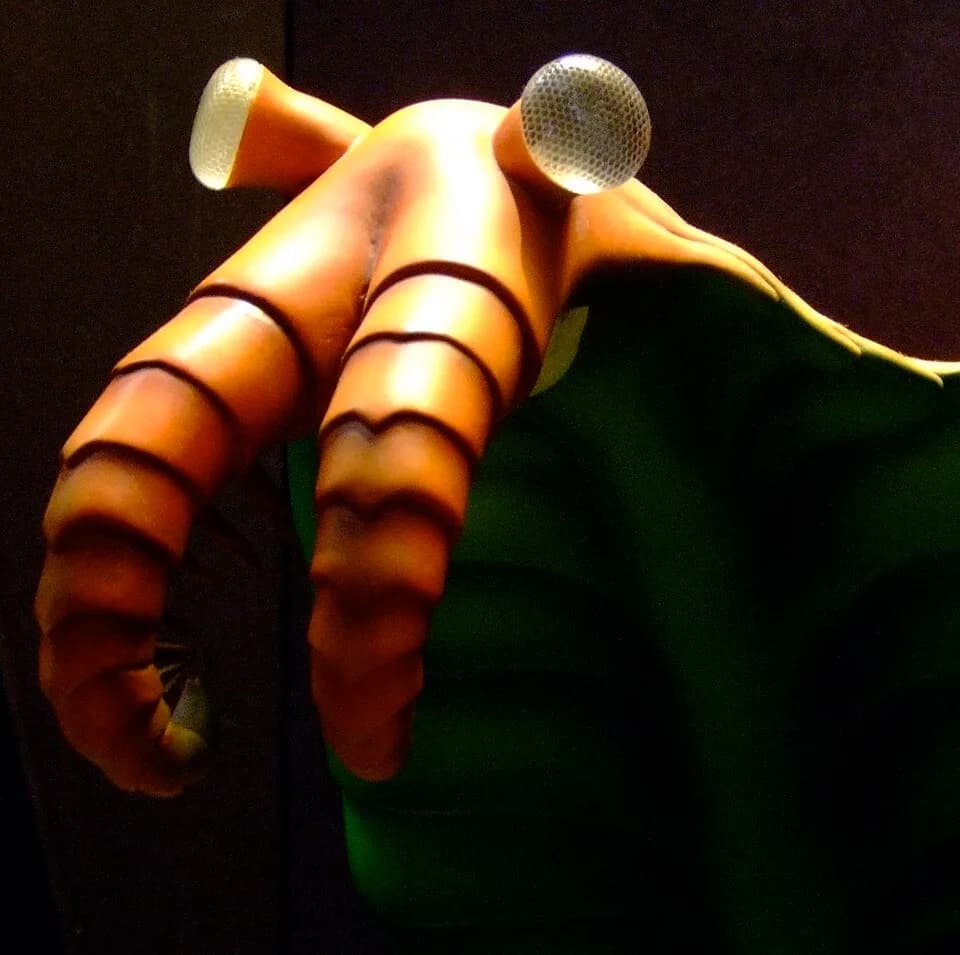
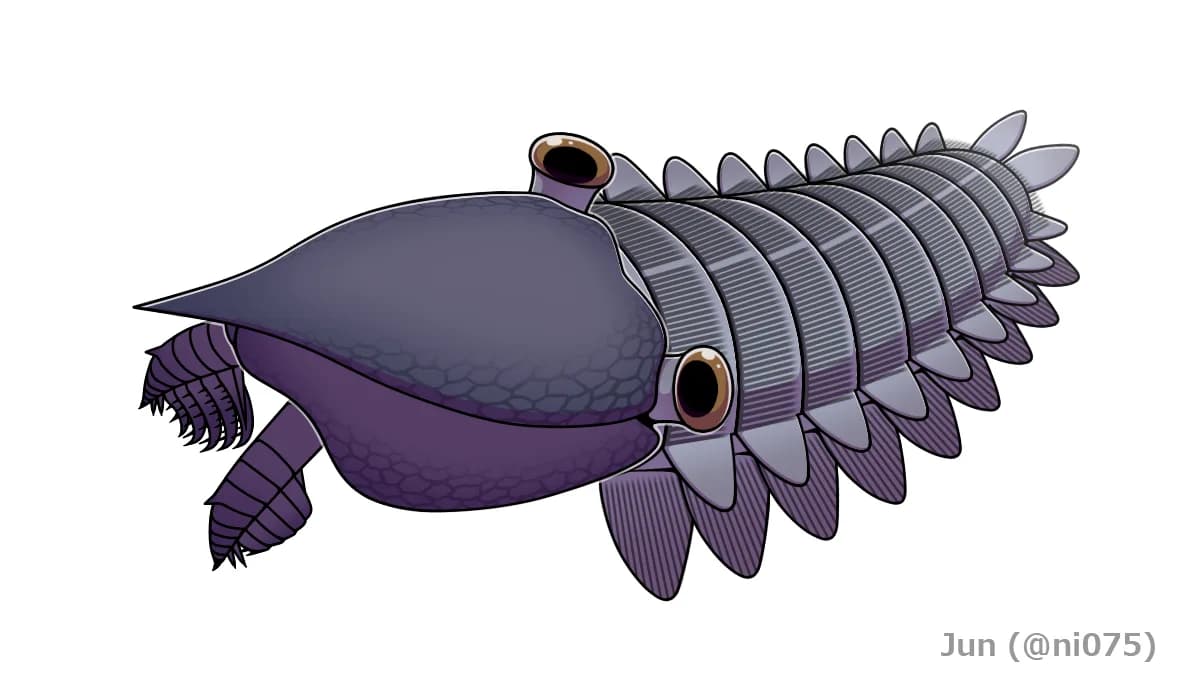
Hurdia victoria measured approximately 20 to 50 centimeters in total length, making it one of the largest animals of the Cambrian explosion after Anomalocaris. Its body was segmented and flattened, with a broad H-shaped head carapace that is its most recognizable feature. This frontal carapace could measure up to 15 centimeters wide. Its oral appendages were robust and spiny, and its circular mouth was bordered by toothed plates. Hurdia's size varied considerably between specimens.
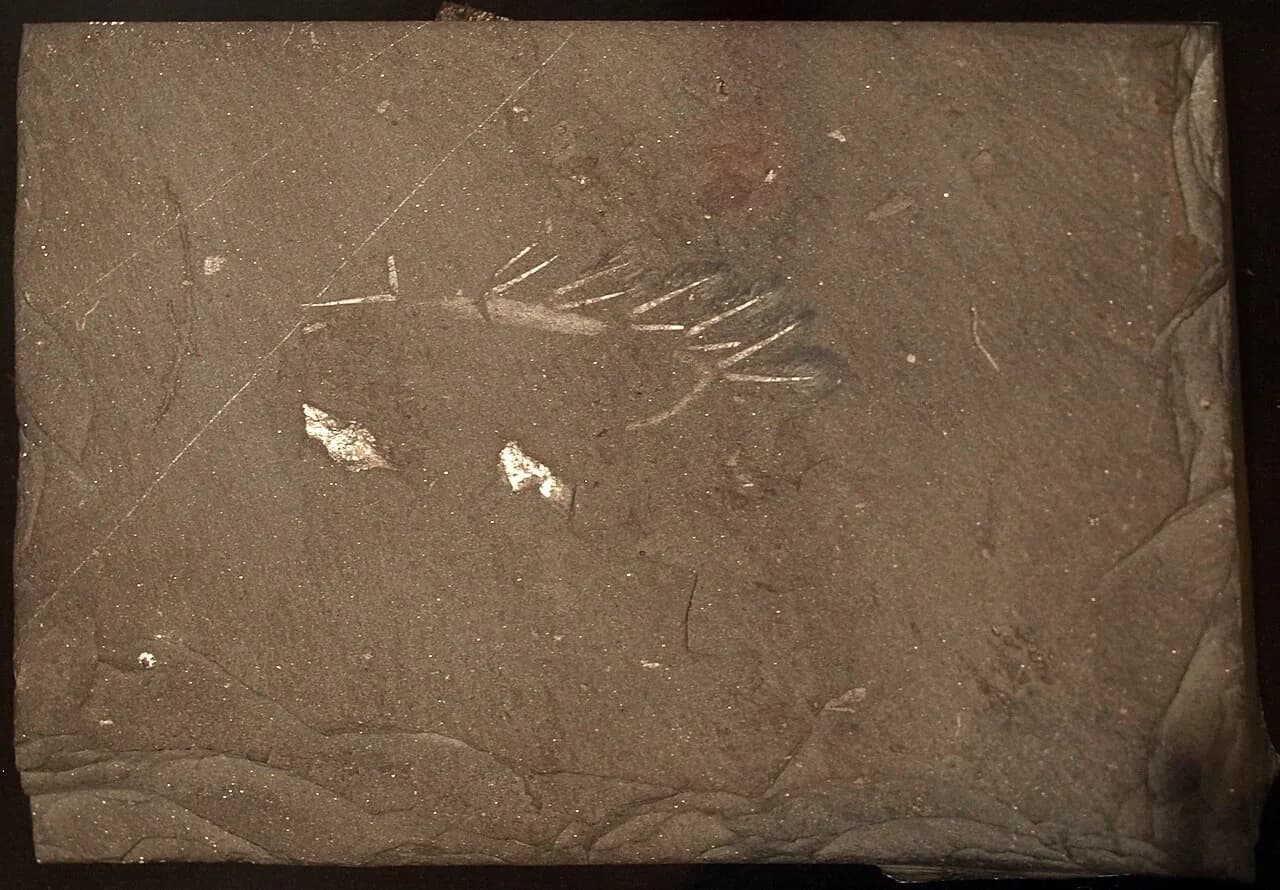
Hurdia was a predator-filter feeder of Cambrian seas. Its frontal appendages bore long spines arranged in a comb pattern, forming an efficient filtering apparatus for capturing plankton and small suspended organisms. Unlike its cousin Anomalocaris which actively hunted large prey, Hurdia probably combined predation of medium-sized prey with filtration of smaller food particles. This mixed feeding strategy allowed it to exploit a wider range of resources in the nutrient-rich Cambrian waters.
Hurdia inhabited the shallow marine waters of the Cambrian continental shelf, in a reef and mud environment at the base of a submarine cliff. The Burgess Shale, where its fossils were preserved, represents an ancient sea floor where submarine mudflows periodically buried benthic and nektic communities. The water was warm, well-oxygenated at the surface but anoxic in the sediments, which enabled the exceptional preservation of soft parts.
Hurdia's anatomy is characteristic of radiodonts (anomalocarids) with unique innovations. Its H-shaped head carapace, composed of three elements (one central and two lateral), has no equivalent in other anomalocarids. Its frontal appendages, inserted beneath the carapace, were robust and bore rows of spines for prey capture and filtration. Its circular mouth featured toothed plates arranged in a ring, typical of the group. The segmented body bore lateral swimming lobes for propulsion and lamellar gills for respiration.
Hurdia actively swam in the water column by undulating its lateral swimming lobes, similar to a modern ray. It used its spiny frontal appendages to rake through water and capture plankton and small organisms. When it encountered larger prey — worms, small arthropods, or benthic organisms — it seized them with its appendages and guided them toward its circular mouth. As a medium-sized predator, it occupied an ecological position between small filter feeders and the apex predator Anomalocaris in the Burgess Shale food chain.
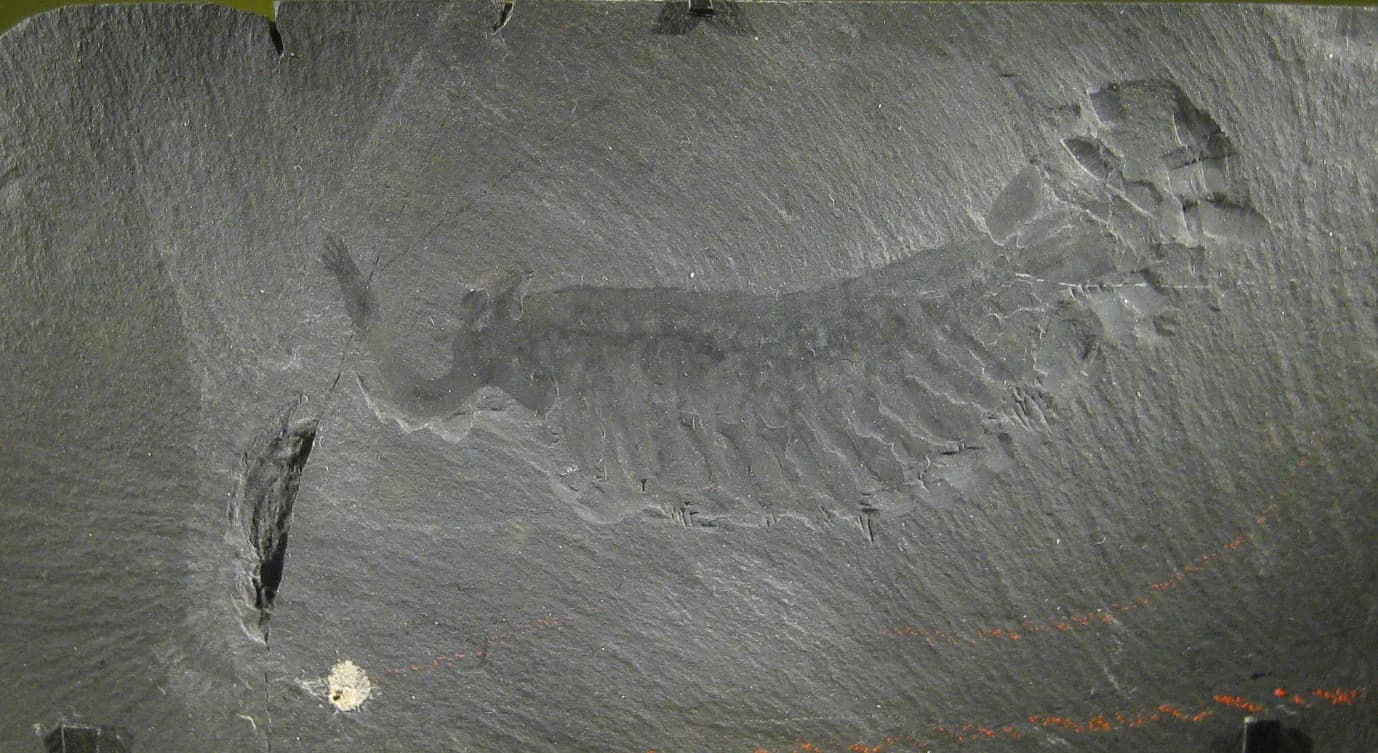
Hurdia victoria was first described by Walcott in 1912 from Burgess Shale fossils in British Columbia, but its nature was long misunderstood. For nearly a century, its different body parts were classified as separate organisms: the carapace as a crustacean, the appendages as shrimp, and the mouth as a jellyfish. It was not until 2009 that Daley et al. reunified all these pieces into a single animal thanks to new specimens from the Royal Ontario Museum. This spectacular rediscovery transformed our understanding of Cambrian anomalocarid diversity.
| Period | Cambrien moyen / Middle Cambrian |
| Era | Paléozoïque / Paleozoic |
| Age | ~508 Ma |
| Location | Colombie-Britannique (Canada) / British Columbia (Canada) |
| Length | 20-50 cm |
| Height | ~8 cm |
| Weight | ~500 g |
| Diet | Prédateur-filtreur |
| Discovery | 1912 |
No. Hurdia victoria was a radiodont (anomalocarid), a primitive arthropod living 508 million years ago in the Middle Cambrian — some 260 million years before the first dinosaurs appeared. It belongs to a fully extinct group unrelated to reptiles or vertebrates.
Hurdia victoria has an H-shaped head carapace made of three distinct elements (one central and two lateral), up to 15 cm wide — found in no other known anomalocarid. This frontal carapace was long classified as a separate crustacean before Daley et al. reunified it in 2009.
Hurdia victoria combined two feeding strategies: its frontal appendages bore long comb-like spines for filtering plankton and small suspended organisms, while also being capable of grasping medium-sized prey. This dual specialization, unique among anomalocarids, let it exploit several trophic levels in Cambrian waters.
Hurdia victoria life reconstruction
Wikimedia Commons