Hétérodontosaure
Heterodontosaurus tucki was a small dinosaur from southern Africa, described in 1962 and dated to 200 to 190 million years ago. About 1 metre long and 2 to 3 kilograms, it is the only dinosaur known to carry three tooth types — incisors, canines and molars — like a mammal. What its canines were for is still debated: digging, fighting, or eating insects.
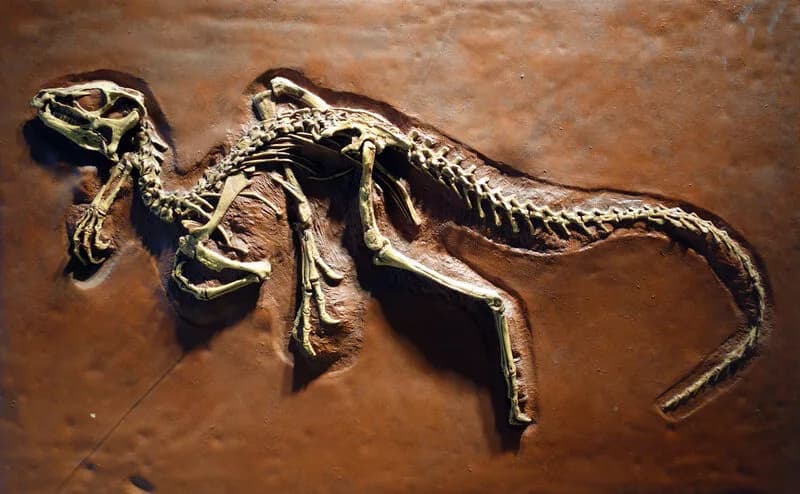
Heterodontosaurus lived in the Early Jurassic, approximately 200 to 190 million years ago, during the Hettangian and Sinemurian stages. This period corresponds to the very beginning of the age of dinosaurs, shortly after the great Triassic-Jurassic extinction that eliminated many competing reptile groups. Heterodontosaurus belongs to the family Heterodontosauridae, a basal group of ornithischians ranking among the most primitive of this order. It is one of the few Early Jurassic dinosaurs from southern Africa known from a nearly complete skeleton, providing invaluable insight into the early evolution of ornithischian dinosaurs.
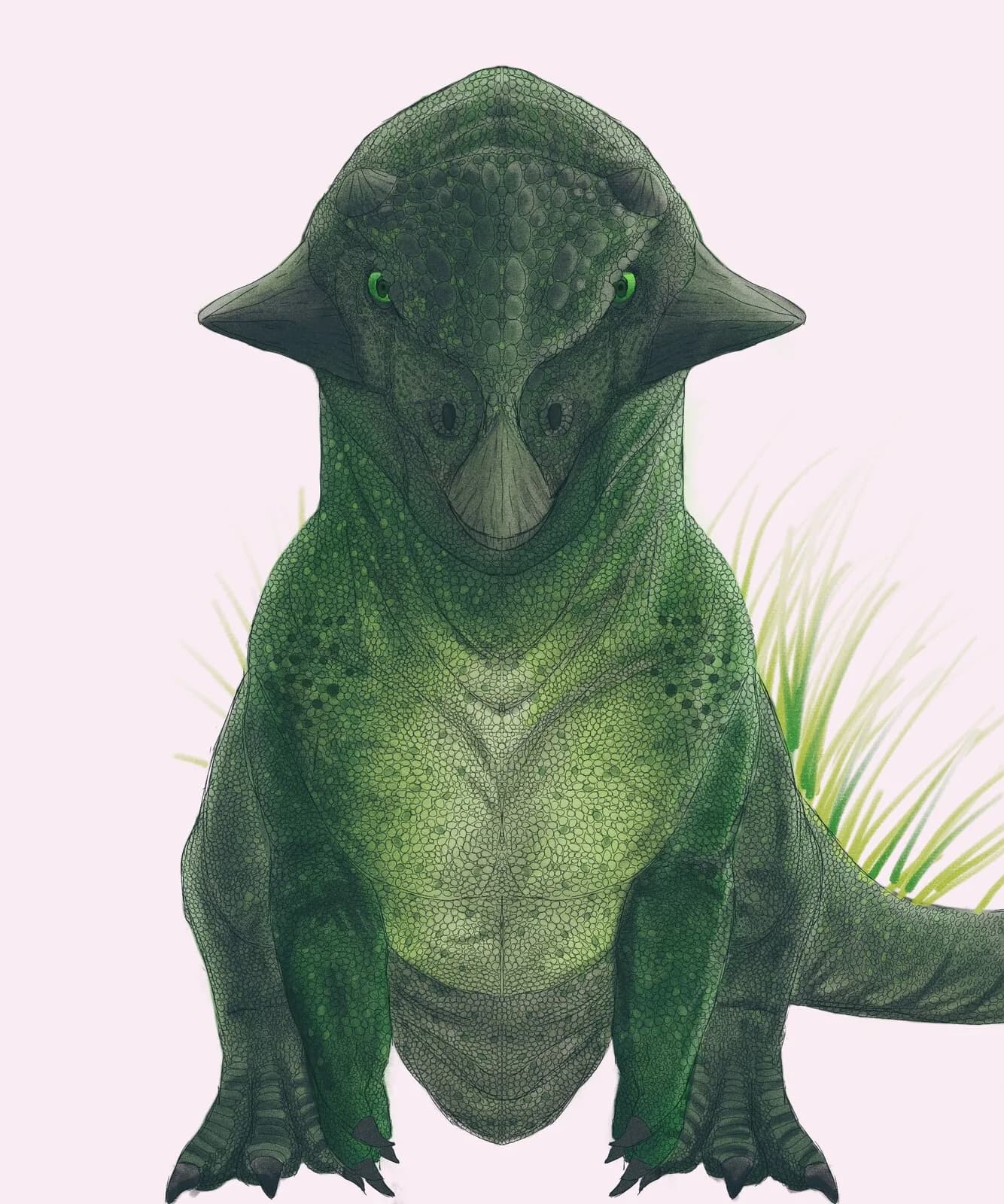
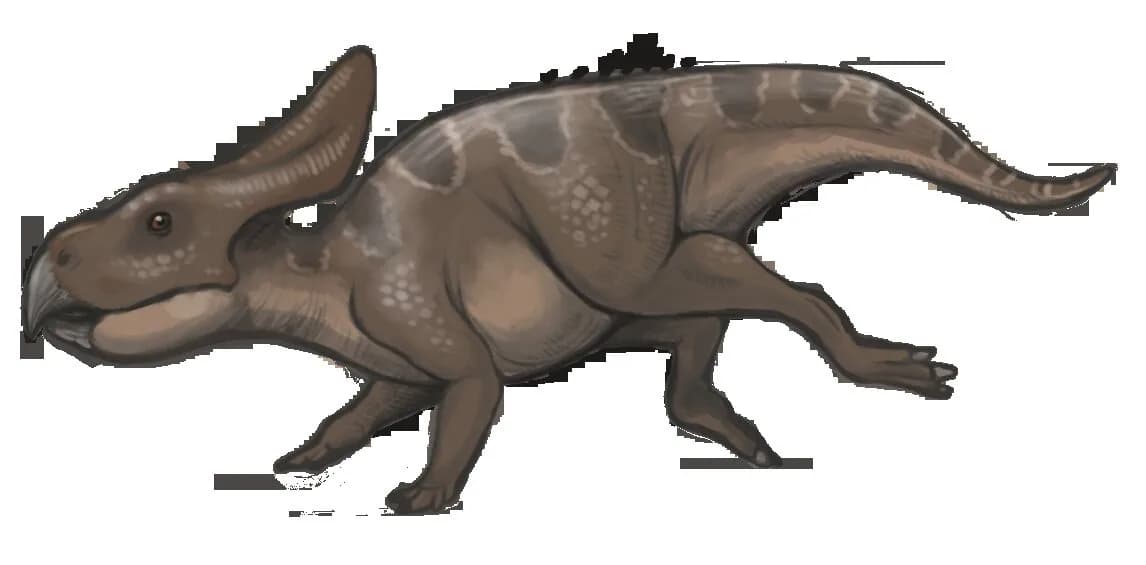
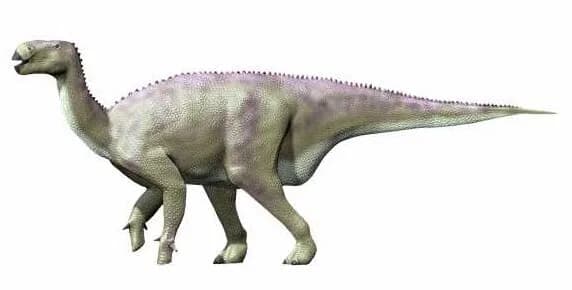
Heterodontosaurus was a small dinosaur, measuring approximately 1 meter in total length, about 50 centimeters tall at the hips, with an estimated weight between 2 and 3 kilograms. Its size was comparable to that of a large red fox. Despite its small size, it possessed powerful musculature, particularly in the proportionally long hindlimbs, indicating great agility and high running speed essential for escaping predators. Its relatively long arms were equipped with prehensile five-fingered hands capable of grasping and manipulating various food items, an unusual trait among early ornithischians.
Heterodontosaurus diet is a subject of passionate debate among paleontologists. Its unique dentition, composed of three different types of teeth, strongly suggests an omnivorous diet unlike most other ornithischians. The small anterior teeth served to pinch and grasp food with precision. The large canines or 'tusks' could have served to dig up roots or capture small invertebrates like beetles and grubs. The posterior teeth were closely packed with flat surfaces, adapted for efficient grinding of tough vegetation. This remarkable combination is far more reminiscent of mammalian dentition than typical reptilian tooth arrangements.
Heterodontosaurus inhabited the semi-arid regions of the Early Jurassic in what is now South Africa and Lesotho. The Upper Elliot Formation and Clarens Formation represent an environment of sandy plains with aeolian dunes, ephemeral lakes, and sparse vegetation of ferns and primitive conifers. The climate was hot and dry with marked rainy seasons that briefly transformed the arid landscape into lush green areas. Heterodontosaurus shared its environment with Lesothosaurus, the prosauropod Massospondylus, and various primitive archosaurs in an ecosystem still transitioning after the end-Triassic extinction event.
Heterodontosaurus anatomy is remarkable for its heterodont dentition — literally 'different teeth' — which gives it its name. It is the only known dinosaur to possess three distinct types of teeth: incisors for cutting, large pointed canines, and molars for grinding. This dental differentiation is typical of mammals but exceptional among reptiles, making it a notable case of convergent evolution. The body was light and agile with long hindlimbs built for swift bipedal locomotion. Some specimens show filamentous integumentary structures, possible proto-feathers that may have served for insulation or display in this small-bodied ornithischian.
Heterodontosaurus was a fast and agile runner, capable of sprinting on its powerful hindlimbs to evade larger predators. The large canines probably served during confrontations between males for access to females, similar to modern chevrotains and musk deer. Sexual dimorphism has been proposed, with more developed canines in males than in females. Its prehensile hands allowed it to manipulate food and dig for roots and insects hidden in the soil. Its small size and agility made it a dietary opportunist, capable of adapting to various food sources depending on the season and local availability.
Heterodontosaurus tucki was discovered in 1962 in the Upper Elliot Formation in South Africa and described by Alfred Crompton and Alan Charig in 1962. The holotype is a remarkably well-preserved skull clearly showing the three distinct types of teeth that define this genus. The genus name means 'lizard with different teeth' in Greek (heteros = different, odous = tooth, sauros = lizard). The species honors G.C. Tuck, who financially supported paleontological expeditions in the region. In 2005, a South African specimen revealed possible filamentous integumentary structures, adding a new chapter to the story of feather evolution among ornithischian dinosaurs.
| Period | Jurassique inférieur / Early Jurassic |
| Era | Mésozoïque / Mesozoic |
| Age | 200-190 Ma |
| Location | Afrique du Sud, Lesotho / South Africa, Lesotho |
| Length | ~1 m |
| Height | ~0.5 m |
| Weight | 2-3 kg |
| Diet | Omnivore |
| Discovery | 1962 |
Heterodontosaurus tucki possesses a heterodont dentition unique among dinosaurs: incisors for cutting, large pointed canine 'tusks,' and molars for grinding. This dental differentiation is typical of mammals but exceptional among reptiles. It suggests an omnivorous diet allowing it to process both vegetation, roots, insects, and small invertebrates depending on seasonal resources available in the semi-arid Early Jurassic regions of South Africa.
Heterodontosaurus tucki was a small dinosaur, 1 meter long, 50 centimeters at the hip, weighing only 2 to 3 kilograms — comparable to a large red fox. It lived in the Early Jurassic (200-190 Ma) in the semi-arid plains of present-day South Africa and Lesotho, in the Upper Elliot and Clarens Formations. Its nearly complete skeleton makes it one of the best-documented primitive ornithischians.
The function of the large canines of Heterodontosaurus tucki remains debated. Three main hypotheses exist: digging up roots and tubers, capturing insects and small invertebrates, or serving as weapons during intraspecific confrontations between rival males for access to females — similar to modern chevrotains. Sexual dimorphism has been proposed, with more developed canines in males.
Forelimb of Heterodontosaurus tucki
Wikimedia Commons, CC BY-SA
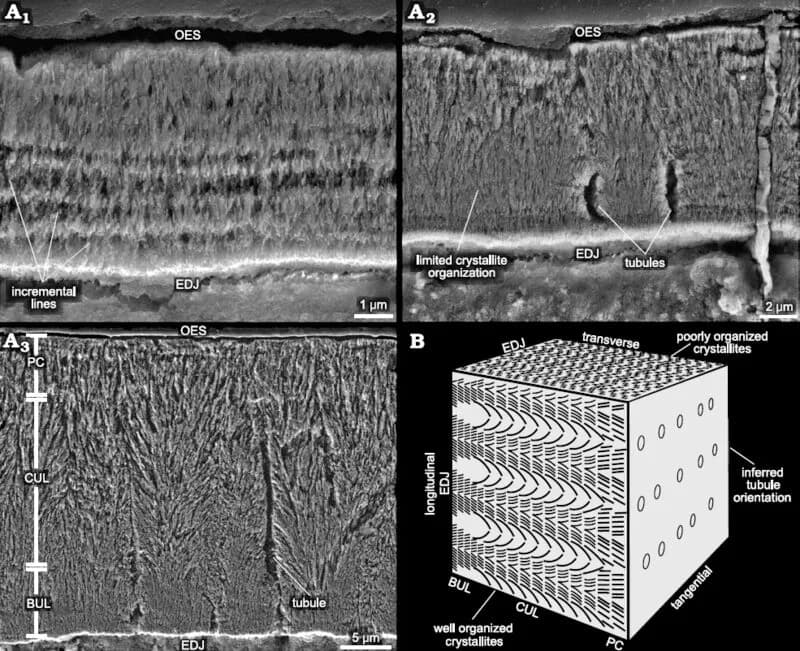
Enamel microstructure of Heterodontosaurus
Wikimedia Commons, CC BY-SA