Citipati
Citipati osmolskae was an oviraptorosaur from Mongolia, described in 2001 and dated to 75 to 71 million years ago. At 2.5 to 3 metres and 75 to 100 kilograms, it is known from the Big Mama specimen, found sitting on its nest with arms spread, exactly like a brooding bird. Its name comes from the Citipati, skeletal dancers of Tibetan mythology.
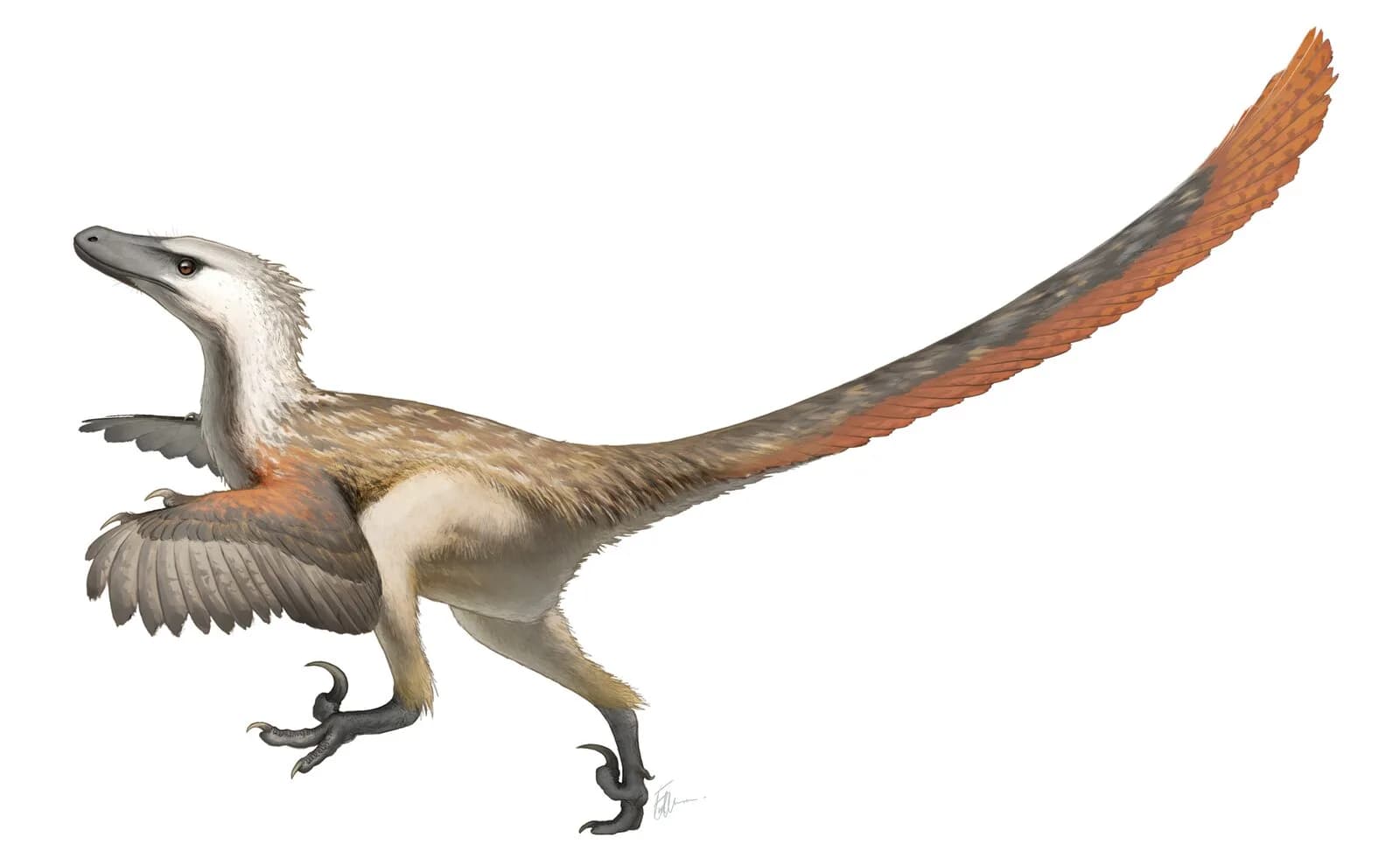
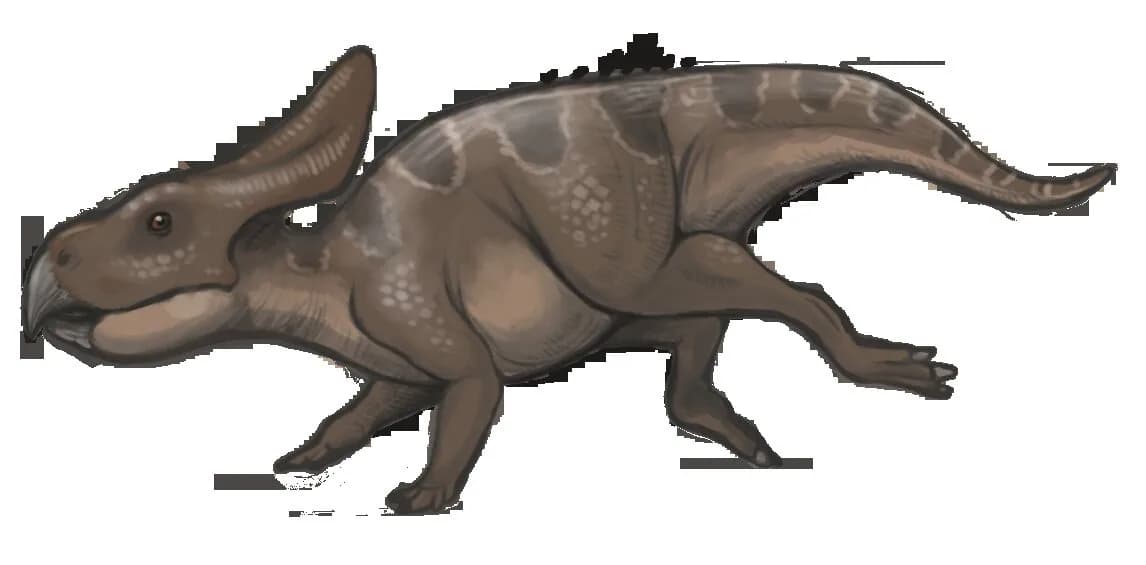
Citipati lived during the Late Cretaceous period, approximately 75 to 71 million years ago, during the Campanian stage, in what is now the Djadokhta Formation of Mongolia. This formation is world-famous for its exceptional preservation of dinosaur nesting sites and behavioral fossils in ancient sand dune deposits. The environment was semi-arid with extensive sand dune fields, seasonal oases, and sparse vegetation. Citipati shared its ecosystem with Velociraptor, Protoceratops, and various other small dinosaurs and mammals. The Djadokhta Formation preserves one of the most detailed windows into Late Cretaceous desert-dwelling dinosaur communities and their reproductive behavior.
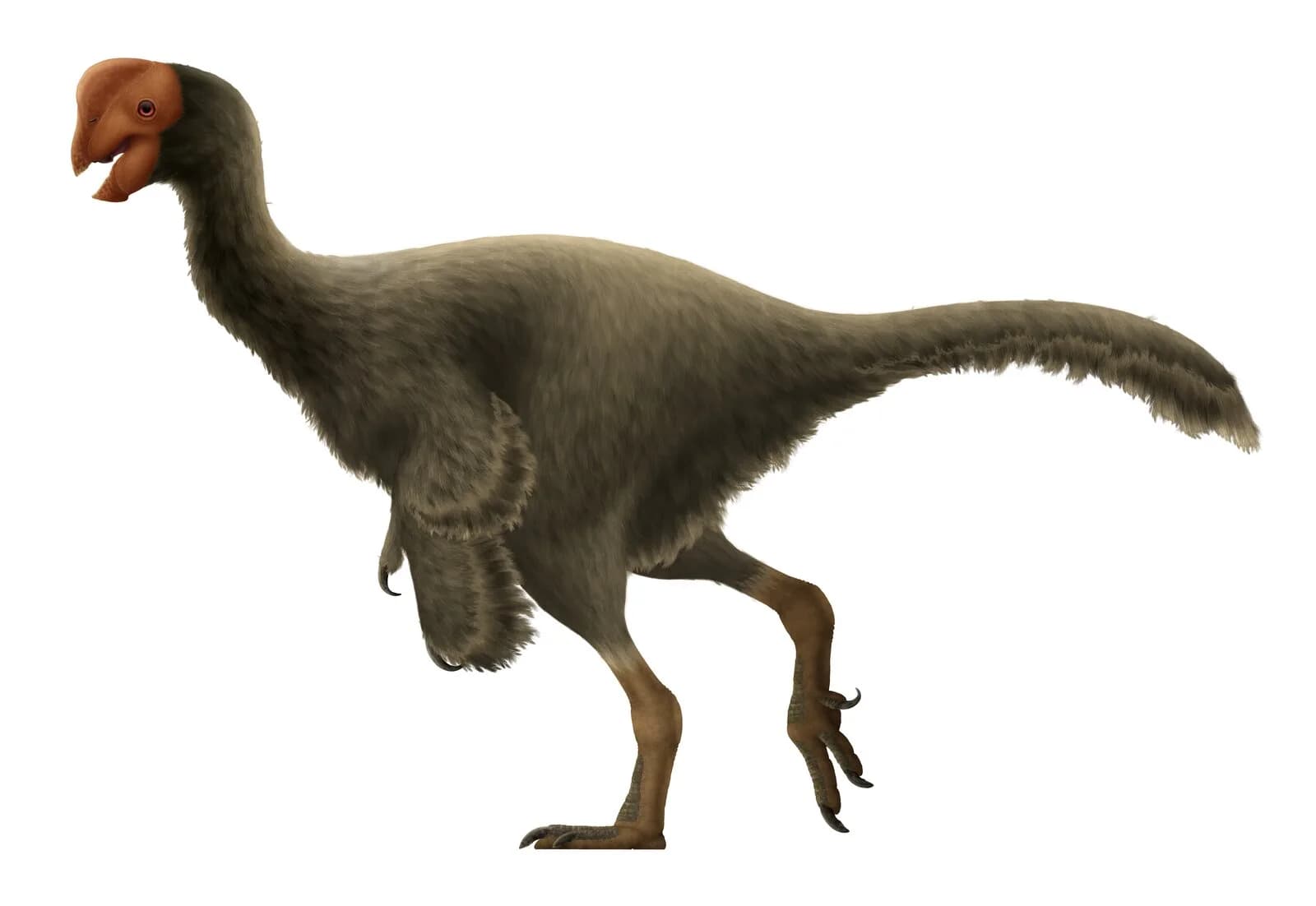
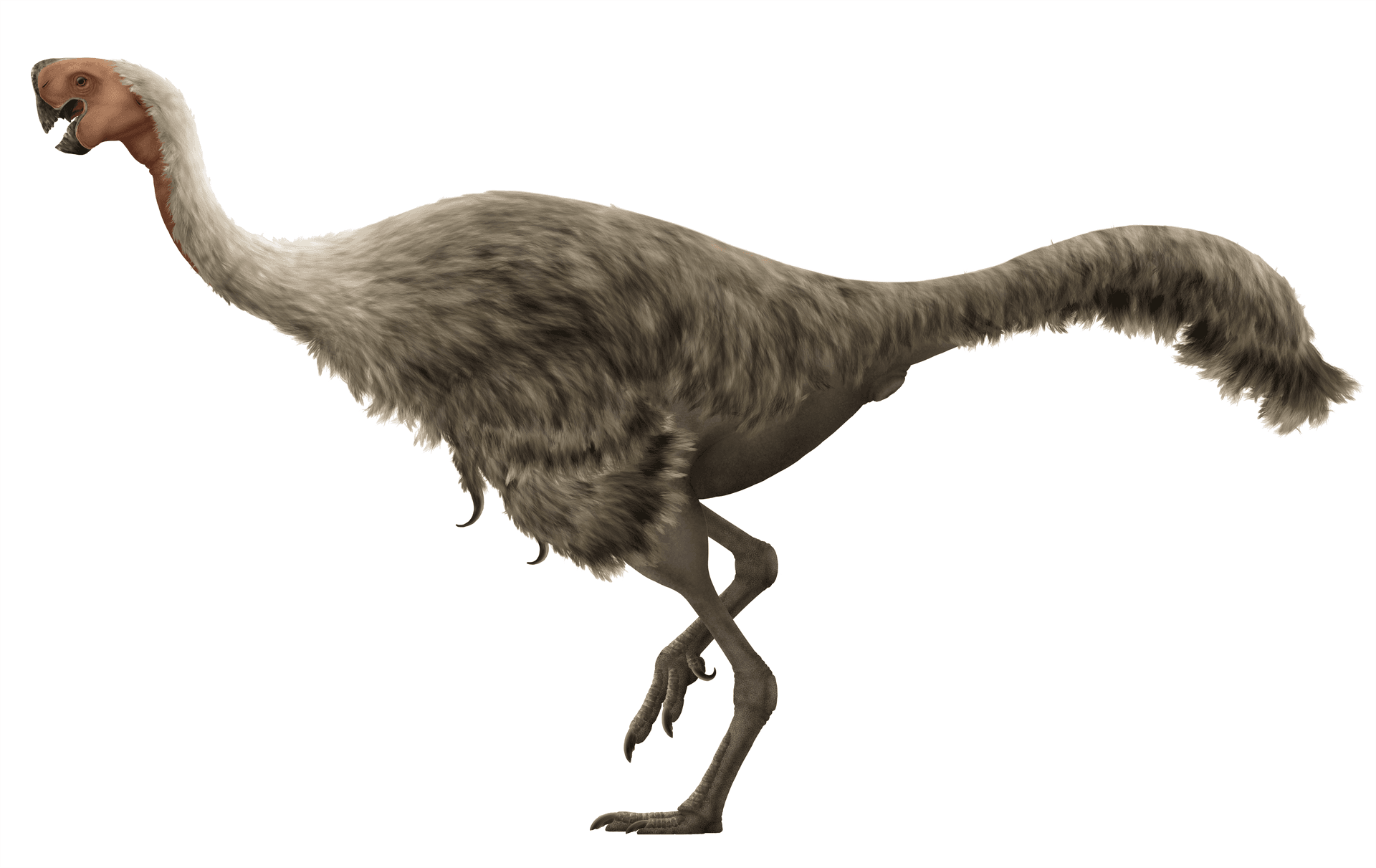
Citipati was one of the largest known oviraptorosaurs, measuring approximately 2.5 to 3 meters long and standing about 1.5 meters tall at head height. Its weight is estimated between 75 and 100 kilograms. It possessed a short, rounded skull topped with a prominent bony crest, similar to that of a modern cassowary. Its toothless beak was powerful and adapted to crushing a variety of foods. Its forelimbs were long and tipped with sharp claws, while its robust hind legs allowed agile bipedal locomotion.
Citipati was likely an omnivorous dinosaur, as suggested by its toothless beak and the general body plan of oviraptorosaurs. Its strong, deep beak was capable of crushing hard food items such as seeds, nuts, shellfish, and possibly small vertebrates. The jaw muscles were powerful, providing significant bite force despite the lack of teeth, and the palate featured bony projections that could have aided in processing food. Some researchers have proposed that Citipati may have been primarily herbivorous, feeding on tough vegetation and hard-shelled fruits, while others suggest a more generalist omnivorous diet. The semi-arid environment it inhabited would have required dietary flexibility to exploit whatever food resources were seasonally available.
Citipati inhabited the semi-arid desert and dune environments of the Djadokhta Formation in Late Cretaceous Mongolia. The landscape was dominated by active sand dune fields interspersed with interdune areas of harder substrate where vegetation could grow. Seasonal oases and temporary water bodies provided crucial water sources in this arid environment, creating focal points for animal activity. Despite the harsh conditions, this ecosystem supported a surprisingly diverse fauna. Citipati likely nested in sandy substrates at the margins of dune fields, where the sand provided natural insulation for its eggs while remaining accessible for brooding. The discovery of multiple nesting sites in this formation suggests these animals showed fidelity to specific nesting localities across generations.
Citipati's anatomy reveals an oviraptorosaur well-adapted to life in Cretaceous deserts. Its prominent cranial crest, larger than most other oviraptorosaurs, was likely used for intraspecific recognition and courtship displays. Its toothless beak featured a reinforced palate with two bony projections for crushing hard foods. Its long, powerful arms, ending in three clawed fingers, were covered with long pennaceous feathers used to protect eggs during brooding. Its relatively short tail ended in a pygostyle supporting a fan of tail feathers similar to modern birds.
Citipati's most remarkable behavior was undoubtedly its nesting. The famous specimen IGM 100/979, nicknamed 'Big Mama,' was discovered sitting on a nest of eggs with arms spread in a brooding position identical to modern birds. This posture demonstrates advanced parental care among oviraptorosaurs. The nests contained elongated eggs arranged in concentric circles, each egg tilted toward the center. The parent would position itself at the center of the nest, arms and feathers extended to cover the entire clutch. This brooding behavior was probably essential in the desert environment to protect eggs from intense sun and sandstorms.
Citipati was described in 2001 by James Clark, Mark Norell, and Rinchen Barsbold from specimens discovered in Mongolia's Gobi Desert. The name comes from Tibetan Buddhist mythology, referring to the lords of the funeral pyre, in reference to brooding poses reminiscent of dancing figures. Specimen IGM 100/979, nicknamed 'Big Mama,' is one of the most famous fossils in the world: a complete theropod found sitting on its nest. Other specimens include well-preserved skulls showing the distinctive crest and fossilized embryos inside eggs. These discoveries revolutionized our understanding of dinosaur parental behavior.
| Period | Crétacé supérieur / Late Cretaceous (Campanien) |
| Era | Mésozoïque / Mesozoic |
| Age | 75–71 Ma |
| Location | Asie Centrale / Central Asia (Mongolie / Mongolia) |
| Length | 2.5–3 m |
| Height | ~1.5 m |
| Weight | 75–100 kg |
| Diet | Omnivore |
| Discovery | 2001 |
Specimen IGM 100/979, nicknamed 'Big Mama,' was found sitting on its nest of eggs arranged in concentric circles, arms spread in a brooding position identical to modern birds. This posture, preserved in Djadokhta Formation sediments (Mongolia), proves advanced parental care behavior in Citipati osmolskae, described in 2001 by Clark, Norell, and Barsbold.
Citipati osmolskae measured 2.5 to 3 meters long with a weight of 75 to 100 kg. Its prominent cranial crest, resembling that of a modern cassowary, was more developed than in most other oviraptorosaurs. Its toothless beak and palate reinforced by two bony projections allowed it to crush hard foods. Its short tail ended in a pygostyle anchoring a fan of tail feathers like modern birds.
Citipati osmolskae lived 75 to 71 million years ago in the sandy deserts of Late Cretaceous Mongolia. The Djadokhta Formation, famous for its sand dunes, allowed exceptional preservation thanks to sudden sandstorms that sometimes buried entire individuals on their nests, preserving them in their natural posture. Citipati shared this ecosystem with Velociraptor and Protoceratops.
Artistic restoration of Citipati osmolskae
Wikimedia Commons, CC BY-SA
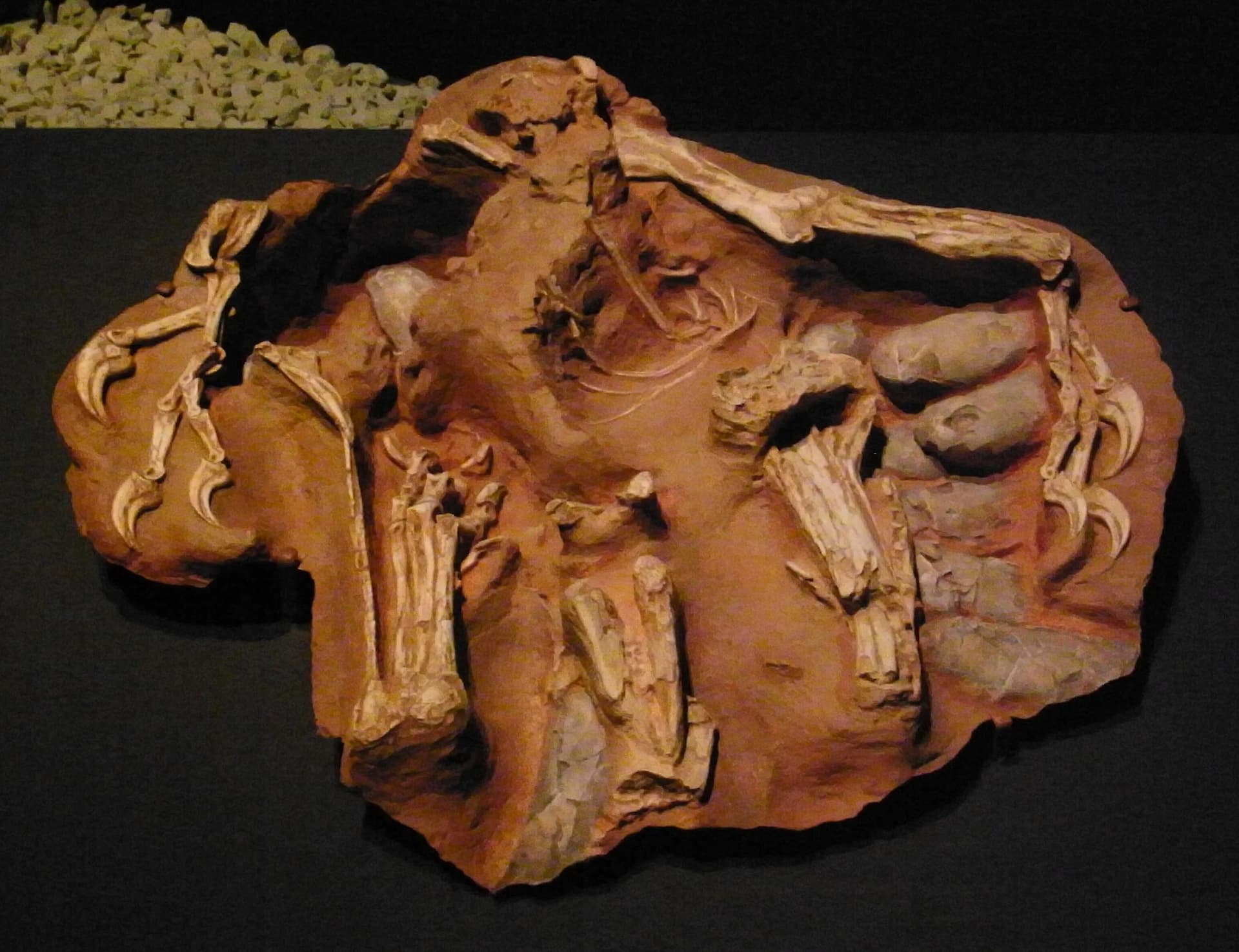
Citipati fossil in brooding position
Wikimedia Commons, CC BY-SA