Centrosaure
Centrosaurus apertus is a ceratopsian 5 to 6 metres long and 1.5 to 2.5 tonnes, described in 1904 in Alberta. It lived 76.5 to 75.5 million years ago. One Albertan bone bed alone yielded the remains of at least a thousand individuals, apparently drowned at once: the most direct evidence we have of a vast herd. It gives its name to the whole Centrosaurinae subfamily.
Centrosaurus lived in the Late Cretaceous, approximately 76.5 to 75.5 million years ago, during the Campanian stage. This period corresponds to one of the richest eras in ceratopsian diversity in North America, with a multitude of genera coexisting in varied ecosystems. Centrosaurus is the eponymous genus of the subfamily Centrosaurinae, a group characterized by prominent nasal ornamentations and relatively short frills compared to Chasmosaurinae. It lived in the prairies and coastal plains of what is now Alberta, Canada, a region that hosted one of the most diverse dinosaur communities of the Cretaceous. The climate of the time was subtropical, with well-marked seasons favoring lush vegetation.
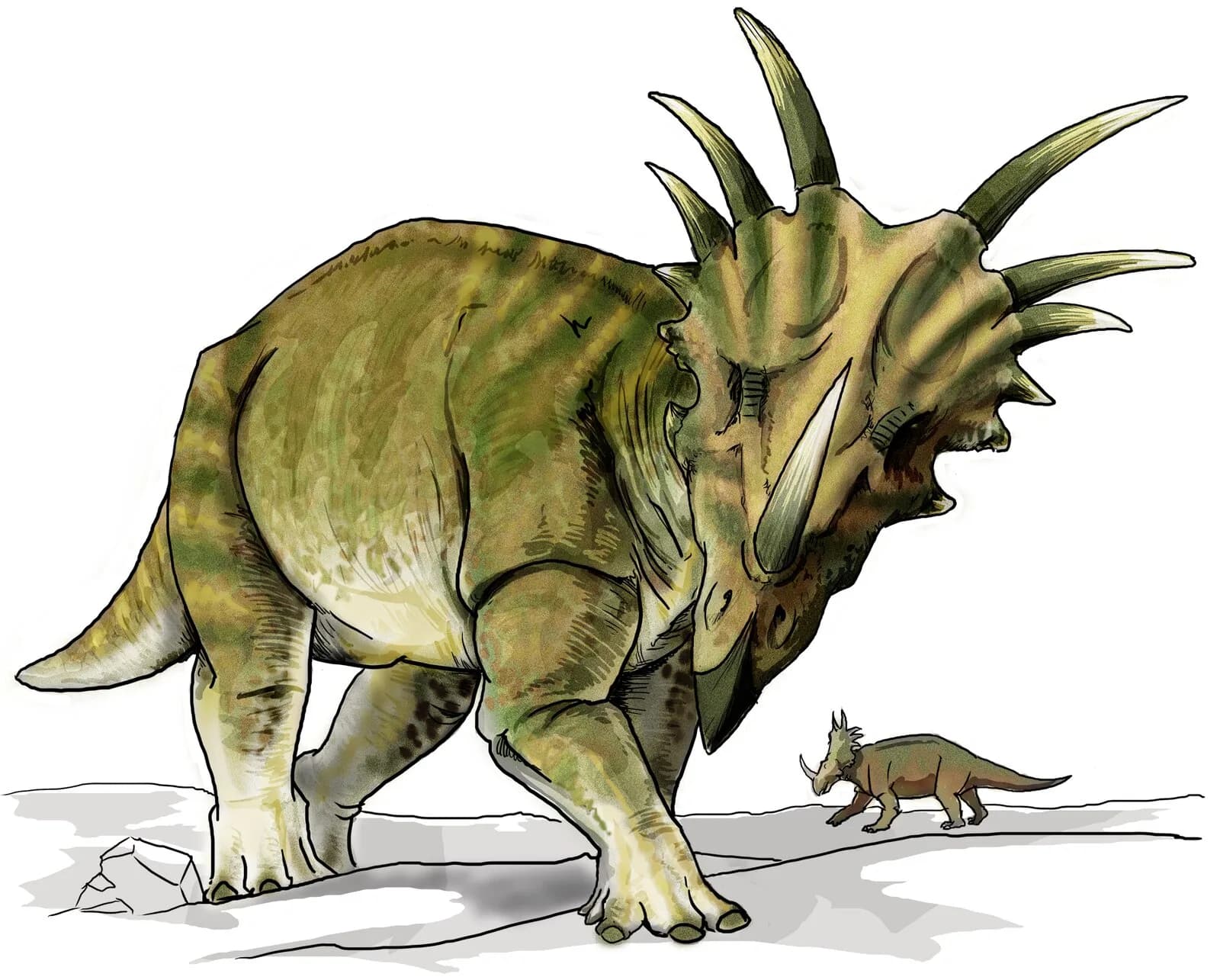
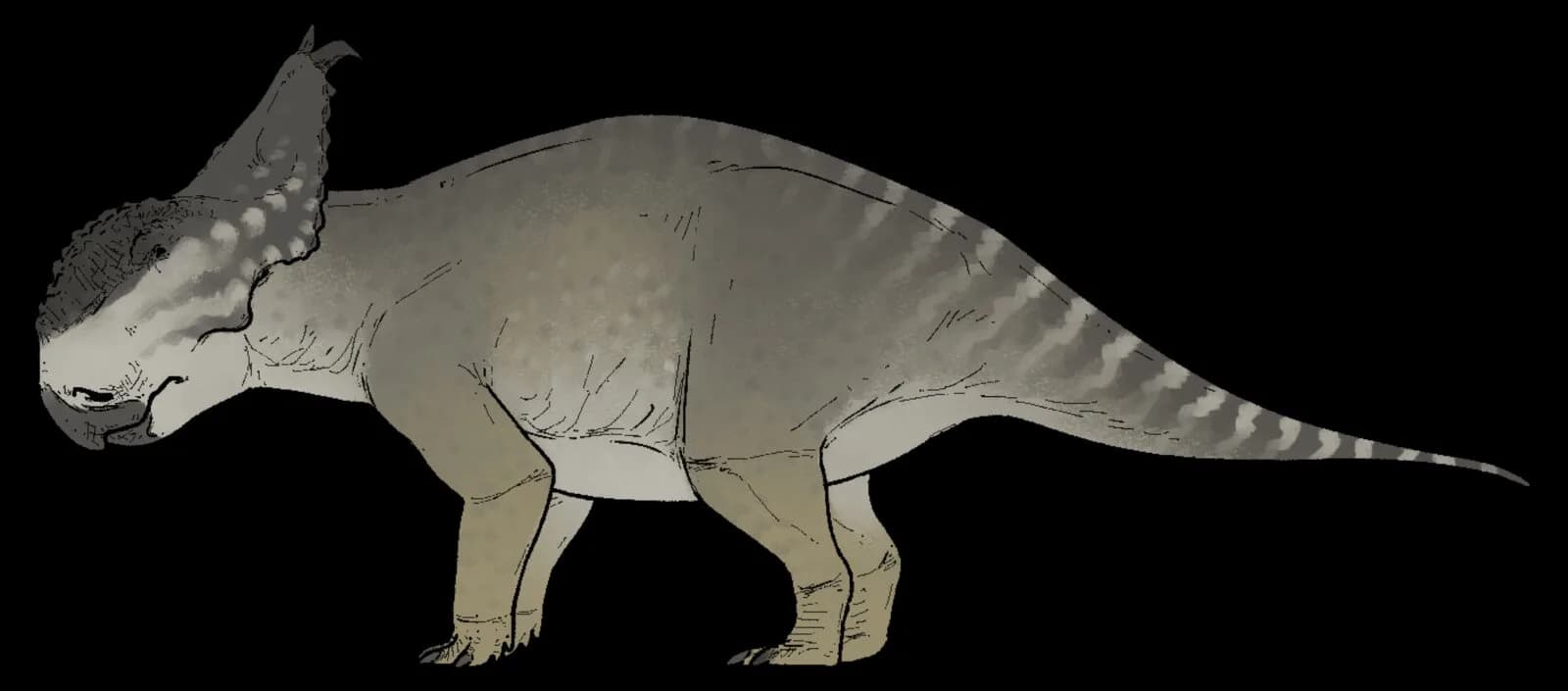
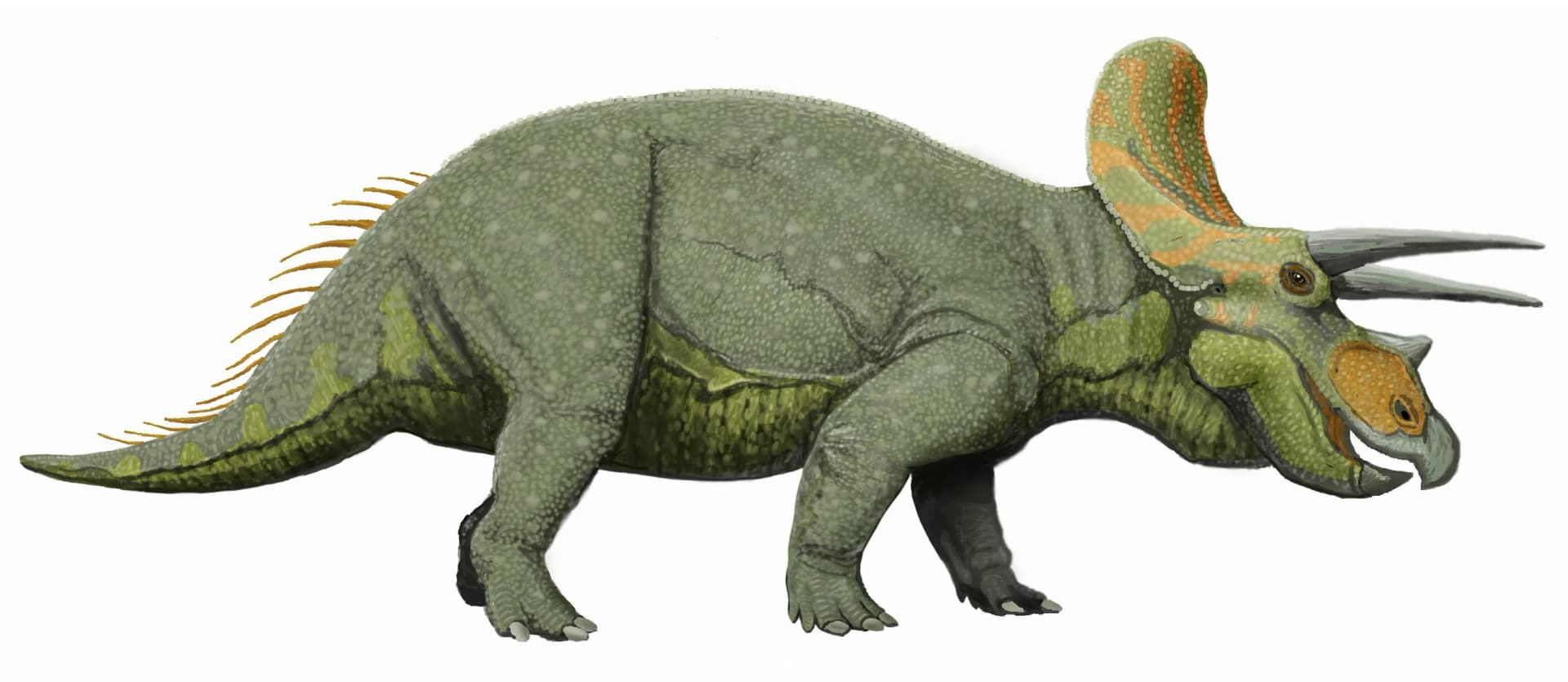
Centrosaurus measured approximately 5 to 6 meters in length, with a height of about 1.8 to 2 meters at the hips and an estimated weight between 1.5 and 2.5 tonnes. Its size was comparable to that of a large modern rhinoceros. Its skull, measuring about 60 centimeters long without the frill, was dominated by a single large curved nasal horn that could reach 30 to 40 centimeters in length. Two small horns or bosses were located above the eyes, but they were significantly more reduced than in chasmosaurines like Triceratops. The parietal frill, relatively short but adorned with distinctive marginal hooks and spines, varied considerably from one individual to another in terms of ornamentation.
A strict herbivore, Centrosaurus fed on the low vegetation of the Campanian plains, including ferns, cycads, low conifers, and the early angiosperms that were beginning to diversify. Its powerful horny beak was perfectly adapted for sectioning the tough stems and fronds of plants. The dental batteries, composed of hundreds of teeth stacked in vertical columns and continuously replaced throughout life, allowed efficient grinding of the most resistant plant fibers through a vertical shearing motion. The naturally low head of Centrosaurus predisposed it to feeding on ground-level vegetation. Isotopic studies on fossil teeth suggest a diet primarily composed of C3 plants adapted to humid environments.
Centrosaurus inhabited the coastal plains and lowlands of what is now western Canada, primarily in the province of Alberta. The Campanian environment in this region was a vast coastal plain bordering the Western Interior Seaway, characterized by a humid subtropical climate with winding rivers, extensive swamps, and forests of conifers and ferns. The Dinosaur Park Formation, the main fossil source, represents a rich floodplain ecosystem. Centrosaurus coexisted with an extremely diverse fauna including other ceratopsids like Chasmosaurus and Styracosaurus, hadrosaurs like Corythosaurus and Lambeosaurus, ankylosaurs like Euoplocephalus, and predatory theropods like Gorgosaurus. This concentration of large herbivores testifies to the exceptional productivity of this ecosystem.
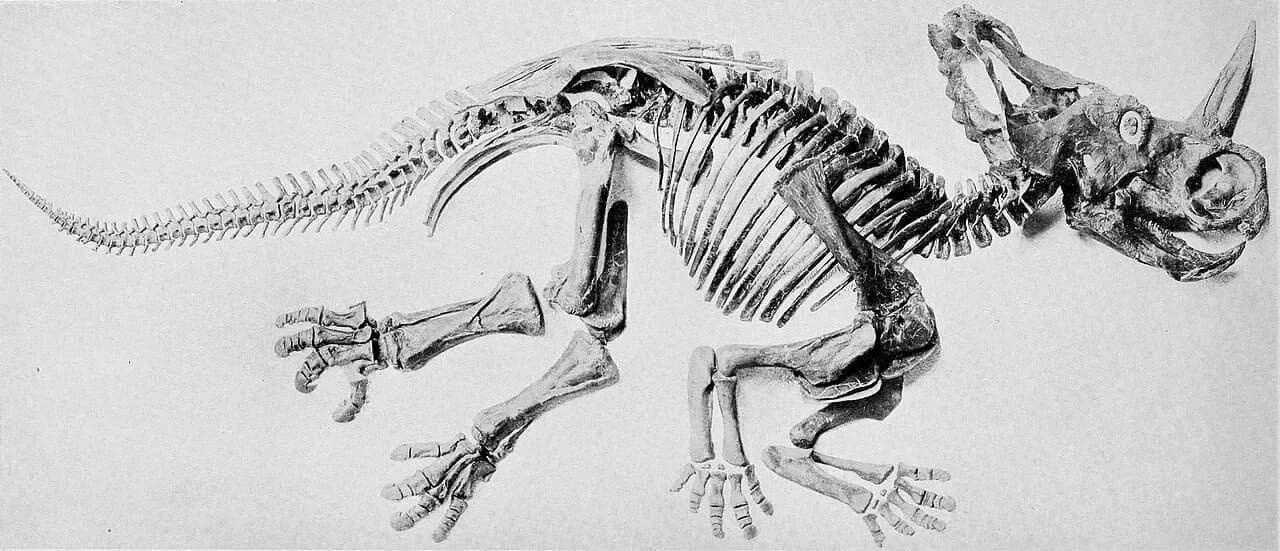
Centrosaurus anatomy is characteristic of centrosaurines. The skull bears a prominent nasal horn, single and often curved forward or backward depending on the individual. The brow horns are reduced to small bosses. The parietal frill is relatively short and fenestrated, adorned with a pair of prominent forward-curving central hooks — a diagnostic trait of the species — as well as small marginal spines. The parietal fenestrae considerably lightened the frill's weight. The body was robust and stocky, typical of ceratopsids, with four massive, columnar limbs adapted to support considerable weight. The feet possessed small hooves rather than claws. The tail was short and muscular, and the overall postcranial skeleton closely resembles that of other centrosaurines.
Centrosaurus is one of the dinosaurs for which gregarious behavior is best documented. Massive bone beds, some containing thousands of individuals, have been discovered in Dinosaur Provincial Park in Alberta, suggesting these animals lived in immense herds potentially numbering hundreds or even thousands of individuals. The most accepted hypothesis for these accumulations is mass drowning during crossings of flooded rivers, similar to modern wildebeest crossing the Mara River in Africa. The nasal horn and frill ornamentations probably served during ritualized combat between males, as well as for species recognition in an environment where several ceratopsids coexisted. The considerable individual variation in cranial ornamentation suggests strong sexual dimorphism.
Centrosaurus apertus was named in 1904 by Lawrence Lambe, from fossils discovered in the Dinosaur Park Formation in Alberta, Canada. The genus name means 'pointed lizard,' referring to its prominent nasal horn. Since its original description, Centrosaurus has become one of the most abundant ceratopsians in the fossil record, with dozens of individual specimens and several massive bone beds containing remains of hundreds or thousands of individuals. Centrosaurus Bone Bed 43, in Dinosaur Provincial Park, is one of the largest dinosaur accumulations in the world, covering over 2 square kilometers and containing remains of at least 1,000 individuals. This wealth of fossil material has enabled detailed studies of ontogenetic growth, individual variation, and sexual dimorphism in this species.
| Period | Crétacé supérieur / Late Cretaceous |
| Era | Mésozoïque / Mesozoic |
| Age | 76.5-75.5 Ma |
| Location | Canada (Alberta) / Canada (Alberta) |
| Length | 5-6 m |
| Height | ~2 m |
| Weight | 1.5-2.5 tonnes |
| Diet | Herbivore |
| Discovery | 1904 |
Centrosaurus apertus measured 5 to 6 meters long with a weight of 1.5 to 2.5 tonnes, comparable to a large rhinoceros. Its single nasal horn could reach 30 to 40 cm and varied between individuals, some specimens showing it curved forward, others backward. Its brow horns were reduced to small bosses, unlike Triceratops.
Bone Bed 43 in Dinosaur Provincial Park, Alberta, covers over 2 km² and contains the remains of at least 1,000 Centrosaurus apertus individuals. These massive accumulations likely resulted from mass drownings during river crossings in flood conditions, similar to modern wildebeest crossing Africa's Mara River. This fossil wealth, first described by Lawrence Lambe in 1904, enabled detailed studies of the species' ontogenetic growth.
Centrosaurus lived in the Late Cretaceous (Campanian), 76.5 to 75.5 million years ago, in the coastal plains of present-day Alberta, Canada. It coexisted with other ceratopsians like Chasmosaurus and Styracosaurus, hadrosaurs Corythosaurus and Lambeosaurus, ankylosaur Euoplocephalus, and the tyrannosaurid Gorgosaurus. Dinosaur Provincial Park, UNESCO, is the primary source of its fossils.
Centrosaurus apertus life reconstruction
Wikimedia Commons
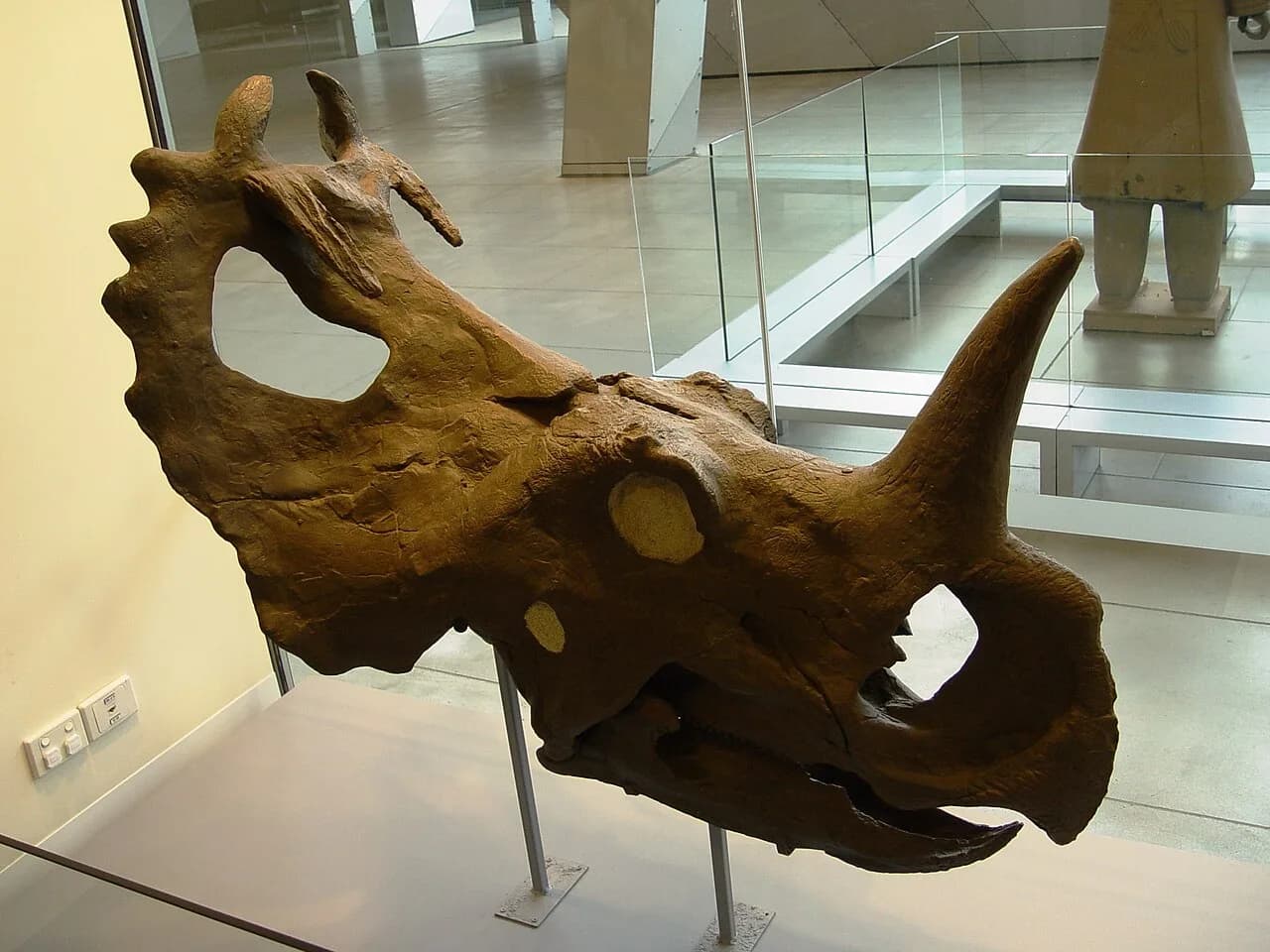
Centrosaurus skull at the Royal Tyrrell Museum
Wikimedia Commons