Adriosaure
Adriosaurus microbrachis was a small marine lizard from Slovenia, described in 2007 and dated to around 95 million years ago. At 25 to 30 centimetres and close to 50 grams, it swam by undulating like a snake while remaining a lizard. Its forelimbs were so reduced they served no purpose — a step toward the limb loss seen in snakes.
Adriosaurus lived during the Late Cretaceous, approximately 95 million years ago (Cenomanian). This small marine lizard inhabited the warm, shallow seas of the Tethys Ocean, in the region that would later become the Adriatic Sea and the coasts of present-day Slovenia and Italy. At that time, much of Europe was submerged beneath an archipelago of tropical islands bordered by lagoons. Conditions were ideal for small marine reptiles exploiting coral reefs and seagrass beds. Adriosaurus belongs to a remarkable assemblage of aquatic squamates from the Cenomanian Adriatic region.
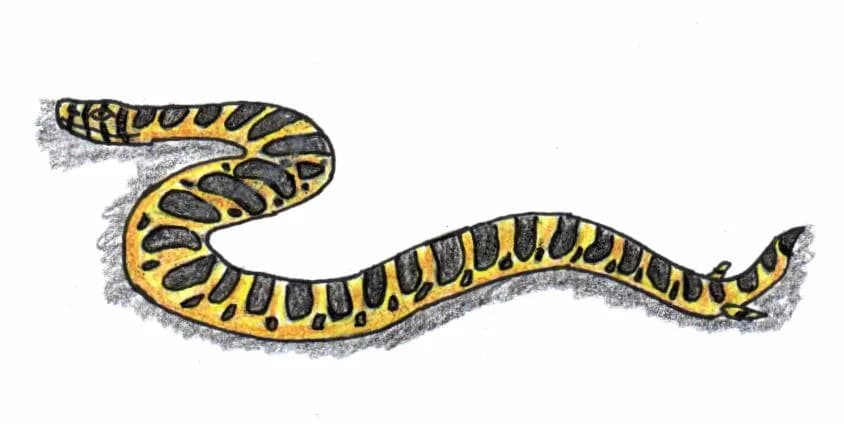
Adriosaurus microbrachis was a small-sized marine lizard, measuring approximately 25 to 30 centimeters in total length. Its body was elongated and serpentine, with extremely reduced forelimbs — hence its species name microbrachis meaning 'small arms.' The hindlimbs were also atrophied but slightly more developed than the forelimbs. Its long, laterally compressed tail served as its primary aquatic propulsion organ. Compared to other Cretaceous marine squamates like mosasaurs, Adriosaurus was tiny, but it represents a notable stage in the transition toward a fully aquatic lifestyle.
Adriosaurus likely fed on small marine invertebrates, larvae, small crustaceans, and possibly small reef fish. Its fine, elongated jaw lined with small but sharp teeth was adapted for capturing agile prey in shallow lagoon waters. Like modern small marine lizards, it probably hunted by actively swimming among algae and seagrass beds, seizing prey with rapid head movements. Its dietary habits were comparable to those of small modern sea snakes.
Adriosaurus inhabited the shallow lagoons and epicontinental seas of the Cenomanian in the Adriatic region. The environment was a tropical archipelago with clear, warm, shallow waters bordered by carbonate platforms. The lithographic limestones in which its fossils were preserved indicate calm, anoxic sea floors, similar to the famous Solnhofen limestones. The main locality is near Komen in present-day Slovenia, in deposits of the Komen Formation.
Adriosaurus's anatomy reveals a remarkable adaptation to aquatic life among squamates. Its forelimbs are the most reduced known among dolichosaurs, retaining only a tiny vestigial humerus. This extreme limb reduction is interpreted as convergent with snake evolution from lizards. Its highly elongated body had an increased number of vertebrae, enhancing flexibility for undulatory swimming. The laterally compressed tail served as the main rudder and propulsor. The skull was lightweight with relatively large orbits, suggesting good vision for hunting.
Adriosaurus adopted a fully aquatic lifestyle in the warm waters of Cenomanian lagoons. Its locomotion relied primarily on lateral undulation of the body and tail, with its reduced limbs playing no significant role in propulsion. It was probably an agile swimmer capable of pursuing small prey through seagrass beds and around reefs. Like many small marine reptiles, it needed to surface regularly to breathe. Its reproductive mode remains unknown, but it likely laid eggs on the shores of the Adriatic archipelago islands.
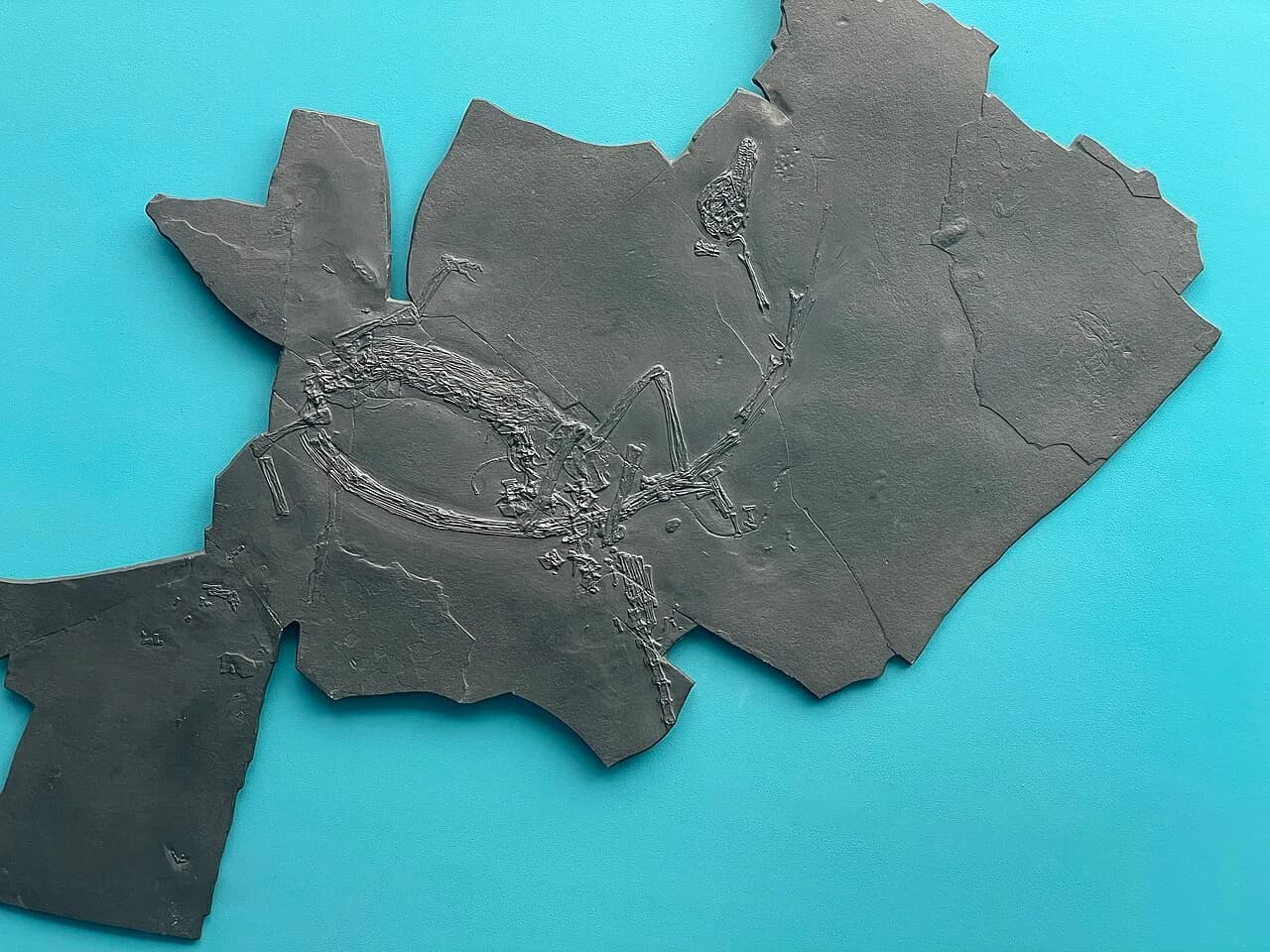
Adriosaurus was first described by Palci and Caldwell in 2007, from exceptionally preserved specimens found in the Upper Cenomanian limestones of Komen, Slovenia. The holotype is a nearly complete skeleton, flattened in lithographic limestone, clearly showing the extreme limb reduction. These fossils come from the same geological formation that yielded other remarkable marine squamates such as Pontosaurus and Dolichosaurus. The exceptional preservation in fine-grained limestones allowed detailed study of delicate bone structures, including the vestiges of the tiny limbs.
| Period | Crétacé supérieur / Late Cretaceous |
| Era | Mésozoïque / Mesozoic |
| Age | ~95 Ma |
| Location | Slovénie (Komen) / Slovenia (Komen) |
| Length | 25-30 cm |
| Height | ~3 cm |
| Weight | ~50 g |
| Diet | Carnivore (invertébrés marins) |
| Discovery | 2007 |
Adriosaurus microbrachis, whose species name means 'small arms', retained forelimbs reduced to a single vestigial humerus — the smallest known among dolichosaurs. This extreme reduction reflects adaptation to aquatic locomotion through body and tail undulation. Described in 2007 by Palci and Caldwell, this 25-30 cm lizard from Cenomanian lagoons of Slovenia illustrates convergence with snake evolution.
Adriosaurus microbrachis inhabited shallow tropical lagoons of the Cenomanian Adriatic archipelago, where present-day Slovenia is located. These clear, warm Tethys Sea waters were bordered by carbonate platforms. The exceptional preservation in the lithographic limestones of Komen, similar to Solnhofen limestones, enabled detailed study of the bone vestiges of this approximately 50-gram animal.
Adriosaurus microbrachis is considered an example of convergent evolution with snakes: a lizard that progressively reduced its limbs to adopt an undulating swimming mode. While not a direct snake ancestor, it demonstrates that limb loss can occur independently in separate lineages. Its fossils come from the same formation as Pontosaurus and Dolichosaurus, other Cenomanian marine squamates.
Adriosaurus microbrachis reconstruction
Wikimedia Commons