Abélisaure
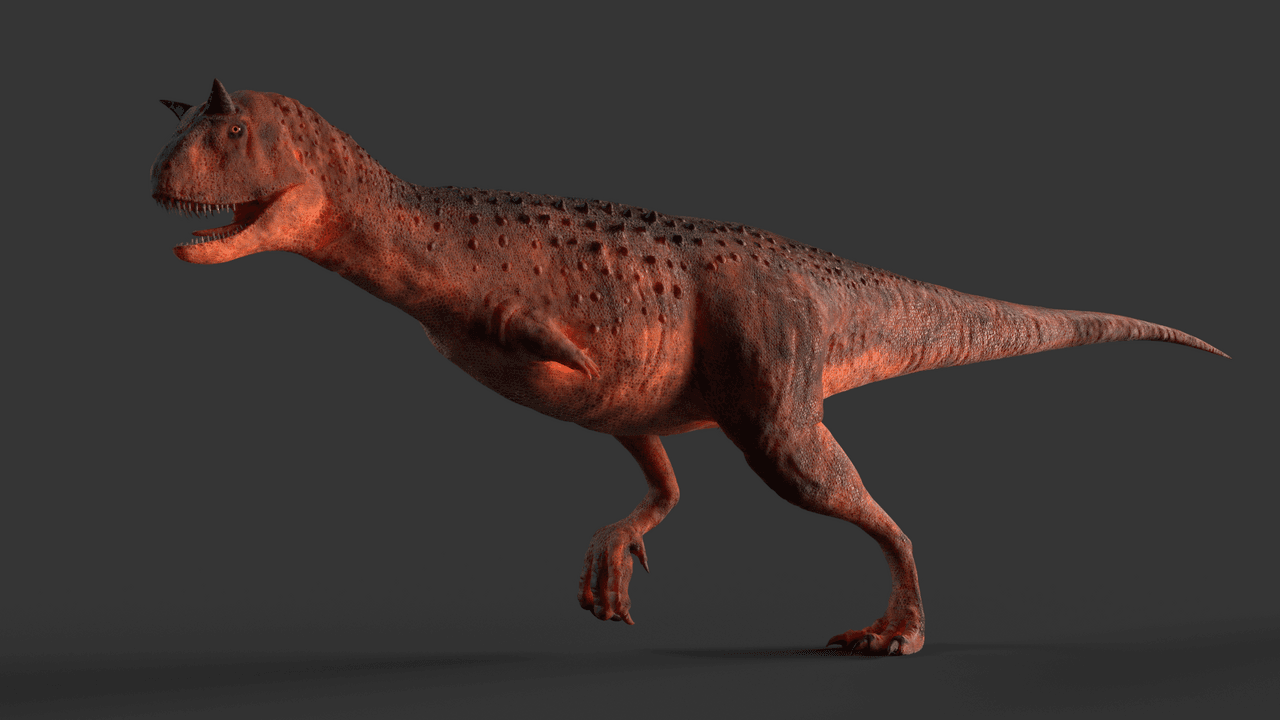
Abelisaurus comahuensis was a carnivorous theropod from Patagonia, described in 1985 from a fossil found near Lake Pellegrini in Argentina. At 7 to 9 metres and 1.5 to 3 tonnes, it lived around 75 million years ago. It gave its name to the whole abelisaurid family, which includes Carnotaurus; its arms were even shorter than those of T. rex.
Abelisaurus lived during the Late Cretaceous period, approximately 75 to 70 million years ago, in what is now Argentine Patagonia. This corresponds to the Campanian stage of the Mesozoic Era, a time when South America was an isolated continent with a unique dinosaur fauna. Gondwana had long since fragmented, and Argentina harbored a remarkable diversity of carnivorous theropods, with abelisaurids as the dominant predators of the continent. The climate was warm and semi-arid in this region, with pronounced seasons and vegetation adapted to dry conditions. This period saw the final flourishing of the great dinosaur ecosystems before the mass extinction event.
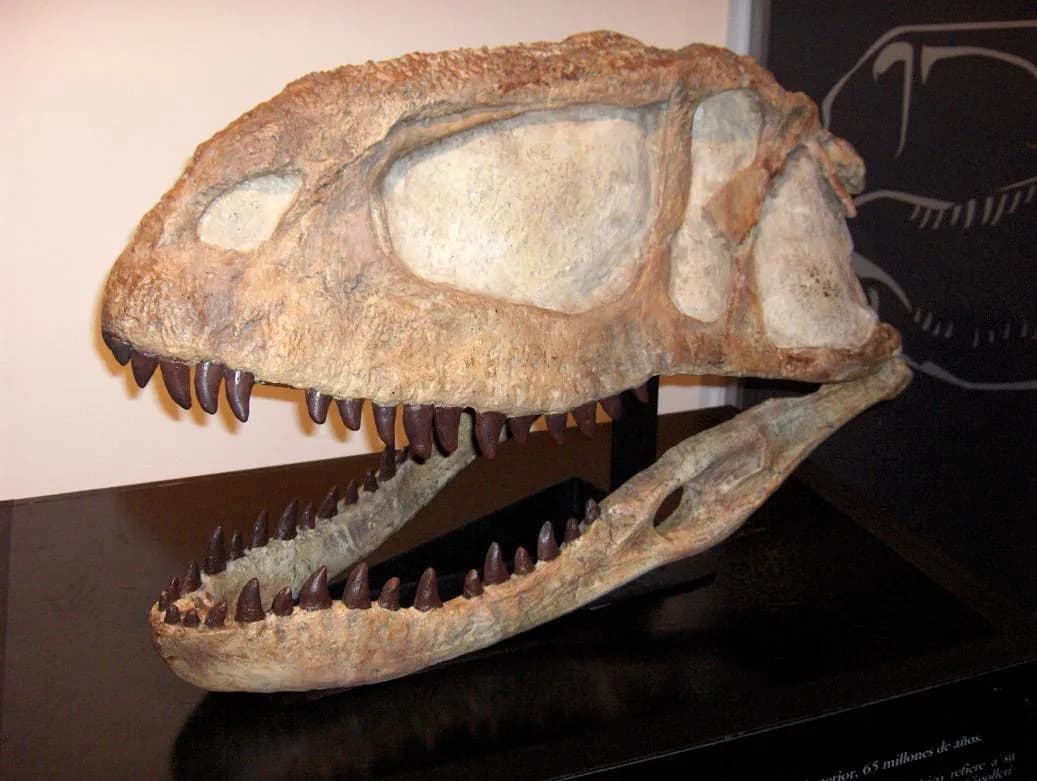
Abelisaurus was a medium to large theropod, estimated at approximately 7 to 9 meters in length and weighing about 1.5 to 3 tonnes. Its hip height reached approximately 2 meters. These estimates remain uncertain because the known fossil material consists primarily of an incomplete skull. Compared to its abelisaurid relatives, it was larger than Carnotaurus (approximately 7.5 m) but probably smaller than Ekrixinatosaurus. The skull measured approximately 85 centimeters in length, which is proportionally broad for its body size, a characteristic common to abelisaurids that had robust and short skulls adapted for powerful biting.
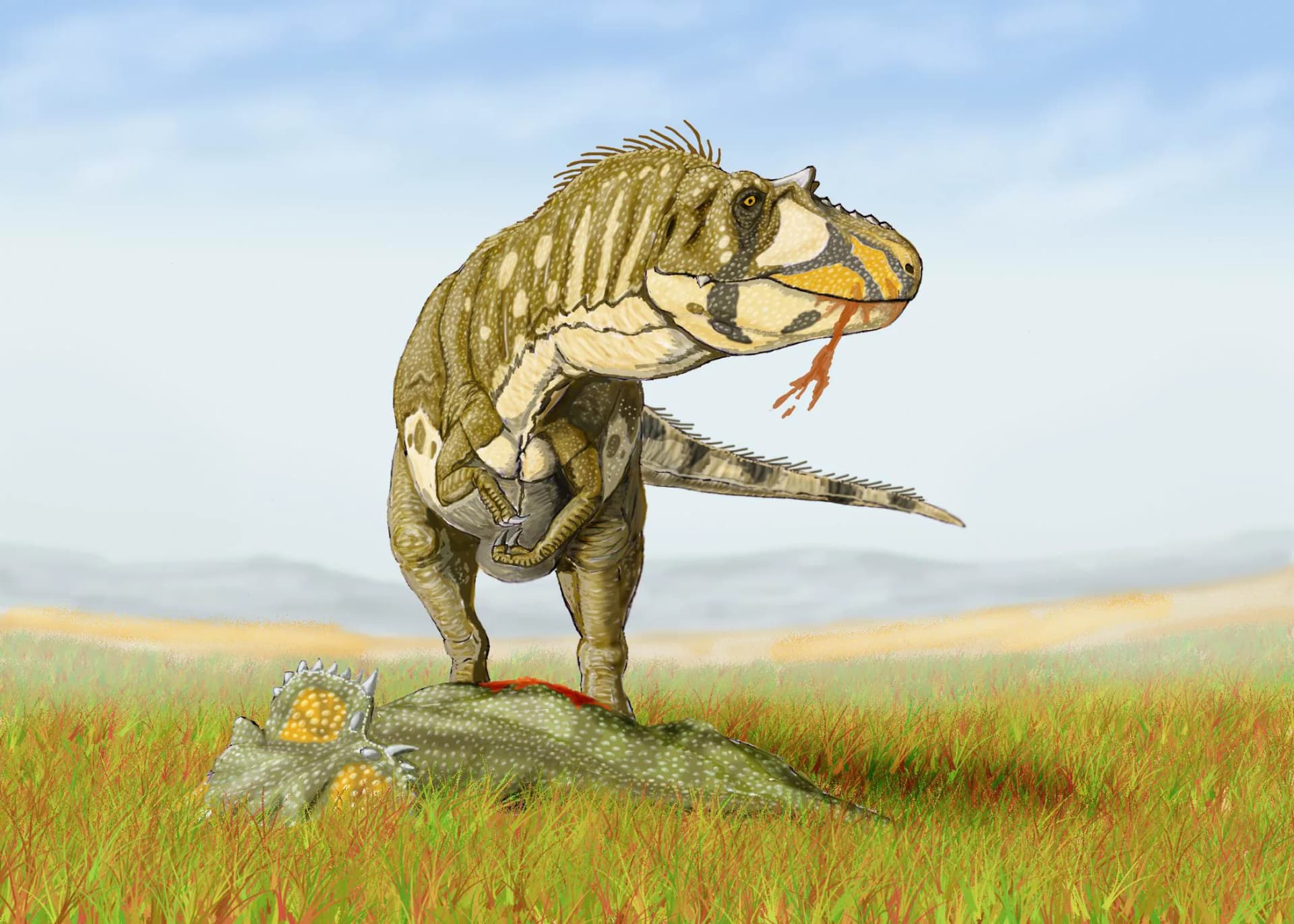
As a carnivorous theropod, Abelisaurus fed exclusively on meat. Its sharp teeth and powerful jaws allowed it to hunt medium to large prey, probably juvenile sauropods, hadrosaurs, and other herbivores of Cretaceous Argentina. The structure of its skull suggests a powerful but less precise bite than that of tyrannosaurs, adapted for tearing large quantities of flesh rather than crushing bones. It likely hunted alone or in small groups, targeting weak, sick, or young animals from herds of herbivores that roamed the Patagonian plains. Scavenging was also likely a significant part of its feeding strategy, as is common among large predatory theropods.
Abelisaurus inhabited the semi-arid environments of Late Cretaceous Patagonia, in the Anacleto geological formation of Argentina. This region was characterized by alluvial plains, seasonal waterways, and vegetation consisting of conifers, ferns, and early flowering plants. The climate was warm with pronounced dry seasons, very different from today's glacial Patagonia. The ecosystem was rich in dinosaurs: titanosaur sauropods like Saltasaurus roamed the plains, hadrosaurs browsed the vegetation, and several theropod species shared the predator role. Seasonal rivers and lakes attracted fauna and constituted prime hunting grounds for predators like Abelisaurus.
Abelisaurus anatomy is primarily known from its skull, which is the holotype of the species. The skull displays typical abelisaurid characteristics: a short and deep snout, large orbits, and an enlarged premaxillary fenestra. The skull surface shows rough textures suggesting the presence of keratinous structures or bony protuberances, possibly used for intraspecific recognition or ritual combat. The nasal bones are thick and ornamented, a characteristic common to the abelisaurid family. Although the postcranial skeleton is unknown, by comparison with close relatives like Carnotaurus, it is estimated that it had extremely reduced arms, powerful and muscular hind legs, and a robust body adapted for sprinting over short distances.
Abelisaurus behavior is inferred from its anatomical characteristics and comparison with other abelisaurids. Cranial ornamentations suggest complex social interactions, possibly ritual combat between males for territory or access to females, similar to head-butting observed in modern bovids. Its binocular vision, deduced from the forward-facing position of its orbits, indicated good depth perception, essential for an active predator. It was probably a diurnal hunter, using its vision and possibly its sense of smell to locate prey. Abelisaurids in general are considered relatively fast predators despite their robust build, capable of short sprints to surprise their prey in ambush-style attacks.
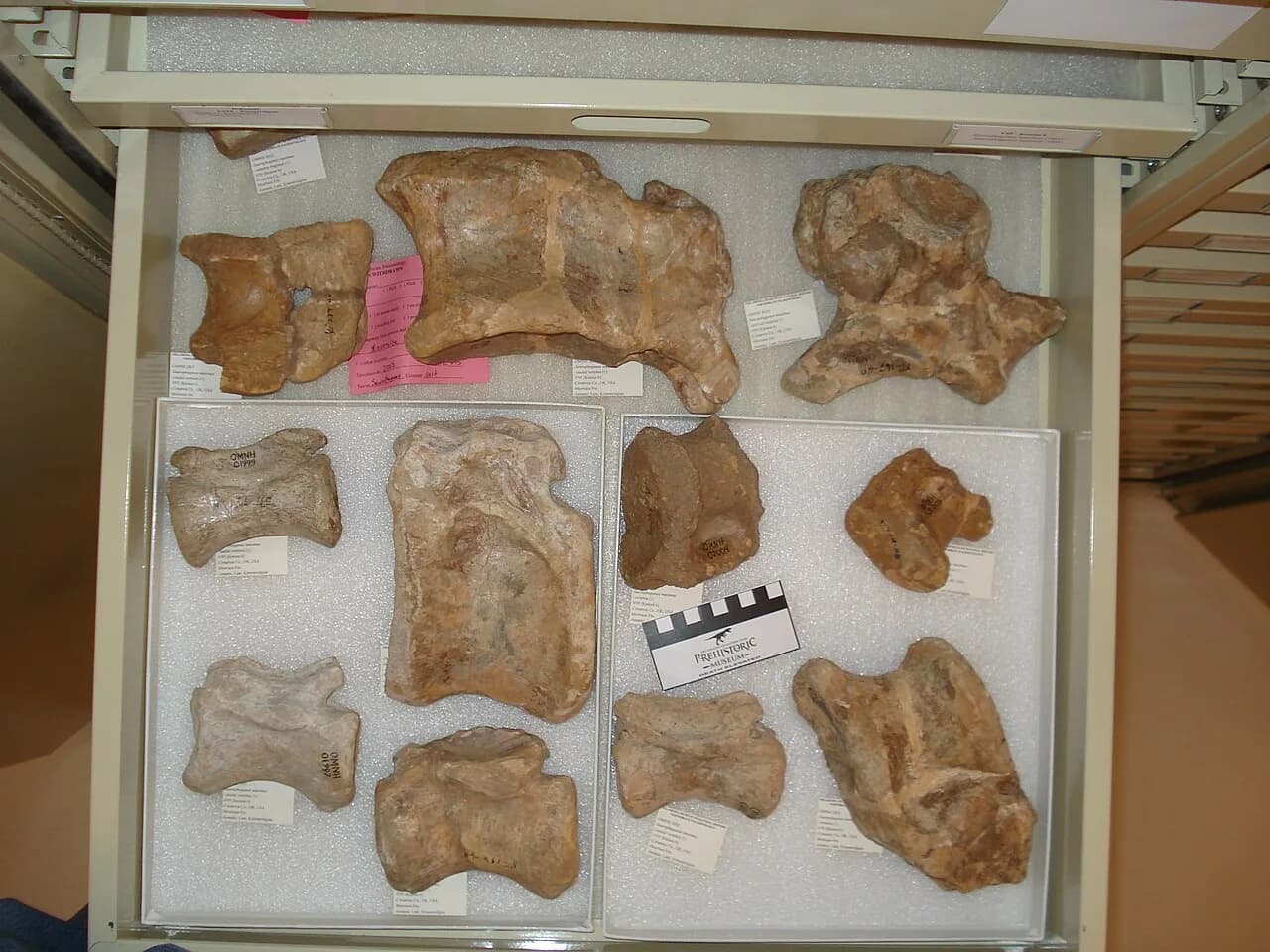
Abelisaurus was described in 1985 by Argentine paleontologists José Bonaparte and Fernando Novas, two major figures in South American paleontology. The holotype (MPCA 11098) is an incomplete but informative skull discovered in the Anacleto Formation of Río Negro Province, in northwestern Argentine Patagonia. The skull was found near Lake Pellegrini, a rich paleontological site. Although the fossil material is limited, it was sufficient to identify a new species and genus, and to give its name to the entire Abelisauridae family. The genus is named after Roberto Abel, former director of the Museo de Cipolletti, who contributed to the discovery. Since the original description, no additional material has been formally attributed to Abelisaurus, making its taxonomy sometimes debated among specialists.
| Period | Crétacé supérieur / Late Cretaceous |
| Era | Mésozoïque / Mesozoic |
| Age | ~75 millions d'années / ~75 million years ago |
| Location | Argentine (Patagonie) / Argentina (Patagonia) |
| Length | 7-9 m |
| Height | ~2 m |
| Weight | ~1.5-3 tonnes |
| Diet | Carnivore |
| Discovery | 1985 |
Abelisaurus comahuensis measured between 7 and 9 meters in length, with an estimated weight of 1.5 to 3 tonnes. Its skull reached approximately 85 centimeters — proportionally broad for its size. These estimates remain uncertain as the only known fossil is an incomplete skull from Argentine Patagonia.
Described in 1985 by José Bonaparte and Fernando Novas from a skull found in Argentina's Anacleto Formation, Abelisaurus comahuensis became the type species of Abelisauridae. This family groups Gondwanan carnivorous theropods like Carnotaurus, characterized by a short, robust skull. The genus is named after Roberto Abel, former director of the Museo de Cipolletti.
As the dominant predator of Campanian Patagonia, Abelisaurus comahuensis likely targeted juvenile titanosaur sauropods like Saltasaurus and hadrosaurs from the Anacleto Formation. Its powerful jaws were adapted for tearing large amounts of flesh rather than crushing bone, suggesting solitary or small-group hunting targeting weakened prey.
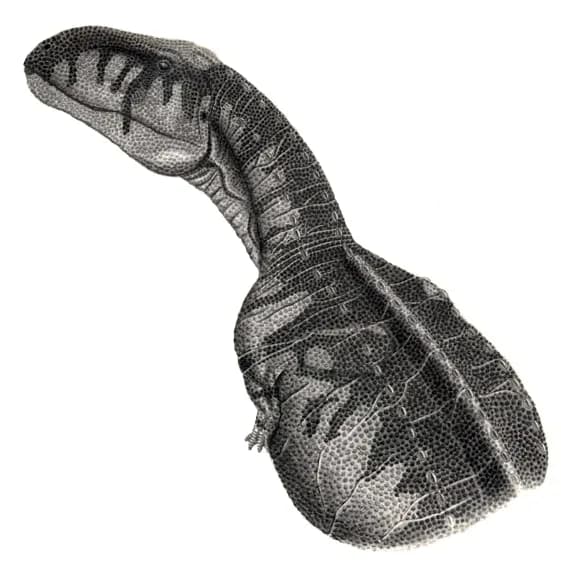
Reconstruction of Abelisaurus comahuensis
Wikimedia Commons
Abelisaurus fossil skull
Wikimedia Commons