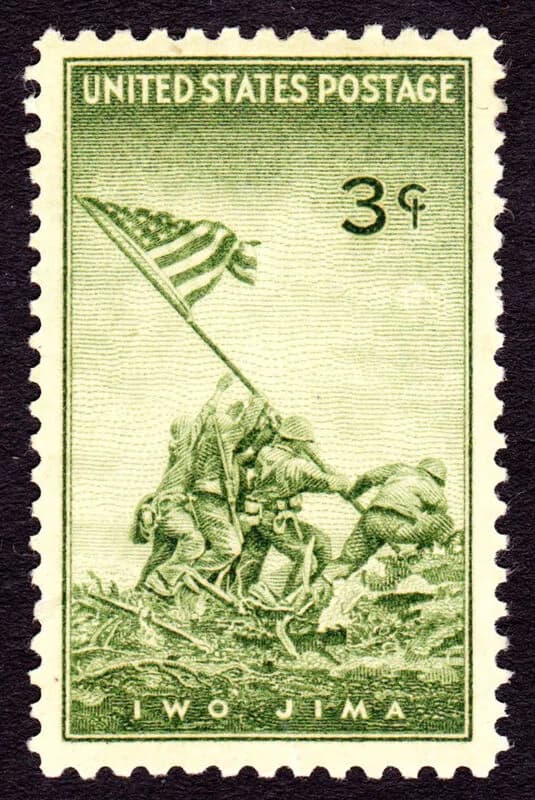
The Pacific Theater primarily pitted the United States against Imperial Japan in a naval and amphibious war spanning thousands of kilometers of ocean. From Pearl Harbor to Hiroshima, this fierce campaign concluded with the use of the first atomic bombs in history.
The Pacific Theater covered the largest geographical expanse of all World War II theaters. It stretched from the Aleutian Islands in the north (Alaska) to Australia in the south, from the coasts of India in the west to the Hawaiian Islands in the east — roughly 100 million square kilometers. This immensity posed unprecedented logistical challenges: bases were separated by thousands of kilometers of ocean, and each conquered island had to be transformed into a staging base for the next advance. The terrain varied considerably: dense tropical jungles of New Guinea and Burma, tiny coral atolls of the Marshalls and Carolines, fortified volcanic islands like Iwo Jima and Okinawa. The tropical climate brought its own challenges: diseases (malaria, dengue, dysentery), stifling heat, and typhoons. The geography favored naval and carrier-based warfare, making the Pacific a radically different theater from the European front.
Imperial Japan fielded the world's third-largest navy in 1941, with 10 aircraft carriers, 12 battleships, and the finest naval aviators in the world. The Japanese army numbered 2.1 million men, battle-hardened by years of war in China. Japanese soldiers were indoctrinated in bushido and the cult of the Emperor, fighting with a fanaticism that horrified the Allies — surrender was considered the ultimate dishonor. The United States, after the shock of Pearl Harbor, mobilized unmatched industrial might: in four years, they built 27 fleet carriers, 110 escort carriers, 10 new battleships, and thousands of auxiliary vessels. The Marine Corps, specialized in amphibious warfare, grew from 54,000 to 475,000 men. Allied forces also included Australia, New Zealand, the United Kingdom (in Burma), Chiang Kai-shek's Nationalist China, and Filipino guerrillas. The balance of power quickly shifted in favor of the Americans thanks to their production capacity: Japan, poor in resources, could never replace its losses.
The Pacific was marked by naval and amphibious battles of extreme violence. After Pearl Harbor (December 1941), Japan conquered the Philippines, Malaya, Singapore (fall of the 'impregnable fortress' on February 15, 1942, with 80,000 prisoners), the Dutch East Indies, Burma, and countless islands within months. The Battle of the Coral Sea (May 1942) was the first naval engagement where the opposing ships never saw each other — everything was decided by carrier-based aviation. Midway (June 1942) was the decisive turning point: four Japanese aircraft carriers were sunk, breaking Japanese naval superiority. Guadalcanal (August 1942-February 1943) was the first American ground offensive — six months of hell in the jungle. MacArthur's island-hopping campaign and Nimitz's thrust through the Central Pacific converged on Japan. Tarawa, Saipan, Guam, Peleliu, the Philippines (MacArthur's return in October 1944), Iwo Jima (February-March 1945), and Okinawa (April-June 1945) were all bloody battles where Japanese garrisons fought to the last man.
The Battle of Midway (June 4-7, 1942) is universally recognized as the turning point of the Pacific. Six months after Pearl Harbor, Admiral Yamamoto launched a complex offensive to seize Midway Atoll and destroy the surviving American aircraft carriers. But American cryptanalysts at Station HYPO, led by Commander Joseph Rochefort, broke the Japanese codes and knew the enemy plan. Admiral Nimitz set a trap: three American carriers (Enterprise, Hornet, Yorktown) lay in ambush. On June 4, after hours of confused combat, American dive bombers struck in five fatal minutes, sinking three Japanese carriers (Akagi, Kaga, Soryu). The fourth (Hiryu) was sunk the following day. Japan lost four aircraft carriers, 248 aircraft, and most critically, its most experienced pilots and deck crews — irreplaceable losses. After Midway, Japan was permanently on the defensive. The Battle of the Philippine Sea (June 1944) — dubbed the 'Great Marianas Turkey Shoot' — and the Battle of Leyte Gulf (October 1944, the largest naval battle in history) confirmed absolute American dominance.
The toll of the Pacific Theater was enormous. Japan lost approximately 2.5 million military personnel and between 500,000 and 800,000 civilians (excluding China). American strategic bombing, notably the incendiary bombing of Tokyo on March 9-10, 1945 (100,000 dead in a single night), devastated Japanese cities. The atomic bombs on Hiroshima and Nagasaki (August 1945) killed between 150,000 and 226,000 people. The United States lost approximately 111,000 military personnel in the Pacific. Allied prisoners of war were treated with systematic brutality: 27% of Western prisoners held by Japan died in captivity (compared to 4% in German captivity). The Bataan Death March, the camps on the River Kwai, and the 'hell ships' are documented war crimes. The Pacific Theater was also marked by the kamikazes: from October 1944, approximately 3,800 Japanese pilots carried out suicide attacks against Allied ships, sinking 34 vessels and damaging 368. The war in the Pacific transformed the United States into a global superpower and redrew the geopolitical map of Asia for decades.
This article draws on historical works, military archives and recognized academic publications.
The Battle of Midway (June 4-7, 1942) overturned Japanese naval superiority in four days. American cryptanalysts at Station HYPO, led by Commander Joseph Rochefort, broke the Japanese code and warned Admiral Nimitz. Dive bombers from USS Enterprise and USS Yorktown sank four Japanese carriers (Akagi, Kaga, Soryu, Hiryu) with 248 aircraft and above all their experienced pilots — irreplaceable losses. After Midway, Japan was permanently on the defensive.
Japan lost approximately 2.5 million military personnel and between 500,000 and 800,000 civilians (excluding China). The United States lost approximately 111,000 military personnel in the Pacific. The firebombing of Tokyo on March 9-10, 1945, killed 100,000 people in a single night. The atomic bombs on Hiroshima and Nagasaki in August 1945 caused between 150,000 and 226,000 deaths. Japan surrendered on September 2, 1945, aboard USS Missouri.
From October 1944, approximately 3,800 Japanese pilots carried out kamikaze (suicide) missions against the Allied fleet, deliberately crashing their bomb-laden aircraft onto ships. These attacks sank 34 Allied vessels and damaged 368, including USS Enterprise hit three times. During the Battle of Okinawa, kamikazes represented the primary threat against the American fleet.
Information cross-checked against Wikipedia and reference historical works.
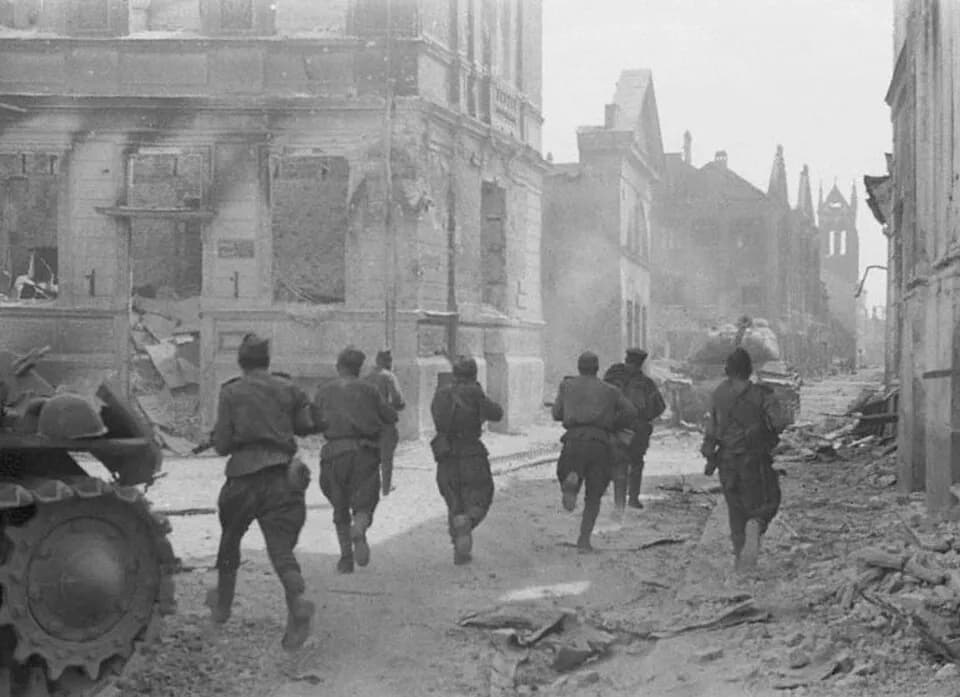
Eastern Front
The Eastern Front was the largest and deadliest theatre of operations in World War II. The clash between Nazi Germany and the Soviet Union caused over 30 million deaths and decided the outcome of the war in Europe. Four out of five German soldiers killed in the conflict fell there.
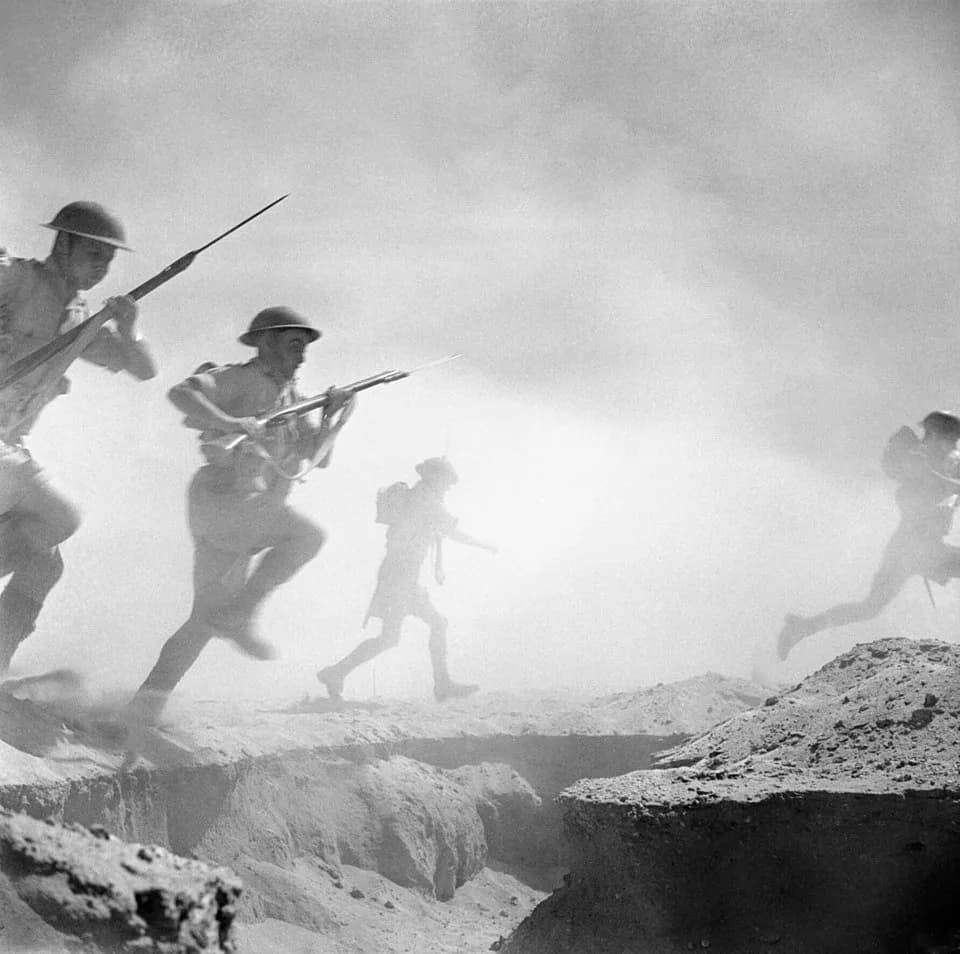
North African Campaign
The North African Campaign saw Axis and Allied forces clash in the deserts of Libya, Egypt and Tunisia. Theater of Rommel's desert war and Montgomery's decisive victory at El Alamein, it concluded with the surrender of 250,000 Axis soldiers in May 1943.
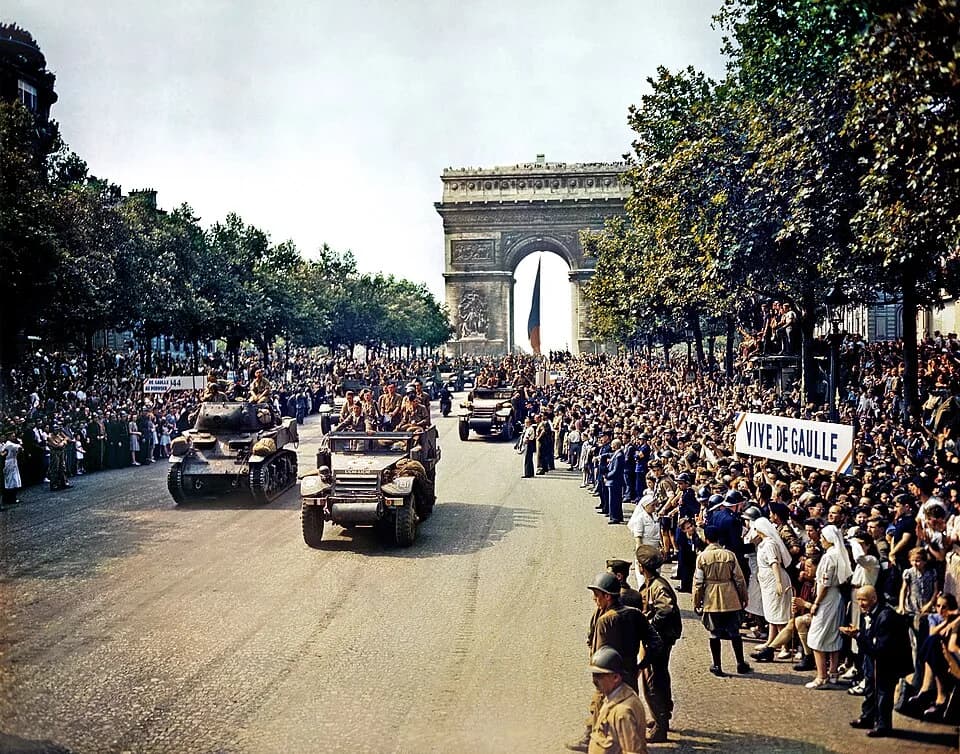
Western Front (1944-1945)
The Western Front, opened by the Normandy landings on June 6, 1944, saw Allied forces liberate France, Belgium and the Netherlands before invading Germany. From the Avranches breakthrough to the Rhine crossing, this eleven-month campaign ended the Third Reich from the west.
Battle of the Atlantic
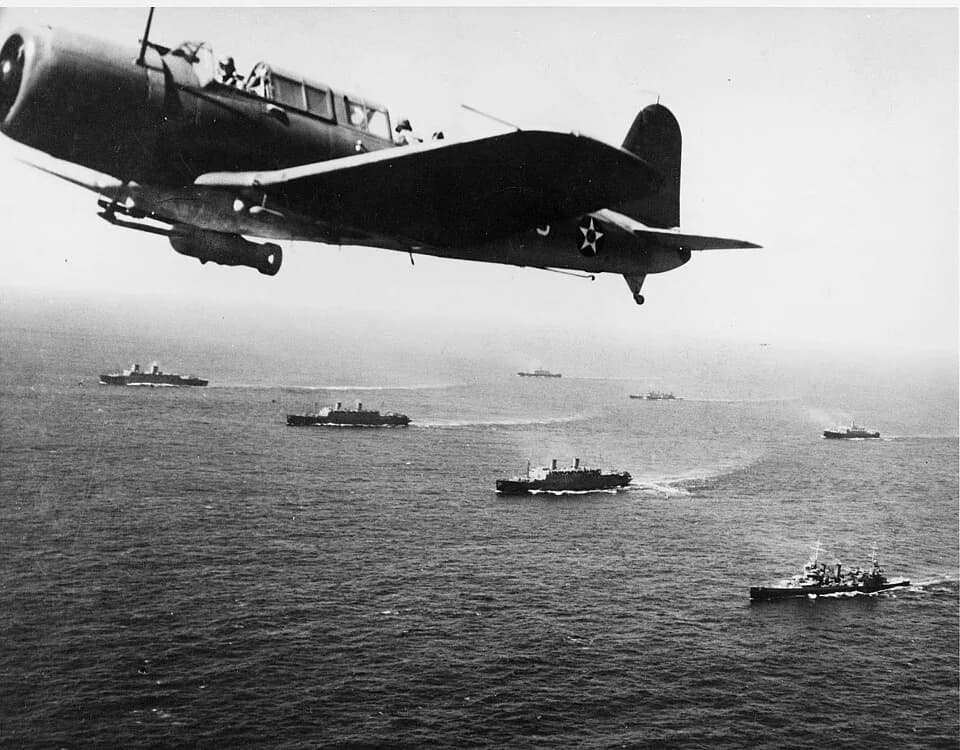
The Battle of the Atlantic was the longest continuous campaign of World War II, pitting German U-boats against Allied convoys for six years. This struggle for control of sea lanes determined Britain's ability to survive and the Allies' capacity to wage war in Europe.
