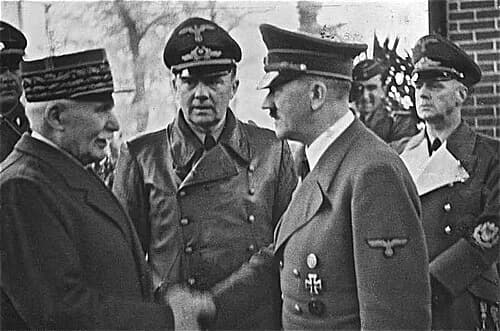
Philippe Pétain led the Vichy regime from 1940 to 1944 and collaborated with Nazi Germany after the French defeat. A hero of Verdun in 1916, he embodied French military prestige when he was called to power in June 1940 to sign the armistice. His authoritarian, antisemitic regime took an active part in deporting Jews to the extermination camps. Sentenced to death at the Liberation and reprieved by de Gaulle, he died in captivity on the Île d'Yeu in 1951.
Henri Philippe Bénoni Omer Pétain was born on April 24, 1856, in Cauchy-à-la-Tour, a village in the Pas-de-Calais, into a Catholic peasant family. Orphaned of his mother at two, he was raised by his grandparents in an austere rural environment. Inspired by the memory of the 1870 defeat against Prussia, he entered the military school of Saint-Cyr in 1876, graduating as a sub-lieutenant in 1878. His military career progressed slowly in the Third Republic's army, as his tactical ideas, which favored defense and firepower over offense at all costs, ran counter to the official French doctrine of offensive à outrance. A professor at the École de Guerre, he taught that 'firepower kills' and that artillery must prepare all infantry attacks, principles considered defeatist by the general staff. On the eve of World War I, at nearly sixty years old, he was a colonel expecting to retire without particular distinction.
World War I transformed Pétain's career spectacularly. His tactical principles, mocked before the war, proved prophetic in the face of the slaughter of the 1914 offensives. Promoted to brigadier general then division commander, he distinguished himself in Artois and Champagne. In February 1916, he was appointed commander of the defense of Verdun, where he organized methodical resistance against the German offensive with his famous rallying cry 'On les aura!' (We'll get them!). He established the Voie Sacrée, a vital supply road, and instituted a troop rotation system that preserved morale. The defensive victory at Verdun made him a national hero. In 1917, after the mutinies following the Nivelle Offensive on the Chemin des Dames, he was appointed Commander-in-Chief of the French armies. He restored morale through a combination of measured repression, improvement of soldiers' living conditions, and an end to suicidal offensives. Named Marshal of France in 1918, he enjoyed immense prestige between the wars, holding prominent political and military positions.
When Nazi Germany invaded France in May 1940, the military debacle was rapid and total. Pétain, recalled to government as Vice President of the Council, pushed for an armistice against the wishes of those who wanted to continue fighting from the colonial empire. On June 17, 1940, having become President of the Council, he announced to the French that they must 'cease combat.' The armistice signed on June 22 divided France into an occupied zone in the north and a so-called free zone in the south, administered from Vichy. On July 10, 1940, the National Assembly granted him full constituent powers, ending the Third Republic. Pétain established the French State, an authoritarian regime founded on the motto 'Work, Family, Fatherland.' The National Revolution he promoted was conservative, clerical, and antisemitic. The Vichy regime promulgated the Statute on Jews in October 1940, without German pressure, excluding Jews from the civil service and numerous professions. In July 1942, French police organized the Vel d'Hiv roundup, arresting over 13,000 Jews in Paris, including 4,000 children.
Pétain's decisions during World War II rank among the most consequential in French history. His decision to seek an armistice rather than continue fighting from North Africa, an option defended by de Gaulle and Mandel, broke the continuity of French resistance and gave legitimacy to collaboration. His meeting with Hitler at Montoire on October 24, 1940, where he committed to the path of state collaboration, marked a moral point of no return. The promulgation of the Jewish statute, a French rather than German initiative, revealed the antisemitism inherent to the Vichy regime. His decision to maintain French sovereignty at the cost of increasing concessions to the occupier led to the delivery of forced laborers for the STO, the use of French police to hunt down resistance fighters and Jews, and the military collaboration of the Milice with the SS. Pétain justified his choices by claiming to serve as a 'shield' protecting the French, but historians have demonstrated that Vichy's active collaboration went well beyond what the occupier demanded.
At the Liberation, Pétain was taken to Germany by the Germans in August 1944, then voluntarily surrendered at the Swiss border in April 1945 to stand trial. His trial before the High Court of Justice, in July-August 1945, was one of the most significant judicial events of twentieth-century France. Found guilty of intelligence with the enemy and high treason, he was sentenced to death, national indignity, and confiscation of his property. Due to his advanced age, General de Gaulle commuted the death sentence to life imprisonment. Imprisoned at Fort du Portalet then on the Île d'Yeu, he gradually sank into senility and died on July 23, 1951, at the age of 95. His legacy deeply divides French national memory. The 'Vichy Syndrome,' analyzed by historian Henry Rousso, shows how France long repressed and then gradually confronted the reality of collaboration. Jacques Chirac's 1995 speech, recognizing the responsibility of the French state in the deportation of Jews, marked a turning point in this still painful collective memory.
Philippe Pétain, born April 24, 1856, became a national hero by organizing the defense of Verdun in 1916 and restoring army morale after the 1917 mutinies. Named Marshal of France in 1918, he enjoyed immense prestige. During the debacle of May-June 1940, he was recalled as Vice President of the Council and pushed for an armistice. On July 10, 1940, the National Assembly granted him full constituent powers, ending the Third Republic.
Philippe Pétain's trial before the High Court of Justice (July-August 1945) was one of twentieth-century France's most significant judicial events. Found guilty of intelligence with the enemy and high treason, he was sentenced to death, national indignity, and confiscation of property. Due to his age (89 years), General de Gaulle commuted the sentence to life imprisonment. Pétain died on July 23, 1951 on the Île d'Yeu at age 95.
The Vichy regime promulgated the Jewish statute in October 1940, without German pressure, excluding Jews from the civil service and numerous professions. In July 1942, French police organized the Vel d'Hiv roundup, arresting over 13,000 Jews in Paris including 4,000 children. Historians have demonstrated that Vichy's active collaboration exceeded what the occupier demanded. Jacques Chirac acknowledged in 1995 the French state's responsibility in these deportations.
Information cross-checked against Wikipedia and reference historical works.
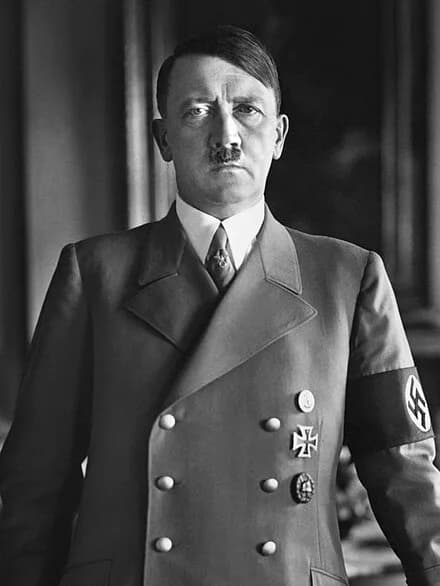
Adolf Hitler
Dictator of Nazi Germany from 1933 to 1945, Adolf Hitler was the primary instigator of World War II and the Holocaust. His racist and expansionist ideology caused the deaths of tens of millions of people worldwide. Appointed chancellor on 30 January 1933, he had dismantled the Weimar Republic within eighteen months and taken absolute power.
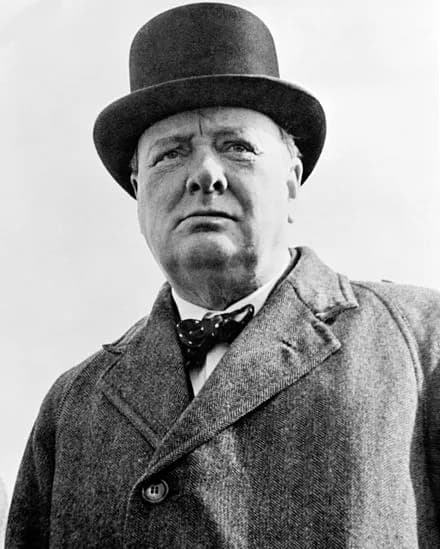
Winston Churchill
Prime Minister of the United Kingdom from 1940 to 1945, Winston Churchill embodied British resistance to Nazi Germany. His rousing speeches and unwavering leadership were instrumental in sustaining British morale through the darkest hours of the war. He refused any negotiated peace after the fall of France.
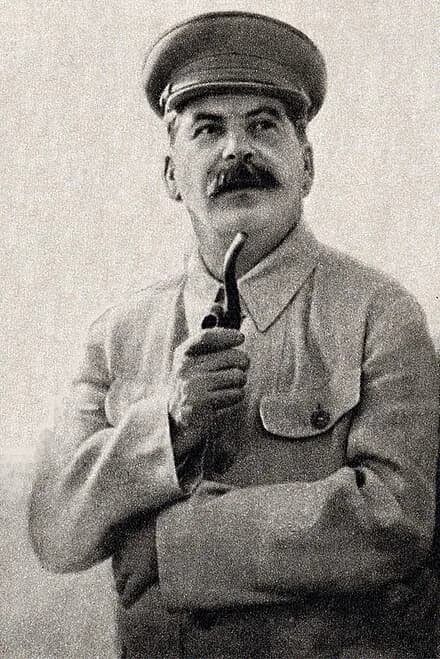
Joseph Stalin
Leader of the Soviet Union from 1924 to 1953, Joseph Stalin transformed the USSR into an industrial and military superpower. His leadership during the Great Patriotic War was decisive in defeating Nazi Germany, but his totalitarian regime caused millions of deaths among his own people.
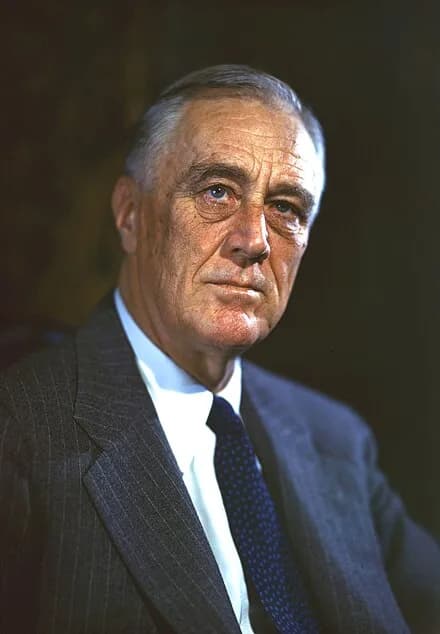
Franklin D. Roosevelt
32nd President of the United States, Franklin D. Roosevelt led the country through the Great Depression and most of World War II. His Lend-Lease program and diplomacy with Churchill and Stalin were decisive in the Allied victory, though he died just weeks before Germany's surrender.
