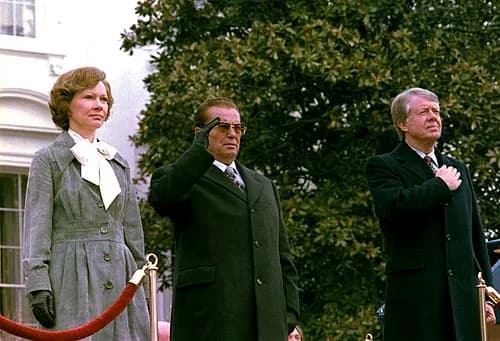
Josip Broz Tito led the Yugoslav resistance against Nazi occupation, then founded socialist Yugoslavia. His guerrilla force, 800,000 strong, fought Germans, Italians, Croatian Ustaše and Serbian Chetniks at once. It liberated the country largely by its own means, a unique case in occupied Europe. President for life after the war, he broke with Stalin in 1948 and pursued a policy of non-alignment.
Josip Broz was born on May 7, 1892, in Kumrovec, a village in Croatia then part of the Austro-Hungarian Empire, into a Croatian-Slovenian peasant family. The seventh of fifteen children, he grew up in rural poverty. An apprentice locksmith and then metalworker, he discovered the labor movement and trade unionism in the factories of Zagreb and Vienna. Conscripted into the Austro-Hungarian Army in 1913, he served as a non-commissioned officer on the Eastern Front during World War I. In April 1915, he was seriously wounded by a Cossack lance fragment and captured by the Russians. A prisoner of war in Russia, he witnessed the Bolshevik Revolution of 1917 and joined the Red Guards. Returning to Yugoslavia in 1920, he joined the Communist Party, now outlawed, and conducted clandestine activity under various pseudonyms. Arrested in 1928, he was sentenced to five years in prison where he deepened his Marxist-Leninist education and forged his character as a professional revolutionary.
After his release in 1934, Broz rose through the ranks of the Yugoslav Communist Party, spending time in Moscow during the Great Stalinist Purges where he survived by skillfully navigating Comintern intrigues. In 1937, he was appointed General Secretary of the Communist Party of Yugoslavia and definitively adopted the pseudonym Tito. He reorganized the party into a disciplined, clandestine machine, ready to act when opportunity arose. When the Axis invaded and dismembered Yugoslavia in April 1941, Tito launched the armed insurrection in July 1941 after the German attack on the Soviet Union. Under his leadership, the communist partisans quickly became the most organized and effective resistance force in the Balkans. Unlike the Chetniks of Colonel Draža Mihailović, who adopted a wait-and-see strategy and eventually collaborated with the Germans, Tito's partisans waged aggressive and constant guerrilla warfare, establishing liberated territories and a parallel administration in the mountainous regions of Bosnia and Montenegro.
Tito's partisan war was one of the fiercest of the entire Second World War. Between 1941 and 1945, the Germans launched seven major offensives to destroy the partisans, mobilizing up to 120,000 soldiers supported by Italian, Ustasha, and Chetnik forces. During the fifth offensive in May-June 1943 on the Sutjeska, the partisans, surrounded and on the brink of annihilation, achieved a heroic breakthrough that became a founding myth of Yugoslavia. Tito himself was wounded by a bomb fragment. Gradually recognized by the Western Allies who abandoned Mihailović in his favor, Tito received increasing British material support from 1943 onward. Churchill sent military missions to the partisans, impressed by their combat effectiveness. In May 1944, a German airborne operation nearly captured Tito at his headquarters in Drvar, but he narrowly escaped. With the help of the Red Army, which entered Yugoslavia in October 1944, the partisans liberated Belgrade on October 20, 1944, and continued the liberation of the country until May 1945.
Tito's wartime decisions reveal a political and military leader of exceptional skill. His decision to launch the insurrection as early as July 1941, while other resistance movements hesitated, allowed him to seize the initiative and recruit massively among persecuted populations. His choice to wage a multiethnic national liberation war, uniting Serbs, Croats, Slovenes, Bosniaks, and Montenegrins under the communist banner, contrasted with the ethnic nationalism of the Chetniks and Ustasha. His decision to create a state within a state with people's councils in liberated territories laid the foundations of the future federal Yugoslavia. Diplomatically, he skillfully maneuvered between the Western Allies and the Soviet Union, obtaining support from both sides. His rivalry with Mihailović, whom he denounced as a collaborator, led to the transfer of Allied support in his favor, a decision that sealed the postwar political fate of the Balkans. His refusal to submit to Moscow's directives foreshadowed the Tito-Stalin split of 1948.
After the war, Tito established the Federal People's Republic of Yugoslavia and spectacularly broke with Stalin in 1948, refusing Soviet tutelage and developing a unique self-managing socialist model. This break made him a hero of national independence and a leader of the Non-Aligned Movement alongside Nehru and Nasser. President for life from 1953, he maintained the unity of multiethnic Yugoslavia through a mixture of personal charisma, political repression, and relative economic prosperity. He died on May 4, 1980, in Ljubljana, and his funeral gathered heads of state from around the world in one of the largest diplomatic gatherings in history. His legacy is complex and controversial: hero of the antifascist resistance and architect of a third way between East and West, he was also an authoritarian dictator. The Yugoslavia he had unified disintegrated in the bloody wars of the 1990s, raising the question of whether his political work rested on durable foundations or solely on his exceptional personality.
Josip Broz Tito's guerrilla force, which grew to 800,000 fighters, liberated Yugoslavia largely through its own efforts — a unique feat among occupied European countries. Yugoslav partisans simultaneously fought German and Italian occupation forces, Croatian Ustasha, and Serbian Chetniks. Between 1941 and 1945, the Germans launched seven major offensives mobilizing up to 120,000 soldiers without managing to destroy them.
In 1948, Josip Broz Tito refused Soviet tutelage and developed an independent self-managing socialist model, triggering the Tito-Stalin split. This break made him a hero of national independence and a leader of the Non-Aligned Movement alongside Nehru and Nasser. Yugoslavia thus obtained a unique position during the Cold War, neither in the Western nor in the Soviet bloc.
In May 1944, a German airborne operation (Operation Rösselsprung) nearly captured Josip Broz Tito at his headquarters in Drvar, Bosnia. SS paratroopers from the 500th SS launched a surprise attack, but Tito narrowly escaped down a cliff face. This episode occurred when the Western Allies were providing him with increasing material support, Churchill having sent military missions impressed by his combat effectiveness.
Information cross-checked against Wikipedia and reference historical works.
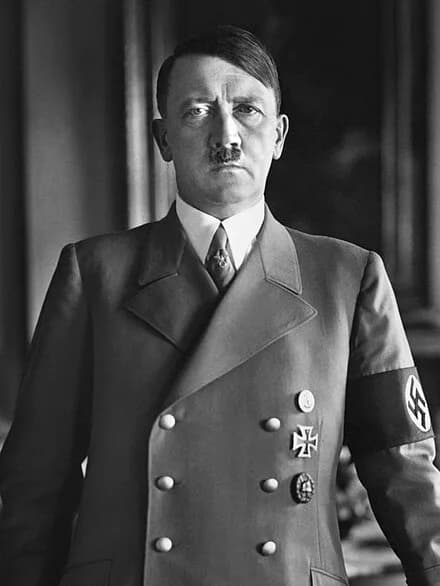
Adolf Hitler
Dictator of Nazi Germany from 1933 to 1945, Adolf Hitler was the primary instigator of World War II and the Holocaust. His racist and expansionist ideology caused the deaths of tens of millions of people worldwide. Appointed chancellor on 30 January 1933, he had dismantled the Weimar Republic within eighteen months and taken absolute power.
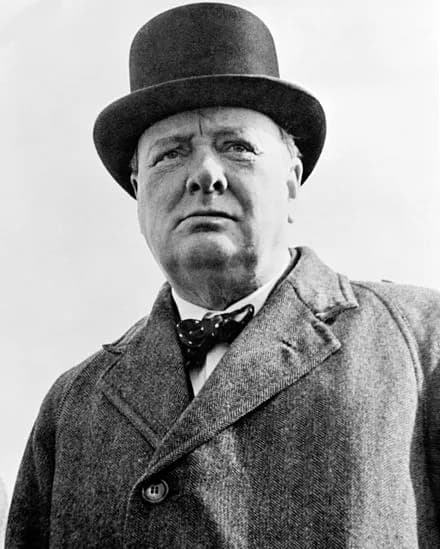
Winston Churchill
Prime Minister of the United Kingdom from 1940 to 1945, Winston Churchill embodied British resistance to Nazi Germany. His rousing speeches and unwavering leadership were instrumental in sustaining British morale through the darkest hours of the war. He refused any negotiated peace after the fall of France.
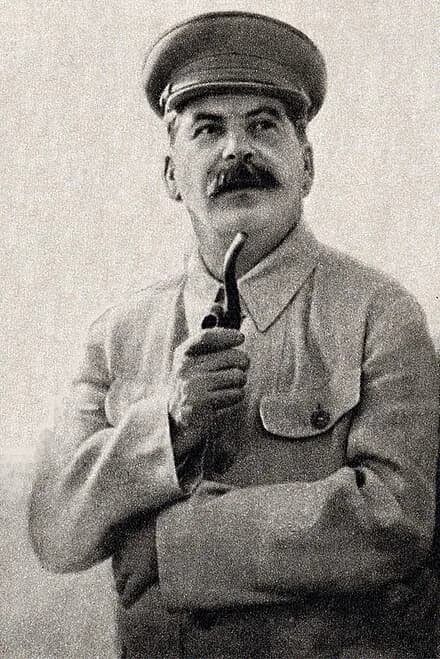
Joseph Stalin
Leader of the Soviet Union from 1924 to 1953, Joseph Stalin transformed the USSR into an industrial and military superpower. His leadership during the Great Patriotic War was decisive in defeating Nazi Germany, but his totalitarian regime caused millions of deaths among his own people.
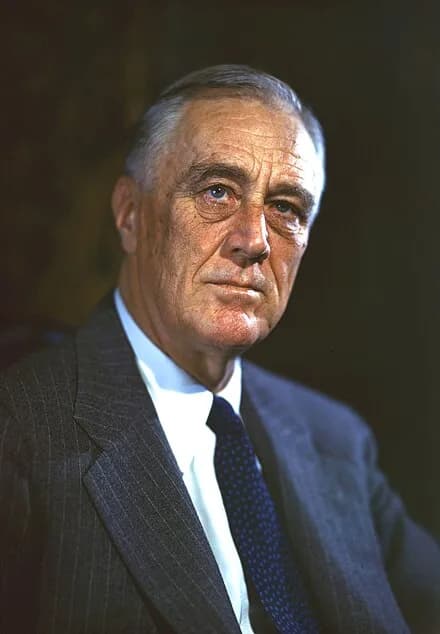
Franklin D. Roosevelt
32nd President of the United States, Franklin D. Roosevelt led the country through the Great Depression and most of World War II. His Lend-Lease program and diplomacy with Churchill and Stalin were decisive in the Allied victory, though he died just weeks before Germany's surrender.
