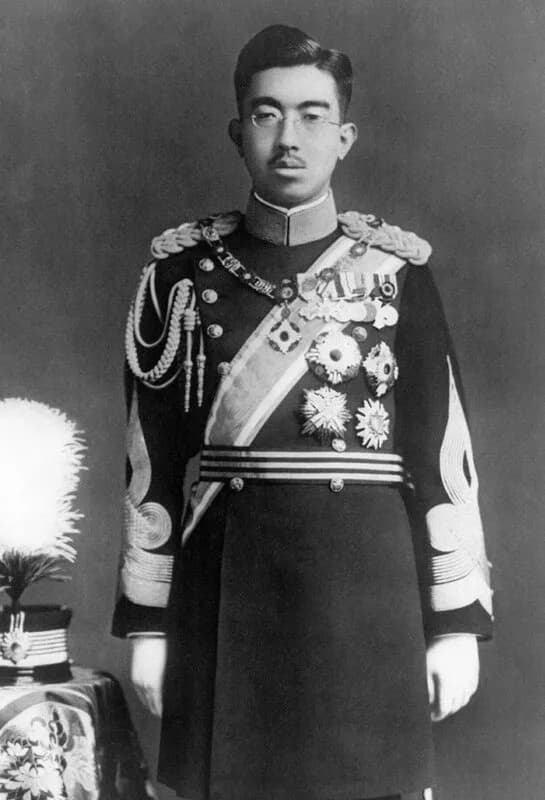
Emperor of Japan from 1926 to 1989, Hirohito reigned during one of the most turbulent periods in Japanese history, including militarist expansion, World War II, and postwar reconstruction. His decision to accept surrender in 1945 brought an end to the war in the Pacific.
Hirohito was born on April 29, 1901, in the Aoyama Palace in Tokyo, the first son of Crown Prince Yoshihito and Crown Princess Sadako. As the grandson of the reigning Emperor Meiji, who had transformed Japan from a feudal society into a modern industrial and military power, Hirohito grew up in an environment steeped in tradition yet facing the pressures of rapid modernization. Following Japanese imperial custom, he was separated from his parents at a young age and raised by a succession of tutors and retainers. He attended the Peers' School (Gakushūin), where he received a rigorous education in both classical Japanese arts and Western sciences. From an early age, he developed a passionate interest in marine biology, a pursuit he would maintain throughout his life and in which he would become a published researcher of international standing. In 1921, he made an unprecedented six-month tour of Europe, visiting Britain, France, Belgium, the Netherlands, and Italy — the first Japanese crown prince ever to travel abroad. The trip profoundly influenced him; he was particularly impressed by the constitutional monarchy of Britain and the relative informality of King George V. Upon his return, he was appointed regent for his ailing father Emperor Taishō, who suffered from neurological illness, effectively assuming the responsibilities of the throne at the age of twenty.
Hirohito ascended the Chrysanthemum Throne on December 25, 1926, choosing the era name Shōwa, meaning "Enlightened Peace" — a name that would prove bitterly ironic given the decades of war that followed. The Japanese political system he inherited was deeply flawed: while the emperor was theoretically supreme, real power was fragmented among military factions, court advisors, civilian politicians, and the Privy Council. The military, which answered directly to the emperor rather than to the civilian government, increasingly acted independently. The 1930s saw a cascade of crises that Hirohito struggled to control. Army officers assassinated moderate politicians, and in 1931, the Kwantung Army invaded Manchuria without authorization from Tokyo, presenting the government with a fait accompli. Hirohito was privately displeased but did not publicly oppose the action, establishing a pattern that would characterize his reign: expressing reservations in private while sanctioning aggressive actions in public. The February 26 Incident of 1936, when young army officers attempted a coup and assassinated several senior officials, was one of the rare occasions when Hirohito asserted his authority directly, demanding the rebellion be crushed. Japan's full-scale invasion of China began in 1937, leading to atrocities including the Nanjing Massacre, as the military establishment tightened its grip on national policy and steered the empire toward confrontation with Western powers.
The decision to go to war against the United States and the Western Allies was formalized at an Imperial Conference on September 6, 1941, and confirmed on December 1, 1941. Hirohito's exact role in the decision to attack Pearl Harbor on December 7, 1941, remains one of the most debated questions of the war. He reportedly expressed reluctance by reading a poem by his grandfather Emperor Meiji about the seas uniting all nations, yet he ultimately sanctioned the war plan. The early months brought stunning Japanese victories: Pearl Harbor crippled the American Pacific Fleet, and within six months Japan had conquered Hong Kong, Malaya, Singapore, the Dutch East Indies, the Philippines, and Burma, creating the Greater East Asia Co-Prosperity Sphere. Hirohito was actively briefed on military operations and expressed satisfaction at early successes. However, the tide turned decisively at the Battle of Midway in June 1942, where Japan lost four aircraft carriers. The following years brought relentless American island-hopping campaigns — Guadalcanal, Tarawa, Saipan, Iwo Jima, Okinawa — each bringing the war closer to the Japanese homeland. By early 1945, American firebombing had devastated Japanese cities, with the Tokyo raid of March 9-10 alone killing over 100,000 civilians. Throughout this period, Hirohito maintained his support for the war effort, approving desperate measures including kamikaze attacks, while the Supreme War Council remained deadlocked between those who sought peace and those who demanded a fight to the death.
Hirohito's most pivotal decision came in August 1945. After the atomic bombing of Hiroshima on August 6 and Nagasaki on August 9, and the Soviet declaration of war on Japan on August 8, the Supreme War Council remained deadlocked, with the military faction insisting on continuing the fight. On the night of August 9-10, Prime Minister Suzuki took the unprecedented step of asking the emperor to break the deadlock. Hirohito declared that the unendurable must be endured and that he favored accepting the Potsdam Declaration's terms for surrender. Even then, a group of young officers attempted a coup on the night of August 14-15 to prevent the surrender, seizing the Imperial Palace in a desperate bid to find and destroy the recording of the emperor's surrender announcement. The coup failed, and on August 15, 1945, the Japanese people heard their emperor's voice for the first time in a radio broadcast known as the Jewel Voice Broadcast (Gyokuon-hōsō). Speaking in formal court Japanese that many listeners struggled to understand, Hirohito announced Japan's acceptance of the Allied terms without ever using the word 'surrender.' His decision to intervene personally saved potentially millions of lives on both sides, as the Allies had been planning Operation Downfall, the invasion of the Japanese home islands, which was expected to result in catastrophic casualties. The emperor's authority was the only force capable of compelling the military to lay down its arms.
After Japan's surrender, the question of Hirohito's fate became a major issue for the Allied occupation. General Douglas MacArthur, the Supreme Commander of the Allied Powers in Japan, made the strategic decision to retain the emperor on the throne, judging that his authority was essential for maintaining order and facilitating the peaceful transformation of Japan. The famous photograph of MacArthur towering over the diminutive emperor, taken on September 27, 1945, symbolized the new power dynamic. Hirohito was not indicted as a war criminal at the Tokyo Trials, a controversial decision that many historians attribute to American Cold War calculations rather than an assessment of his actual guilt or innocence. On January 1, 1946, Hirohito issued the Humanity Declaration (Ningen-sengen), in which he renounced the traditional claim that the emperor was divine. Under the new constitution imposed by the occupation, which took effect in 1947, the emperor became a purely ceremonial figurehead with no political power, described as the 'symbol of the State.' Hirohito embraced this new role with apparent sincerity, touring the devastated country to boost public morale and dedicating himself to his marine biology research. He reigned for another forty-four years, overseeing Japan's transformation from a ruined, occupied country into the world's second-largest economy. He died on January 7, 1989, and the debate over his wartime responsibility continues to this day, dividing those who see him as a powerless figurehead manipulated by militarists and those who argue he bore significant responsibility for Japan's aggression.
On the night of August 9-10, 1945, after the atomic bombings of Hiroshima on August 6 and Nagasaki on August 9, with Japan's Supreme War Council deadlocked, Emperor Hirohito declared that 'the unendurable must be endured' and broke the deadlock in favor of accepting the Potsdam Declaration terms. On August 15, he announced the surrender by radio in the Gyokuon-hōsō, the Jewel Voice Broadcast, the first time Japanese people had ever heard his voice.
Hirohito was not indicted at the Tokyo Trials (1946-1948). General Douglas MacArthur, the Allied Supreme Commander, decided to keep him on the throne to preserve order and facilitate Japan's peaceful transformation — a decision many historians attribute to American Cold War calculations. Under the 1947 constitution, Hirohito became a purely ceremonial symbol with no political power.
Hirohito ascended the Chrysanthemum Throne on December 25, 1926, choosing the era name Shōwa (Enlightened Peace). He reigned until his death on January 7, 1989 — 63 years, one of the longest reigns in history. Passionate about marine biology since childhood, he became an internationally renowned published researcher in the field, pursuing his scientific studies throughout his life despite his imperial responsibilities.
Information cross-checked against Wikipedia and reference historical works.
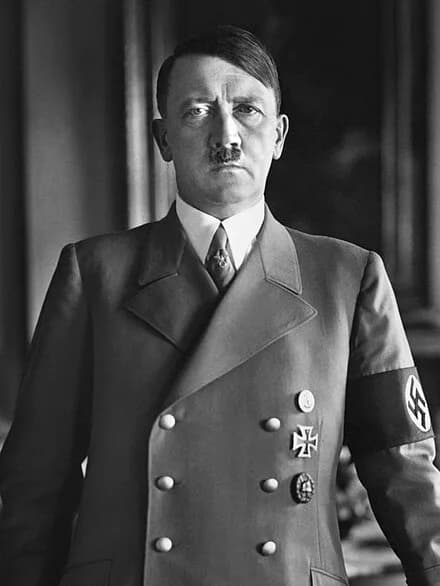
Adolf Hitler
Dictator of Nazi Germany from 1933 to 1945, Adolf Hitler was the primary instigator of World War II and the Holocaust. His racist and expansionist ideology caused the deaths of tens of millions of people worldwide. Appointed chancellor on 30 January 1933, he had dismantled the Weimar Republic within eighteen months and taken absolute power.
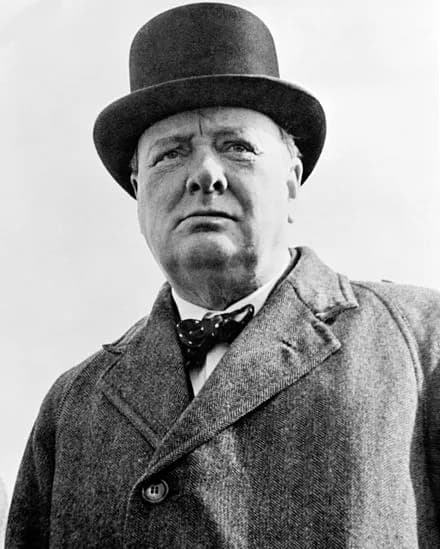
Winston Churchill
Prime Minister of the United Kingdom from 1940 to 1945, Winston Churchill embodied British resistance to Nazi Germany. His rousing speeches and unwavering leadership were instrumental in sustaining British morale through the darkest hours of the war. He refused any negotiated peace after the fall of France.
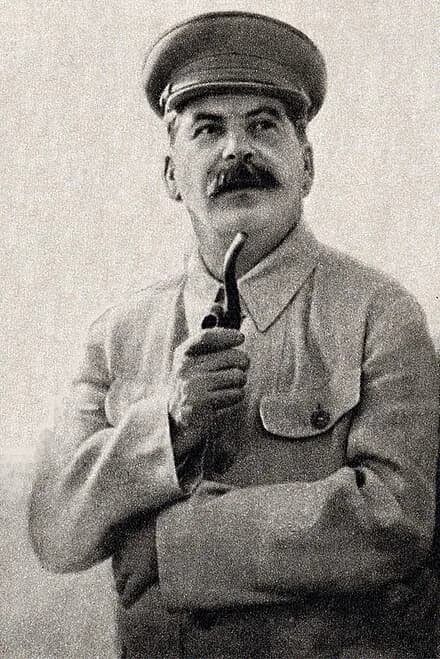
Joseph Stalin
Leader of the Soviet Union from 1924 to 1953, Joseph Stalin transformed the USSR into an industrial and military superpower. His leadership during the Great Patriotic War was decisive in defeating Nazi Germany, but his totalitarian regime caused millions of deaths among his own people.
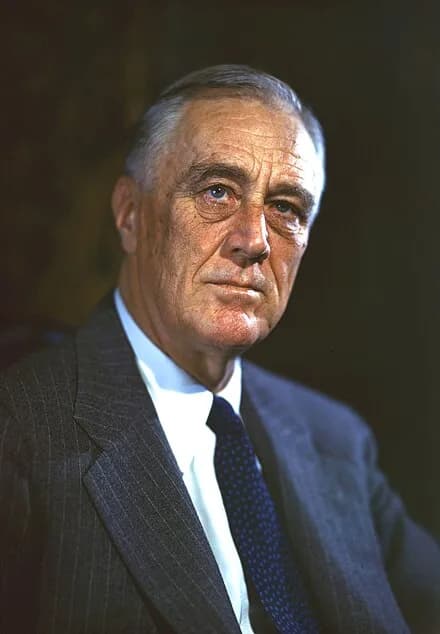
Franklin D. Roosevelt
32nd President of the United States, Franklin D. Roosevelt led the country through the Great Depression and most of World War II. His Lend-Lease program and diplomacy with Churchill and Stalin were decisive in the Allied victory, though he died just weeks before Germany's surrender.
