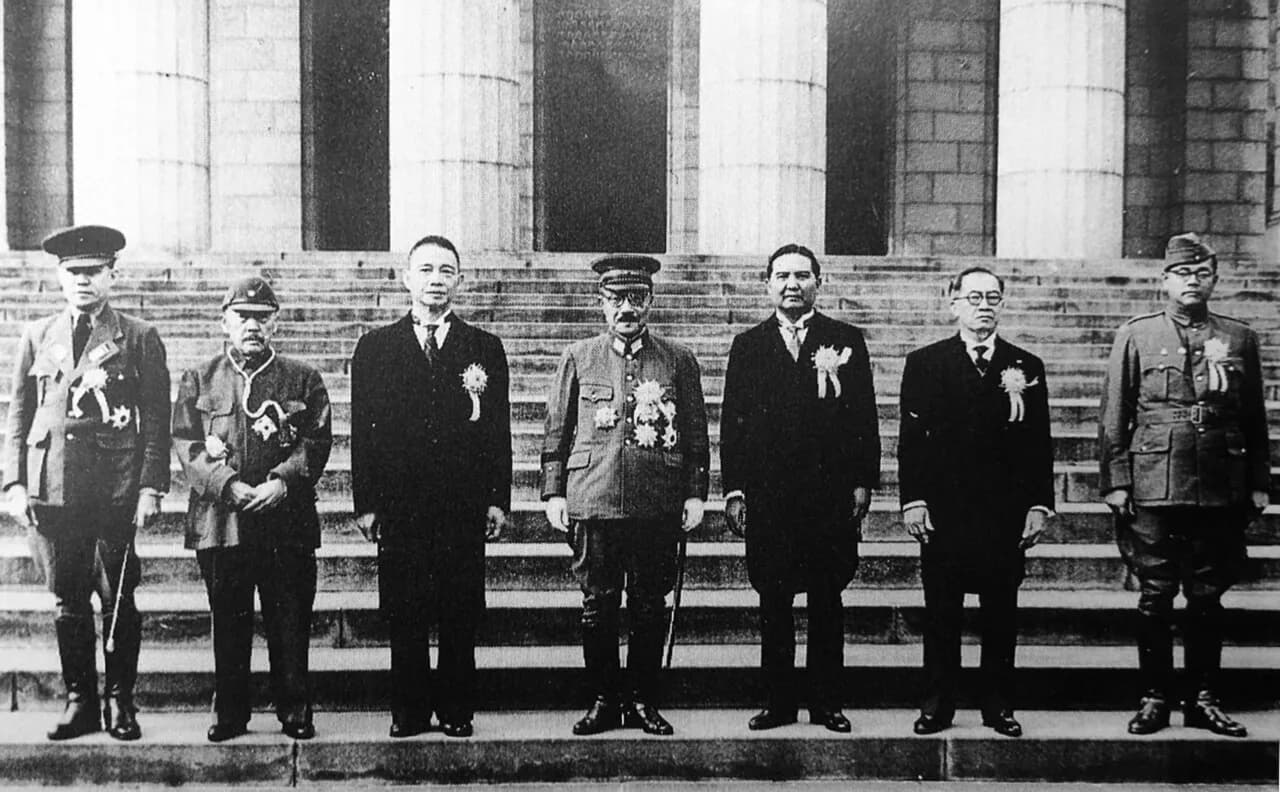
Hideki Tōjō was Prime Minister of Japan from 1941 to 1944 and the man chiefly responsible for the country's entry into World War II. A general of the imperial army, he ordered the attack on Pearl Harbor on 7 December 1941 and oversaw Japanese expansion across Southeast Asia and the Pacific. His government bears responsibility for massive war crimes. Tried by the International Military Tribunal for the Far East, he was hanged on 23 December 1948.
Hideki Tōjō was born on December 30, 1884, in Kōjimachi, central Tokyo, the son of a lieutenant general in the Imperial Japanese Army. Raised in a strict military family where loyalty to the Emperor and the honor of bushidō were absolute values, he naturally followed the path of arms. He entered the Imperial Japanese Army Academy in 1899 and graduated in 1905, just after Japan's victory in the Russo-Japanese War which galvanized Japanese military nationalism. A methodical and hardworking young officer, he distinguished himself through rigorous organization rather than any tactical genius. He later attended the Army War College where he was trained in strategy and German military thought, developing an admiration for the Prussian model of discipline and military efficiency. His austere personality and total devotion to the military institution earned him the nickname Kamisori, the Razor.
Tōjō climbed the ranks of the Imperial Japanese Army with determination. In the 1930s, he served in Manchuria as head of the military police of the Kwantung Army, then as chief of staff of that same army, acquiring a reputation as a strongman and fervent anticommunist. He played an active role in consolidating Japanese control over Manchuria and supported military expansionism in China. In 1938, he was recalled to Japan as Vice Minister of War, then became Minister of War in 1940 in Prince Konoe's cabinet. An advocate of the alliance with Nazi Germany and Fascist Italy through the Tripartite Pact, he pushed for an aggressive policy toward Western powers. When negotiations with the United States regarding the oil embargo failed, Prince Konoe resigned and Emperor Hirohito appointed Tōjō as Prime Minister on October 18, 1941, entrusting him with the fateful decision of war or peace with the United States.
As Prime Minister, Tōjō approved the plan to attack Pearl Harbor and the simultaneous offensives across the Pacific and Southeast Asia. The first six months were marked by lightning victories: the destruction of the American Pacific fleet at Pearl Harbor, the fall of Hong Kong, Singapore, the Philippines, the Dutch East Indies, and Burma. Japan then controlled an immense maritime empire. Tōjō held the combined positions of Prime Minister, Minister of War, and Army Chief of Staff, concentrating near-dictatorial power. However, the Battle of Midway in June 1942 marked the turning point of the war in the Pacific. The series of defeats that followed, notably at Guadalcanal, the Gilbert and Marshall Islands, and the catastrophic fall of Saipan in July 1944, definitively eroded confidence in his leadership. Under pressure from political and military circles, Tōjō was forced to resign on July 18, 1944. His government was replaced by that of General Koiso, but the war was already lost for Japan.
Tōjō's most consequential decision was approving the attack on Pearl Harbor, which brought the United States into the war and sealed Japan's fate. Convinced that the Americans, whom he considered decadent and incapable of prolonged sacrifice, would negotiate peace after a series of initial defeats, he committed a catastrophic error of judgment. His decision to wage war on multiple fronts simultaneously dispersed Japanese forces and made any strategic concentration impossible. His treatment of prisoners of war, codified by military orders denying Geneva Convention protections, led to the deaths of tens of thousands of Allied prisoners in atrocious conditions, notably on the Burma-Siam Death Railway and in forced labor camps. His policy in China and Southeast Asia authorized systematic massacres and atrocities against civilian populations. His obstinate refusal to contemplate defeat needlessly prolonged suffering and contributed to the massive losses of the war's final years.
After Japan's surrender on August 15, 1945, Tōjō attempted suicide on September 11, 1945, by shooting himself in the chest with a pistol as American soldiers came to arrest him, but he survived his wound. Treated by American doctors, he was tried by the International Military Tribunal for the Far East from 1946 to 1948. Found guilty of war crimes and crimes against humanity, he was sentenced to death and executed by hanging on December 23, 1948, at Sugamo Prison in Tokyo. His legacy in Japan remains deeply controversial. He is venerated by some nationalists at Yasukuni Shrine, where he is among the Class A war criminals enshrined in 1978, which regularly provokes diplomatic tensions with China and Korea. For most historians, Tōjō symbolizes the Japanese militarism that led the country to catastrophe and caused the deaths of millions of people across the Asia-Pacific region.
As Prime Minister since October 18, 1941, Hideki Tōjō approved the plan to attack Pearl Harbor on December 7, 1941. Convinced that the United States, which he considered decadent, would negotiate peace after initial defeats, he committed a catastrophic error of judgment. The attack sank or damaged eight American battleships but missed the aircraft carriers, absent from port, which proved fatal for Japan.
Hideki Tōjō was tried by the International Military Tribunal for the Far East from 1946 to 1948. Found guilty of war crimes and crimes against humanity for the brutal treatment of Allied prisoners of war, notably on the Burma-Siam Death Railway, and for atrocities against civilians in Asia, he was executed by hanging on December 23, 1948, at Sugamo Prison in Tokyo.
The Battle of Midway, from June 4 to 7, 1942, marked the decisive turning point against Tōjō's Japan in the Pacific. Japan lost four aircraft carriers and hundreds of irreplaceable experienced pilots. This defeat halted Japanese expansion and shifted strategic initiative to the United States. Subsequent defeats at Guadalcanal and then Saipan in July 1944 forced Tōjō to resign on July 18, 1944.
Information cross-checked against Wikipedia and reference historical works.
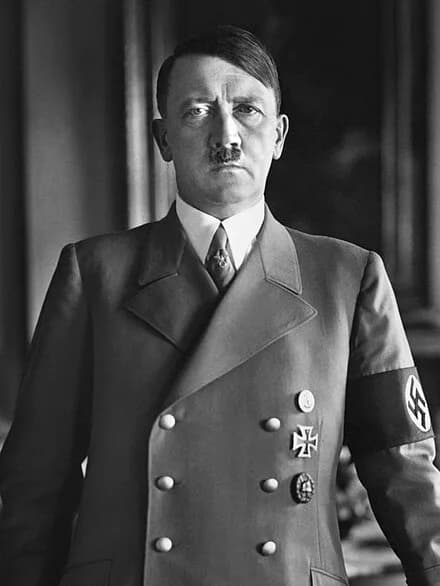
Adolf Hitler
Dictator of Nazi Germany from 1933 to 1945, Adolf Hitler was the primary instigator of World War II and the Holocaust. His racist and expansionist ideology caused the deaths of tens of millions of people worldwide. Appointed chancellor on 30 January 1933, he had dismantled the Weimar Republic within eighteen months and taken absolute power.
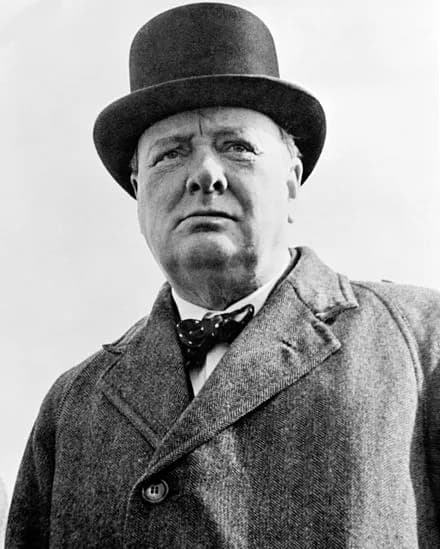
Winston Churchill
Prime Minister of the United Kingdom from 1940 to 1945, Winston Churchill embodied British resistance to Nazi Germany. His rousing speeches and unwavering leadership were instrumental in sustaining British morale through the darkest hours of the war. He refused any negotiated peace after the fall of France.
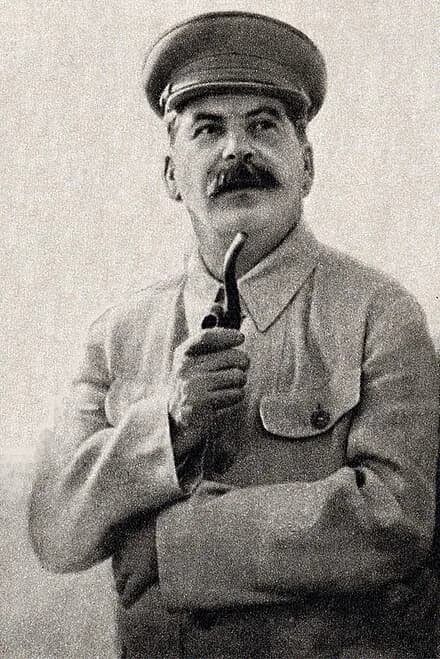
Joseph Stalin
Leader of the Soviet Union from 1924 to 1953, Joseph Stalin transformed the USSR into an industrial and military superpower. His leadership during the Great Patriotic War was decisive in defeating Nazi Germany, but his totalitarian regime caused millions of deaths among his own people.
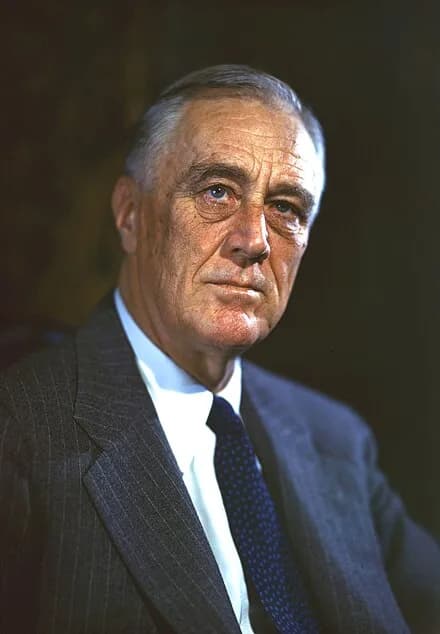
Franklin D. Roosevelt
32nd President of the United States, Franklin D. Roosevelt led the country through the Great Depression and most of World War II. His Lend-Lease program and diplomacy with Churchill and Stalin were decisive in the Allied victory, though he died just weeks before Germany's surrender.
