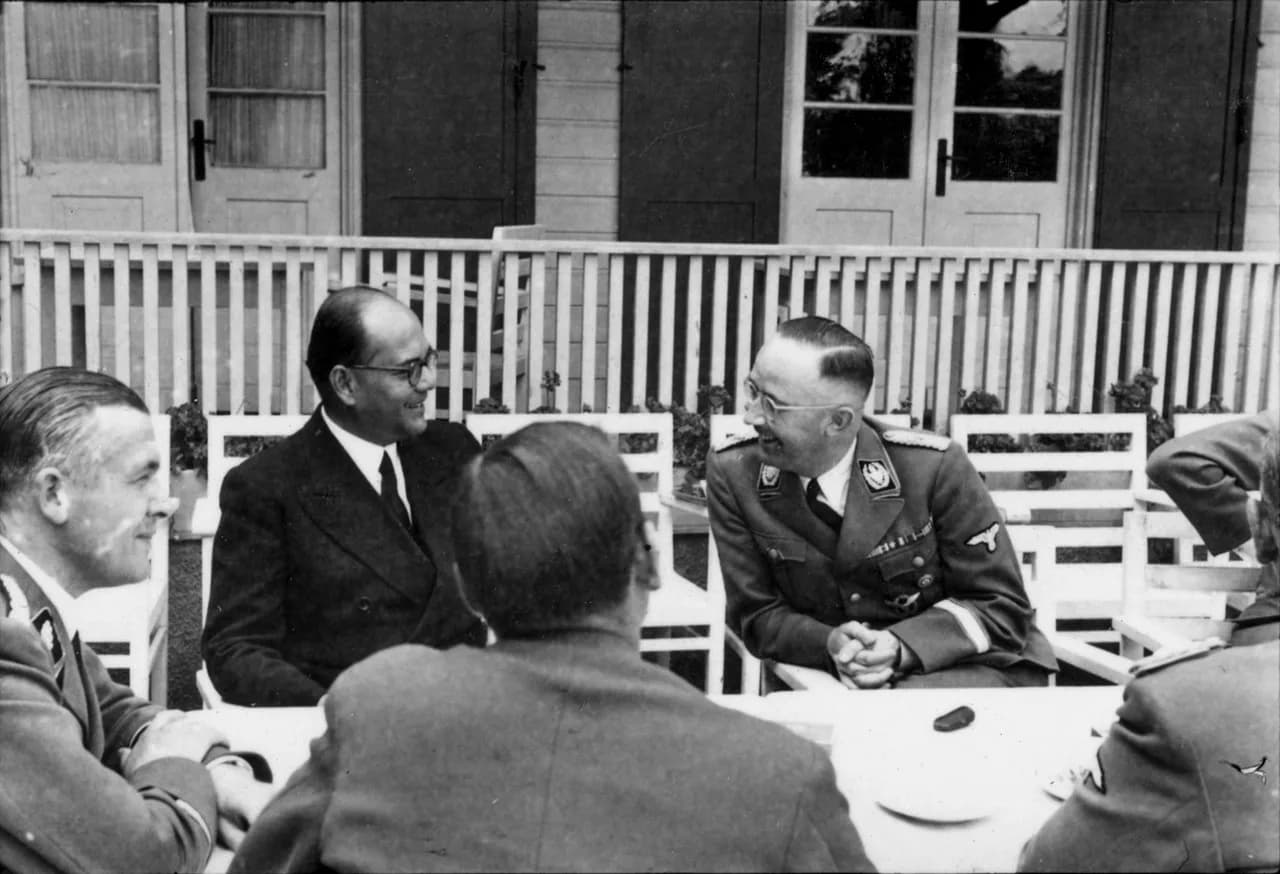
Heinrich Himmler was Reichsführer-SS and one of the principal architects of the Holocaust. Heading the SS, the Gestapo and the entire police apparatus of the Third Reich, he oversaw the concentration camp system and the implementation of the Final Solution. Under his direction the SS became a state within the state. Captured by the British after trying to negotiate with the Allies, he took cyanide on 23 May 1945.
Heinrich Luitpold Himmler was born on October 7, 1900, in Munich, into a Catholic middle-class Bavarian family. His father, Gebhard Himmler, was deputy headmaster of a gymnasium and former tutor to Prince Heinrich of Bavaria, after whom the young Himmler was named. Raised in a strict and religious environment, he was a studious but physically frail student, suffering from chronic stomach problems. During World War I, he tried to enlist but was too young to fight. He finally joined a regiment in January 1918 as an officer cadet, but the armistice came before he saw the front. Deeply frustrated at not having fought, he studied agronomy at the Technical University of Munich from 1919 to 1922. It was during this period that he discovered the nationalist and antisemitic movements proliferating in postwar Bavaria, joining various paramilitary organizations.
Himmler joined the Nazi Party in 1923 and participated in the Beer Hall Putsch in Munich. After the failed coup, he became a tireless party organizer, working as secretary to Gregor Strasser. In 1929, Hitler appointed him Reichsführer-SS when the organization numbered only 280 members. Within a few years, Himmler transformed the SS from a small personal guard into a powerful paramilitary organization of over 50,000 men. After the seizure of power in 1933, he took control of the Bavarian political police, then of all German police forces in 1936, merging the Gestapo, Kripo, and SD under his authority. He created the concentration camp system with Dachau as the model from 1933 onward. The SS became an economic and military empire with its own armed divisions (Waffen-SS), industrial enterprises, and intelligence apparatus. Himmler developed a pseudo-scientific racial ideology obsessed with Aryan blood purity and ancient Germanic myths.
During World War II, Himmler was the principal figure responsible for implementing the Final Solution. After the Wannsee Conference in January 1942, he oversaw the construction and operation of the extermination camps at Auschwitz-Birkenau, Treblinka, Sobibor, Belzec, Chelmno, and Majdanek. The Einsatzgruppen, mobile killing units under his command, massacred over one million Jews, Roma, and Soviet prisoners of war on the Eastern Front. In 1943, he became Reich Minister of the Interior, further consolidating his power. After the assassination attempt on Hitler on July 20, 1944, he took command of the Reserve Army and led a ferocious crackdown against the conspirators. In 1944-1945, he even received command of an army group on the Vistula Front, but proved a disastrous military commander. Facing imminent defeat, he initiated secret negotiations with Count Bernadotte of the Swedish Red Cross for a partial surrender to the Western Allies.
Himmler's decisions rank among the most criminal in human history. His decision to transform the SS into the primary instrument of genocide, to systematize mass murder through gas chambers, and to industrialize extermination led to the murder of six million Jews and millions of other victims. His order to build the network of concentration and extermination camps created an unprecedented system of terror. His creation of the Einsatzgruppen unleashed massacres on an industrial scale on the Eastern Front. In 1943, his Posen speech before SS officers, in which he openly discussed the extermination of Jews, is one of the most chilling documents of the twentieth century. His late decision to attempt negotiations with the Allies, betraying Hitler, demonstrates both his opportunism and his complete disconnection from reality. Hitler, furious upon learning of the betrayal, stripped him of all titles in his political testament.
Heinrich Himmler's legacy is that of one of the greatest criminals in history. After being stripped of his titles by Hitler and expelled from the Nazi Party, he attempted to flee disguised as an ordinary soldier but was captured by British forces on May 21, 1945, near Bremervörde. Two days later, during a medical examination, he bit down on a cyanide capsule hidden in his mouth and died within minutes, thus escaping the Nuremberg tribunal. His body was buried in a secret, unmarked location. Himmler embodies the genocidal bureaucrat par excellence, a meticulous administrator who transformed hateful ideology into an administrative system of extermination. His case is studied worldwide as an example of the banality of evil and the dangers of ideological fanaticism combined with bureaucratic power. The camps he created have become memorials where millions of visitors come each year to pay their respects and bear witness to the horror of the Holocaust.
Heinrich Himmler, Reichsführer-SS, was the principal figure responsible for implementing the Final Solution. After the Wannsee Conference of January 1942, he oversaw the construction and operation of six extermination camps in occupied Poland. The Einsatzgruppen under his command massacred over one million people on the Eastern Front. His Posen speech of October 1943, in which he openly discussed the extermination of Jews, is one of the most damning documents of the 20th century.
Heinrich Himmler attempted to flee disguised as an ordinary soldier after the war ended, but was captured by British forces on May 21, 1945, near Bremervörde. Two days later, on May 23, 1945, during a medical examination, he bit down on a cyanide capsule hidden in his mouth and died within minutes, thus escaping the Nuremberg tribunal where he would have been tried alongside other Nazi leaders.
In 1929, Hitler appointed Heinrich Himmler Reichsführer-SS when the organization numbered only 280 members. Within a few years, Himmler transformed it into an organization of over 50,000 men. After 1933, he took control of the Gestapo, Kripo, and SD, merging all German police forces under his authority in 1936. The SS became an empire with its own Waffen-SS divisions, industrial enterprises, and intelligence apparatus.
Information cross-checked against Wikipedia and reference historical works.
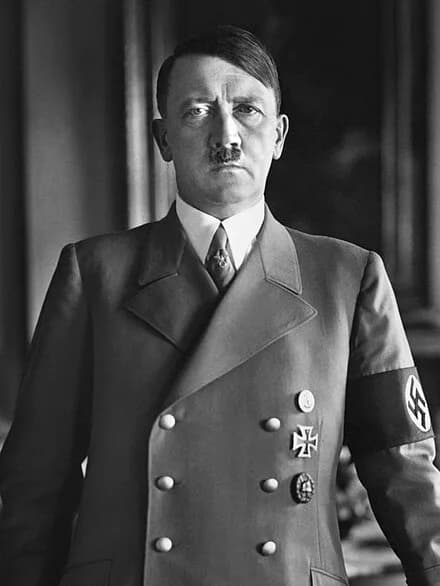
Adolf Hitler
Dictator of Nazi Germany from 1933 to 1945, Adolf Hitler was the primary instigator of World War II and the Holocaust. His racist and expansionist ideology caused the deaths of tens of millions of people worldwide. Appointed chancellor on 30 January 1933, he had dismantled the Weimar Republic within eighteen months and taken absolute power.
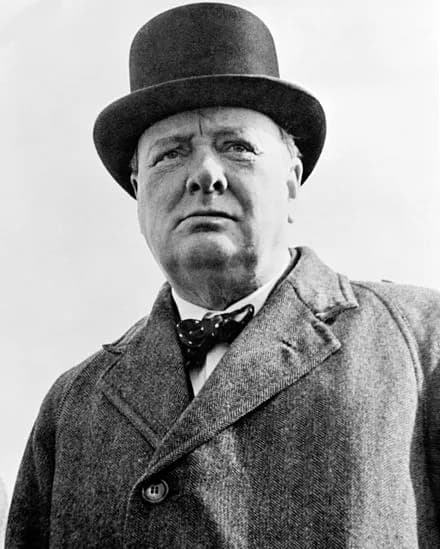
Winston Churchill
Prime Minister of the United Kingdom from 1940 to 1945, Winston Churchill embodied British resistance to Nazi Germany. His rousing speeches and unwavering leadership were instrumental in sustaining British morale through the darkest hours of the war. He refused any negotiated peace after the fall of France.
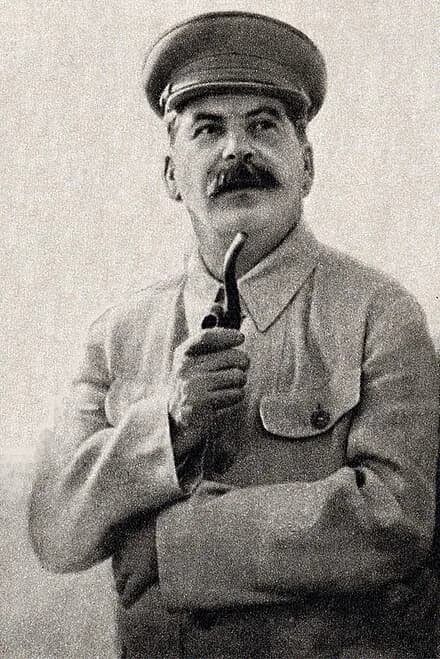
Joseph Stalin
Leader of the Soviet Union from 1924 to 1953, Joseph Stalin transformed the USSR into an industrial and military superpower. His leadership during the Great Patriotic War was decisive in defeating Nazi Germany, but his totalitarian regime caused millions of deaths among his own people.
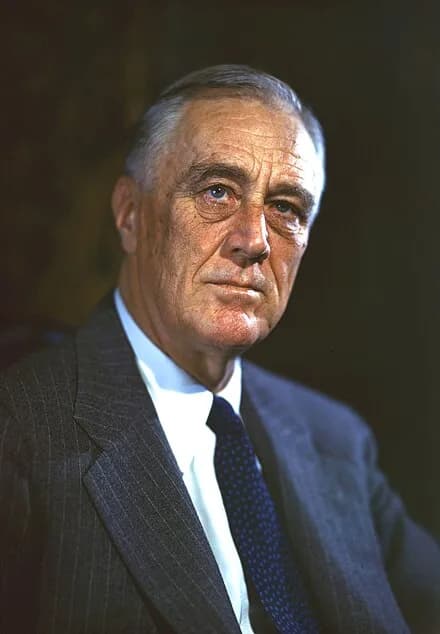
Franklin D. Roosevelt
32nd President of the United States, Franklin D. Roosevelt led the country through the Great Depression and most of World War II. His Lend-Lease program and diplomacy with Churchill and Stalin were decisive in the Allied victory, though he died just weeks before Germany's surrender.
