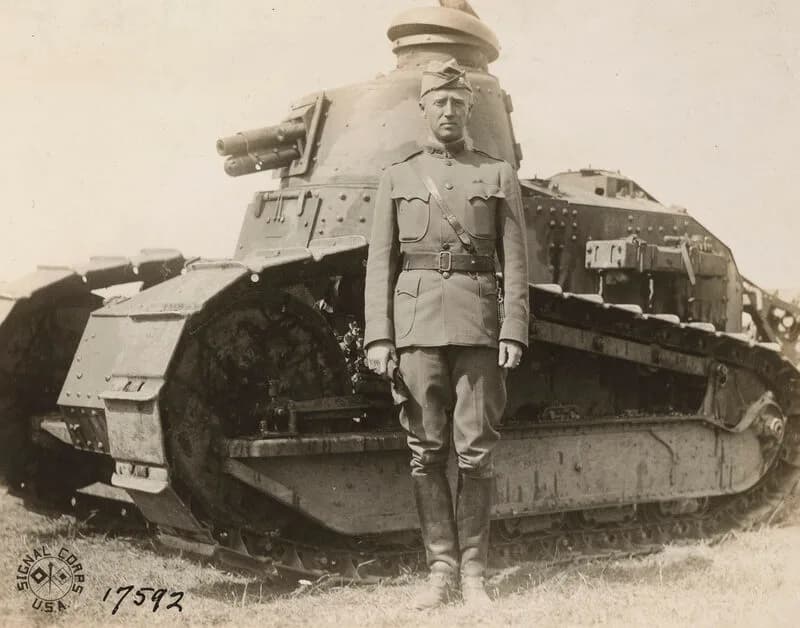
Legendary American general nicknamed 'Old Blood and Guts,' George S. Patton was one of the most feared armored commanders of World War II. Leading the Third Army, he conducted lightning offensives across France and Germany, embodying the American offensive spirit despite a controversial personality.
George Smith Patton Jr. was born on November 11, 1885, in San Gabriel, California, into a family with a deeply rooted military tradition. His paternal grandfather, a Confederate colonel, died in combat during the Civil War, and this warrior lineage shaped young George's identity from childhood. Dyslexic, he struggled with reading but compensated with an exceptional memory and a consuming passion for military history. He knew the battles of Hannibal, Caesar, and Napoleon by heart before even entering West Point in 1904. An average student academically, he excelled in horsemanship and fencing, even representing the United States in the modern pentathlon at the 1912 Stockholm Olympics, where he finished fifth. This Olympic experience reinforced his taste for competition and personal glory. He developed early on a flamboyant personality, wearing ivory-handled pistols and cultivating a romantic warrior image that would become his distinctive trademark.
Patton became one of the first American officers specialized in armored warfare. During the punitive expedition against Pancho Villa in Mexico in 1916, he led the first motorized attack in American military history. During World War I, he commanded the first American tank brigade in France, was wounded during the Meuse-Argonne offensive, and received the Distinguished Service Cross for his bravery. Between the wars, he tirelessly studied and promoted the doctrine of mechanized warfare, often clashing with the conservative military hierarchy that underestimated the role of armor. His theoretical writings on the employment of tanks anticipated the Blitzkrieg doctrines developed by the Germans. In 1940, he took command of the 2nd Armored Division at Fort Benning, then directed the Desert Training Center in California, where he prepared American troops for combat in extreme conditions. His rigorous and relentless training forged battle-hardened soldiers who would distinguish themselves in North Africa.
Patton proved himself in combat in North Africa in 1943, taking command of II Corps after the humiliating defeat at Kasserine and rapidly restoring the discipline and morale of American troops. In Sicily, he competed with Montgomery in a race to Messina that revealed his tactical genius but also his impetuous temperament. The slapping incidents — he struck two soldiers hospitalized for combat trauma — caused a scandal that threatened to end his career. Eisenhower reprimanded him severely but kept him, knowing he was irreplaceable in combat. After D-Day, Patton took command of the Third Army in August 1944 and led a spectacular breakout across France, liberating thousands of square kilometers in just weeks. His supreme moment of glory came during the Battle of the Bulge in December 1944, when he pivoted his Third Army 90 degrees in the middle of winter to relieve Bastogne, a logistical feat considered one of the most remarkable of the entire war.
Patton's battlefield decisions were marked by calculated audacity and speed of execution that constantly destabilized the enemy. His command philosophy rested on perpetual attack: 'Wars are not won by defending, but by attacking.' He refused to consolidate positions when he could advance, preferring to maintain pressure on a retreating enemy. This approach drew criticism from superiors worried about his exposed flanks, but proved devastatingly effective. His most controversial decision was perhaps his race to the Rhine in spring 1945, where he crossed the river before Montgomery, stealing the spotlight from the British field marshal. Patton also held a prophetic vision of the Soviet threat: from 1945 onward, he advocated confrontation with the USSR, statements that caused his disgrace but would be partly vindicated by history. His legendary bluntness and disdain for diplomatic conventions earned him as many admirers as detractors within the Allied high command.
George S. Patton died tragically on December 21, 1945, from injuries sustained in a car accident in Heidelberg, Germany, at the age of 60. His death, coming just months after victory, deprived America of one of its most charismatic war heroes. The Germans considered him the most dangerous Allied general — Field Marshal von Rundstedt called him 'the best commander the Allies had.' His Third Army set staggering records: in 281 days of combat, it covered more distance, liberated more territory, and captured more prisoners than any other American army in history. The film Patton (1970), starring George C. Scott in the title role, won seven Academy Awards and immortalized his image in popular culture. His military legacy profoundly influenced American maneuver warfare doctrine, and his writings on leadership are still studied at military academies worldwide. Buried at the American cemetery in Luxembourg alongside his soldiers, he remains the symbol of combat aggressiveness and the offensive spirit.
George Smith Patton Jr. earned this nickname for his aggressive command style and extreme demands on his troops. His creed 'Wars are not won by defending, but by attacking' reflected a philosophy of perpetual offense. His Third Army covered more distance and liberated more territory than any other American army in 281 days of combat, from 1944 to 1945.
In December 1944, during the Battle of the Bulge, George Patton pivoted his Third Army 90 degrees in the middle of winter in just 72 hours to relieve the encircled American garrison at Bastogne. This logistical feat, moving tens of thousands of soldiers and hundreds of vehicles in extreme winter conditions, is universally considered one of the most remarkable of the entire war.
George Patton died on December 21, 1945, from injuries in a car accident in Heidelberg, Germany, at age 60 — just months after victory. His Third Army had set staggering records: in 281 days of combat, it covered more distance, liberated more territory, and captured more prisoners than any other American army in US military history.
Information cross-checked against Wikipedia and reference historical works.
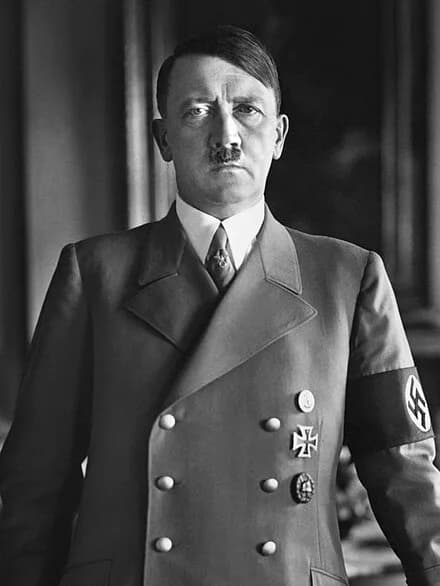
Adolf Hitler
Dictator of Nazi Germany from 1933 to 1945, Adolf Hitler was the primary instigator of World War II and the Holocaust. His racist and expansionist ideology caused the deaths of tens of millions of people worldwide. Appointed chancellor on 30 January 1933, he had dismantled the Weimar Republic within eighteen months and taken absolute power.
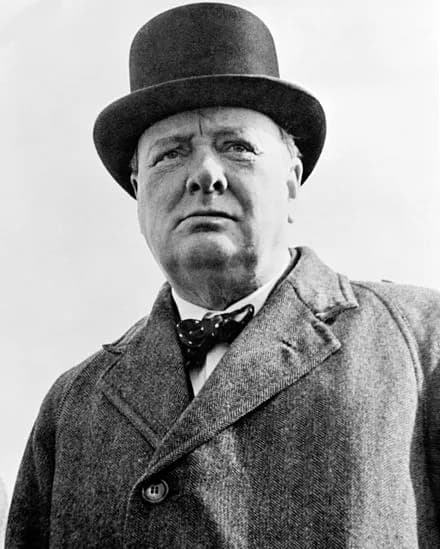
Winston Churchill
Prime Minister of the United Kingdom from 1940 to 1945, Winston Churchill embodied British resistance to Nazi Germany. His rousing speeches and unwavering leadership were instrumental in sustaining British morale through the darkest hours of the war. He refused any negotiated peace after the fall of France.
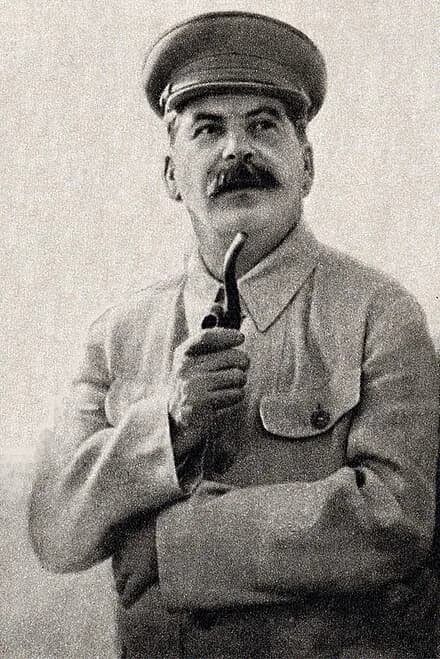
Joseph Stalin
Leader of the Soviet Union from 1924 to 1953, Joseph Stalin transformed the USSR into an industrial and military superpower. His leadership during the Great Patriotic War was decisive in defeating Nazi Germany, but his totalitarian regime caused millions of deaths among his own people.
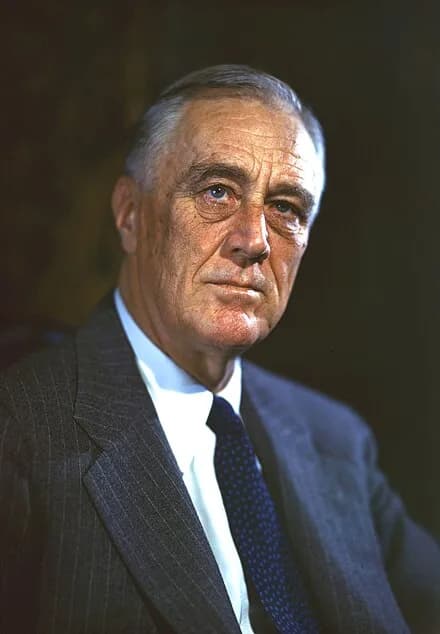
Franklin D. Roosevelt
32nd President of the United States, Franklin D. Roosevelt led the country through the Great Depression and most of World War II. His Lend-Lease program and diplomacy with Churchill and Stalin were decisive in the Allied victory, though he died just weeks before Germany's surrender.
