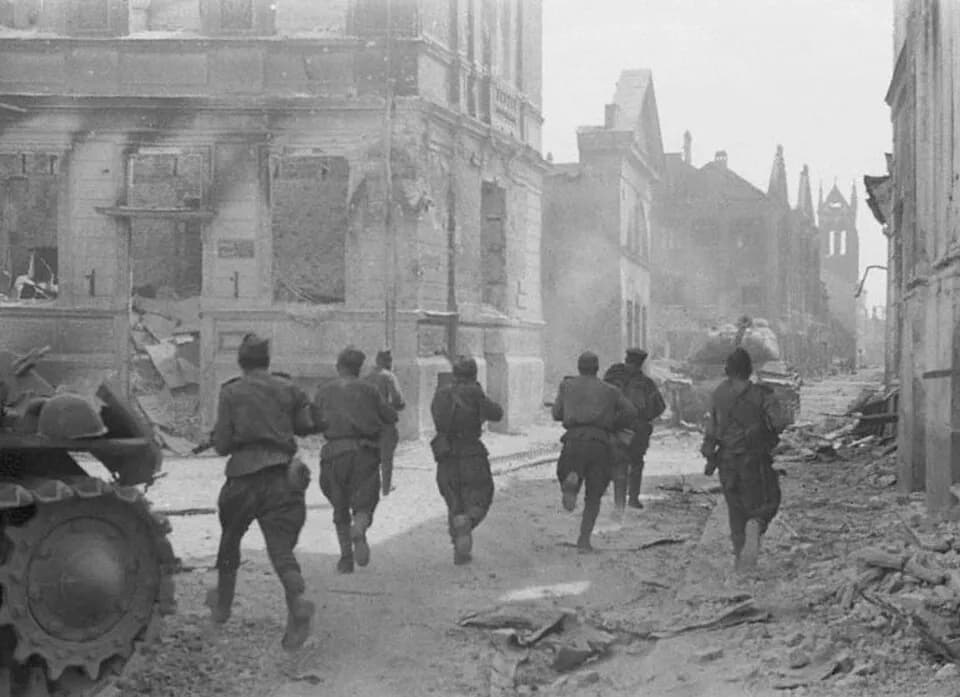
The Eastern Front was the largest and deadliest theatre of operations in World War II. The clash between Nazi Germany and the Soviet Union caused over 30 million deaths and decided the outcome of the war in Europe. Four out of five German soldiers killed in the conflict fell there.
The Eastern Front stretched over more than 2,900 kilometers, from the Baltic Sea in the north to the Black Sea in the south. This gigantic theater of operations traversed extremely varied terrain: the swampy forests of Belarus, the vast plains of Ukraine — the breadbasket of the USSR —, the steppes of southern Russia, and the oil-rich Caucasus Mountains. The distances were staggering: Moscow lay 1,800 km from the 1941 German-Soviet border, Stalingrad 2,400 km. Climate played a decisive role: Russian winters with temperatures dropping to minus 40 degrees Celsius paralyzed unprepared German equipment, while the rasputitsa (the mud season in spring and autumn) turned unpaved roads into impassable swamps. The great rivers — the Dnieper, the Don, the Volga — formed natural obstacles and strategic defense lines. The sheer immensity of the territory forced both sides to deploy millions of men across fronts of unprecedented scale in military history.
The forces engaged on the Eastern Front surpassed anything previously seen in military history. Germany launched Operation Barbarossa on June 22, 1941, with 3.8 million soldiers, 3,350 tanks, 2,770 aircraft, and 600,000 motorized vehicles — the largest invasion force ever assembled. Axis allies (Romania, Hungary, Italy, Finland, Slovakia) contributed an additional 500,000 men. The Red Army, despite the 1937-1938 purges that had decapitated its command structure, fielded 2.9 million men on the western border, but was disorganized by the surprise attack. Over the course of the war, the USSR mobilized a total of 34 million men and women under arms. Soviet production, relocated to the Urals, reached staggering figures: 102,000 tanks and self-propelled guns, 137,000 aircraft. Allied Lend-Lease aid provided 400,000 trucks, 12,000 tanks, and 18,000 aircraft. Germany, fighting on multiple fronts, could never match these numbers. Total losses on the Eastern Front reached 30 to 35 million dead (military and civilian combined), approximately 80% of all European war casualties.
The Eastern Front was punctuated by battles of unimaginable scale. Operation Barbarossa (June-December 1941) produced the largest encirclement battles in history: at Kiev, 665,000 Soviet soldiers were captured. The Battle of Moscow (October 1941-January 1942) was the Wehrmacht's first major failure. Stalingrad (August 1942-February 1943) was the psychological and strategic turning point: the German 6th Army was encircled and destroyed, with 91,000 prisoners including Field Marshal Paulus. The Battle of Kursk (July 1943), the largest tank battle in history with 6,000 armored vehicles engaged, confirmed Soviet superiority. Operation Bagration (June-August 1944) destroyed the German Army Group Center, killing or capturing 400,000 soldiers — a disaster worse than Stalingrad. The sieges of Leningrad (900 days, one million civilian deaths) and Sevastopol illustrate the horror of total war. The Battle of Berlin (April-May 1945) cost 80,000 Soviet dead and marked the end of the Third Reich.
The turning point of the Eastern Front occurred in several stages. The first signal was the failure before Moscow in December 1941: for the first time, the Blitzkrieg failed and the Wehrmacht was pushed back. But it was Stalingrad (November 1942-February 1943) that constituted the true tipping point. Operation Uranus, conceived by Zhukov and Vasilevsky, encircled the 6th Army with a double pincer movement through the flanks weakly defended by Romanian and Italian armies. Manstein's relief attempt (Operation Winter Storm) failed. After Stalingrad, the strategic initiative passed definitively to the USSR. Kursk (July 1943) confirmed this reversal: Germany launched its last major offensive in the East, which was broken by Soviet defense in depth before a devastating counteroffensive. From the summer of 1943 onward, the Red Army never stopped advancing westward, successively liberating Ukraine, Belarus, the Baltic states, Poland, Romania, Bulgaria, Hungary, and finally Germany itself.
The toll of the Eastern Front was of unprecedented horror. The USSR lost 27 million people — 14% of its prewar population — including 8.7 million military personnel and 18 million civilians. Germany and its allies lost approximately 5 million military personnel on the Eastern Front. Soviet prisoners of war suffered an appalling fate: of 5.7 million captured, 3.3 million (58%) died in captivity, victims of a deliberate policy of starvation and forced labor. Atrocities were systematic: German Einsatzgruppen massacred 1.5 million Jews and Soviet civilians in occupied territories. Partisan warfare, particularly in Belarus, was of extreme violence on both sides. Entire cities were razed: Stalingrad, Minsk, Kiev, Warsaw. The Eastern Front was the theater where Nazism showed its true genocidal face, simultaneously waging a racial and military war of annihilation. It was also on this front that the fate of the war in Europe was decided: 80% of German military losses were suffered in the East. Without the immense sacrifice of the USSR, Allied victory would have been far longer and more uncertain.
This article draws on historical works, military archives and recognized academic publications.
The Eastern Front caused between 30 and 35 million deaths — approximately 80% of all European military war casualties. The USSR alone lost 27 million people, including 8.7 million military personnel and 18 million civilians. This toll is explained by Nazi exterminatory ideology (Einsatzgruppen massacred 1.5 million Jews and Soviet civilians), appalling captivity conditions (58% of 5.7 million Soviet prisoners died), and the systematic destruction of cities.
Operation Barbarossa, launched June 22, 1941, was the largest invasion in military history: 3.8 million German soldiers, 3,350 tanks, 2,770 aircraft, and 600,000 motorized vehicles. Axis allies (Romania, Hungary, Italy, Finland, Slovakia) added 500,000 men. The first weeks brought unprecedented Soviet catastrophes: at Kiev alone, 665,000 Soviet soldiers were encircled and captured in September 1941.
Stalingrad (August 1942 – February 1943) is the strategic turning point because Operation Uranus, conceived by Marshals Zhukov and Vasilevsky, encircled the German 6th Army with a double pincer through Romanian and Italian flanks. On February 2, 1943, 91,000 prisoners including Field Marshal Friedrich Paulus surrendered. For the first time, an entire German army was destroyed. After Stalingrad, the USSR maintained strategic initiative without interruption until Berlin.
Information cross-checked against Wikipedia and reference historical works.
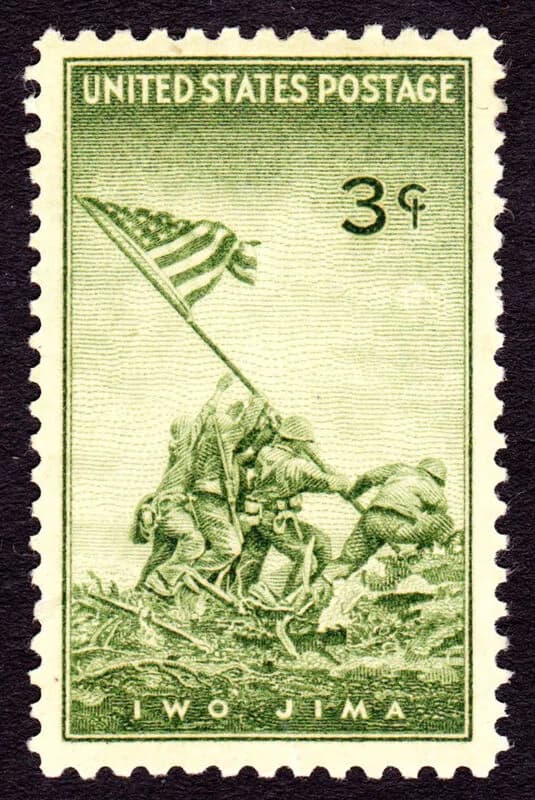
Pacific Theater
The Pacific Theater primarily pitted the United States against Imperial Japan in a naval and amphibious war spanning thousands of kilometers of ocean. From Pearl Harbor to Hiroshima, this fierce campaign concluded with the use of the first atomic bombs in history.
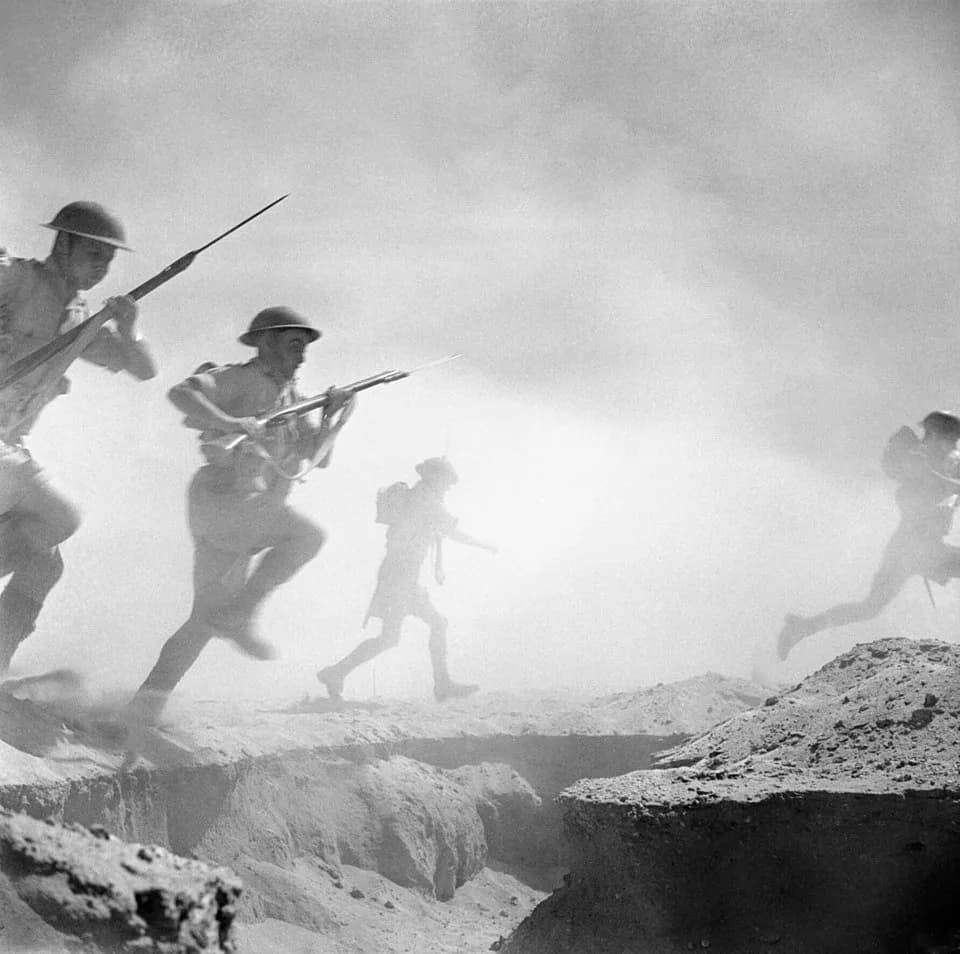
North African Campaign
The North African Campaign saw Axis and Allied forces clash in the deserts of Libya, Egypt and Tunisia. Theater of Rommel's desert war and Montgomery's decisive victory at El Alamein, it concluded with the surrender of 250,000 Axis soldiers in May 1943.
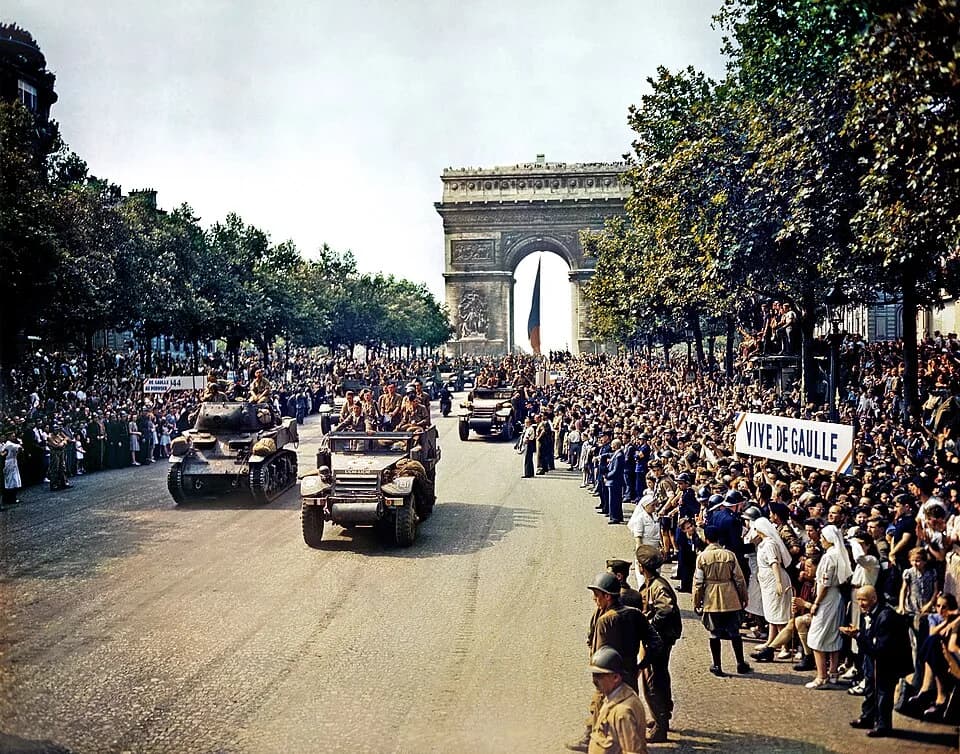
Western Front (1944-1945)
The Western Front, opened by the Normandy landings on June 6, 1944, saw Allied forces liberate France, Belgium and the Netherlands before invading Germany. From the Avranches breakthrough to the Rhine crossing, this eleven-month campaign ended the Third Reich from the west.
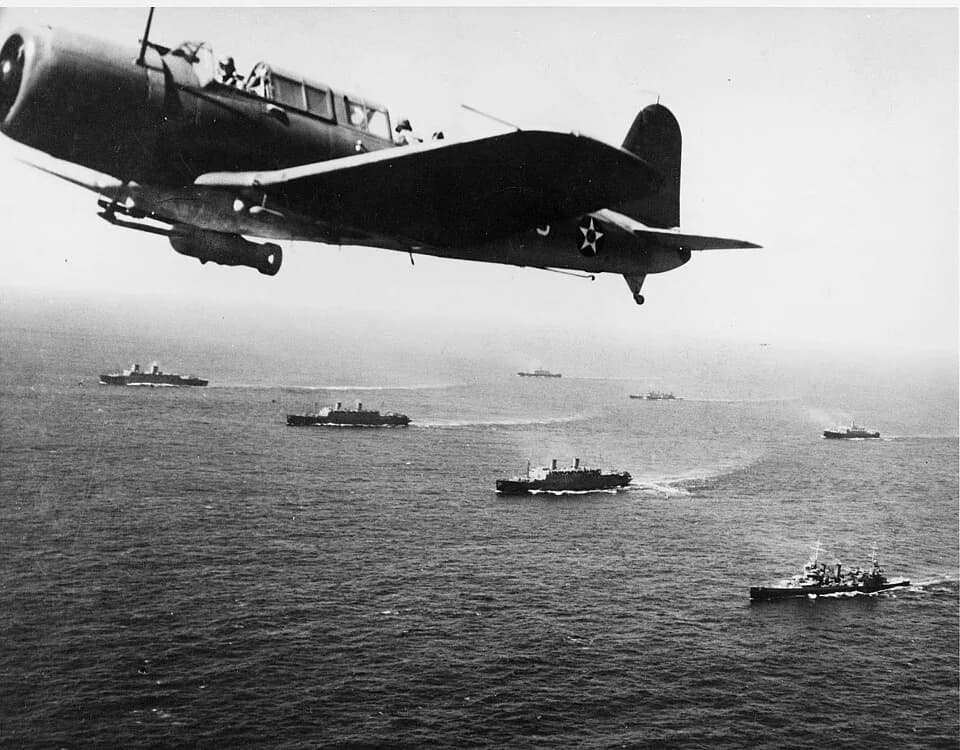
Battle of the Atlantic
The Battle of the Atlantic was the longest continuous campaign of World War II, pitting German U-boats against Allied convoys for six years. This struggle for control of sea lanes determined Britain's ability to survive and the Allies' capacity to wage war in Europe.
