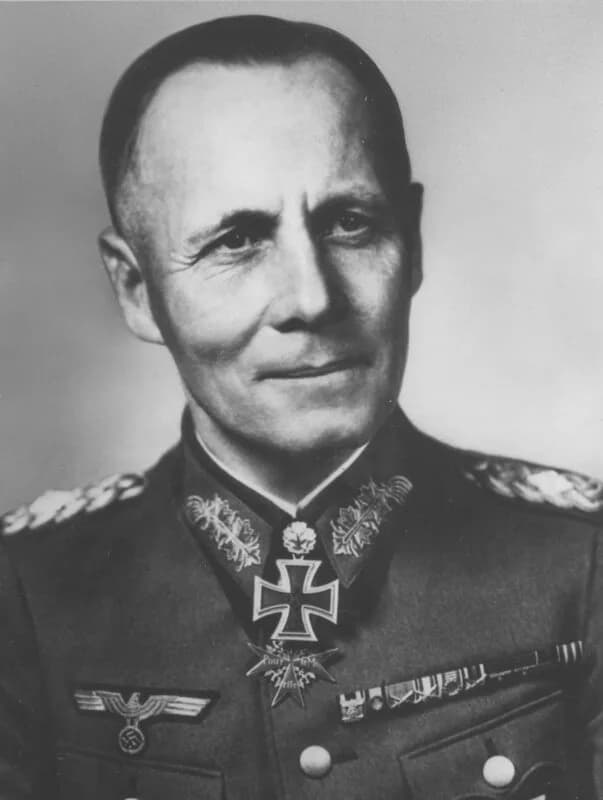
German Field Marshal nicknamed the 'Desert Fox,' Erwin Rommel is famous for his bold campaigns in North Africa at the head of the Afrika Korps. Respected even by his enemies for his tactical genius, he was forced to commit suicide in 1944 after being linked to the plot against Hitler.
Erwin Johannes Eugen Rommel was born on November 15, 1891, in Heidenheim an der Brenz, in the Kingdom of Württemberg, into a middle-class Protestant family. His father, also named Erwin, was a teacher and later headmaster, and his mother Helene was the daughter of a local government official. Young Rommel was described as a small, gentle, and studious child who showed early aptitude for mathematics and engineering. Despite his father's hope that he would pursue an academic career, Rommel chose the military path and entered the Royal Württemberg Army as an officer cadet in 1910. He attended the Officer Cadet School in Danzig, where he met his future wife Lucia Maria Mollin. During World War I, Rommel served with distinction in France, Romania, and Italy. At the Battle of Caporetto in 1917, he led a small detachment that captured over 9,000 Italian soldiers and 81 guns in a remarkable display of initiative and daring. For this feat, he received the Pour le Mérite, Imperial Germany's highest military decoration, an extraordinary honor for a lieutenant. This early experience forged his philosophy of leading from the front and exploiting enemy weaknesses with speed and surprise.
During the interwar period, Rommel remained in the drastically reduced Reichswehr, serving as an instructor at the Infantry School in Dresden from 1929 to 1933. He wrote "Infantry Attacks" (Infanterie greift an), a manual based on his World War I experiences that became a bestseller and caught the attention of Adolf Hitler. Rommel was not initially a Nazi party member, but his exceptional military reputation drew him into Hitler's orbit. In 1938, he was appointed commandant of the War Academy at Wiener Neustadt, and later commanded Hitler's personal headquarters security battalion during the invasions of Czechoslovakia and Poland. During the invasion of France in May 1940, Rommel commanded the 7th Panzer Division, which advanced so rapidly that it earned the nickname "Ghost Division" because even the German high command often lost track of its position. His division crossed the Meuse, broke through French lines, and raced across northern France, capturing thousands of prisoners and vast quantities of equipment. This spectacular performance demonstrated his mastery of mobile warfare and earned him promotion to lieutenant general. His willingness to take risks, his personal bravery at the front, and his instinctive grasp of armored tactics made him one of the most celebrated commanders of the early war years.
In February 1941, Rommel was sent to Libya to command the newly formed Afrika Korps, tasked with rescuing the faltering Italian campaign in North Africa. Despite orders to remain on the defensive, he immediately launched an offensive that pushed the British back to the Egyptian border, beginning a legendary desert campaign that would last over two years. His bold flanking maneuvers, deceptive tactics, and ability to exploit fleeting opportunities earned him the nickname "Desert Fox" and the respect of Allied commanders, including Churchill who famously described him as a daring and skillful opponent. Rommel captured Tobruk in June 1942, a victory that earned him promotion to Field Marshal at age fifty. However, the tide turned at the First and Second Battles of El Alamein in mid and late 1942, where Montgomery's British Eighth Army, bolstered by superior numbers, air power, and Ultra intelligence decrypts, decisively defeated the Afrika Korps. Rommel retreated across Libya and into Tunisia, fighting a brilliant rearguard action but hampered by catastrophic supply shortages. Hitler refused to authorize evacuation, and the remaining Axis forces in North Africa surrendered in May 1943, though Rommel himself had been recalled to Europe due to illness before the final collapse.
Rommel's most consequential decisions came during the preparation for the Allied invasion of Western Europe. Appointed in late 1943 to inspect and strengthen the Atlantic Wall defenses, he threw himself into the task with characteristic energy, ordering the laying of millions of mines, the construction of beach obstacles, and the flooding of low-lying areas behind the Normandy coastline. He fundamentally disagreed with the prevailing German strategy: while commanders like von Rundstedt favored holding panzer reserves inland for a massive counterattack, Rommel insisted the invasion had to be defeated on the beaches within the first twenty-four hours, knowing that Allied air superiority would prevent any large-scale movement of reserves once a beachhead was established. On D-Day, June 6, 1944, Rommel was absent from his command post, having traveled to Germany for his wife's birthday, a fateful decision that left the German response disorganized during the critical first hours. After the Allied breakout from Normandy, Rommel increasingly lost faith in final victory and urged Hitler to seek a political solution. He was loosely connected to the July 20 plot to assassinate Hitler, though the extent of his involvement remains debated by historians. His pragmatic assessment that the war was lost placed him in direct opposition to Hitler's strategy of fighting to the last man.
On October 14, 1944, two generals arrived at Rommel's home in Herrlingen and presented him with an ultimatum from Hitler: face a People's Court trial for treason, which would endanger his family, or take poison and receive a state funeral with the official story that he had died of his wounds. Rommel chose the cyanide capsule, dying at the age of fifty-two. His death was publicly attributed to injuries sustained when his staff car was strafed by Allied aircraft on July 17, 1944, and he was given a full military funeral with Nazi honors. The truth about his forced suicide only emerged after the war. Rommel's legacy is complex and contested. During and after the war, both Allied and German sources cultivated the "Rommel myth" — portraying him as a chivalrous, apolitical soldier who fought cleanly and was untainted by Nazi atrocities. While it is true that no war crimes were documented against the Afrika Korps under his command and he ignored orders to execute Jewish prisoners and captured commandos, modern historians note that he was a loyal servant of the Nazi regime for most of his career and benefited enormously from Hitler's patronage. Nevertheless, he remains one of the most studied military commanders of World War II, admired for his tactical brilliance, personal courage, and the tragic circumstances of his death. In postwar Germany, several military installations of the Bundeswehr were named in his honor, and he is often cited as an example of the professional soldier caught in the moral dilemmas of serving a criminal regime.
This article draws on historical works, military archives and recognized academic publications.
Rommel earned the nickname Desert Fox for his bold flanking maneuvers and deceptive tactics at the head of the Afrika Korps in North Africa (1941-1942). His capture of Tobruk in June 1942 earned him promotion to Field Marshal at age fifty. Churchill described him as 'a daring and skillful opponent.' His image as a chivalrous warrior remains associated with the North African campaign, where no war crimes were documented under his command.
Appointed in late 1943 to inspect and strengthen the Atlantic Wall, Rommel ordered the laying of millions of mines, the construction of beach obstacles, and the flooding of low-lying areas behind the Norman coastline. Unlike his superior von Rundstedt, he insisted on defeating the invasion on the beaches within the first 24 hours, knowing Allied air superiority would make any movement of armored reserves impossible once a beachhead was established. On D-Day, June 6, 1944, he was absent in Germany for his wife's birthday.
Erwin Rommel was forced to commit suicide on October 14, 1944, at his home in Herrlingen. Two generals delivered an ultimatum from Hitler: either face trial before the People's Court for treason (which would endanger his family), or take poison and receive a state funeral. Loosely connected to the July 20, 1944 plot, Rommel chose the cyanide capsule. His death was officially attributed to wounds sustained when his staff car was strafed by Allied aircraft on July 17, 1944.
Information cross-checked against Wikipedia and reference historical works.
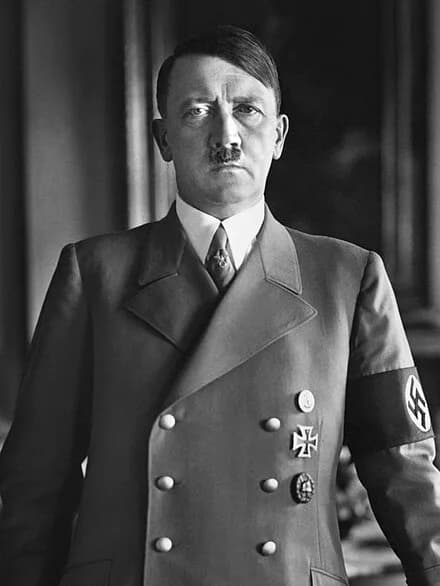
Adolf Hitler
Dictator of Nazi Germany from 1933 to 1945, Adolf Hitler was the primary instigator of World War II and the Holocaust. His racist and expansionist ideology caused the deaths of tens of millions of people worldwide. Appointed chancellor on 30 January 1933, he had dismantled the Weimar Republic within eighteen months and taken absolute power.
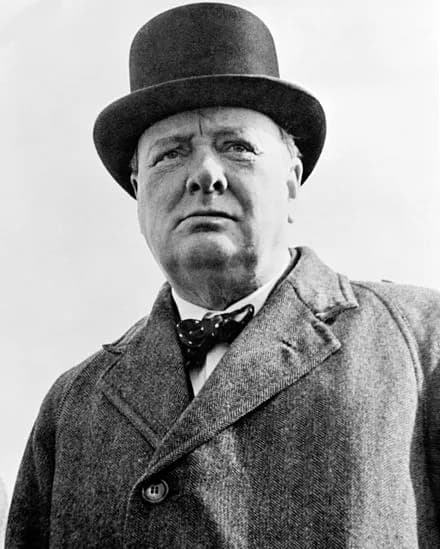
Winston Churchill
Prime Minister of the United Kingdom from 1940 to 1945, Winston Churchill embodied British resistance to Nazi Germany. His rousing speeches and unwavering leadership were instrumental in sustaining British morale through the darkest hours of the war. He refused any negotiated peace after the fall of France.
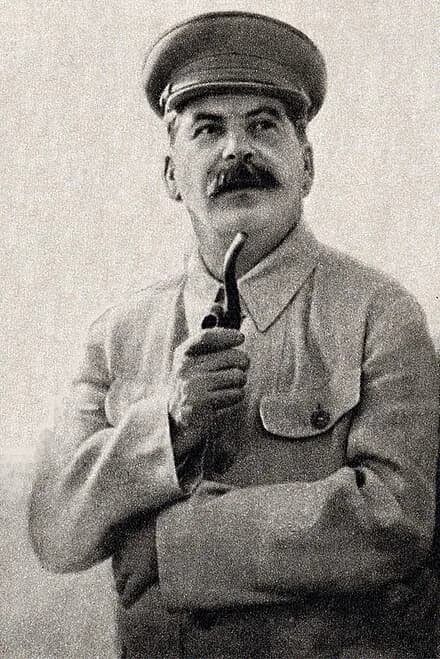
Joseph Stalin
Leader of the Soviet Union from 1924 to 1953, Joseph Stalin transformed the USSR into an industrial and military superpower. His leadership during the Great Patriotic War was decisive in defeating Nazi Germany, but his totalitarian regime caused millions of deaths among his own people.
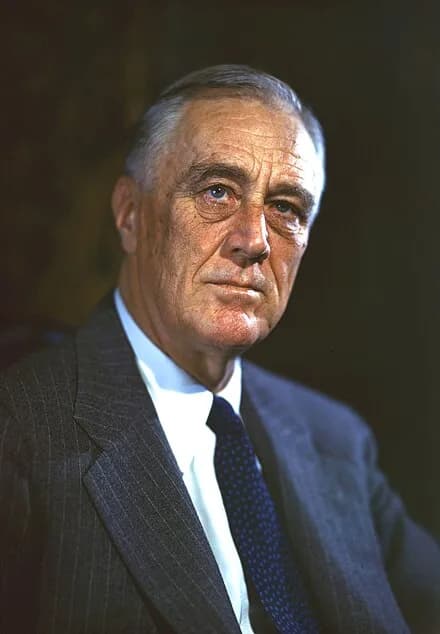
Franklin D. Roosevelt
32nd President of the United States, Franklin D. Roosevelt led the country through the Great Depression and most of World War II. His Lend-Lease program and diplomacy with Churchill and Stalin were decisive in the Allied victory, though he died just weeks before Germany's surrender.
