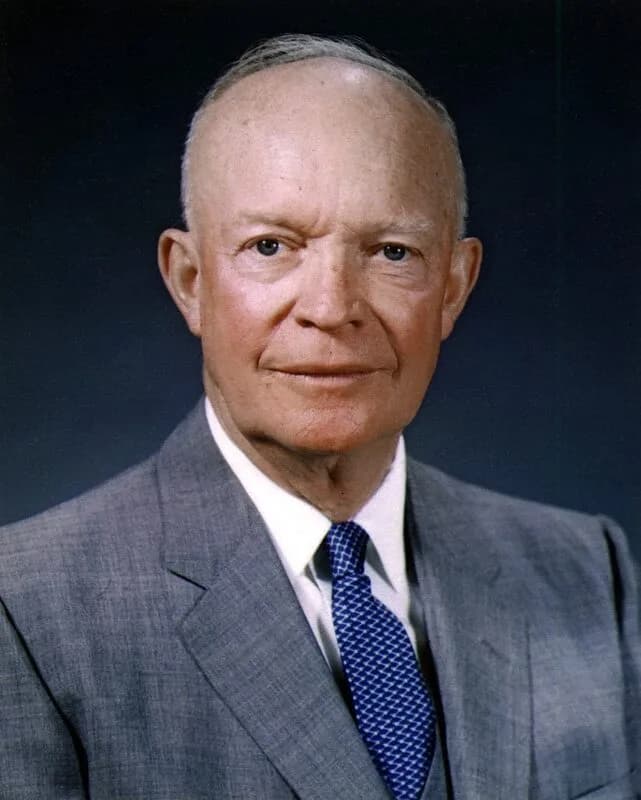
Supreme Commander of Allied Forces in Europe, Dwight D. Eisenhower orchestrated the D-Day landings and the defeat of Nazi Germany. A brilliant strategist and exceptional diplomat, he later became the first NATO commander and the 34th President of the United States, embodying American leadership from World War II through the Cold War.
Dwight David Eisenhower was born on October 14, 1890, in Denison, Texas, into a modest family of German descent. His family soon moved to Abilene, Kansas, where he grew up with five brothers in an environment shaped by hard work and Mennonite religious values. An accomplished athlete in high school, he excelled at football and developed a competitive spirit that would follow him throughout his life. In 1911, he entered the United States Military Academy at West Point, not out of military vocation but because the education was free. He distinguished himself more on the athletic field than in academic studies, graduating 61st out of 164 cadets in 1915. A knee injury ended his promising sports career, a blow that pushed him to dedicate himself entirely to his military career. He married Mamie Geneva Doud in 1916, with whom he would have two sons, one of whom died in infancy.
During World War I, Eisenhower did not see combat in Europe despite repeated requests, but distinguished himself by training tank crews at Camp Colt in Pennsylvania. Between the wars, he served under influential generals who shaped his strategic thinking: Fox Conner in Panama taught him the art of military coalition-building, and Douglas MacArthur in the Philippines showed him the political realities of command. He graduated first in his class at the Command and General Staff College at Fort Leavenworth in 1926, a remarkable performance that placed him on the list of officers to watch. His exceptional ability to plan complex operations and manage difficult personalities caught the attention of Chief of Staff George C. Marshall. After Pearl Harbor, Marshall assigned him to the War Plans Division in Washington, where Eisenhower drafted the initial strategic plans for the war in Europe, demonstrating an operational vision that deeply impressed his superiors.
In June 1942, Eisenhower was named commander of US forces in Europe, then took charge of Operation Torch, the landings in North Africa in November 1942. This first major inter-Allied operation revealed his talent for coordinating forces of different nationalities and managing rivalries between generals. He then directed the invasion of Sicily and Italy in 1943. In December 1943, Roosevelt chose him as Supreme Commander of the Allied Expeditionary Forces for Operation Overlord. Eisenhower oversaw the meticulous planning of the largest amphibious landing in history. On June 5, 1944, he made the solitary and courageous decision to launch the operation despite uncertain weather. He even drafted a communiqué accepting full responsibility in case of failure. After D-Day's success, he coordinated the liberation of France, the crossing of the Rhine, and the final advance into the heart of Germany, managing the monumental egos of Montgomery, Patton, and de Gaulle with remarkable diplomatic patience.
Eisenhower's wartime decisions reflect a rare combination of moral courage and strategic pragmatism. His 'broad front' strategy in Europe — advancing along the entire line rather than concentrating on a single axis — was controversial but maintained the cohesion of the Allied coalition. His choice not to race for Berlin in April 1945, leaving that symbolic prize to the Soviets, infuriated Churchill but proved militarily sound in minimizing American casualties. The discovery of the concentration camps deeply shook him: he ordered local populations and journalists to visit the camps to document the atrocities, anticipating future denial. He also insisted that American soldiers photograph and film the evidence of genocide. His management of the German surrender and the treatment of prisoners of war raised difficult questions, but his leadership maintained the unity of a fragile coalition against a common enemy until total victory in May 1945.
After the war, Eisenhower became Chief of Staff of the US Army, then the first Supreme Allied Commander of NATO in 1950, where he laid the foundations of Western collective defense against the Soviet threat. Elected 34th President of the United States in 1952 and re-elected in 1956, he governed with moderation, ended the Korean War, and launched the Interstate Highway program that transformed America. His farewell address in 1961, warning against the 'military-industrial complex,' remains one of the most prophetic speeches in American political history. Eisenhower died on March 28, 1969, in Washington. His legacy is immense: he demonstrated that a military leader could also be an accomplished statesman, that diplomacy and compromise are weapons as powerful as tanks and planes. The Eisenhower Memorial in Washington and the historic site of his home at Gettysburg honor his memory. Historians regularly rank him among the greatest American presidents for his management of postwar prosperity and his moderation during the Cold War.
This article draws on historical works, military archives and recognized academic publications.
On June 5, 1944, General Dwight Eisenhower alone decided to launch Operation Overlord despite uncertain weather. A brief window of acceptable conditions was opening on June 6 according to his chief meteorologist James Stagg. Eisenhower drafted a personal communiqué accepting full responsibility in case of failure. Further postponement would have meant waiting two weeks, risking compromise of the operation's secrecy.
Eisenhower decided not to attempt to take Berlin in April 1945, leaving that symbol to the Soviets. His priority was minimizing American casualties: urban combat in Berlin would have cost tens of thousands of lives. Under the Yalta agreements, Berlin fell within the future Soviet occupation zone regardless. Churchill was furious at this decision, but it proved militarily and politically justified.
In his farewell address of January 17, 1961, Dwight Eisenhower warned America about the dangers of the 'military-industrial complex' — the alliance between the defense industry, the military, and the federal government. He feared this alliance would dictate American foreign policy at the expense of civil liberties and democracy. This speech, delivered by a five-star general turned president, remains one of the most prophetic in American political history.
Information cross-checked against Wikipedia and reference historical works.
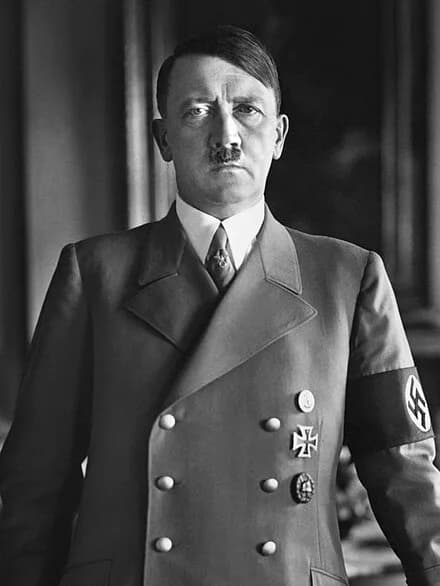
Adolf Hitler
Dictator of Nazi Germany from 1933 to 1945, Adolf Hitler was the primary instigator of World War II and the Holocaust. His racist and expansionist ideology caused the deaths of tens of millions of people worldwide. Appointed chancellor on 30 January 1933, he had dismantled the Weimar Republic within eighteen months and taken absolute power.
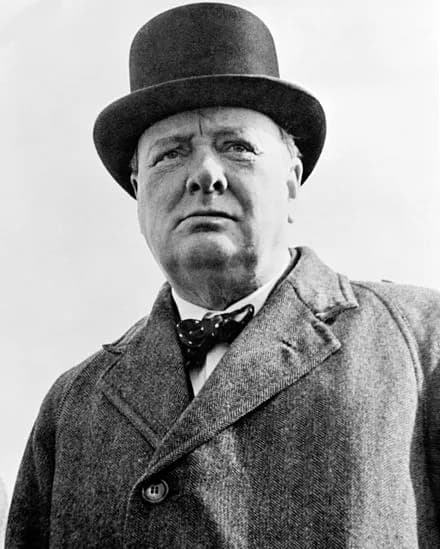
Winston Churchill
Prime Minister of the United Kingdom from 1940 to 1945, Winston Churchill embodied British resistance to Nazi Germany. His rousing speeches and unwavering leadership were instrumental in sustaining British morale through the darkest hours of the war. He refused any negotiated peace after the fall of France.
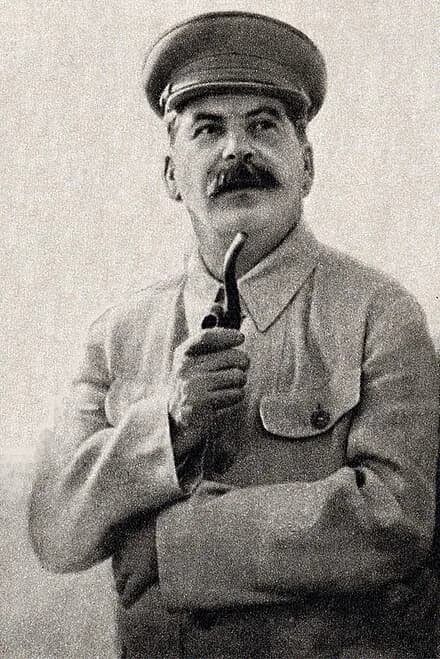
Joseph Stalin
Leader of the Soviet Union from 1924 to 1953, Joseph Stalin transformed the USSR into an industrial and military superpower. His leadership during the Great Patriotic War was decisive in defeating Nazi Germany, but his totalitarian regime caused millions of deaths among his own people.
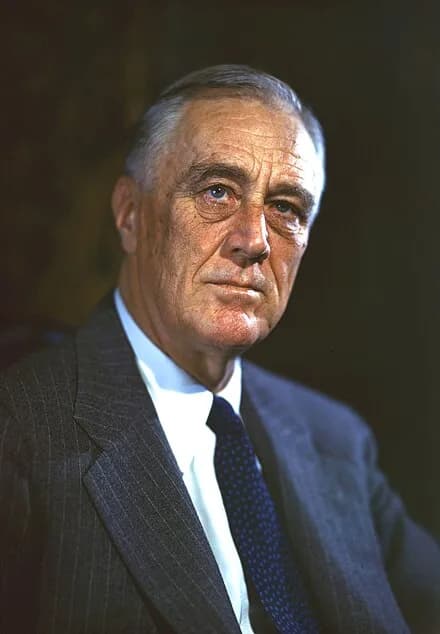
Franklin D. Roosevelt
32nd President of the United States, Franklin D. Roosevelt led the country through the Great Depression and most of World War II. His Lend-Lease program and diplomacy with Churchill and Stalin were decisive in the Allied victory, though he died just weeks before Germany's surrender.
