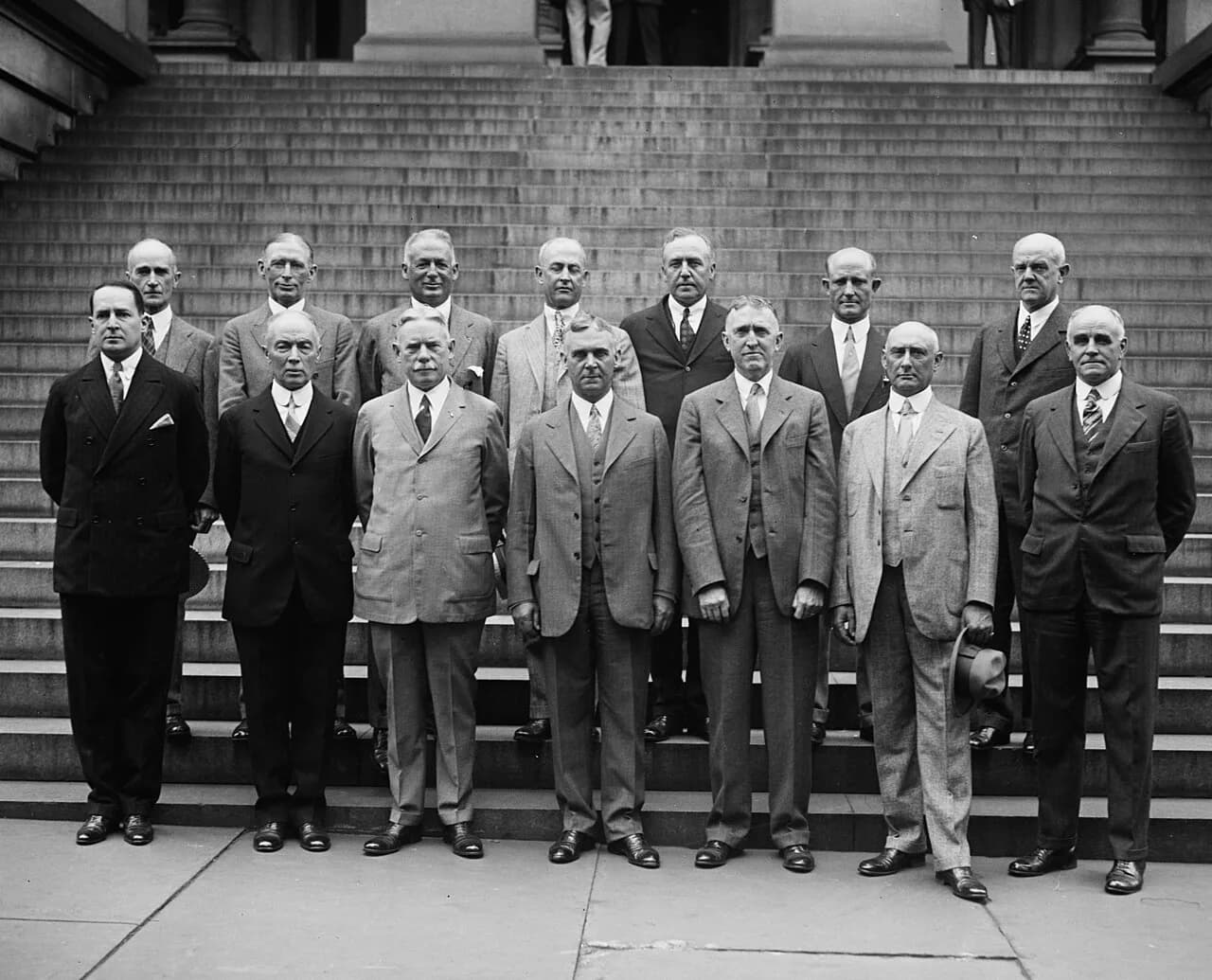
Douglas MacArthur commanded Allied forces in the Southwest Pacific during World War II. There he applied the island-hopping strategy, bypassing the most strongly held Japanese garrisons to retake the Philippines and bring Japan closer to surrender. He served in both World Wars and then in Korea, and oversaw the occupation and reconstruction of Japan with near-imperial authority.
Douglas MacArthur was born on January 26, 1880, in Little Rock, Arkansas, into a family deeply rooted in American military tradition. His father, Arthur MacArthur Jr., was a Civil War hero who would receive the Medal of Honor and become military governor of the Philippines. Raised at military posts across the country, young Douglas was immersed in army life from childhood. He entered the United States Military Academy at West Point in 1899, where he achieved one of the best academic records in the institution's history, with an average of 98.14 out of 100. During World War I, he served in France as chief of staff and then commander of the 42nd Rainbow Infantry Division, distinguishing himself through remarkable personal courage that earned him numerous decorations, including two Distinguished Service Crosses. His habit of leading his troops to the front without a helmet and carrying a riding crop became legendary, as did his apparent contempt for danger.
Between the wars, MacArthur became the youngest superintendent of West Point in 1919, modernizing the academy. In 1930, he was appointed Chief of Staff of the United States Army, the youngest to hold the position. In 1932, he controversially dispersed the Bonus Marchers protest camp in Washington, tarnishing his public reputation. In 1935, he went to the Philippines as military advisor to President Quezon to prepare the archipelago's defense, accepting the title of Field Marshal of the Philippine Army. When Japan attacked the Philippines on December 8, 1941, MacArthur commanded the American and Filipino forces that heroically resisted on the Bataan Peninsula and Corregidor Island. In March 1942, Roosevelt ordered him to evacuate to Australia, from where he made his famous promise: 'I shall return.' Appointed Supreme Commander of Allied Forces in the Southwest Pacific, he devised a brilliant strategy of bypassing fortified Japanese positions, island-hopping toward Japan while isolating and neutralizing enemy garrisons.
From Australia, MacArthur launched a series of campaigns in New Guinea and the Solomon Islands that progressively pushed back the Japanese. His island-hopping strategy, which involved bypassing fortified enemy positions to strike weaker objectives, is considered one of the most brilliant strategic innovations of the war. In October 1944, he kept his promise by landing at Leyte in the Philippines, wading through knee-deep water in a carefully staged scene for the cameras. The reconquest of the Philippines proved long and bloody, however, with the Battle of Manila devastating the capital in February-March 1945. MacArthur was promoted to five-star General of the Army in December 1944. He then prepared Operation Downfall, the invasion of Japan planned for November 1945, but the atomic bombs on Hiroshima and Nagasaki rendered the operation unnecessary. On September 2, 1945, aboard the battleship USS Missouri in Tokyo Bay, he presided over the Japanese surrender ceremony, officially ending World War II in the Pacific.
MacArthur's strategic decisions in the Pacific were often brilliant but always controversial. His decision to insist on reconquering the Philippines rather than bypassing them, against the Navy's preference for a direct attack on Formosa, is still debated by historians. Some see it as a decision motivated by personal honor and his promise to return, others as a sound strategic choice that deprived Japan of vital resources. His handling of the first hours after Pearl Harbor in the Philippines, where he allowed his B-17 bombers to be destroyed on the ground despite several hours of warning, remains one of the greatest mysteries of his career. His decision to defend all of Luzon rather than withdraw to Bataan according to the prewar plan dispersed his forces and contributed to the initial catastrophe. During the occupation of Japan, his decisions to preserve Emperor Hirohito, impose a democratic constitution, and dismantle the zaibatsu fundamentally transformed Japanese society and are considered a model for postwar reconstruction.
After the war, MacArthur governed Japan as Supreme Commander for the Allied Powers from 1945 to 1951, overseeing democratization, the new Japanese constitution, and the country's economic reconstruction with near-absolute authority. During the Korean War, his audacious Inchon landing in September 1950 is considered a stroke of military genius, but his desire to extend the conflict to Communist China prompted his dismissal by President Truman in April 1951. Returning to the United States, he delivered his famous speech before Congress concluding with 'old soldiers never die, they just fade away.' He died on April 5, 1964, in Washington. His legacy is that of a military genius who was also a visionary statesman for his management of Japan, but also a figure of sometimes dangerous vanity and insubordination. His influence on American military strategy in the Pacific and on postwar Asian policy remains considerable.
Island-hopping consisted of bypassing fortified Japanese garrisons to strike directly at less-defended strategic objectives, thus isolating enemy positions without frontal assault. Douglas MacArthur used it from 1943 onward from Australia, progressing through New Guinea and the Solomon Islands. This approach allowed advancement toward Japan while saving American lives and limiting Japanese resistance.
In October 1944, MacArthur fulfilled his promise by landing at Leyte in the Philippines, wading through knee-deep water in a carefully staged scene for photographers. The reconquest of the Philippines proved long and bloody: the Battle of Manila (February-March 1945) devastated the capital. MacArthur had spoken 'I shall return' in March 1942 from Australia, after Roosevelt ordered him to evacuate the Philippines.
MacArthur governed Japan as Supreme Commander for the Allied Powers (SCAP) from 1945 to 1951 with near-absolute authority. His decisions transformed the country: preserving Emperor Hirohito as a state symbol, drafting a new democratic constitution (1947) with Article 9 renouncing war, dismantling the zaibatsu, and land reform. He presided over the Japanese surrender ceremony on September 2, 1945, aboard the USS Missouri in Tokyo Bay.
Information cross-checked against Wikipedia and reference historical works.
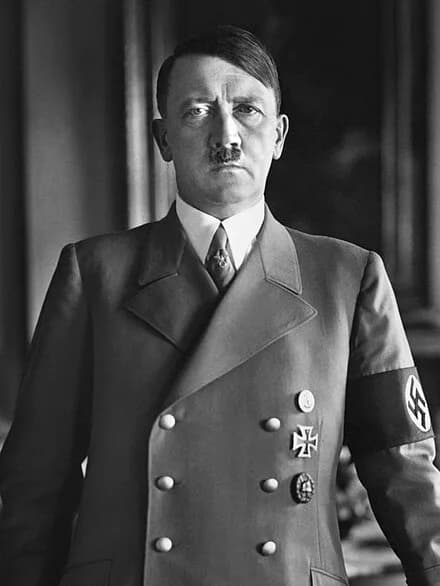
Adolf Hitler
Dictator of Nazi Germany from 1933 to 1945, Adolf Hitler was the primary instigator of World War II and the Holocaust. His racist and expansionist ideology caused the deaths of tens of millions of people worldwide. Appointed chancellor on 30 January 1933, he had dismantled the Weimar Republic within eighteen months and taken absolute power.
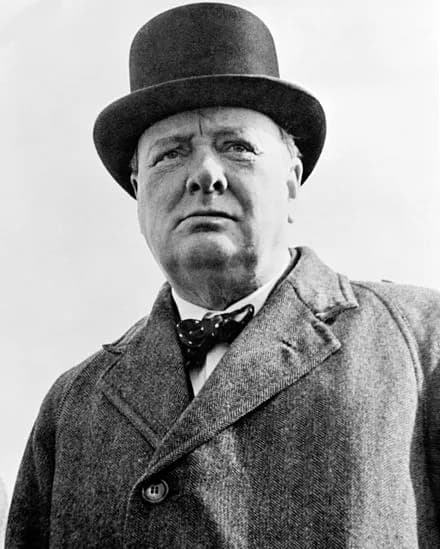
Winston Churchill
Prime Minister of the United Kingdom from 1940 to 1945, Winston Churchill embodied British resistance to Nazi Germany. His rousing speeches and unwavering leadership were instrumental in sustaining British morale through the darkest hours of the war. He refused any negotiated peace after the fall of France.
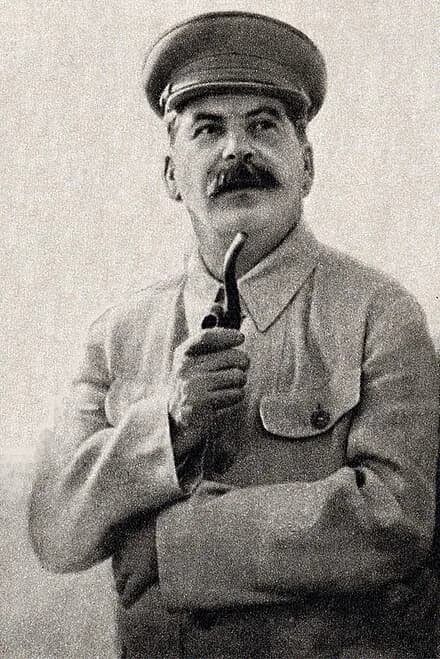
Joseph Stalin
Leader of the Soviet Union from 1924 to 1953, Joseph Stalin transformed the USSR into an industrial and military superpower. His leadership during the Great Patriotic War was decisive in defeating Nazi Germany, but his totalitarian regime caused millions of deaths among his own people.
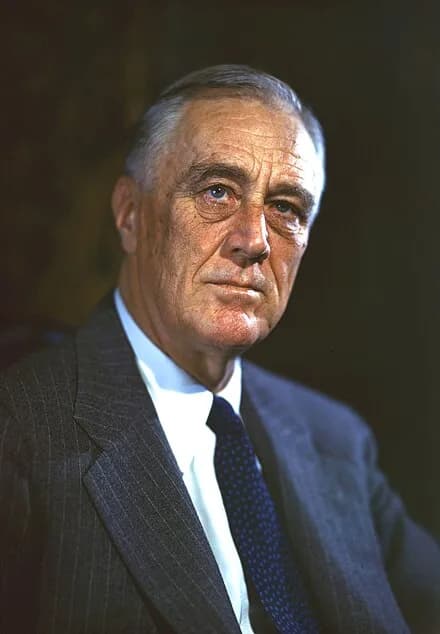
Franklin D. Roosevelt
32nd President of the United States, Franklin D. Roosevelt led the country through the Great Depression and most of World War II. His Lend-Lease program and diplomacy with Churchill and Stalin were decisive in the Allied victory, though he died just weeks before Germany's surrender.
