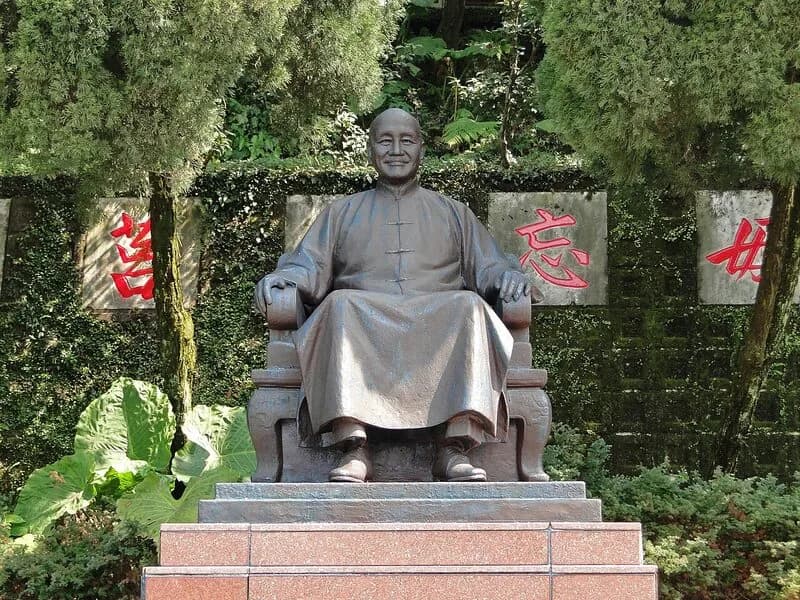
Chiang Kai-shek led the Republic of China through World War II. Generalissimo of the Chinese armies, he directed resistance to the Japanese invasion from 1937 to 1945 and kept China in the Allied camp despite desperate conditions. That resistance tied down millions of Japanese soldiers, easing the pressure in the Pacific. Head of the Kuomintang, he fought Mao's communists at the same time; defeated in 1949, he withdrew to Taiwan.
Chiang Kai-shek was born on October 31, 1887, in Xikou, a village in Zhejiang Province, into a relatively prosperous salt merchant family. His father died when he was nine, and he was raised by his mother in the Confucian tradition, developing a keen sense of duty and personal discipline. Aspiring to a military career, he first studied at the Baoding Military Academy in 1906, then was sent to Japan in 1907 to continue his military training at the Shinbu Gakko Preparatory Military Academy and the Imperial Japanese Military Academy. It was in Japan that he discovered Sun Yat-sen's revolutionary ideas and joined the Tongmenghui, the Revolutionary Alliance. Returning to China, he participated in the 1911 Revolution that overthrew the Qing Dynasty and established the Republic of China. During the following decade, he served under various warlords and in the Kuomintang ranks, building a reputation as a competent military commander and ambitious politician.
After Sun Yat-sen's death in 1925, Chiang Kai-shek emerged as the dominant leader of the Kuomintang. Commander of the Whampoa Military Academy since 1924, he launched the Northern Expedition in 1926 to reunify China under nationalist authority. In 1927, he brutally broke with the communists during the Shanghai Massacre, triggering the first phase of the Chinese Civil War. Establishing his capital in Nanjing, he attempted to modernize China while fighting regional warlords, communists, and the growing Japanese threat. Japan invaded Manchuria in 1931 and established the puppet state of Manchukuo, but Chiang prioritized the anticommunist struggle according to his doctrine of 'first internal pacification, then external resistance.' The Xi'an Incident in December 1936, where he was kidnapped by Marshal Zhang Xueliang, forced him to form a united front with the communists against Japan. When the Sino-Japanese War erupted in July 1937, Chiang led national resistance with fierce determination despite catastrophic initial defeats.
China's war of resistance against Japan was one of the longest and costliest conflicts of World War II. After the fall of Nanjing in December 1937, accompanied by the abominable massacre of hundreds of thousands of civilians by the Japanese army, Chiang relocated his government to Chongqing, in China's mountainous interior, from where he continued the resistance. Despite the loss of major coastal cities and vast territories, he refused to surrender, maintaining an army of several million soldiers that tied down the majority of Japanese ground forces in Asia. After Pearl Harbor in December 1941, China officially joined the Allies and Chiang was named Supreme Commander of the China-Burma-India Theater. Relations with his American chief of staff, General Joseph Stilwell, were however atrocious, with Stilwell dismissively calling him 'Peanut.' The Burma Road, vital for supplies, was cut by the Japanese and provisions had to transit via the perilous Hump airlift over the Himalayas. In 1944, the Japanese Ichi-Go offensive inflicted heavy defeats on nationalist forces.
Chiang Kai-shek's wartime decisions reflected the impossible dilemmas of a leader fighting on multiple fronts with limited resources. His decision to resist Japan rather than surrender, despite overwhelming Japanese military superiority, kept China in the war and tied down over one million Japanese soldiers who could have been deployed elsewhere. His controversial decision to breach the Yellow River dikes in June 1938 to slow the Japanese advance caused a catastrophic flood that killed hundreds of thousands of Chinese civilians but effectively halted the enemy offensive. His choice to preserve his best troops for the anticipated civil war against the communists rather than fully committing them against the Japanese alienated his American advisors and weakened the war effort. At the Cairo Conference in November 1943, he obtained from Roosevelt and Churchill the promise to restore Manchuria, Formosa, and the Pescadores to China. His distrust of the communists proved justified when civil war resumed in 1946, but his rigid military strategy and the endemic corruption of his regime led to his final defeat in 1949.
After victory over Japan in 1945, the civil war between nationalists and communists resumed with increased intensity. Despite massive American aid, Chiang's forces were defeated by Mao Zedong's People's Liberation Army, and in December 1949, he retreated to Taiwan with the remnants of his government, his army, and the Chinese national treasure. In Taiwan, he established an authoritarian regime under martial law while launching an economic modernization that would transform the island into an Asian Tiger. He maintained the fiction that the Republic of China on Taiwan was the legitimate government of all China, retaining the Chinese seat on the United Nations Security Council until 1971. He died on April 5, 1975, in Taipei. His legacy is deeply divided: in Taiwan, he is both venerated as the father of the economic miracle and criticized for the White Terror and dictatorship. In mainland China, he is depicted as a corrupt tyrant defeated by the people's revolution. Historians today recognize that his prolonged resistance against Japan was a major contribution to the Allied victory.
Chiang Kai-shek, Generalissimo of the Republic of China, maintained resistance against the Japanese invasion from 1937 to 1945, despite losing major coastal cities. His army of several million soldiers tied down over one million Japanese combatants in China, preventing their deployment in the Pacific. After Pearl Harbor, he was named Supreme Commander of the China-Burma-India Theater. At the Cairo Conference in November 1943, he obtained from Roosevelt and Churchill the promise to restore Manchuria and Formosa to China.
General Joseph Stilwell dismissively called Chiang Kai-shek 'Peanut.' He criticized Chiang for preserving his best troops for the anticipated civil war against Mao Zedong's communists rather than fully committing them against the Japanese. The Burma Road, a vital supply route, was cut by the Japanese, forcing resupply via the perilous Hump airlift over the Himalayas. In 1944, the Japanese Ichi-Go offensive inflicted heavy defeats on nationalist forces, worsening the tension.
Despite massive American aid, Chiang Kai-shek's nationalist forces were defeated by Mao Zedong's People's Liberation Army. In December 1949, he retreated to Taiwan with the Republic of China government, the army, and the national treasury. In Taiwan, he established an authoritarian regime under martial law while launching an economic modernization that would transform the island into an Asian Tiger. He retained China's seat on the UN Security Council until 1971 and died on April 5, 1975, in Taipei.
Information cross-checked against Wikipedia and reference historical works.
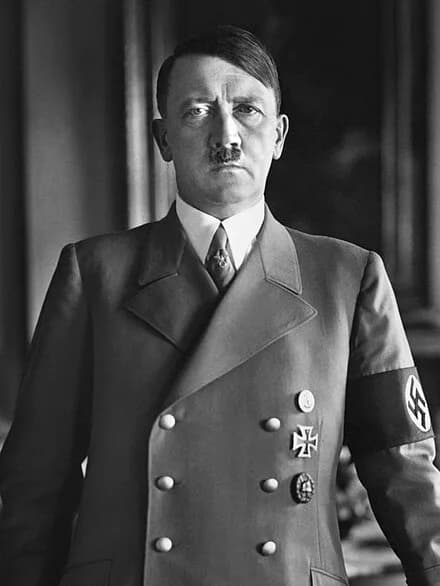
Adolf Hitler
Dictator of Nazi Germany from 1933 to 1945, Adolf Hitler was the primary instigator of World War II and the Holocaust. His racist and expansionist ideology caused the deaths of tens of millions of people worldwide. Appointed chancellor on 30 January 1933, he had dismantled the Weimar Republic within eighteen months and taken absolute power.
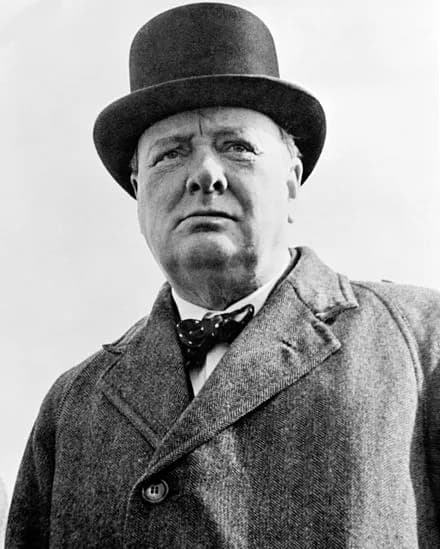
Winston Churchill
Prime Minister of the United Kingdom from 1940 to 1945, Winston Churchill embodied British resistance to Nazi Germany. His rousing speeches and unwavering leadership were instrumental in sustaining British morale through the darkest hours of the war. He refused any negotiated peace after the fall of France.
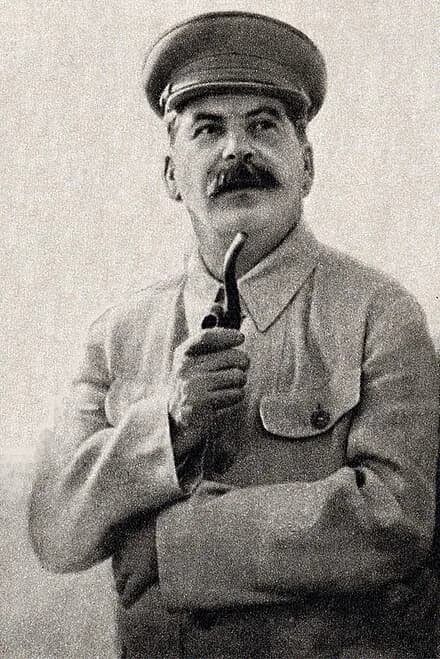
Joseph Stalin
Leader of the Soviet Union from 1924 to 1953, Joseph Stalin transformed the USSR into an industrial and military superpower. His leadership during the Great Patriotic War was decisive in defeating Nazi Germany, but his totalitarian regime caused millions of deaths among his own people.
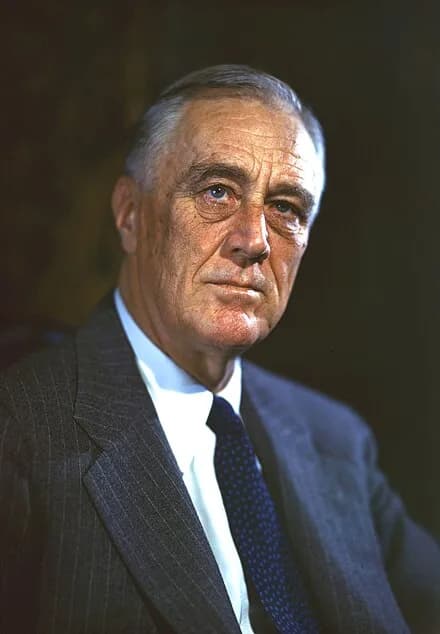
Franklin D. Roosevelt
32nd President of the United States, Franklin D. Roosevelt led the country through the Great Depression and most of World War II. His Lend-Lease program and diplomacy with Churchill and Stalin were decisive in the Allied victory, though he died just weeks before Germany's surrender.
