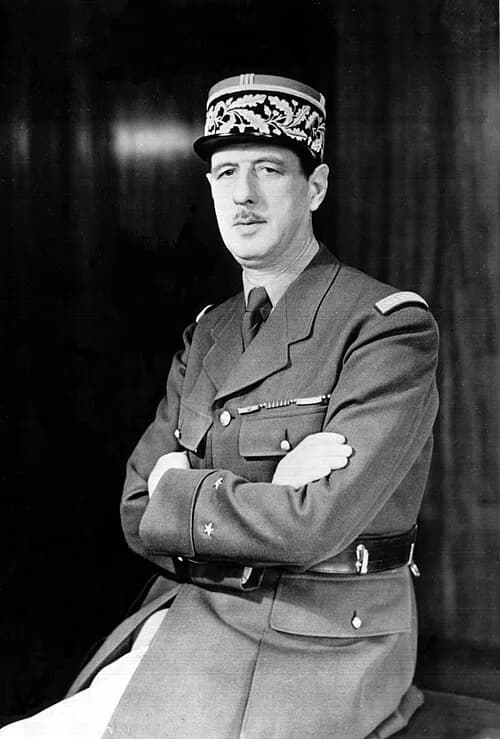
Leader of Free France from London starting June 1940, Charles de Gaulle refused capitulation and embodied French resistance. Through his determination and political skill, he succeeded in having France recognized as a victorious power at the war's end, preserving its place among the great nations.
Born on November 22, 1890, in Lille into a patriotic Catholic family, Charles Andre Joseph Marie de Gaulle grew up in an environment where French history and service to the nation were central values. His father Henri, a teacher of literature and history, instilled in him a love of France and a sense of duty. A brilliant student, he entered the military academy of Saint-Cyr in 1909 and graduated thirteenth in his class in 1912. Assigned to the 33rd Infantry Regiment commanded by Colonel Philippe Petain, he fought in World War I from August 1914. Wounded three times — at Dinant, in Champagne, and at Verdun — he was left for dead and captured by the Germans at Verdun in March 1916. A prisoner for 32 months, he attempted five escapes without success. This experience of captivity profoundly affected him and reinforced his conviction that France needed a modern and mobile army. After the war, he served in Poland and then pursued a career as both an officer and a military intellectual.
During the interwar period, de Gaulle distinguished himself as a visionary military thinker. His book "The Army of the Future" (1934) advocated the creation of professional, mobile armored divisions, anticipating the doctrine of mechanized warfare. His ideas were ignored by the French high command, which clung to the static defense of the Maginot Line, but were ironically studied by the Germans who would develop the Blitzkrieg. Promoted to colonel in 1937, he was one of the few French officers to achieve tactical successes during the debacle of May-June 1940, commanding the 4th Reserve Armored Division at Montcornet and Abbeville. These exploits earned him a temporary promotion to the rank of brigadier general and a brief appointment as Under-Secretary of State for War in Paul Reynaud's government. When Petain signed the armistice on June 22, 1940, de Gaulle refused to accept defeat. He flew to London where, on June 18, 1940, he delivered his famous appeal over the BBC airwaves, urging the French to continue the fight. He founded the Free France movement with a handful of volunteers.
From London, de Gaulle patiently built Free France into a credible political and military force. Sentenced to death in absentia by the Vichy regime, he gradually rallied territories of the French colonial empire — French Equatorial Africa, Cameroon, Chad, and then North Africa after the Allied landings of November 1942. His relations with the Anglo-Saxon Allies were tumultuous: Churchill supported him but Roosevelt held him in contempt, preferring General Giraud. De Gaulle nevertheless imposed his authority through unwavering determination and remarkable political skill. He created the French Committee of National Liberation in Algiers in 1943, which became the Provisional Government of the French Republic in 1944. The Free French Forces fought on all fronts: at Bir Hakeim (1942), in Italy, and during the landings in Provence (August 1944). On August 25, 1944, General Leclerc's 2nd Armored Division liberated Paris. De Gaulle walked down the Champs-Elysees the following day, acclaimed by an immense crowd, symbolically restoring French sovereignty and eliminating any risk of an Allied military government (AMGOT) being imposed on France.
The Appeal of June 18 was arguably de Gaulle's most audacious decision: a 49-year-old unknown general, without troops or resources, defying from London a legal government and a revered marshal. This seemingly reckless gamble proved visionary. His decision to maintain Free France's independence from the Anglo-Saxons, even at the cost of constant conflicts with Roosevelt and Churchill, preserved French sovereignty. In Algiers, he skillfully sidelined General Giraud, who was backed by the Americans, to become the sole leader of the French Resistance. His handling of the liberation of Paris was a political masterstroke: he persuaded Eisenhower to let a French division be the first to enter the capital, and immediately organized the restoration of Republican authority, preventing any Communist seizure of power. As head of the provisional government, he granted women the right to vote (1944), launched nationalizations, and created the social security system. However, disagreeing with the parties over the institutions of the Fourth Republic, which he considered too weak, he resigned in January 1946, convinced that the French would call him back — which would not happen until twelve years later, in 1958.
Charles de Gaulle's legacy in World War II is above all that of safeguarding France's honor and standing among nations. Thanks to his obstinacy, France obtained an occupation zone in Germany, a permanent seat on the UN Security Council, and a place at the victors' table — a remarkable outcome for a country defeated in six weeks and occupied for four years. The Gaullist myth of a "resistant" France masked the more complex reality of Vichy collaboration, but enabled national reconciliation and reconstruction. Called back to power in 1958, de Gaulle founded the Fifth Republic, ended the Algerian War, and built an independent France equipped with nuclear weapons. He died on November 9, 1970, at Colombey-les-Deux-Eglises. Regarded as the greatest Frenchman of the twentieth century, he embodies the conviction that a single individual, armed with willpower and vision, can change the destiny of a nation. The international airport of Paris, an aircraft carrier, and countless streets and squares bear his name. His philosophy of national sovereignty and French grandeur continues to influence French politics to this day.
This article draws on historical works, military archives and recognized academic publications.
On June 18, 1940, Brigadier General Charles de Gaulle, 49 years old and sheltered in London, launched an appeal over BBC airwaves urging the French to continue fighting despite the armistice signed by Marshal Pétain. Sentenced to death in absentia by the Vichy regime, he founded the Free France movement with a handful of volunteers. This act, defying a legal government from London without troops or resources, became the foundation of Gaullist legitimacy and French resistance.
Franklin Roosevelt despised Charles de Gaulle and preferred the more pliable General Henri Giraud. Roosevelt refused to recognize Free France as representing France and envisaged an Allied Military Government (AMGOT) over liberated France. De Gaulle imposed his authority by skillfully sidelining Giraud in Algiers in 1943 and by organizing the triumphant entry of General Leclerc's 2nd Armored Division into Paris on August 25, 1944, restoring French sovereignty before any Allied occupation.
Thanks to Charles de Gaulle's tenacity, France secured an occupation zone in Germany, a permanent seat on the United Nations Security Council, and a place at the victors' table — a remarkable outcome for a country defeated in six weeks in 1940 and occupied for four years. France was thus recognized as a victorious power, alongside the United States, Great Britain, and the USSR, preserving its standing among the great nations.
Information cross-checked against Wikipedia and reference historical works.
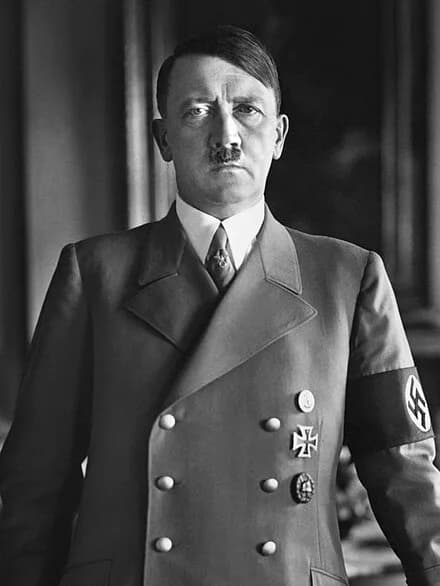
Adolf Hitler
Dictator of Nazi Germany from 1933 to 1945, Adolf Hitler was the primary instigator of World War II and the Holocaust. His racist and expansionist ideology caused the deaths of tens of millions of people worldwide. Appointed chancellor on 30 January 1933, he had dismantled the Weimar Republic within eighteen months and taken absolute power.
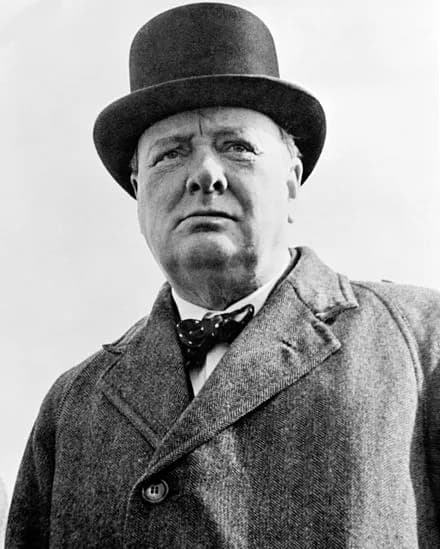
Winston Churchill
Prime Minister of the United Kingdom from 1940 to 1945, Winston Churchill embodied British resistance to Nazi Germany. His rousing speeches and unwavering leadership were instrumental in sustaining British morale through the darkest hours of the war. He refused any negotiated peace after the fall of France.
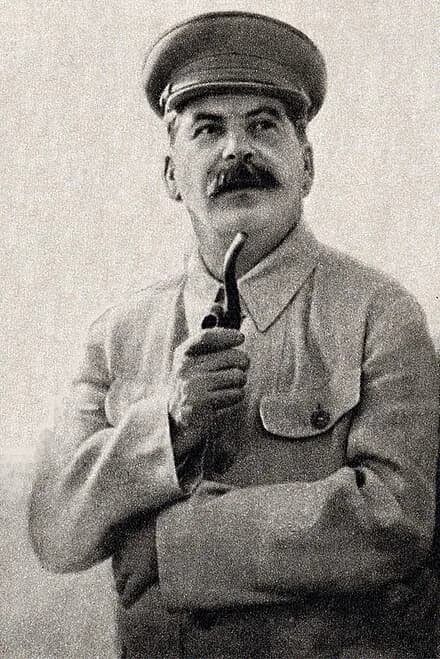
Joseph Stalin
Leader of the Soviet Union from 1924 to 1953, Joseph Stalin transformed the USSR into an industrial and military superpower. His leadership during the Great Patriotic War was decisive in defeating Nazi Germany, but his totalitarian regime caused millions of deaths among his own people.
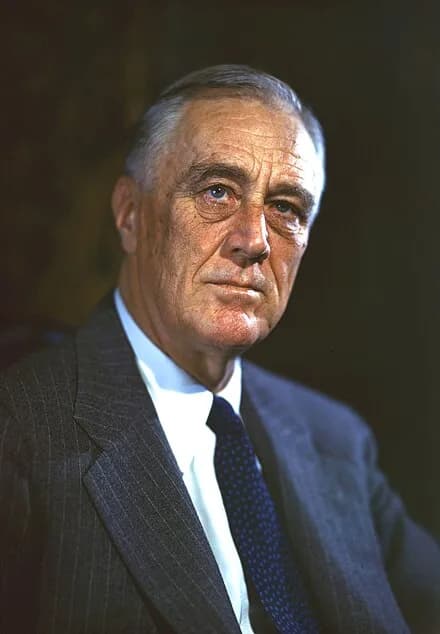
Franklin D. Roosevelt
32nd President of the United States, Franklin D. Roosevelt led the country through the Great Depression and most of World War II. His Lend-Lease program and diplomacy with Churchill and Stalin were decisive in the Allied victory, though he died just weeks before Germany's surrender.
