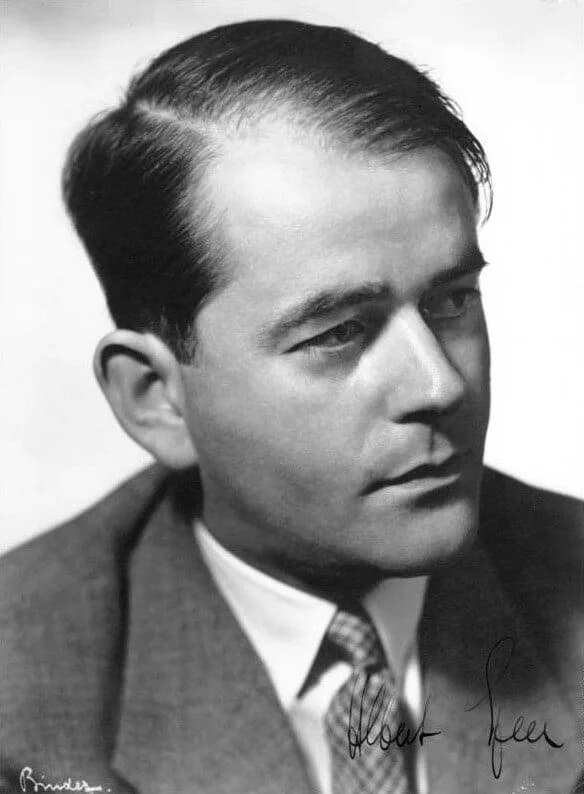
Albert Speer was Adolf Hitler's favorite architect and the designer of the Nazi regime's megalomaniac projects, including the future capital Germania. Appointed Minister of Armaments in 1942, he multiplied German war production before being sentenced to twenty years in prison at the Nuremberg Trials.
Albert Speer was born on March 19, 1905 in Mannheim, Germany, into a wealthy upper-middle-class family. Both his father and grandfather were prosperous architects, and young Albert grew up in a privileged environment, surrounded by servants in a large bourgeois house. However, family relations were cold and distant, marked by a lack of affection that Speer later recounted in his memoirs. After secondary studies at the Heidelberg gymnasium, he followed in the family footsteps by enrolling at the Karlsruhe Institute of Technology in 1923 to study architecture. He continued his studies at the Technical University of Munich then at the Technical University of Berlin, where he became a student of Heinrich Tessenow, a renowned neoclassical architect whose influence on his style was decisive. It was in Berlin, in January 1931, that an event changed his life: he attended a speech by Hitler before students and was immediately fascinated by the future Führer's charisma. In March 1931, he joined the NSDAP (Nazi party), then the SA, not so much from deep ideological conviction as from opportunism and the attraction of a dynamic movement that seemed to offer a promising future. His organizational talent quickly attracted the party's attention: he decorated the first great Nazi rally of May 1933 at Berlin-Tempelhof, using flags and searchlights in spectacular fashion. This staging impressed Hitler, who saw in Speer the young architect capable of giving architectural form to his dreams of grandeur for the Third Reich.
The relationship between Speer and Hitler quickly became one of the most singular of the Third Reich. Hitler, himself a frustrated artist who had dreamed of becoming an architect, found in Speer the ideal collaborator to realize his megalomaniac architectural fantasies. In 1934, Speer received his first major commission: designing the sets for the Nazi party congress in Nuremberg, immortalized by Leni Riefenstahl's propaganda film 'Triumph of the Will.' He created the famous 'cathedral of light' (Lichtdom), a spectacular effect achieved by pointing 130 anti-aircraft searchlights skyward at night, creating columns of light visible for dozens of kilometers. This theatrical innovation became the symbol of Nazi aesthetics. In 1937, Hitler appointed him Inspector General of Buildings for the Reich capital, with the official title of Generalbauinspektor. In this role, Speer developed the Germania project, a plan to transform Berlin into 'Welthauptstadt Germania' (World Capital Germania), featuring a Great Dome 290 meters high capable of holding 180,000 people, a Triumphal Arch 117 meters tall, and a seven-kilometer north-south monumental axis. These projects, of unprecedented scale in architectural history, were to symbolize the eternal power of the thousand-year Reich. To realize these constructions, Speer ordered the eviction of thousands of Berlin Jews from their apartments, directly contributing to their deportation, a fact he long denied after the war. His intimacy with Hitler, whom he visited at the Berghof and who treated him almost like a spiritual son, gave him considerable power within the Nazi hierarchy.
On February 8, 1942, the death of Fritz Todt in a plane crash radically transformed Speer's career. Hitler immediately appointed him Minister of Armaments and Munitions, a position for which the architect had no particular training. Yet Speer proved an exceptionally efficient administrator. By rationalizing industrial production, eliminating duplication between services, imposing component standardization, and centralizing decisions, he succeeded in tripling German armament production between 1942 and 1944, despite the intensification of Allied bombing. Tank production rose from 9,300 in 1942 to 27,300 in 1944. Aircraft production tripled, ammunition production quadrupled. This 'armaments miracle' considerably prolonged Nazi Germany's capacity for resistance. To accomplish this industrial feat, Speer massively resorted to forced labor. Under his direction, millions of foreign workers, prisoners of war, and concentration camp inmates were exploited in armament factories under appalling conditions. The underground Mittelwerk factory, where V2 rockets were assembled by inmates from Dora-Mittelbau camp, became one of the most sinister symbols of this exploitation. Conditions were so atrocious that more than 20,000 inmates perished there. Toward the war's end, Speer distanced himself from Hitler. In March 1945, he secretly sabotaged Hitler's Nero Decree, which ordered the destruction of all German infrastructure to prevent its capture by the Allies, believing that the German people needed these resources to survive after defeat. This disobedience, which he highlighted during his trial, helped construct his image as a 'good Nazi' who had repented.
Albert Speer's decisions illustrate the trajectory of a brilliant technocrat in the service of a criminal regime. His initial decision to join the Nazi party in 1931 was motivated more by professional opportunism than ideological conviction, but it placed him on a trajectory that led him to the heart of Hitlerian power. His decision to accept the Armaments Ministry in 1942, a domain foreign to his training, revealed considerable ambition and self-confidence. The managerial choices he made — decentralization of production, creation of industrial committees by specialty, direct negotiation with industrialists — were innovative and effective, but they prolonged an already lost war and caused additional suffering to millions. His decision to massively resort to forced labor, which he presented after the war as a necessity imposed by circumstances rather than a deliberate choice, remains one of the most condemnable aspects of his actions. At the Nuremberg Trial, Speer made the strategic decision to accept collective responsibility while denying personal knowledge of the Holocaust. He declared: 'As an important member of the Reich leadership, I must accept my share of responsibility for what happened.' This posture, skillfully calibrated between admission and denial, allowed him to escape the death penalty while constructing the image of the repentant technocrat. His decision to sabotage the Nero Decree, if proven to the full extent he attributed to it, represents a rare case of disobedience within the Nazi hierarchy in the war's final months.
Albert Speer's legacy is one of the most controversial of the twentieth century, blending organizational genius, criminal complicity, and skillfully orchestrated mythification. Sentenced to twenty years in prison at Nuremberg — a moderate sentence compared to the hangings of his co-defendants — he served his term at Spandau Prison in Berlin until 1966. During his detention, he secretly wrote his memoirs, published in 1969 as 'Inside the Third Reich' (Erinnerungen), which became a worldwide bestseller and durably shaped public perception of the Nazi regime. Speer presented himself as an apolitical technician, seduced by Hitler but ignorant of the regime's worst crimes. This carefully constructed image of the 'good Nazi' was long accepted by the public and even by some historians. However, from the 1980s and especially after Speer's death in 1981, thorough research methodically demolished this facade. Historians Matthias Schmidt, Gitta Sereny, and Susanne Willems demonstrated that Speer had known about the Holocaust, that he had attended Himmler's speech at Posen in October 1943 where the genocide was explicitly discussed, and that he had actively participated in the expulsion of Jews from Berlin to free housing for Berliners whose homes had been bombed. His systematic use of forced labor, with the inhuman conditions that accompanied it, makes him a direct accomplice to the regime's crimes. Speer's legacy today serves as a warning about the dangers of technocratic expertise placed in service of totalitarian power, and about criminals' ability to rewrite their own history.
Appointed Armaments Minister in February 1942 after Fritz Todt's death, Albert Speer managed to triple German war production between 1942 and 1944 despite Allied bombing. Tank production rose from 9,300 to 27,300 per year; aircraft and ammunition output multiplied. He massively exploited the forced labor of millions of prisoners and camp inmates, over 20,000 of whom perished at the underground Mittelwerk factory.
Germania was Speer's project, as Generalbauinspektor from 1937, to transform Berlin into 'Welthauptstadt Germania' (World Capital). It featured a Great Dome 290 meters tall holding 180,000 people, a Triumphal Arch 117 meters high, and a seven-kilometer monumental axis. To clear the land, Speer ordered the eviction of thousands of Berlin Jews, directly contributing to their deportations.
At the Nuremberg Trials (1945-1946), Albert Speer received a twenty-year prison sentence rather than hanging because he adopted a strategic posture: he accepted collective responsibility while denying personal knowledge of the Holocaust, and claimed to have sabotaged Hitler's Nero Decree of March 1945. Later research demonstrated that he had attended Himmler's Posen speech in October 1943 where the genocide was explicitly discussed.
Information cross-checked against Wikipedia and reference historical works.
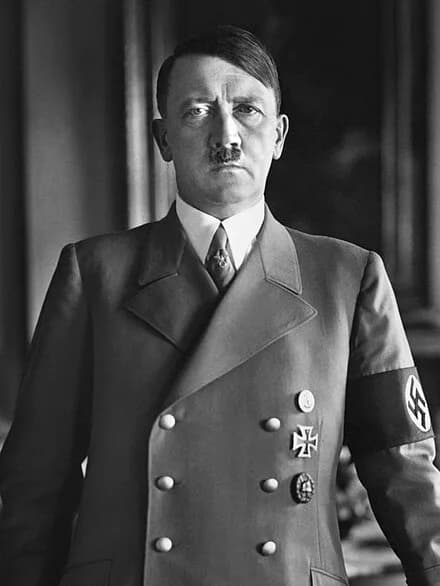
Adolf Hitler
Dictator of Nazi Germany from 1933 to 1945, Adolf Hitler was the primary instigator of World War II and the Holocaust. His racist and expansionist ideology caused the deaths of tens of millions of people worldwide. Appointed chancellor on 30 January 1933, he had dismantled the Weimar Republic within eighteen months and taken absolute power.
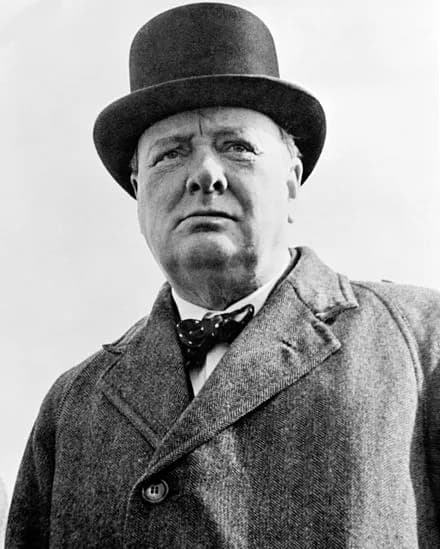
Winston Churchill
Prime Minister of the United Kingdom from 1940 to 1945, Winston Churchill embodied British resistance to Nazi Germany. His rousing speeches and unwavering leadership were instrumental in sustaining British morale through the darkest hours of the war. He refused any negotiated peace after the fall of France.
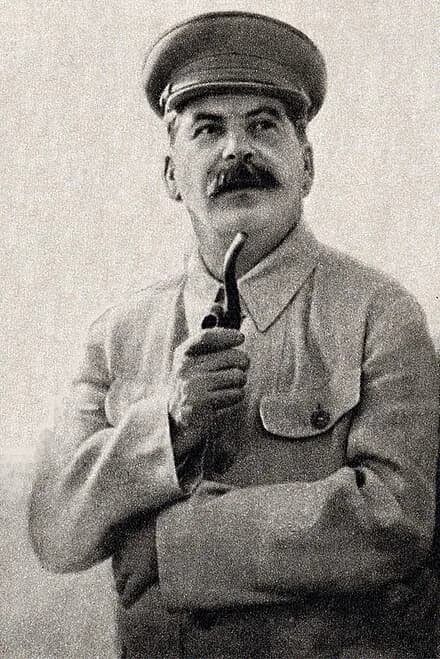
Joseph Stalin
Leader of the Soviet Union from 1924 to 1953, Joseph Stalin transformed the USSR into an industrial and military superpower. His leadership during the Great Patriotic War was decisive in defeating Nazi Germany, but his totalitarian regime caused millions of deaths among his own people.
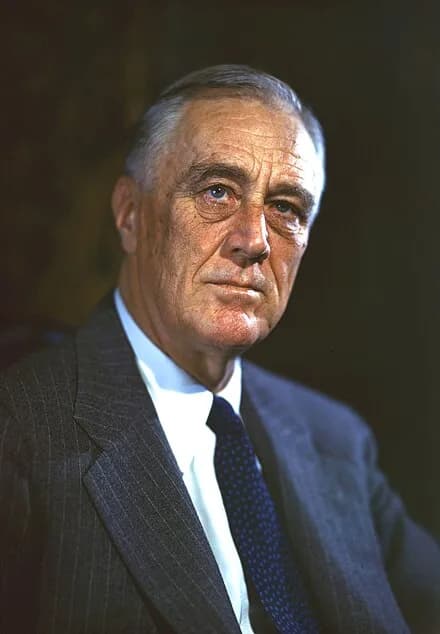
Franklin D. Roosevelt
32nd President of the United States, Franklin D. Roosevelt led the country through the Great Depression and most of World War II. His Lend-Lease program and diplomacy with Churchill and Stalin were decisive in the Allied victory, though he died just weeks before Germany's surrender.
