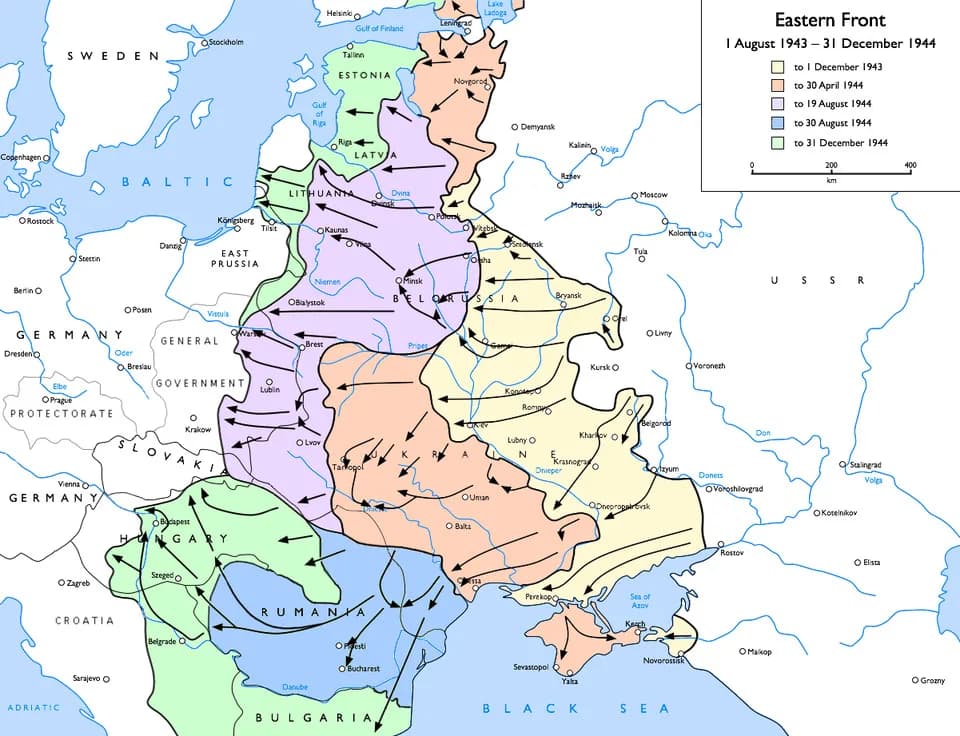
The Union of Soviet Socialist Republics, led by Joseph Stalin during World War II, played a decisive role in the defeat of Nazi Germany at the cost of 27 million dead, the heaviest losses of the entire conflict. Its factories were moved beyond the Urals in 1941 to keep producing.
The Soviet Union entered World War II under complex and controversial circumstances. The German-Soviet non-aggression pact, signed on August 23, 1939, by Foreign Ministers Ribbentrop and Molotov, stunned the world by bringing together two ideologically opposed regimes. The pact contained a secret protocol dividing Eastern Europe into respective spheres of influence. Consequently, the USSR invaded eastern Poland on September 17, 1939, annexed the Baltic states in 1940, and waged the Winter War against Finland between November 1939 and March 1940, a campaign that revealed serious weaknesses in the Red Army. These weaknesses were largely the result of the Great Purges of 1937-1938, during which Stalin had arrested and executed a considerable proportion of the Red Army's senior officer corps. Three of the Soviet Union's five marshals, thirteen of fifteen army commanders, fifty of fifty-seven corps commanders, and 154 of 186 division commanders were eliminated. This decapitation of military command deprived the Red Army of its experience and competence at the most critical moment in its history. On June 22, 1941, Germany launched Operation Barbarossa, the largest military invasion in history, with more than three million soldiers. Despite numerous warnings from British intelligence services and his own spies, Stalin had refused to believe the attack was imminent. Soviet forces were caught off guard and suffered catastrophic losses in the first weeks. Millions of soldiers were encircled and captured in vast pockets at Minsk, Smolensk, Kiev, and Vyazma. Within five months, the Wehrmacht had advanced over a thousand kilometers, occupying Ukraine, Belarus, and threatening Moscow and Leningrad. The Battle of Moscow, between October 1941 and January 1942, marked the first major failure of the German Blitzkrieg. General Zhukov, recalled from the Manchurian front, organized the capital's defense with Siberian reinforcements experienced in winter combat. The Soviet counter-offensive of December 1941 pushed the Germans back several dozen kilometers, demonstrating for the first time that the Wehrmacht was not invincible. However, the German summer offensive of 1942 toward the Caucasus and Stalingrad reignited the conflict on the Eastern Front with unprecedented intensity. The Battle of Stalingrad, from July 1942 to February 1943, constituted the decisive turning point of the war. Fierce urban combat in the city's ruins transformed Germany's Blitzkrieg advantage into a deadly trap. Operation Uranus, launched on November 19, 1942, encircled Field Marshal Paulus's 6th Army. Despite Hitler's orders to hold at all costs, the 91,000 survivors of the 6th Army surrendered on February 2, 1943. This catastrophic defeat cost Germany an entire army and shattered the myth of Wehrmacht invincibility. After Stalingrad, the strategic initiative passed definitively to the Soviet side. The Battle of Kursk in July 1943, the largest tank battle in history, confirmed the Red Army's growing superiority. The Soviet offensives of 1944, known as Stalin's ten blows, progressively liberated all occupied Soviet territory and then carried the war into Eastern Europe. Operation Bagration in June 1944 destroyed the German Army Group Center in Belarus, opening the road to Poland and Germany. The Red Army reached Berlin in April 1945 and raised the red flag over the Reichstag on May 2, 1945, symbolizing total victory over Nazism.
The Red Army, officially the Workers' and Peasants' Red Army, was the military force that bore the principal weight of the war against Nazi Germany and played the decisive role in its defeat. At the conflict's start in 1941, the Red Army was numerically imposing but suffered from serious organizational deficiencies, partially obsolete equipment, and above all the loss of its most experienced officers during Stalin's purges. Its transformation into one of history's most effective war machines constitutes one of the most remarkable military metamorphoses ever observed. In June 1941, the Red Army numbered approximately 5.5 million men deployed in the western military districts. This figure masked deep weaknesses. Most units were not at full strength, training was insufficient, communications were poor, and tactical doctrine was obsolete. The T-26 and BT-7 tanks, which constituted the bulk of the armored fleet, were vulnerable against German Panzers. However, the Red Army already possessed some superior equipment, notably the KV-1 heavy tank and the new T-34 medium tank, which unpleasantly surprised the Germans in the first engagements. The Soviet Union's massive mobilization enabled the reconstitution of forces decimated by the summer and autumn 1941 catastrophes. In total, approximately 34 million Soviets served in the armed forces during the conflict, a figure testifying to the war effort's scale. Siberian reserves, successive mobilizations of increasingly wider age groups, and the enrollment of women in combat roles maintained numerical pressure on the Wehrmacht. Approximately 800,000 women served in the Red Army, some in combat units such as the famous night aviation regiments, the Night Witches. The T-34 became the symbol of Soviet armored power. Produced in massive quantities in Ural factories, it combined effective sloped armor, a powerful 76mm then 85mm gun, good mobility, and above all great ease of production. Over 84,000 T-34s were manufactured during the war, a figure that overwhelmed qualitatively superior German production. The IS-2 heavy tanks, armed with 122mm guns, complemented Soviet armored formations from 1944 onward, capable of destroying even the formidable German Tigers. Soviet artillery acquired a terrifying reputation on the Eastern Front. Stalin's Organs, the Katyusha multiple rocket launchers, became the nightmare of German soldiers for their ability to saturate an area with devastating fire in seconds. The Red Army developed a doctrine of massive artillery preparation before each major offensive, using thousands of pieces to pulverize enemy defenses. During the Berlin offensive in April 1945, more than 40,000 guns and mortars were concentrated on the Oder front. Soviet aviation, though decimated in Barbarossa's first days with the loss of over 2,000 aircraft on the ground, gradually reconstituted through mass production of aircraft like the Ilyushin Il-2 Shturmovik, the most-produced ground attack aircraft in history with over 36,000 built. Yakovlev Yak-3 and Lavochkin La-7 fighters rivaled the best German fighters from 1943 onward. Soviet air superiority became overwhelming in 1944-1945, contributing decisively to the war's great final offensives.
The Soviet economy during World War II accomplished what many historians consider the greatest industrial war feat in history. Faced with the German invasion that threatened to annihilate the Soviet industrial base, the USSR carried out an industrial transfer of unprecedented scale, relocating more than 1,500 entire factories to the Urals, Siberia, and Central Asia between July and December 1941. This titanic evacuation saved Soviet production capacity and constituted the foundation of final victory. Before the war, the Soviet economy had been transformed by the Stalinist five-year plans of the 1930s. Forced industrialization, conducted at a breakneck pace and at the cost of immense human suffering, had created a considerable heavy industrial base. Steel, coal, and electricity production had been multiplied several times over. However, this industrialization had largely concentrated in the USSR's western regions, precisely those rapidly occupied by the Wehrmacht in 1941. The loss of these territories deprived the Soviet Union of approximately 40% of its population, 60% of its coal production, 60% of its aluminum production, and 40% of its railway network. The transfer of factories eastward represented an extraordinary logistical effort. Complete industrial installations were dismantled, loaded onto trains, and transported thousands of kilometers before being reassembled in often precarious conditions. Workers sometimes labored outdoors in freezing temperatures to restart the machines. The Kharkov tank factory, for example, was evacuated to Chelyabinsk in the Urals, where it was combined with other facilities to form Tankograd, the city of tanks, which produced thousands of T-34s and KV-1s. Soviet war production reached staggering levels. Between 1941 and 1945, the USSR produced approximately 120,000 aircraft, 102,000 tanks and self-propelled guns, 480,000 artillery pieces, and millions of rifles and machine guns. These figures surpassed German production in virtually every category, demonstrating the effectiveness of centralized planning in wartime. Standardization and simplification of models enabled mass production on a scale that German industry, more artisanal in its approach, could not match. Allied aid, provided mainly by the United States through the Lend-Lease program, played a complementary but important role in the Soviet war effort. The Americans delivered approximately 400,000 Studebaker and Dodge trucks, 12,000 armored vehicles, 11,000 aircraft, millions of tons of food, steel, aluminum, explosives, and communications equipment. American trucks motorized Soviet logistics and enabled the rapid advances of 1943-1945, while American canned food fed front-line soldiers. Stalin publicly minimized this aid, but Zhukov acknowledged after the war that it had been indispensable. The human cost of the war economic effort was considerable. Soviet workers labored twelve to sixteen-hour days, seven days a week, under extremely difficult conditions. Women, teenagers, and the elderly replaced men who had gone to the front in factories and farms. The forced collectivization of agriculture had already weakened food production, and the war worsened the situation, causing famines in some regions. Forced labor by Gulag prisoners also contributed to war production, under conditions of brutality that cost hundreds of thousands of prisoners their lives.
The Soviet Union's political system during World War II was a totalitarian dictatorship dominated by the omnipotent figure of Joseph Stalin. General Secretary of the Communist Party of the Soviet Union since 1922, Stalin had consolidated absolute power during the 1930s through a combination of political terror, massive propaganda, and a personality cult. When war broke out, this monolithic political system proved both a strength and a weakness in conducting the conflict. The Communist Party constituted the heart of the Soviet political system, controlling all aspects of public and private life. The party's structure, with its Politburo at the top, its Central Committee, and its base organizations in every factory, collective farm, and military unit, enabled total mobilization of society for the war effort. Political commissars, present in every military unit, monitored the loyalty of officers and soldiers, reporting any shortcomings to the party. While this political omnipresence sometimes created friction with military command, it also ensured an ideological cohesion and determination that few armies could match. Stalin's direction of the war evolved considerably over the course of the conflict. In the catastrophic first months of Barbarossa, Stalin made major strategic errors by refusing to authorize necessary retreats and demanding premature counter-attacks that worsened losses. Order No. 227 of July 1942, known as Not One Step Back, threatened death for soldiers who retreated without authorization and created blocking detachments tasked with shooting those who fled. However, Stalin gradually learned to trust his most competent generals, notably Zhukov, Vasilevsky, and Rokossovsky, and to give them greater latitude in conducting operations. The State Defense Committee (GKO), created on June 30, 1941, and chaired by Stalin, centralized all civil and military powers. This small committee, which included Molotov, Beria, Malenkov, and Voroshilov, could make any decision without any constitutional or legal constraint. The Stavka, the supreme headquarters, directed military operations under Stalin's direct supervision, as he held the title of Supreme Commander of the Armed Forces. This extreme concentration of decision-making power allowed rapid responsiveness but also exposed the system to one man's errors in judgment. Soviet war propaganda partially abandoned Marxist-Leninist discourse in favor of more traditional Russian patriotism. Stalin invoked historical figures of Russian resistance against invaders, calling upon Alexander Nevsky, Kutuzov, and Suvorov. The Russian Orthodox Church, long persecuted by the regime, was rehabilitated to mobilize religious sentiment in service of the national cause. The term Great Patriotic War replaced the usual ideological formulations, creating a war narrative centered on defense of the fatherland rather than class struggle. Beria's NKVD continued to function as an instrument of terror even during the war. Nations accused of collaboration with the invader were deported en masse: Chechens, Ingush, Crimean Tatars, Volga Germans, and other peoples were torn from their homes and sent to the Central Asian steppes under atrocious conditions, causing the deaths of hundreds of thousands. Soviet prisoners of war liberated from German camps were treated with suspicion and often sent to Gulag camps, as Stalin considered captivity a form of treason. This implacable repression coexisted with authentic heroism and sincere national determination in the face of the Nazi invader.
The Soviet Union's balance sheet in World War II is of a magnitude that defies imagination. No other nation paid such a heavy toll in human lives, material destruction, and suffering to defeat Nazism. The sacrifices made by the Soviet people were decisive in the conflict's outcome and profoundly shaped the postwar world order, with the USSR's emergence as one of the two Cold War superpowers. Soviet human losses are the highest of all belligerent nations, with an estimated total of approximately 27 million dead, roughly 14% of the prewar population. This staggering figure includes approximately 8.7 million military personnel killed in combat or who died of their wounds, plus losses among prisoners of war. Of the 5.7 million Soviet soldiers captured by the Germans, approximately 3.3 million perished in captivity from starvation, cold, disease, and executions. Civilian losses, estimated between 15 and 18 million people, resulted from deliberate Einsatzgruppen massacres, the Holocaust, the Siege of Leningrad which killed approximately one million civilians, occupation-induced famines, bombing, and deportations. Material destruction on Soviet territory was of unprecedented scale. German occupation devastated an area comprising approximately 40% of the prewar Soviet population. The Germans destroyed or damaged 1,710 cities and more than 70,000 villages, 31,850 factories and industrial enterprises, 65,000 kilometers of railway, 98,000 collective farms, and 1,876 state farms. The total cost of destruction was estimated at 679 billion rubles of the era, equivalent to several years of Soviet gross national product. Despite these appalling losses, the Soviet Union emerged from the war as a leading world power. Victory over Nazi Germany conferred upon the Stalinist regime a legitimacy it had never previously possessed. The Red Army's prestige was immense, and the Soviet Union extended its influence over all of Eastern Europe, installing communist regimes in Poland, Czechoslovakia, Hungary, Romania, Bulgaria, and East Germany. This zone of influence, the Iron Curtain as Churchill called it, became the central theater of the Cold War that pitted the USSR against the United States for more than forty years. The memory of the Great Patriotic War became the founding myth of Soviet identity and remained, even after the USSR's dissolution in 1991, a central element of Russian national identity. May 9, Victory Day, is celebrated annually as the most important national holiday in Russia. War memorials, war museums, and commemorative ceremonies testify to this conflict's enduring importance in collective memory. However, official Soviet and then Russian memory often obscured the war's darkest aspects, including Stalin's errors, the deportation of peoples, the fate of Soviet prisoners of war, and the repression that continued after victory. Strategically, the Soviet victory radically transformed the global balance of power. The USSR, which in 1941 had come close to annihilation, became by 1945 the dominant military power on the Eurasian continent. The development of the Soviet atomic weapon in 1949 confirmed its superpower status and inaugurated the era of nuclear deterrence. The war's military lessons, notably the importance of strategic depth, massive reserves, and armored warfare, durably influenced Soviet and global military doctrine.
This article draws on historical works, military archives and recognized academic publications.
The Soviet Union lost approximately 27 million people, roughly 14% of its prewar population — the highest losses of all belligerent nations. This toll includes approximately 8.7 million military personnel killed in combat, over 3.3 million prisoners of war who died in German captivity out of 5.7 million captured, and between 15 and 18 million civilians killed by massacres, famines, bombing, and deportations.
Between July and December 1941, the USSR relocated more than 1,500 entire factories to the Urals, Siberia, and Central Asia to save them from the German advance. Complete installations were dismantled, loaded onto trains, and reassembled sometimes outdoors in freezing temperatures. The Kharkov tank factory, combined with others at Chelyabinsk, formed Tankograd which produced thousands of T-34s and KV-1s.
The Battle of Stalingrad (July 1942 - February 1943) constituted the decisive turning point. Operation Uranus, launched on November 19, 1942, encircled Field Marshal Paulus's 6th Army. Despite Hitler's orders to hold at all costs, 91,000 survivors surrendered on February 2, 1943. This defeat cost Germany an entire army and shattered the myth of Wehrmacht invincibility on the Eastern Front.
Information cross-checked against Wikipedia and reference historical works.
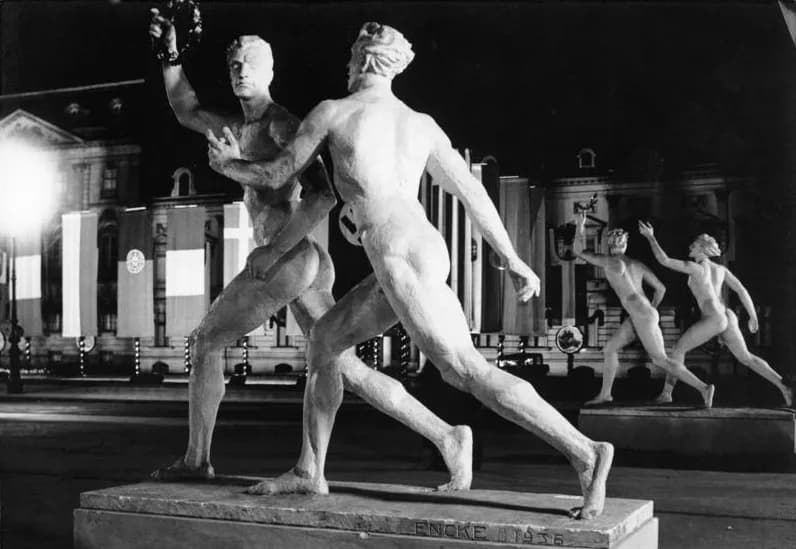
Nazi Germany
The Third Reich, led by Adolf Hitler from 1933 to 1945, plunged the world into World War II and perpetrated the Holocaust, causing tens of millions of deaths before its unconditional surrender in May 1945. Born of Hitler's appointment as chancellor on 30 January 1933, the regime dismantled the Weimar Republic within months and turned Germany into a one-party state.
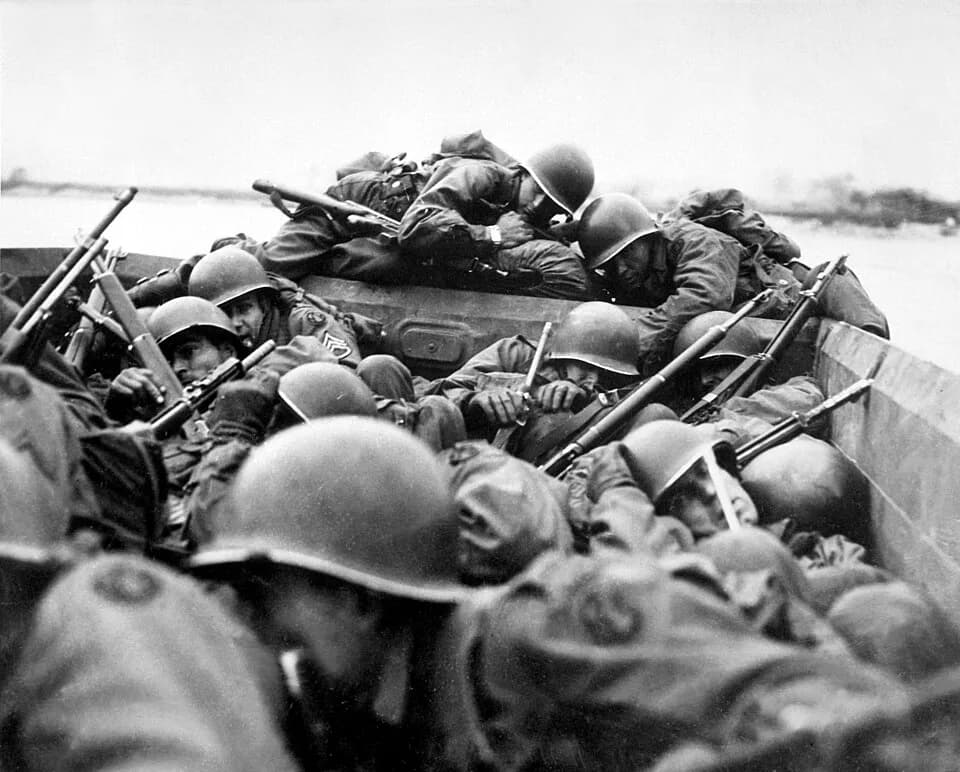
United States
The United States, drawn into the war after the attack on Pearl Harbor on 7 December 1941, became the arsenal of democracy and the decisive industrial and military power that helped the Allies to victory on both theatres of operations. Its war production alone exceeded that of all the Axis powers combined.
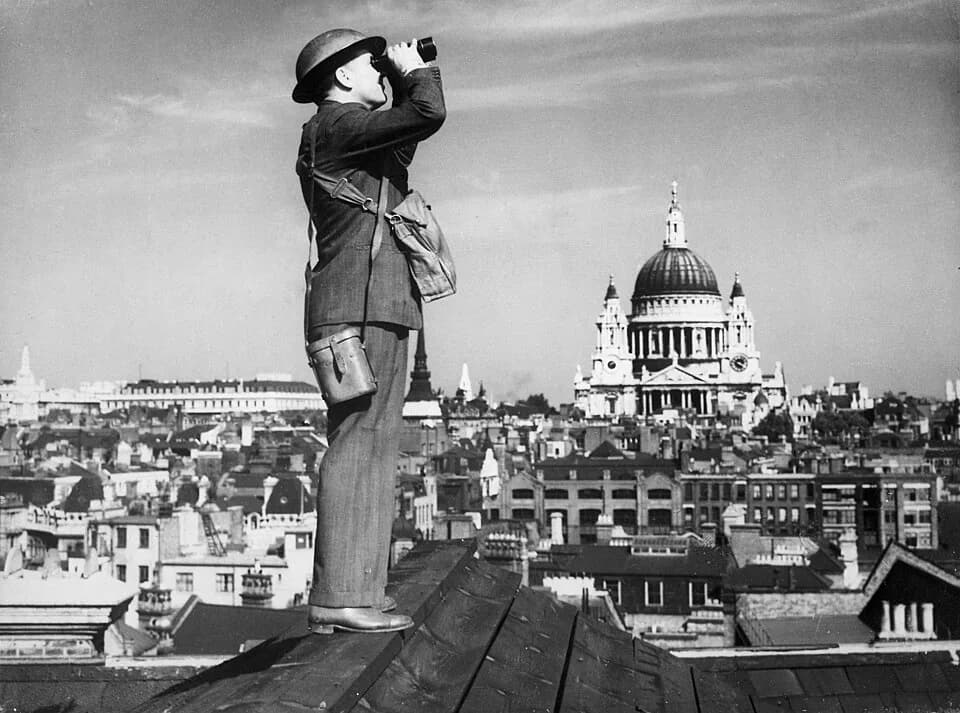
United Kingdom
The United Kingdom of Great Britain and Northern Ireland, led by Winston Churchill from May 1940, was the only major European power to fight Nazi Germany without interruption from September 1939 to May 1945. For a year after the fall of France, it stood alone against the Axis in Europe.
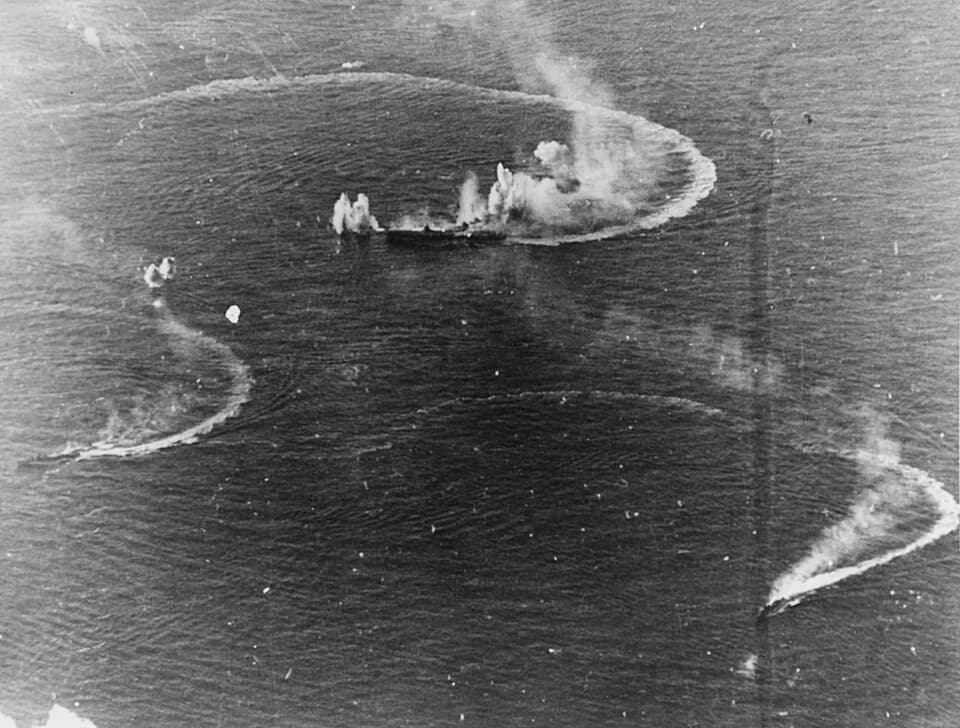
Empire of Japan
The Empire of Japan, led by Emperor Hirohito and the militarists in power, waged a war of expansion across Asia and the Pacific from 1937 to 1945, before surrendering after the atomic bombings of Hiroshima and Nagasaki in August 1945. Its Co-Prosperity Sphere project presented that conquest as a liberation of Asia from Western colonial powers.
