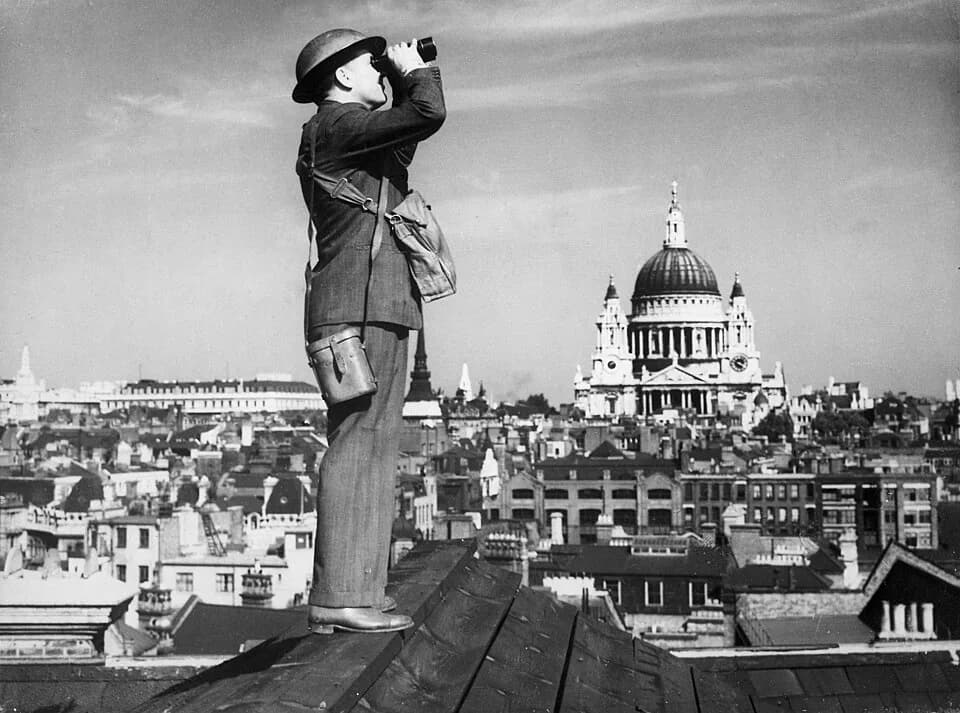
The United Kingdom of Great Britain and Northern Ireland, led by Winston Churchill from May 1940, was the only major European power to fight Nazi Germany without interruption from September 1939 to May 1945. For a year after the fall of France, it stood alone against the Axis in Europe.
The United Kingdom entered World War II on September 3, 1939, two days after the German invasion of Poland, in accordance with the security guarantees given to Warsaw in March of that year. This declaration of war marked the definitive failure of the appeasement policy pursued by Prime Minister Neville Chamberlain, who had hoped to preserve peace by yielding to Hitler's territorial demands. The Munich Agreement of September 1938, by which Britain and France accepted Germany's annexation of the Sudetenland, was retrospectively considered one of the greatest diplomatic errors of the twentieth century. The war's first months, the period known as the Phoney War, were marked by a near-total absence of fighting on the Western Front. The British Expeditionary Force was deployed to France, but no major offensive was launched. This period of false calm ended abruptly with the German invasion of Norway in April 1940, whose failed British response provoked a parliamentary crisis and the fall of the Chamberlain government. On May 10, 1940, Winston Churchill became Prime Minister, the very day Germany launched its Western offensive. The Fall of France in May-June 1940 was a military disaster for the Allies. The German breakthrough in the Ardennes cut Allied forces in two and trapped the British Expeditionary Force in the Dunkirk pocket. The Dunkirk evacuation, Operation Dynamo, miraculously saved more than 338,000 Allied soldiers between May 26 and June 4, 1940, thanks to the mobilization of a motley flotilla of warships, fishing boats, and civilian craft. Churchill transformed this defeat into a narrative of indomitable resistance with his famous speech: we shall fight on the beaches, we shall fight on the landing grounds, we shall never surrender. After France's fall in June 1940, the United Kingdom found itself alone against German power, a situation it had not known since the Napoleonic Wars. The Battle of Britain, from July to October 1940, pitted the Royal Air Force against the Luftwaffe in an aerial combat whose stake was Great Britain's very survival as a free nation. British pilots, aided by the Chain Home radar system and German code decryption, repulsed Luftwaffe attacks and forced Hitler to indefinitely postpone Operation Sea Lion, the planned invasion of England. The Blitz, the nocturnal bombing campaign against British cities, killed more than 40,000 civilians but did not break the population's morale. The entry of the Soviet Union into the war in June 1941, then the United States in December 1941, transformed the United Kingdom's strategic position. From a solitary besieged nation, it became the pivot of the grand alliance that would defeat the Axis. The special relationship between Churchill and Roosevelt, founded on personal friendship and converging strategic interests, was the cement of the Anglo-American coalition. British forces fought on multiple theaters of operations: in North Africa against Rommel, where the victory at El Alamein in October 1942 marked the turning point of the desert war; in Italy from 1943; in Burma against the Japanese; and in Normandy from June 1944. The United Kingdom's war role was also marked by less visible but equally crucial contributions. Bletchley Park, the British code-breaking center, cracked the German Enigma codes, providing the Allies with an intelligence advantage that, according to some historians, shortened the war by two years. The Special Operations Executive conducted sabotage and resistance operations throughout occupied Europe. The Royal Navy maintained vital communication lines across the Atlantic despite the German submarine threat. RAF Bomber Command conducted a strategic bombing campaign against Germany that, though controversial for its civilian casualties, contributed to the destruction of Germany's war industry.
British armed forces during World War II constituted a first-rate military power that fought on every theater of operations. Organized around three traditional services, the British Army, the Royal Navy, and the Royal Air Force, they also benefited from the considerable contributions of the British Empire's dominions and colonies. In total, approximately 5.9 million Britons served in the armed forces during the conflict, supplemented by millions of Commonwealth soldiers from Canada, Australia, New Zealand, India, South Africa, and other territories. The British Army, though numerically inferior to those of other major powers, distinguished itself by the quality of its training, the competence of its officers, and its adaptability to varied combat conditions. British ground forces fought in environments as diverse as North African deserts, Italian mountains, Burmese jungles, and Norman hedgerows. The 8th Army, under the successive command of generals such as Auchinleck then Montgomery, waged a legendary campaign in North Africa, culminating in the decisive victory at El Alamein in October-November 1942, which ended the threat of Rommel's Afrika Korps to Egypt and the Suez Canal. British armored equipment underwent significant evolution during the war. Early British tanks, such as the Matilda II and Valentine, suffered from weak guns and insufficient mechanical reliability. The Churchill, though slow, proved a robust and versatile infantry tank. The Cromwell and Comet finally gave British armored forces fast and well-armed vehicles. The Sherman Firefly, an American Sherman re-equipped with the powerful British 17-pounder anti-tank gun, was one of the few Allied tanks capable of destroying German Tigers and Panthers at normal combat range. The Royal Navy remained the world's largest navy at the war's start and played an absolutely vital role in the United Kingdom's survival. As an island nation dependent on imports for food and raw materials, mastery of the seas was literally a matter of life and death for Britain. The Battle of the Atlantic, the war's longest continuous campaign, pitted the Royal Navy and British merchant marine against German U-boats in a fierce struggle for control of transatlantic supply routes. British escorts, Flower-class corvettes and River-class frigates, developed increasingly effective anti-submarine tactics that, combined with Enigma decryption and patrol aircraft, ultimately won this crucial battle. The Royal Air Force wrote some of the most heroic pages in British military history. Fighter Command, with its Spitfires and Hurricanes, saved Britain during the 1940 Battle of Britain. Churchill paid tribute to fighter pilots with his immortal phrase: never in the field of human conflict was so much owed by so many to so few. Bomber Command, under the controversial direction of Air Marshal Arthur Harris, conducted an increasingly intensive strategic bombing campaign against Germany. Night raids by Lancaster and Halifax bombers caused massive destruction, but at the cost of appalling losses: 55,573 Bomber Command crew members were killed, one of the highest casualty rates of any branch of the Allied armed forces. British special forces innovated considerably during the conflict. The Special Air Service, created by David Stirling in North Africa, conducted daring raids behind enemy lines. The Commandos, trained for amphibious operations and raids, carried out spectacular missions such as the St. Nazaire raid in March 1942. The Long Range Desert Group operated in the Saharan vastness, while General Wingate's Chindits fought behind Japanese lines in Burma. These units laid the foundations for modern special forces worldwide.
The British economy during World War II was subjected to total mobilization that radically transformed the United Kingdom's society and industry. More than any other democratic country, Great Britain organized its economy centrally for the war effort, achieving a degree of state control that would have been unthinkable in peacetime. This complete economic mobilization was essential to national survival during the dark years of 1940-1941, when Britain fought virtually alone against the Axis. The United Kingdom entered the war with an economy still weakened by the Great Depression and the costs of late 1930s rearmament. British industrial production, though growing, remained inferior to Germany's in many key sectors. Britain depended heavily on imports for food and raw materials, a vulnerability that the German submarine war threatened to fatally exploit. Before the war, Britain imported approximately 70% of its food, and the Battle of the Atlantic made every supply convoy a matter of national survival. The Churchill government imposed strict rationing and economic controls of unprecedented scope in a democracy. Food rationing, introduced in January 1940, progressively covered virtually all basic goods: meat, sugar, butter, eggs, tea, cheese, and even sweets. Clothing was rationed from 1941, and petrol reserved for essential uses. The rationing system, though constraining, was generally considered fair and efficient. Paradoxically, nutrition among the poorest population improved during the war thanks to more egalitarian food distribution and free school meal programs. British war industrial production reached remarkable levels given the country's limited resources. The aircraft industry, the most important for national defense, produced approximately 131,000 aircraft during the conflict, an impressive figure testifying to industrial mobilization's effectiveness. The Ministry of Aircraft Production, energetically directed by Lord Beaverbrook in 1940, performed production miracles during the Battle of Britain, ensuring replacement of fighters lost in combat. Tank factories, shipyards, gun works, and munitions plants operated at full capacity with a workforce that included millions of women, called into factories by female labor conscription instituted in December 1941. Financing the war posed considerable challenges. The total cost of the war for the United Kingdom is estimated at approximately 25 billion pounds sterling, a colossal sum for the era. The government financed this effort through a combination of high taxes, domestic borrowing, and foreign aid. The American Lend-Lease program, from 1941, provided vital quantities of military equipment, food, and raw materials that enabled Britain to continue fighting. However, the price was the liquidation of most British overseas investments and the accumulation of massive debt to the United States and Commonwealth countries. The Dig for Victory campaign encouraged civilians to grow their own vegetables in gardens, public parks, and even cricket grounds. Women were mobilized through the Women's Land Army to work on farms, replacing men who had gone to the front. Civilian volunteering reached remarkable proportions, with millions of Britons serving in the Home Guard, civil defense, auxiliary fire services, and rescue teams. This total social mobilization created a sense of national solidarity that profoundly influenced postwar British politics, contributing notably to the creation of the National Health Service in 1948.
The British political system during World War II demonstrated the remarkable capacity of the world's oldest parliamentary democracy to adapt to the demands of total conflict while preserving fundamental liberties and constitutional traditions. The role of Winston Churchill, who became Prime Minister on May 10, 1940, was absolutely central to the war's political and moral conduct, to the point that his name has become synonymous with British resistance against Nazi tyranny. Churchill formed a national coalition government that included the three main parties: Conservatives, Labour, and Liberals. This coalition, which lasted until the end of the war in Europe in May 1945, allowed political energies to focus on the war effort while maintaining democratic debate within the cabinet. Clement Attlee, the Labour leader, served as Deputy Prime Minister and played an essential role in managing domestic affairs while Churchill concentrated on military strategy and international diplomacy. Ernest Bevin, the powerful trade union leader turned Minister of Labour, organized workforce mobilization with remarkable efficiency. The Westminster Parliament continued to function throughout the war, even during the Blitz bombings that seriously damaged the Palace of Westminster itself. The House of Commons sometimes sat in other locations, notably Church House, but never ceased its work. Churchill faced several confidence votes, notably in January 1942 after defeats in Malaya and Libya, and in July 1942 after the fall of Tobruk. Though he won these votes by large majorities, their very existence testified to the vitality of British parliamentary democracy in wartime. The constitutional monarchy played a symbolic but important role in maintaining national morale. King George VI and Queen Elizabeth refused to leave London during the Blitz, sharing the dangers of the civilian population. When Buckingham Palace was bombed, the Queen declared she could now look the East End in the face, a reference to London's working-class neighborhoods hardest hit by bombing. Royal visits to bombed areas and war factories helped maintain national solidarity and the determination to continue fighting. Churchill's war policy was guided by two fundamental principles: first, never negotiate or surrender to Hitler, and second, build the broadest possible coalition to defeat the Axis. His relationship with Roosevelt was the pillar of the Anglo-American alliance, but Churchill also pragmatically cultivated his relations with Stalin, despite his visceral anti-communism. The summit conferences at Tehran and Yalta reflected necessary compromises between allies with divergent interests. Churchill was particularly concerned about Eastern Europe's future and attempted, with limited success, to preserve Poland's independence against Soviet ambitions. The July 1945 general election, organized immediately after victory in Europe, constituted one of the most surprising political events in British history. Churchill, the war hero, suffered a crushing electoral defeat at the hands of Clement Attlee's Labour Party. This result, which shocked the entire world, reflected the British people's deep desire for social reform and change after six years of war and sacrifice. Labour's program of nationalization, social security, and National Health Service creation responded to the aspirations of a society that, having fought together, demanded a more just and egalitarian future.
The United Kingdom's balance sheet in World War II is that of a nation which, through its determination and courage, played an absolutely decisive role in the defeat of Nazism, but which emerged from the conflict profoundly transformed and confronted with the decline of its imperial power. The war represented both the United Kingdom's finest hour and the beginning of the end for the British Empire, a duality that continues to shape British national identity today. British human losses, though considerable, were notably lower than those of World War I. Approximately 383,000 British military personnel were killed during the conflict, plus approximately 67,000 civilians, mainly victims of Blitz bombing and V-1 and V-2 rockets. Commonwealth forces added tens of thousands more dead: British India lost approximately 87,000 military personnel, Canada 45,000, Australia 40,000, New Zealand 12,000, and South Africa 12,000. These figures, while significant, remain far below Soviet, Chinese, German, or Japanese losses, partly reflecting the more limited role of British ground forces in the great attritional battles of the Eastern Front. Economically, the war left the United Kingdom in a state of financial exhaustion. The national debt had tripled, reaching approximately 250% of GDP. British overseas investments, which had constituted a major income source before the war, had been largely liquidated to finance the war effort. The United Kingdom was now heavily indebted to the United States, a dramatic reversal of the prewar financial relationship. Food rationing did not end until 1954, nine years after victory, testifying to the slowness of economic reconstruction. The American Lend-Lease program had saved Britain during the war, but its abrupt end in August 1945 caused an immediate financial crisis. The loss of Empire constituted the most profound geopolitical consequence of the war for the United Kingdom. The humiliating defeat by Japan in Southeast Asia, notably the fall of Singapore in February 1942 with the surrender of 80,000 British and Commonwealth soldiers, irreparably shook imperial prestige in the eyes of colonized peoples. India, which had provided a considerable war effort with more than 2.5 million volunteers, gained independence in 1947. Burma, Ceylon, and Palestine quickly followed. The decolonization process, accelerated by the war, transformed the British Empire into the Commonwealth of Nations over the following two decades. Despite this relative decline, the United Kingdom retained great power status in the immediate postwar period. Its seat as a permanent member of the United Nations Security Council, obtained at the San Francisco Conference in 1945, reflected its role in the Allied victory. The development of a British nuclear arsenal, crowned by the first atomic test in 1952, maintained the United Kingdom in the exclusive club of nuclear powers. The special relationship with the United States, forged during the war, remained the cornerstone of British foreign policy and offered diplomatic influence disproportionate to the country's size and resources. The war's cultural and moral legacy occupies a central place in British national identity. The myth of the Blitz spirit, that collective resilience in the face of bombing, and the figure of Churchill as the embodiment of national courage, remain fundamental references in British public discourse. The war is commemorated annually on November 11, Remembrance Day, with a solemnity that testifies to this conflict's enduring importance in collective memory. This heritage, while nourishing legitimate pride, can also fuel a certain nostalgia that sometimes complicates the United Kingdom's relationship with continental Europe and the rest of the world.
After France's fall in June 1940, the United Kingdom fought alone under Winston Churchill's leadership, Prime Minister since May 10, 1940. The Royal Air Force won the Battle of Britain (July-October 1940) thanks to the Chain Home radar and German code-breaking, forcing Hitler to cancel Operation Sea Lion. The Blitz killed over 40,000 civilians but did not break national morale.
Approximately 383,000 British military personnel were killed, plus approximately 67,000 civilians from bombing. Commonwealth forces added tens of thousands more: British India lost approximately 87,000 soldiers, Canada 45,000, Australia 40,000, New Zealand 12,000, and South Africa 12,000. Bomber Command's casualty rate reached 55,573 crew members killed.
Winston Churchill, the war hero, suffered a crushing electoral defeat to Clement Attlee's Labour Party in July 1945. This result reflected the British population's deep desire for social reform after six years of sacrifice. Labour's program — nationalization of key industries, creation of the National Health Service in 1948, social security — responded to a society's aspirations for a more equitable future.
Information cross-checked against Wikipedia and reference historical works.
Nazi Germany
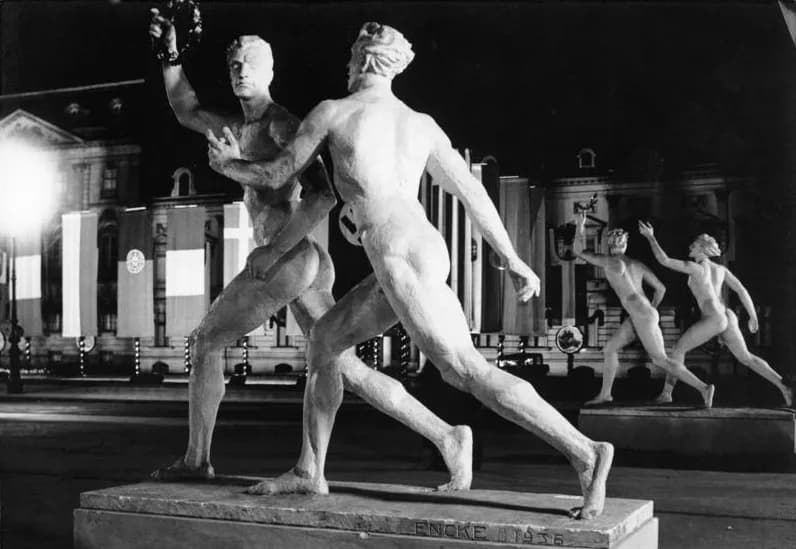
The Third Reich, led by Adolf Hitler from 1933 to 1945, plunged the world into World War II and perpetrated the Holocaust, causing tens of millions of deaths before its unconditional surrender in May 1945. Born of Hitler's appointment as chancellor on 30 January 1933, the regime dismantled the Weimar Republic within months and turned Germany into a one-party state.
Soviet Union
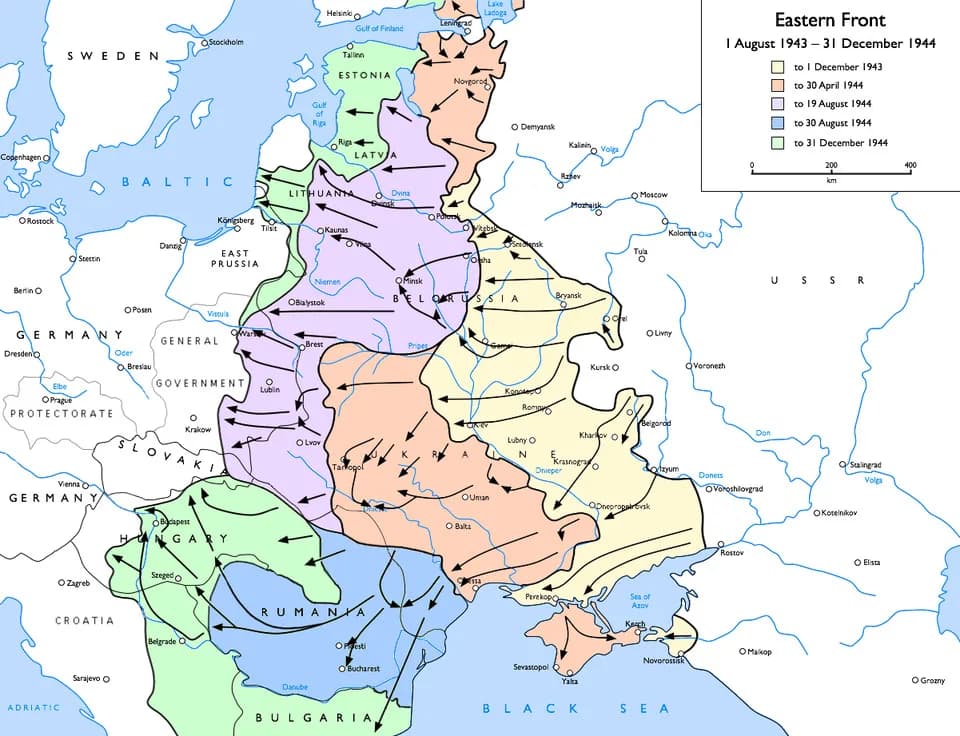
The Union of Soviet Socialist Republics, led by Joseph Stalin during World War II, played a decisive role in the defeat of Nazi Germany at the cost of 27 million dead, the heaviest losses of the entire conflict. Its factories were moved beyond the Urals in 1941 to keep producing.
United States
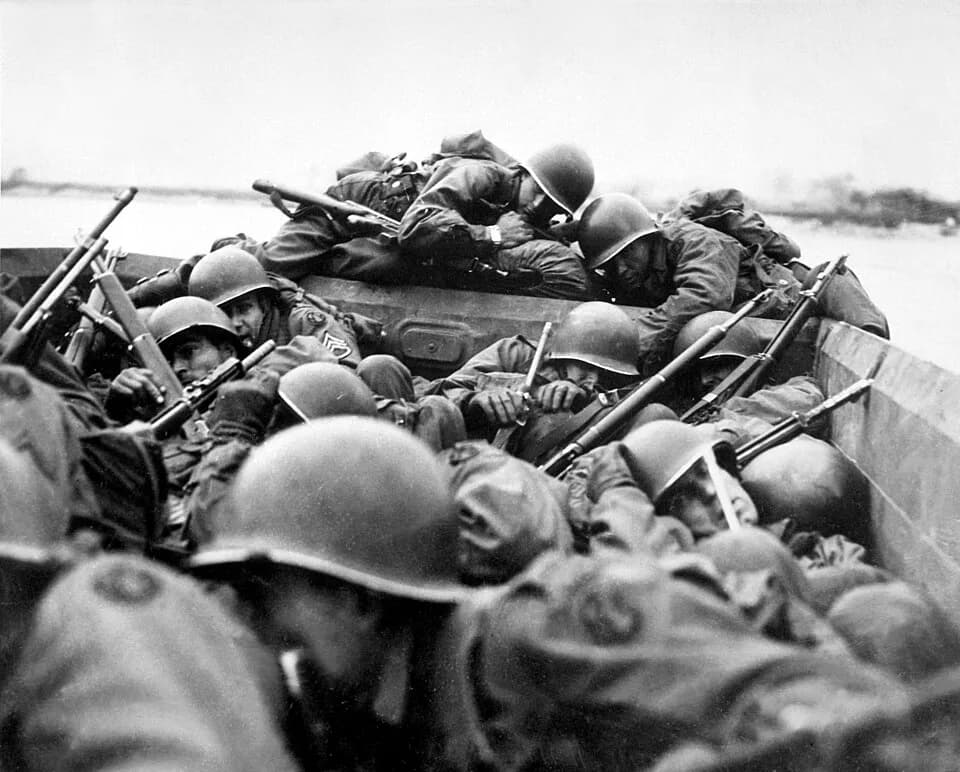
The United States, drawn into the war after the attack on Pearl Harbor on 7 December 1941, became the arsenal of democracy and the decisive industrial and military power that helped the Allies to victory on both theatres of operations. Its war production alone exceeded that of all the Axis powers combined.
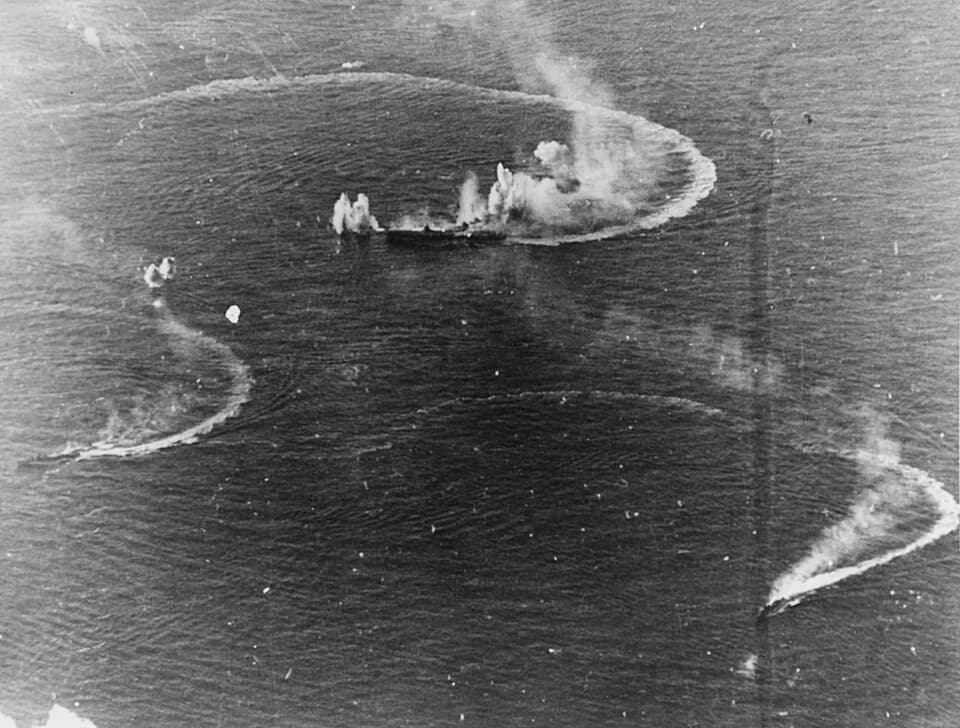
Empire of Japan
The Empire of Japan, led by Emperor Hirohito and the militarists in power, waged a war of expansion across Asia and the Pacific from 1937 to 1945, before surrendering after the atomic bombings of Hiroshima and Nagasaki in August 1945. Its Co-Prosperity Sphere project presented that conquest as a liberation of Asia from Western colonial powers.
