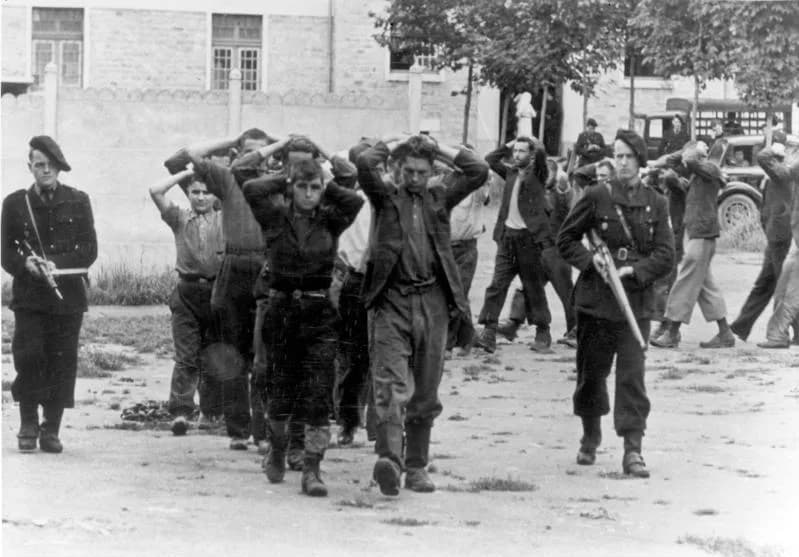
The French Resistance was a set of clandestine networks, movements and individuals who fought the Nazi occupation and the Vichy regime from 1940 to 1944, playing a crucial part in intelligence, sabotage and the liberation of France. Its unification under Jean Moulin in 1943 gave it a single command.
The origins of the French Resistance emerged from the shock and humiliation of France's rapid defeat and occupation in June 1940, when the Third Republic collapsed and Marshal Pétain established the collaborationist Vichy regime. The armistice divided France into an occupied northern zone under direct German military administration and a nominally independent southern zone governed from Vichy, though in practice Vichy cooperated extensively with the occupiers. For most French citizens, the immediate priority was survival under occupation, and active resistance was initially the choice of a tiny and courageous minority. The first act of resistance is often dated to June 18, 1940, when General Charles de Gaulle, a relatively junior and little-known brigadier general, broadcast his famous appeal from London via the BBC, calling on French soldiers and citizens to continue the fight against Germany. This Appel du 18 Juin became the founding act of the Free French movement, though initially only a few thousand people rallied to de Gaulle's cause. Within occupied France, early resistance took varied and often spontaneous forms. Some individuals helped Allied soldiers and airmen evade capture and escape through networks that eventually stretched across France and into Spain or Switzerland. Others distributed clandestine newspapers and tracts, countering German propaganda and the defeatism of the Vichy regime. Small groups began collecting intelligence on German troop movements, fortifications, and military installations, passing information to London through clandestine radio operators. The Communist Party, initially constrained by the Nazi-Soviet Pact of 1939, became a major resistance force after Germany invaded the Soviet Union in June 1941, bringing organizational discipline and a willingness for armed action that dramatically escalated the resistance struggle. The British Special Operations Executive, established by Churchill with the directive to set Europe ablaze, began sending agents into France from 1941, providing training, weapons, explosives, and radio equipment to nascent resistance groups. The various strands of resistance remained fragmented and often ideologically divided during these early years, ranging from conservative nationalists and Gaullists to communists, socialists, trade unionists, and religious figures, united only by their opposition to the German occupation.
The principles of the French Resistance evolved from improvised acts of defiance into a sophisticated clandestine warfare doctrine that combined intelligence gathering, sabotage, propaganda, escape networks, and eventually armed guerrilla combat. The fundamental organizational principle was compartmentalization, or cloisonnement, essential for survival in an environment of pervasive German surveillance and the ever-present threat of infiltration and betrayal. Resistance networks were organized in cells of three to five members, where each member knew only their immediate contacts, so that if captured and tortured, they could reveal only a small fragment of the organization. This cellular structure, while vital for security, also made coordination between different groups extremely difficult. The intelligence principle was among the most important contributions of the Resistance. Networks such as Alliance, Confrérie Notre-Dame, and Jade-Amicol provided London with detailed intelligence on German military dispositions, coastal fortifications, radar installations, V-weapon sites, and industrial production. This human intelligence complemented the signals intelligence from Bletchley Park and was often the only source for information that could not be obtained through aerial reconnaissance or code-breaking. The sabotage principle targeted German military effectiveness through the systematic destruction of infrastructure. Rail networks were a primary target, as disrupting train movements hindered the transport of troops, equipment, and supplies. Resistance saboteurs became increasingly skilled at destroying locomotives, cutting rail lines, and derailing trains using techniques taught by SOE instructors. Industrial sabotage targeted factories producing materials for the German war effort, with workers deliberately introducing defects, slowing production, or destroying machinery. The propaganda principle sought to maintain French morale and undermine collaboration through clandestine publications. Newspapers such as Combat, Défense de la France, Libération, and Témoignage chrétien reached millions of readers and helped sustain hope during the darkest years of the occupation. The armed action principle, particularly championed by the Francs-Tireurs et Partisans controlled by the Communist Party, involved direct attacks on German personnel and installations, though this tactic was controversial because of the savage reprisals the Germans inflicted on civilian populations in retaliation.
The application of resistance activities in France evolved through distinct phases that reflected both the changing military situation and the growing organization and capability of the resistance movements. During 1940-1941, resistance was largely limited to intelligence gathering, escape networks, and clandestine publishing, as the movements lacked the weapons, training, and organization for more ambitious operations. Jean Moulin, a former prefect who had escaped to London, was sent back to France by de Gaulle in January 1942 with the mission of unifying the fractious resistance movements under a single authority. Moulin's extraordinary diplomatic skills and personal courage enabled him to bring together the three major resistance movements of the southern zone, Combat led by Henri Frenay, Libération-Sud led by Emmanuel d'Astier de la Vigerie, and Franc-Tireur, into the Mouvements Unis de la Résistance in January 1943. His greatest achievement was the creation of the Conseil National de la Résistance on May 27, 1943, which united all major resistance organizations, including both Gaullist and Communist groups, under a single coordinating body. Moulin's arrest by Klaus Barbie's Gestapo in Caluire on June 21, 1943, and his subsequent death under torture, was a devastating blow, but the organizational structures he had created survived. The British SOE played a crucial role in arming and training the Resistance, particularly through its F Section, which ran independent networks, and RF Section, which worked with the Free French. SOE agents, including remarkable women like Violette Szabo, Noor Inayat Khan, and Pearl Witherington, parachuted into France to organize reception committees for arms drops, train sabotage teams, and coordinate with London. By 1944, the SOE had delivered thousands of tons of weapons and explosives to the Resistance. The climax of resistance operations came with D-Day on June 6, 1944. Plan Vert targeted railway lines, with resistance saboteurs cutting rail connections throughout France to prevent German reinforcements from reaching Normandy. Plan Violet targeted telecommunications, severing telephone and telegraph cables to force the Germans to use radio communications that could be intercepted. Plan Tortue targeted road movements with ambushes and obstacles. The FFI, Forces Françaises de l'Intérieur, under General Koenig's nominal command, launched widespread attacks that tied down German divisions far from the Normandy beachhead. In Brittany, resistance forces liberated much of the peninsula before American troops arrived. In the Vercors massif, a premature uprising led to a tragic German assault that killed hundreds of maquisards and civilians.
The results of the French Resistance were substantial and multifaceted, encompassing military, political, intelligence, and moral dimensions that profoundly influenced the course of the war and the shape of postwar France. On the military front, the Resistance's contribution to the Allied liberation of France was significant, though its exact impact remains debated among historians. General Eisenhower famously stated that the Resistance was worth fifteen divisions to the Allied cause, a figure that, while difficult to verify precisely, reflects the genuine military value of the resistance contribution. The D-Day sabotage operations were particularly effective, with Plan Vert achieving over 950 rail cuts in the first weeks after the invasion, severely disrupting German reinforcement movements. The 2nd SS Panzer Division Das Reich, ordered from Toulouse to Normandy after D-Day, took seventeen days to cover a distance that should have required three, constantly harassed by resistance ambushes and forced to detour around sabotaged bridges and rail lines. The intelligence contribution was arguably even more valuable than the military one. Resistance networks provided detailed maps of the Atlantic Wall fortifications that were essential to D-Day planning. The Centurie network mapped every German defensive position along the Normandy coast, information that was parachuted to London in a miniaturized form. Resistance agents reported on V-weapon launch sites, enabling RAF bombing raids that significantly reduced the impact of the V-1 and V-2 campaigns against Britain. The human cost of the Resistance was enormous. An estimated 90,000 résistants were killed during the occupation, either in combat, executed by the Germans, or dying in concentration camps. Tens of thousands more were tortured, imprisoned, or deported. The German reprisals against civilian populations were savage, including the massacre at Oradour-sur-Glane on June 10, 1944, where the SS murdered 642 men, women, and children. Politically, the Resistance was crucial in legitimizing de Gaulle's claim to represent France and in ensuring that the country was treated as a liberated ally rather than a defeated enemy. The Conseil National de la Résistance's program became the blueprint for postwar French social policy, including nationalization of key industries, social security, and women's suffrage. The Resistance also played a vital role in the liberation of Paris in August 1944, where the FFI uprising preceded the arrival of General Leclerc's 2nd Armored Division, ensuring that Paris was liberated by French forces.
The analysis of the French Resistance reveals a phenomenon of extraordinary complexity that defies simple characterization and continues to generate historical debate decades after the events. On the military level, the Resistance demonstrated both the potential and the limitations of irregular warfare operating in conjunction with conventional military forces. The Resistance was most effective when it operated in support of Allied conventional operations, providing intelligence, conducting targeted sabotage, and disrupting enemy communications and logistics. It was least effective, and most costly, when it attempted to engage German regular forces in conventional combat, as the tragic examples of the Vercors and Glières plateaus demonstrated. The maquis, rural guerrilla bands that grew enormously after the introduction of the Service du Travail Obligatoire in 1943, which drove thousands of young men into the countryside to avoid forced labor in Germany, were often poorly armed and trained, and suffered heavy casualties when they attempted to hold fixed positions against German counterinsurgency operations. The political dimension of the Resistance was perhaps its most significant long-term legacy. The Resistance provided the foundation myth of postwar France, the idea that the French nation had collectively resisted the occupation, which served to heal the deep wounds of collaboration and defeat. This myth, carefully cultivated by de Gaulle, was essential for national reconciliation but also obscured the uncomfortable reality that active resistance was the choice of a minority, while most French people adapted to occupation in various degrees of accommodation and passive compliance. The Vichy regime actively collaborated with the German occupation, including participation in the deportation of Jews, and many French citizens denounced their neighbors to the German authorities. The historiography of the Resistance has evolved significantly since 1945, from the heroic narrative of the immediate postwar period through the shattering revelations of Marcel Ophuls's documentary The Sorrow and the Pity in 1971 and Robert Paxton's groundbreaking study Vichy France in 1972, to a more nuanced understanding that acknowledges both the genuine heroism of the resisters and the widespread collaboration that coexisted with it. The SOE's role in supporting the Resistance also raises important questions about the ethics and effectiveness of supporting insurgencies, questions that remained relevant throughout the Cold War and into the modern era of asymmetric warfare. The French Resistance ultimately demonstrated that occupied peoples can make a significant contribution to their own liberation when supported by external powers and integrated into a broader military strategy, a lesson that has informed liberation movements and counterinsurgency doctrines ever since.
General Charles de Gaulle's Appeal of June 18, 1940, broadcast from London via the BBC, is considered the founding act of the French Resistance. This gesture by de Gaulle — a relatively unknown brigadier general at the time — called on French soldiers and citizens to continue fighting against the Nazi occupation after the armistice and the establishment of the Vichy regime.
Jean Moulin, a former prefect sent to France by de Gaulle in January 1942, unified the fragmented resistance movements. He created the Conseil National de la Résistance on May 27, 1943, bringing Gaullists and Communists together under a single authority. Arrested by Klaus Barbie's Gestapo at Caluire on June 21, 1943, he died under torture without revealing his secrets, becoming the emblematic martyr of the French Resistance.
On D-Day, June 6, 1944, the French Resistance executed three coordinated plans: Plan Vert achieved over 950 rail cuts to block German reinforcements, Plan Violet severed telecommunications cables, and Plan Tortue organized road ambushes. The 2nd SS Panzer Division Das Reich took seventeen days to reach Normandy from Toulouse instead of three, constantly harassed by saboteurs.
Information cross-checked against Wikipedia and reference historical works.
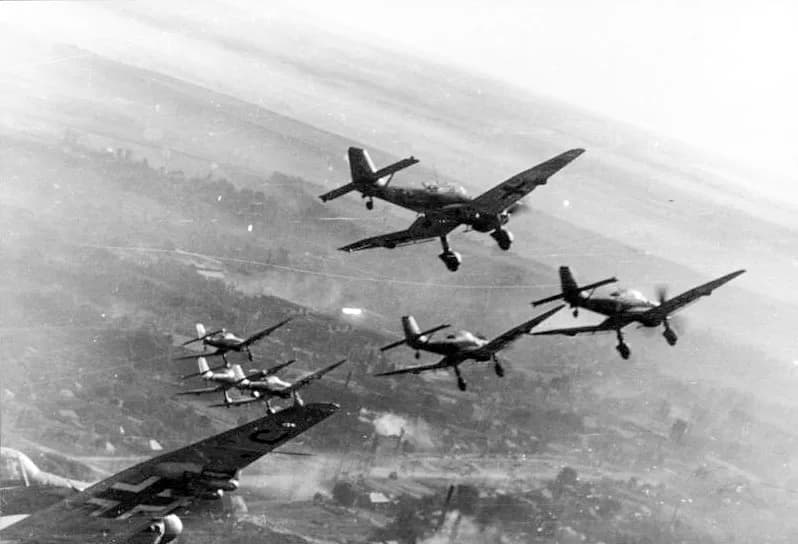
Blitzkrieg
Blitzkrieg, or lightning war, is a German military doctrine combining armour, aircraft and motorised infantry to break through enemy lines and rapidly encircle opposing forces. Applied in Poland in 1939 and then in France in 1940, it brought down a country in six weeks and reshaped modern warfare before stalling on the Eastern Front.
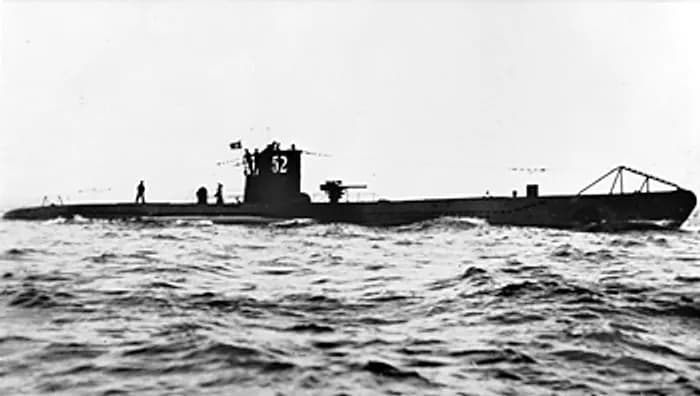
Submarine Warfare
The German submarine war, waged by the Kriegsmarine's U-boats, aimed to cut Britain's transatlantic supply lines, threatening the island's very survival during the Battle of the Atlantic. The reversal came in 1943, with the breaking of Enigma, shipborne radar and long-range escort vessels.
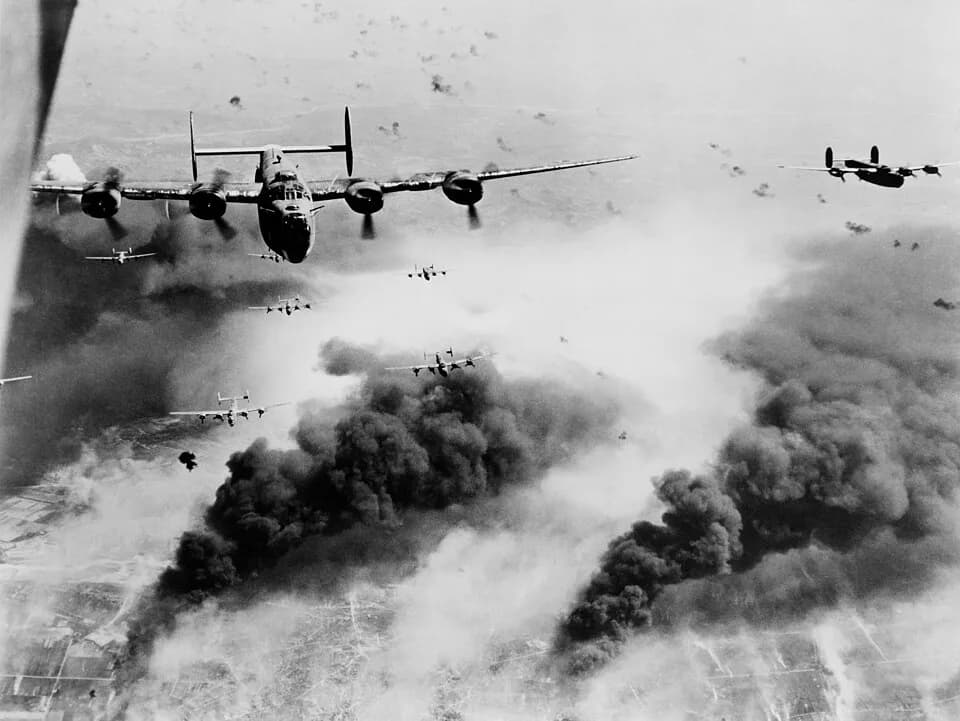
Strategic Bombing
Allied strategic bombing aimed to destroy the industrial and military apparatus of Nazi Germany through massive air raids, mixing American daylight precision bombing with British night-time area bombing. Waged from 1940 to 1945, it diverted a considerable share of German production toward air defence, at the cost of heavy civilian casualties.
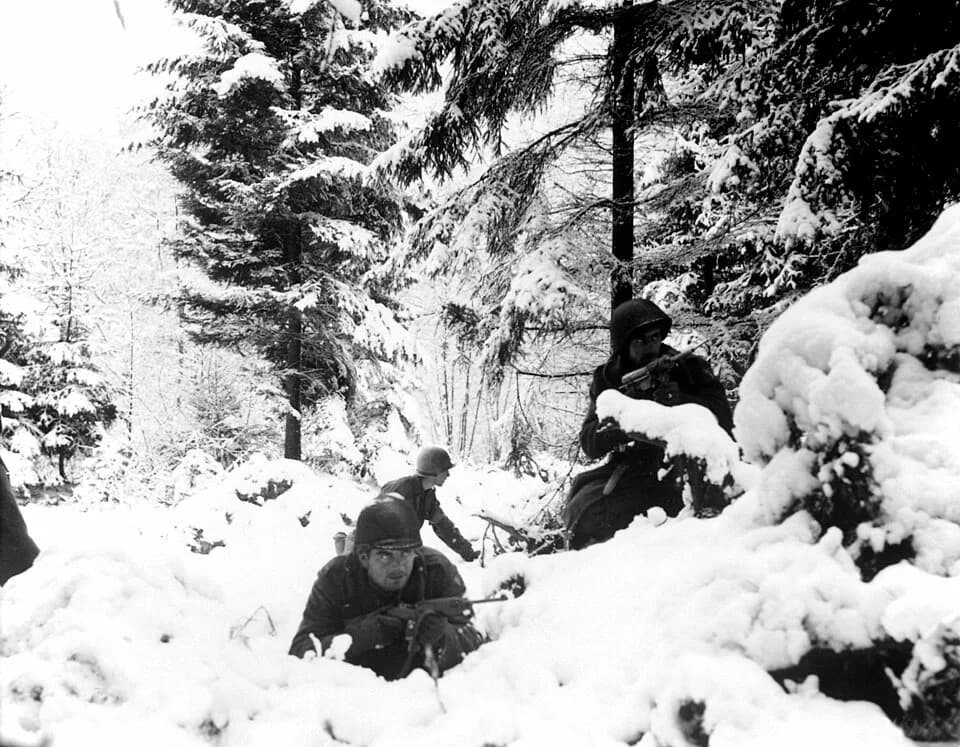
Defense in Depth
The Soviet defence in depth organised successive defensive zones across tens of kilometres, in order to absorb German armoured breakthroughs, exhaust the attacker and set up decisive counter-offensives. Applied at Kursk in 1943, it rested on minefield belts, anti-tank ditches and dug-in artillery, prepared months before the assault.
