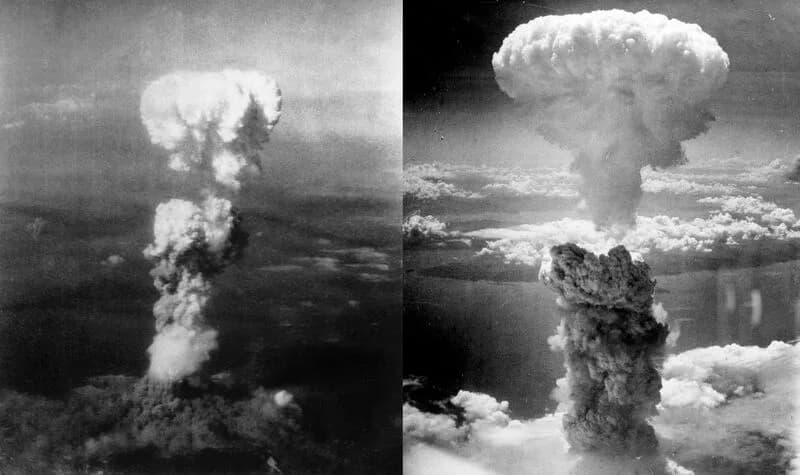
The Manhattan Project was the secret American program that developed the first nuclear weapons during World War II. Mobilizing over 125,000 people and costing nearly $2 billion, it culminated in the atomic bombings of Hiroshima and Nagasaki in August 1945, precipitating Japan's surrender and ushering in the nuclear age.
The Manhattan Project traces its origins to the letter Albert Einstein sent to President Roosevelt in August 1939, warning of the possibility that Nazi Germany could develop an atomic bomb from the recently discovered fission of uranium. Roosevelt first created the Advisory Committee on Uranium, then the project accelerated dramatically after the United States entered the war in December 1941. In June 1942, the Army Corps of Engineers took control of the program under the code name 'Manhattan Engineer District.' General Leslie Groves, a relentless military engineer who had overseen the construction of the Pentagon, was appointed military director in September 1942. His first decisive act was to recruit J. Robert Oppenheimer, a brilliant but politically suspect theoretical physicist, as scientific director. This unlikely duo — the pragmatic general and the intellectual scientist — formed the core of the most secret and ambitious project in military history.
The secret laboratory at Los Alamos, New Mexico, assembled the greatest scientific minds of the century: Enrico Fermi, Niels Bohr, Richard Feynman, Hans Bethe, and dozens of other world-renowned physicists. Two parallel paths were pursued to produce fissile material: enrichment of uranium-235 at Oak Ridge, Tennessee, using costly and energy-intensive isotope separation processes, and production of plutonium-239 in the nuclear reactors at Hanford, Washington State. The Oak Ridge facility alone employed 75,000 people, most of whom were unaware of the nature of their work. At Los Alamos, Oppenheimer directed the design of two types of bombs: 'Little Boy,' a uranium bomb using the gun-type principle, and 'Fat Man,' a plutonium bomb using implosion. Secrecy was maintained with extraordinary rigor: even Vice President Harry Truman was unaware of the project's existence until he assumed the presidency in April 1945.
The Trinity test, on July 16, 1945, in the New Mexico desert, marked the first nuclear test in history. The plutonium bomb explosion produced a force equivalent to 21,000 tons of TNT, vaporizing the 100-foot steel tower and creating a crater of radioactive glass. Oppenheimer, witnessing the blast, quoted the Bhagavad Gita: 'Now I am become Death, the destroyer of worlds.' Three weeks later, on August 6, 1945, the B-29 bomber Enola Gay dropped 'Little Boy' on Hiroshima, instantly killing approximately 80,000 people and wounding 70,000 more. On August 9, 'Fat Man' was dropped on Nagasaki, killing approximately 40,000 people. In total, the two bombings caused between 129,000 and 226,000 deaths, including those from burns and radiation in the following months. Japan surrendered on August 15, 1945, ending World War II. President Truman maintained that the bombs saved the hundreds of thousands of lives that a ground invasion of Japan would have cost.
The effectiveness of the Manhattan Project can be evaluated from multiple angles. Militarily, the atomic bombings achieved their immediate objective: forcing Japan's surrender without a ground invasion. However, debate over their necessity persists. Some historians argue that Japan was already on the verge of surrendering due to the naval blockade, conventional bombing, and the Soviet declaration of war on August 8, 1945. Others maintain that Japanese militarists would never have accepted unconditional surrender without the atomic shock. Scientifically, the project demonstrated that a massive mobilization of intellectual and industrial resources could solve problems of unprecedented complexity in record time. The $2 billion invested (approximately $30 billion in today's dollars) represented the most expensive research and development program of the era. Organizationally, the simultaneous management of dozens of secret sites across the country constituted a remarkable logistical feat that influenced the management of large industrial and military projects for decades to come.
The Manhattan Project's legacy is profound and ambivalent. It inaugurated the nuclear arms race that defined the Cold War: the Soviet Union tested its first atomic bomb in 1949, partly thanks to the espionage of Klaus Fuchs and the Rosenbergs within the project. The hydrogen bomb followed in 1952 for the Americans and 1953 for the Soviets, multiplying destructive power a thousandfold. The doctrine of Mutually Assured Destruction (MAD) maintained a precarious peace for four decades. Oppenheimer, tormented by the moral consequences of his creation, opposed the hydrogen bomb and saw his security clearance revoked in 1954 during controversial hearings fueled by McCarthyism. The Manhattan Project also transformed the relationship between science and government: massive government funding of scientific research became the norm. The project sites — Los Alamos, Oak Ridge, Hanford — continue to play central roles in the American nuclear complex. The Non-Proliferation Treaty of 1968 attempted to limit the spread of nuclear weapons, but nine countries possess them today, a direct legacy of the genius unleashed in the New Mexico desert.
The Manhattan Project mobilized over 125,000 people across dozens of secret sites throughout the United States, including the Los Alamos laboratories (New Mexico), the uranium enrichment plant at Oak Ridge (Tennessee), and the plutonium reactors at Hanford (Washington). The total cost reached nearly $2 billion at the time, approximately $30 billion in today's dollars.
The Trinity test was the first nuclear test in history, conducted on July 16, 1945, in the New Mexico desert. The plutonium bomb exploded with a force equivalent to 21,000 tons of TNT, vaporizing the 100-foot steel tower and creating a crater of radioactive glass. J. Robert Oppenheimer, the project's scientific director, quoted the Bhagavad Gita: 'Now I am become Death, the destroyer of worlds.'
On August 6, 1945, the 'Little Boy' bomb struck Hiroshima, instantly killing approximately 80,000 people and wounding 70,000 more. On August 9, 'Fat Man' was dropped on Nagasaki, killing approximately 40,000 people. In total, both bombings caused between 129,000 and 226,000 deaths, including victims of burns and radiation in the following months. Japan surrendered on August 15, 1945.
Information cross-checked against Wikipedia and reference historical works.
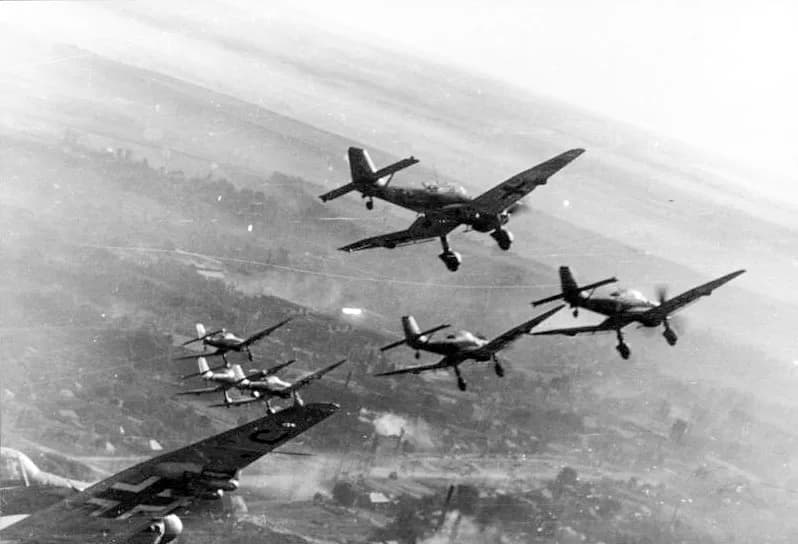
Blitzkrieg
Blitzkrieg, or lightning war, is a German military doctrine combining armour, aircraft and motorised infantry to break through enemy lines and rapidly encircle opposing forces. Applied in Poland in 1939 and then in France in 1940, it brought down a country in six weeks and reshaped modern warfare before stalling on the Eastern Front.
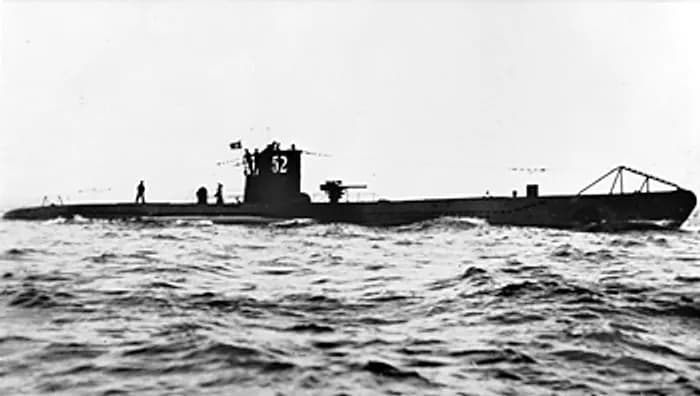
Submarine Warfare
The German submarine war, waged by the Kriegsmarine's U-boats, aimed to cut Britain's transatlantic supply lines, threatening the island's very survival during the Battle of the Atlantic. The reversal came in 1943, with the breaking of Enigma, shipborne radar and long-range escort vessels.
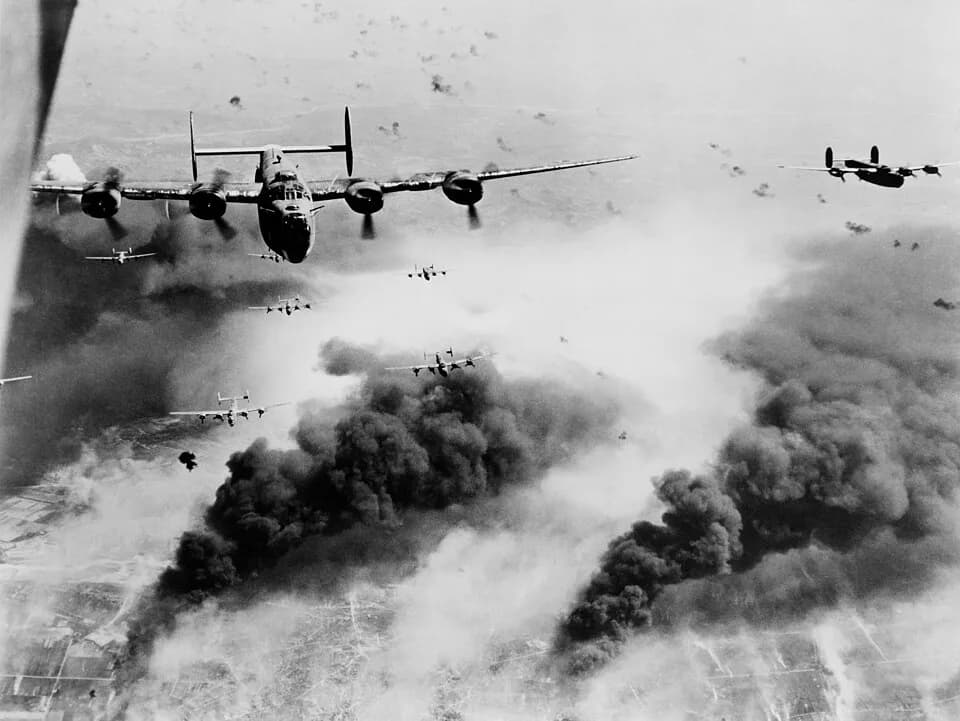
Strategic Bombing
Allied strategic bombing aimed to destroy the industrial and military apparatus of Nazi Germany through massive air raids, mixing American daylight precision bombing with British night-time area bombing. Waged from 1940 to 1945, it diverted a considerable share of German production toward air defence, at the cost of heavy civilian casualties.
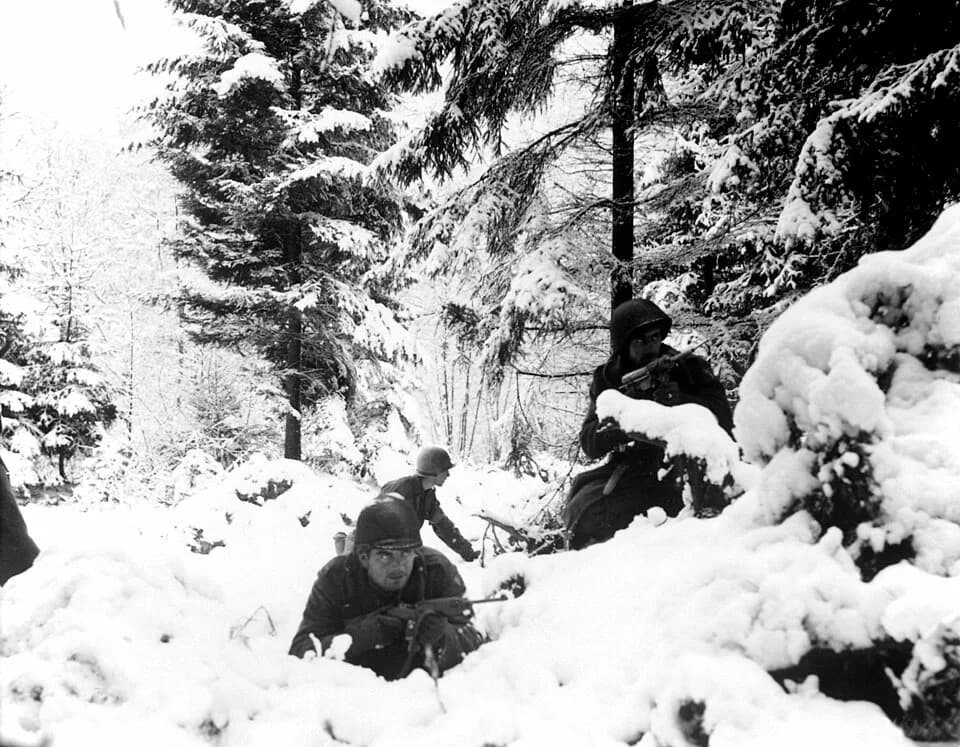
Defense in Depth
The Soviet defence in depth organised successive defensive zones across tens of kilometres, in order to absorb German armoured breakthroughs, exhaust the attacker and set up decisive counter-offensives. Applied at Kursk in 1943, it rested on minefield belts, anti-tank ditches and dug-in artillery, prepared months before the assault.
