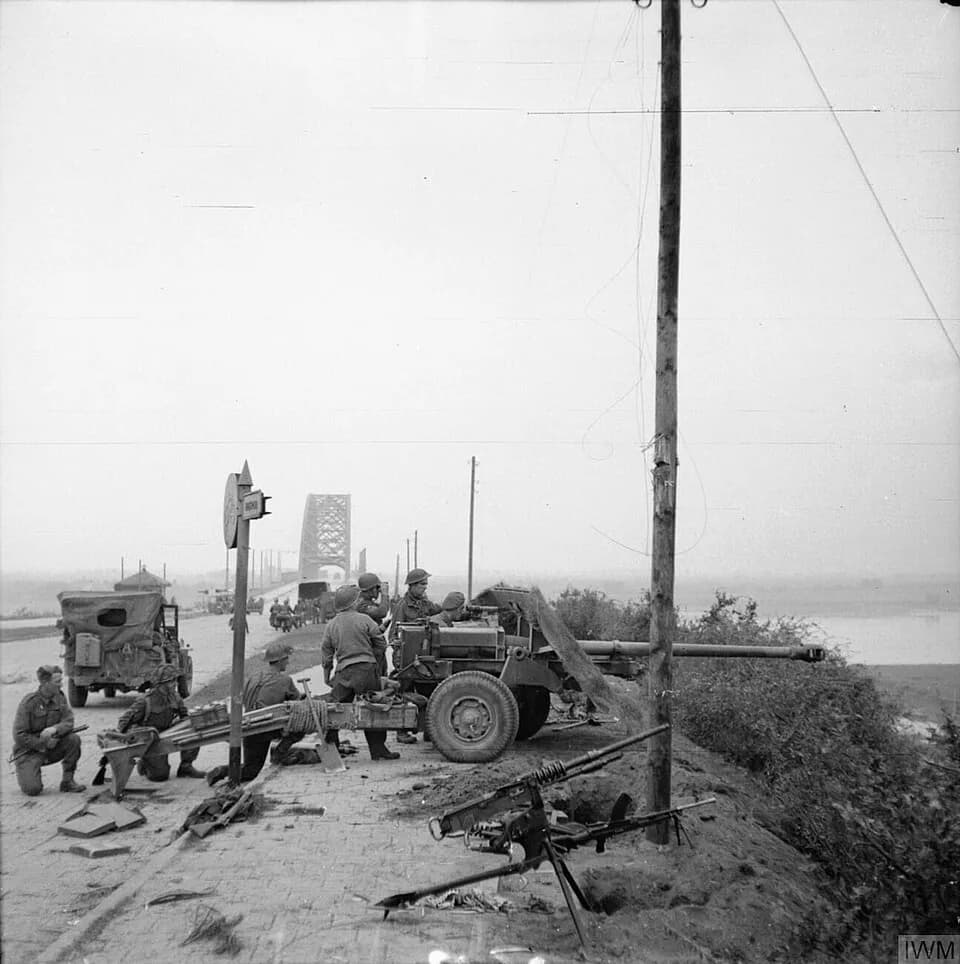
Operation Market Garden was the largest airborne operation in history, aiming to capture a series of bridges in the Netherlands to allow Allied armor to bypass the Siegfried Line and invade Germany. Its failure at Arnhem prolonged the war by several months.
Market Garden was conceived by Field Marshal Montgomery in September 1944, during the euphoria following the liberation of France and Belgium. The plan was audacious: three airborne divisions (the American 101st Airborne, the American 82nd Airborne, and the British 1st Airborne) were to seize bridges over Dutch canals and rivers — this was the 'Market' component. Simultaneously, the British XXX Corps under General Horrocks was to race 100 kilometers along a single narrow road to link up with the bridgeheads — this was the 'Garden' component. The ultimate objective was the bridge at Arnhem over the Lower Rhine, whose capture would open the way to the North German Plain and the Ruhr industrial region. The plan depended on tight timing: the armor had to reach Arnhem within 48 hours. Criticisms were numerous before launch: Major Brian Urquhart, the intelligence chief of the 1st Airborne, presented reconnaissance photos showing German armor near Arnhem, but he was relieved of his duties and sent on 'medical rest.' General Sosabowski, commanding the Polish Parachute Brigade, also expressed serious doubts about the operation's feasibility.
On September 17, 1944, 35,000 paratroopers and glider troops were dropped into the Netherlands in the largest airborne operation ever mounted. The 101st Airborne captured most of its objectives around Eindhoven, but the bridge at Son was destroyed by the Germans. The 82nd Airborne seized the bridge at Grave over the Meuse but failed to take the Nijmegen bridge on the first day — a crucial delay. At Arnhem, the British 1st Airborne landed 13 kilometers from the bridge, as closer drop zones were deemed unsuitable. Only the 2nd Battalion under Lieutenant Colonel John Frost reached the bridge and held on heroically. Unfortunately, the ignored intelligence proved correct: the 9th and 10th SS Panzer Divisions were resting near Arnhem. The lightly armed paratroopers found themselves fighting against armor. XXX Corps progressed far more slowly than planned along the single road, nicknamed 'Hell's Highway,' which was constantly attacked on its flanks. Airborne reinforcements were delayed by poor weather, further compounding the difficulties faced by the isolated British paratroopers at Arnhem.
The Allied forces committed three elite airborne divisions: the American 101st Airborne ('Screaming Eagles') under General Taylor, the American 82nd Airborne ('All American') under General Gavin, and the British 1st Airborne Division ('Red Devils') under General Urquhart, reinforced by the 1st Polish Independent Parachute Brigade under General Sosabowski. On the ground, XXX Corps fielded the Guards Armoured Division at the spearhead, followed by the 43rd and 50th Infantry Divisions. In total, approximately 41,000 paratroopers and glider troops were committed along with 5,000 vehicles and 1,000 artillery pieces on the ground. The German forces, under the command of Field Marshal Model — whose headquarters happened to be located at Oosterbeek right next to the drop zones — reacted with remarkable speed. SS-Obergruppenfuhrer Bittrich commanded the remnants of the 9th and 10th SS Panzer Divisions. Improvised Kampfgruppen, mixing SS troops, Luftwaffe soldiers, and raw recruits, effectively blocked the bridgeheads. Allied numerical and material superiority was negated by the terrain and determined German resistance.
Market Garden was a strategic failure despite partial successes. The bridges at Eindhoven and Nijmegen were eventually captured — the Nijmegen bridge on September 20 in a heroic assault by the 82nd Airborne using assault boats — but the Arnhem bridge, 'a bridge too far,' remained in German hands. Colonel Frost and his 740 men held the northern end of the bridge for four days and three nights against overwhelming armored forces before being overrun. The 1st Airborne, encircled in the Oosterbeek perimeter, was evacuated on the night of September 25-26 in Operation Berlin: only 2,163 men out of 10,000 committed crossed back over the Rhine. Total Allied casualties amounted to approximately 17,000 (killed, wounded, and prisoners), including 7,578 from the 1st Airborne alone. The Germans lost approximately 3,300 men. The salient that was won — the 'corridor' — was maintained but led nowhere without the Arnhem bridge, rendering the entire operation a costly strategic setback.
The failure of Market Garden had major strategic consequences. The war, which many had hoped would end before Christmas 1944, was prolonged by eight months. The Rhine was not crossed until March 1945. The Netherlands north of the rivers remained occupied, and the 'Hongerwinter' (Hunger Winter) of 1944-1945 killed 20,000 Dutch civilians. The operation exposed the limits of an overly ambitious approach and highlighted the tension between Montgomery, who wanted a single thrust to the north, and Eisenhower, who preferred a broad-front strategy. The debate over responsibility for the failure endures: Montgomery is criticized for excessive optimism, intelligence for ignoring the presence of SS armor, and XXX Corps for its slowness. Cornelius Ryan's book 'A Bridge Too Far' (1974) and Richard Attenborough's film of the same name (1977) immortalized the operation in popular culture. Market Garden remains a classic case study in military academies worldwide on the dangers of optimistic planning and underestimation of the enemy.
Operation Market Garden failed at Arnhem due to several combined factors: intelligence showing the 9th and 10th SS Panzer Divisions was ignored, the British 1st Airborne landed 13 km from the bridge, XXX Corps advanced too slowly along 'Hell's Highway,' and bad weather delayed reinforcements. Colonel Frost and 740 men held the bridge for four days before being overrun. Only 2,163 of the 10,000 committed paratroopers crossed back over the Rhine.
Operation Market Garden of September 17-25, 1944 committed three divisions: the American 101st Airborne ('Screaming Eagles,' General Taylor), the American 82nd Airborne (General Gavin), and the British 1st Airborne Division (General Urquhart), reinforced by the Polish 1st Independent Parachute Brigade (General Sosabowski). Total Allied casualties reached approximately 17,000, including 7,578 from the British 1st Airborne alone.
Market Garden's failure prolonged the war by eight months, leaving the Netherlands north of the rivers under German occupation. The 'Hongerwinter' (Hunger Winter) of 1944-1945 killed approximately 20,000 Dutch civilians, victims of German reprisals and the blockade of supplies. The Rhine was finally crossed only in March 1945, while Paris had already been liberated since August 1944.
Information cross-checked against Wikipedia and reference historical works.
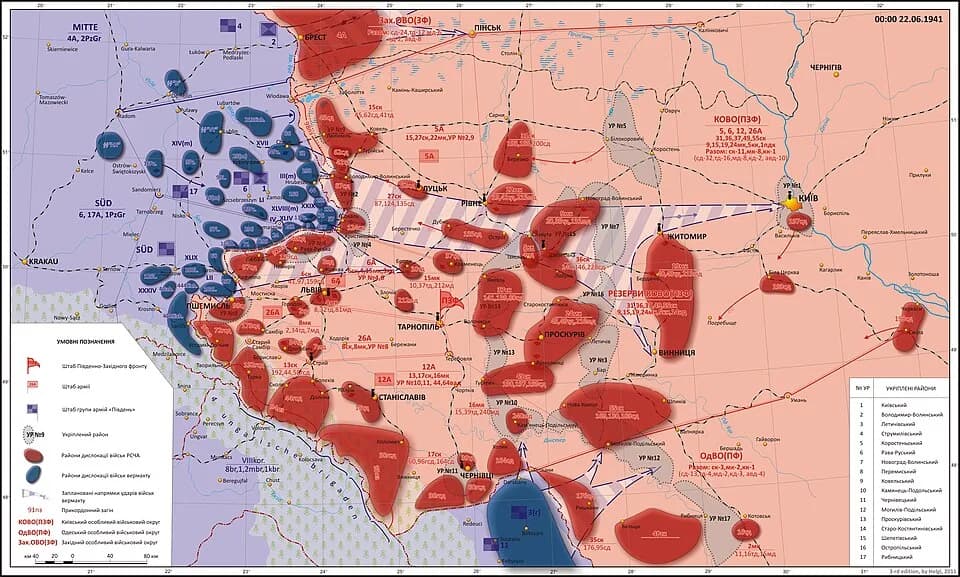
Operation Barbarossa
Operation Barbarossa was Nazi Germany's invasion of the Soviet Union, the largest military operation in history. With 3.8 million soldiers engaged, it opened the Eastern Front and was Hitler's fatal strategic error that led to the destruction of the Third Reich.
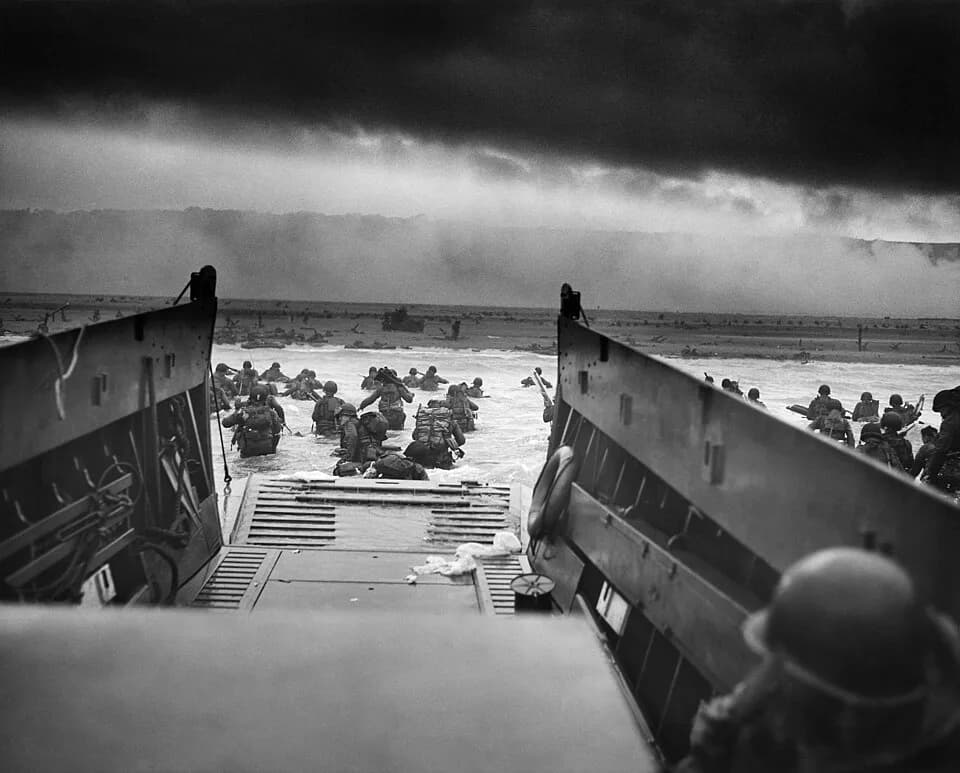
Operation Overlord
Operation Overlord was the code name for the Battle of Normandy, the largest amphibious operation in history. From the D-Day landings to the liberation of Paris, this 80-day campaign opened the second front in Europe and marked the beginning of the end for Nazi Germany.
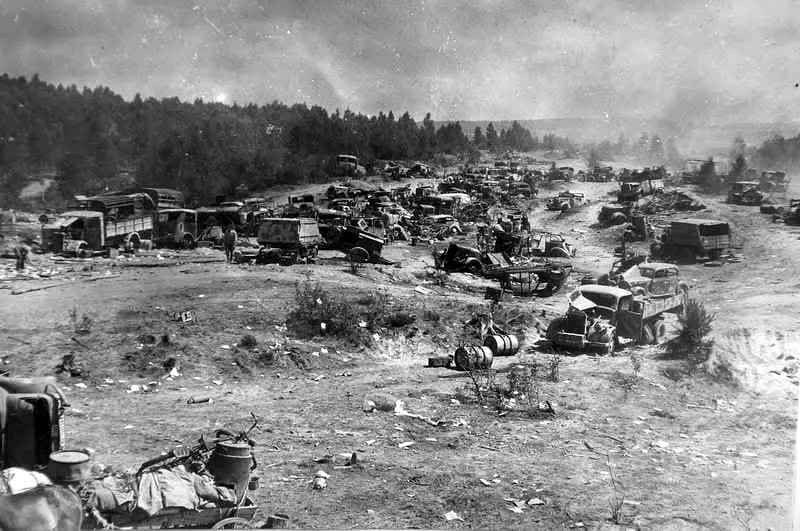
Operation Bagration
Operation Bagration was the Soviet offensive that destroyed the German Army Group Center in Belarus during the summer of 1944. More devastating than Stalingrad, it annihilated 28 German divisions and advanced 600 km in two months, liberating Belarus and reaching the gates of Warsaw.
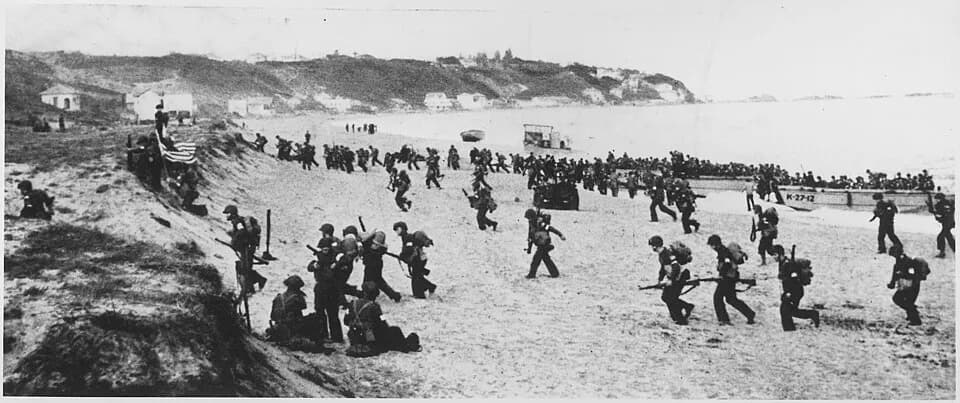
Operation Torch
Operation Torch was the Allied landing in French North Africa on November 8, 1942, the first major engagement of American forces against the Axis. This operation marked the beginning of the liberation of the Mediterranean basin and forged the Anglo-American alliance that would lead to victory in Europe.
