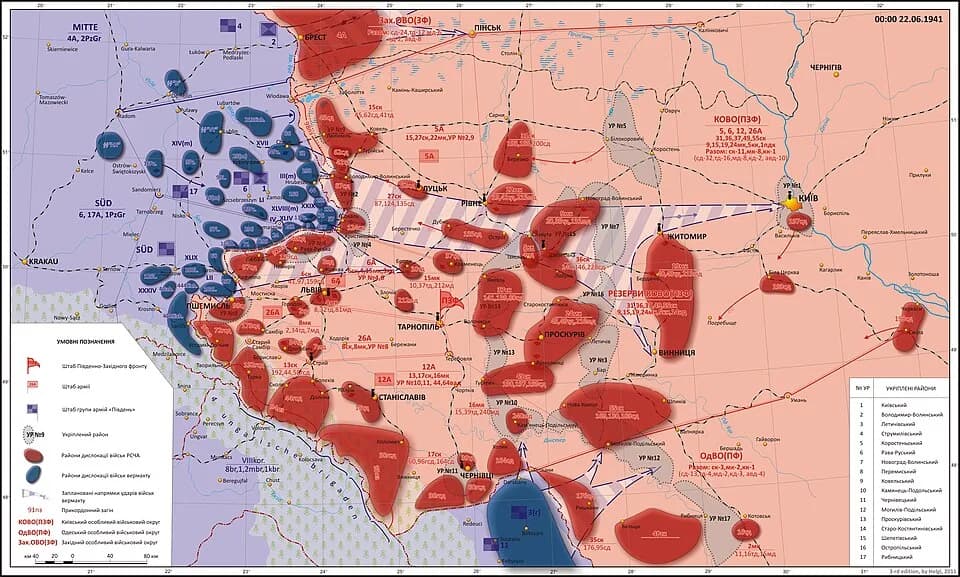
Operation Barbarossa was Nazi Germany's invasion of the Soviet Union, the largest military operation in history. With 3.8 million soldiers engaged, it opened the Eastern Front and was Hitler's fatal strategic error that led to the destruction of the Third Reich.
Hitler first envisioned the invasion of the USSR as early as July 1940, immediately after the fall of France. Directive No. 21, signed on December 18, 1940, ordered preparations for the operation named after Emperor Frederick Barbarossa. The plan called for three army groups: Army Group North (von Leeb) targeting Leningrad, Army Group Center (von Bock) targeting Moscow, and Army Group South (von Rundstedt) targeting Ukraine and the Caucasus. The strategy relied on destroying the Red Army within the first weeks through massive encirclement battles, before the USSR could mobilize its deep reserves. Hitler and his generals estimated the campaign would last six to ten weeks. This confidence was based on the Red Army's disastrous performance during the Winter War against Finland and the devastating effects of Stalin's purges, which had eliminated the majority of the Soviet high command. The invasion was delayed five weeks, from May 15 to June 22, due to the Balkans campaign — a delay whose consequences historians continue to debate.
On June 22, 1941, at 3:15 AM, 3.8 million Axis soldiers crossed the Soviet border along a 2,900-kilometer front. The surprise was total despite multiple warnings from Soviet and foreign intelligence services — Stalin refused to believe them. The Luftwaffe destroyed 1,200 Soviet aircraft on the ground on the first day alone. Panzer divisions broke through defensive lines on all axes. The opening weeks were an unprecedented disaster for the Red Army: at Bialystok-Minsk, 340,000 Soviets were encircled. At Smolensk in July, 310,000 more. At Kiev in September, the largest encirclement in history captured 665,000 soldiers. In October, Operation Typhoon targeted Moscow: at Vyazma-Bryansk, 660,000 Soviets were captured. Yet the Red Army did not collapse as expected. Soviet resistance, though disorganized, constantly slowed the advance. German logistics were severely strained: Russian roads were dirt tracks, the railway gauge differed from the European standard, and the distances exceeded anything the Wehrmacht had previously experienced.
The Axis forces fielded 3.8 million men (including 3.3 million Germans), 3,350 tanks and assault guns, 600,000 motorized vehicles, 625,000 horses, and 2,770 aircraft. It was the largest invasion force ever assembled. Germany's allies — Finland, Romania, Hungary, Italy, and Slovakia — contributed an additional 500,000 soldiers. The quality of German troops was at its peak: veterans of Poland and France formed the most experienced armored force in the world. Facing them, the Red Army deployed 2.9 million men in the western military districts, with 10,000 tanks (including the new T-34 and KV-1, superior to the Panzers) and 8,000 aircraft — though the majority were obsolete models. The purge of 1937-1938 had eliminated 3 of 5 marshals, 13 of 15 army commanders, and 50 of 57 corps commanders. Surviving officers were often incompetent or paralyzed by fear. Defense plans were inadequate, units poorly positioned, and Stalin forbade any visible defensive measures that might 'provoke' the Germans.
Barbarossa was a staggering tactical success but a strategic failure. In six months, the Wehrmacht conquered an enormous territory — Belarus, Ukraine, the Baltic states — and advanced to the gates of Moscow and Leningrad. The Red Army lost 4.3 million prisoners in 1941, over 20,000 tanks, and the majority of its aircraft. But the strategic objective — the destruction of the Red Army and the collapse of the Soviet state — was not achieved. Stalin refused to surrender. Industry was evacuated to the Urals, with 1,500 factories relocated. Millions of reservists were mobilized. On December 5, 1941, before Moscow, the Red Army launched a counteroffensive with fresh Siberian divisions, pushing the Wehrmacht back 100 to 250 kilometers. It was Nazi Germany's first major land defeat. Operation Barbarossa transformed the war from a European conflict into a war of annihilation that would cost 27 million Soviet lives and seal the fate of the Third Reich.
The impact of Barbarossa on the course of the war was immense. By opening the Eastern Front, Hitler committed Germany to a two-front war it could not win against the strategic depth and human resources of the USSR. The brutality of the German occupation — mass executions by the Einsatzgruppen, planned famine (the Hunger Plan), extermination of prisoners of war — radicalized Soviet resistance and eliminated any possibility of collaboration with local populations who, in some regions such as Ukraine and the Baltic states, had initially welcomed the Germans as liberators. Barbarossa consumed the bulk of German forces: from 1942 onward, 80% of the Wehrmacht fought in the East. The operation demonstrated the limits of Blitzkrieg against an adversary possessing strategic depth and seemingly unlimited reserves. The historical lesson of Barbarossa echoes that of Napoleon in 1812: the vastness of Russia is a mortal trap for any invader.
This article draws on historical works, military archives and recognized academic publications.
On June 22, 1941, 3.8 million Axis soldiers (including 3.3 million Germans) crossed the Soviet border along a 2,900-kilometer front — the largest invasion force ever assembled. They fielded 3,350 tanks, 600,000 motorized vehicles, 625,000 horses, and 2,770 aircraft. The Luftwaffe destroyed 1,200 Soviet aircraft on the ground on the first day of the attack.
Barbarossa was a tactical success — 4.3 million Soviet prisoners in 1941, enormous territories conquered — but a strategic failure. The primary objective, destroying the Red Army and causing Soviet collapse, was not achieved. Stalin refused to surrender, 1,500 factories were evacuated to the Urals, and on December 5, 1941, fresh Siberian divisions pushed the Wehrmacht back 100 to 250 km before Moscow, inflicting Germany's first major land defeat.
The largest encirclement of Operation Barbarossa — and in world military history — took place at Kiev in September 1941: 665,000 Soviet soldiers were captured. Before that, the Bialystok-Minsk (340,000 prisoners) and Smolensk (310,000) pockets demonstrated the Wehrmacht's initial dominance. In October, the Vyazma-Bryansk pocket captured 660,000 additional soldiers during Operation Typhoon targeting Moscow.
Information cross-checked against Wikipedia and reference historical works.
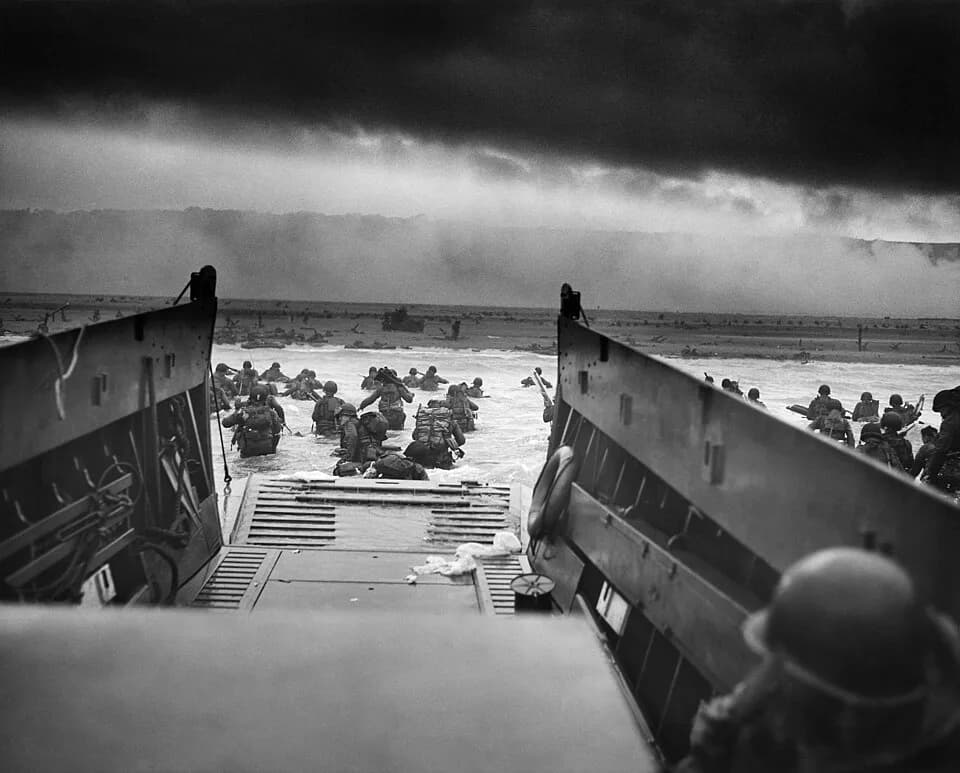
Operation Overlord
Operation Overlord was the code name for the Battle of Normandy, the largest amphibious operation in history. From the D-Day landings to the liberation of Paris, this 80-day campaign opened the second front in Europe and marked the beginning of the end for Nazi Germany.
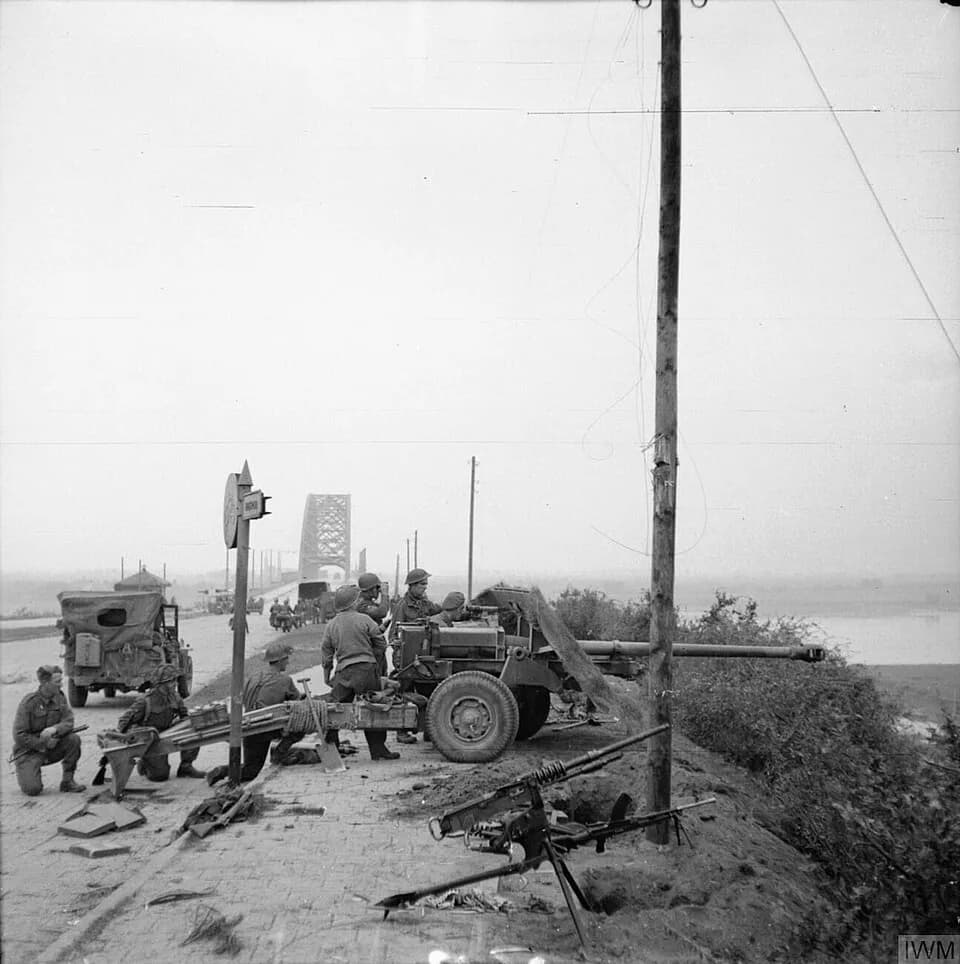
Operation Market Garden
Operation Market Garden was the largest airborne operation in history, aiming to capture a series of bridges in the Netherlands to allow Allied armor to bypass the Siegfried Line and invade Germany. Its failure at Arnhem prolonged the war by several months.
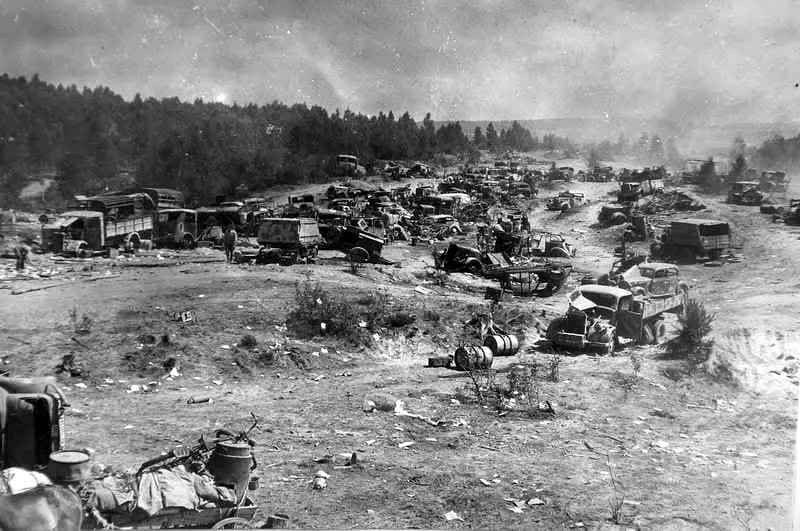
Operation Bagration
Operation Bagration was the Soviet offensive that destroyed the German Army Group Center in Belarus during the summer of 1944. More devastating than Stalingrad, it annihilated 28 German divisions and advanced 600 km in two months, liberating Belarus and reaching the gates of Warsaw.
Operation Torch
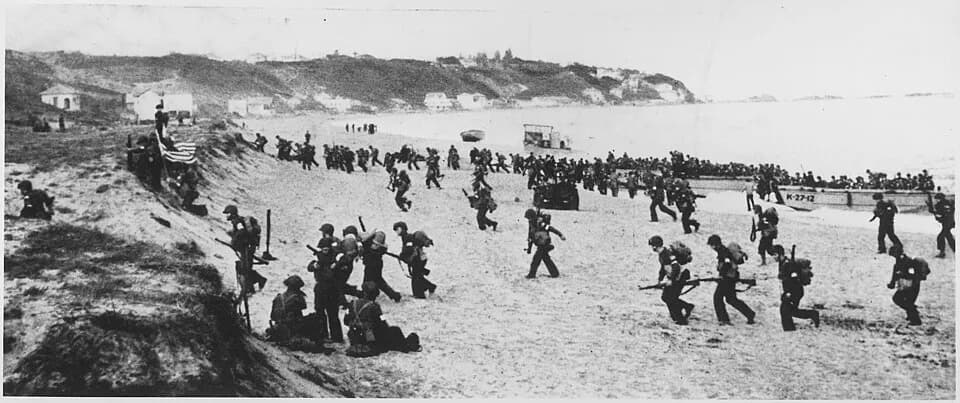
Operation Torch was the Allied landing in French North Africa on November 8, 1942, the first major engagement of American forces against the Axis. This operation marked the beginning of the liberation of the Mediterranean basin and forged the Anglo-American alliance that would lead to victory in Europe.
