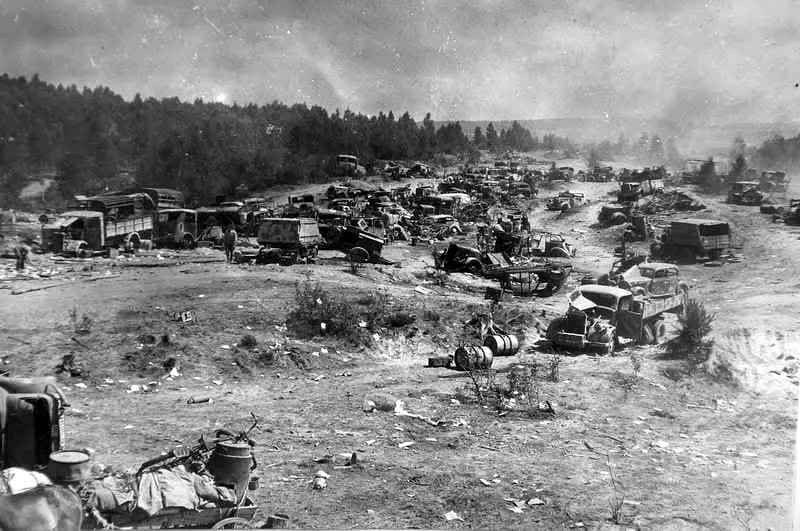
Operation Bagration was the Soviet offensive that destroyed the German Army Group Center in Belarus during the summer of 1944. More devastating than Stalingrad, it annihilated 28 German divisions and advanced 600 km in two months, liberating Belarus and reaching the gates of Warsaw.
Bagration, named after the Georgian general Pyotr Bagration, a hero of the Napoleonic Wars, was planned by the Stavka (Soviet General Staff) with meticulous care. Zhukov and Vasilevsky coordinated four Soviet fronts (equivalent to army groups) for a massive offensive in Belarus. The choice of Belarus was a stroke of strategic genius: the Germans expected a Soviet offensive in Ukraine to the south, where the terrain was more favorable for armor. The Stavka even launched a deception operation (maskirovka) simulating preparations in the south to reinforce this misconception. The plan called for a double breakthrough encircling German forces in 'cauldrons' (pockets), mirroring the encirclements that the Germans had inflicted upon the Soviets in 1941. The offensive was deliberately timed to coincide with the third anniversary of Barbarossa on June 22, and to prevent the Germans from transferring reinforcements to Normandy, where the Allies had just landed on June 6.
On June 23, 1944, four Soviet fronts launched the offensive with massive firepower. Unlike Kursk, where the Germans knew the Soviet plan, the surprise was total. Belarusian partisans had prepared the ground by sabotaging 10,500 sections of railway track in the 48 hours preceding the attack, paralyzing German logistics. The initial breakthroughs were devastating: at Vitebsk, the III Panzer Corps was encircled and destroyed along with 35,000 men. At Bobruisk, 40,000 Germans were trapped. At Minsk, the Belarusian capital was liberated on July 3, trapping 100,000 German soldiers in a gigantic pocket to the east. The Soviet advance was so rapid that the Germans could not establish a coherent defensive line anywhere. Army Group Center, which had fielded 850,000 men on June 22, ceased to exist as a fighting force within weeks. The Soviets advanced up to 600 kilometers, reaching the Vistula River and the gates of Warsaw by the end of July.
The Red Army committed 2.3 million soldiers, 5,200 tanks and self-propelled guns, 5,300 aircraft, and 36,400 artillery pieces and mortars across four fronts. The 1st Belorussian Front (Rokossovsky), the 2nd Belorussian Front (Zakharov), the 3rd Belorussian Front (Chernyakhovsky), and the 1st Baltic Front (Bagramyan) formed a large-scale encirclement configuration. Soviet numerical superiority was overwhelming on the main axes of advance: 10 to 1 in infantry and 7 to 1 in tanks. The German Army Group Center, commanded by Field Marshal Busch (replaced by Model on June 28), fielded 850,000 men but was deployed along a 1,100-kilometer front with very few mobile reserves. Hitler had ordered that 'fortress cities' (feste Platze) — Vitebsk, Orsha, Mogilev, Bobruisk — be held at all costs, forbidding any retreat. This doctrinal rigidity condemned the garrisons to encirclement and destruction. Reinforcements arrived in a trickle, partly because the high command remained convinced that the main offensive would come in the south.
Bagration was the greatest German military defeat of the entire war — worse even than Stalingrad. Army Group Center lost 400,000 men in two months: 300,000 killed or captured and 100,000 wounded. Twenty-eight of the 34 divisions engaged were destroyed or rendered combat-ineffective. Over 2,000 tanks and 57,000 vehicles were destroyed or captured. To humiliate Germany, Stalin paraded 57,000 German prisoners through the streets of Moscow on July 17, 1944, followed by water trucks symbolically cleaning the roads behind them. The Soviets also suffered heavy losses — 770,000 men including 180,000 killed — but unlike the Germans, they could replace them. All of Belarus was liberated, eastern Poland was reached, and the Baltic states were isolated. The offensive only halted in August when Soviet supply lines were stretched to their maximum and German resistance stiffened along the Vistula River.
Bagration was the operation that definitively broke the backbone of the Wehrmacht. Army Group Center never recovered from this destruction — the gaping hole in the German lines allowed subsequent Soviet offensives to sweep westward. The operation demonstrated Soviet mastery of operational art: coordination of four fronts, massive use of partisans, effective maskirovka deception, and rapid exploitation of breakthroughs by mechanized corps. The coincidence with the Battle of Normandy was devastating for Germany: attacked simultaneously in the East and West, it could concentrate its forces nowhere. The Warsaw Uprising of August 1, 1944, launched by the Polish Home Army as the Soviets approached, was crushed by the Germans while the Red Army remained on the eastern bank of the Vistula — a tragic and controversial episode that weighs on Polish-Russian relations to this day. Bagration, despite its enormous scale, remains less well known in the West than Stalingrad or D-Day, an unjustified oversight for what was arguably the most successful offensive of the entire war.
This article draws on historical works, military archives and recognized academic publications.
Operation Bagration (June 23 - August 19, 1944) was the greatest German military defeat of the war, worse than Stalingrad. Army Group Center lost 400,000 men in two months: 300,000 killed or captured, 100,000 wounded. 28 of 34 committed divisions were destroyed. Over 2,000 tanks and 57,000 vehicles were destroyed or captured. On July 17, 1944, Stalin paraded 57,000 German prisoners through the streets of Moscow.
The Red Army committed 2.3 million soldiers, 5,200 tanks and self-propelled guns, 5,300 aircraft, and 36,400 artillery pieces across four fronts (1st, 2nd, 3rd Belorussian and 1st Baltic Fronts). Soviet numerical superiority was overwhelming on main axes: 10 to 1 in infantry, 7 to 1 in tanks. Belorussian partisans sabotaged 10,500 railway sections in the 48 hours preceding the attack.
Operation Bagration remains little known in the West despite its scale exceeding Stalingrad, because it unfolded simultaneously with the Normandy landings (June 6, 1944), which monopolized Allied media attention. Its Eastern geographical location and Soviet secrecy also contributed to this oversight. Military historians nevertheless often consider it the most successful offensive of the entire World War II.
Information cross-checked against Wikipedia and reference historical works.
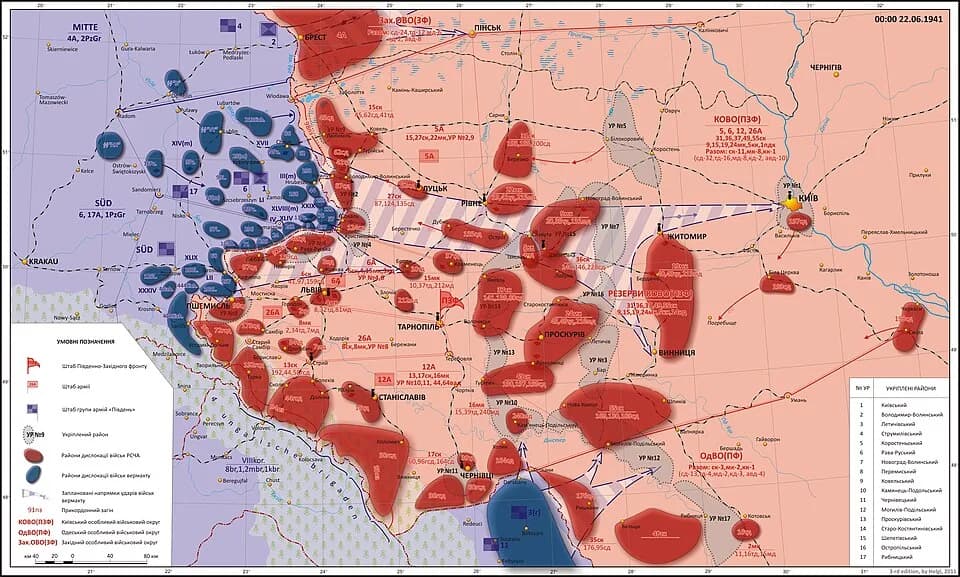
Operation Barbarossa
Operation Barbarossa was Nazi Germany's invasion of the Soviet Union, the largest military operation in history. With 3.8 million soldiers engaged, it opened the Eastern Front and was Hitler's fatal strategic error that led to the destruction of the Third Reich.
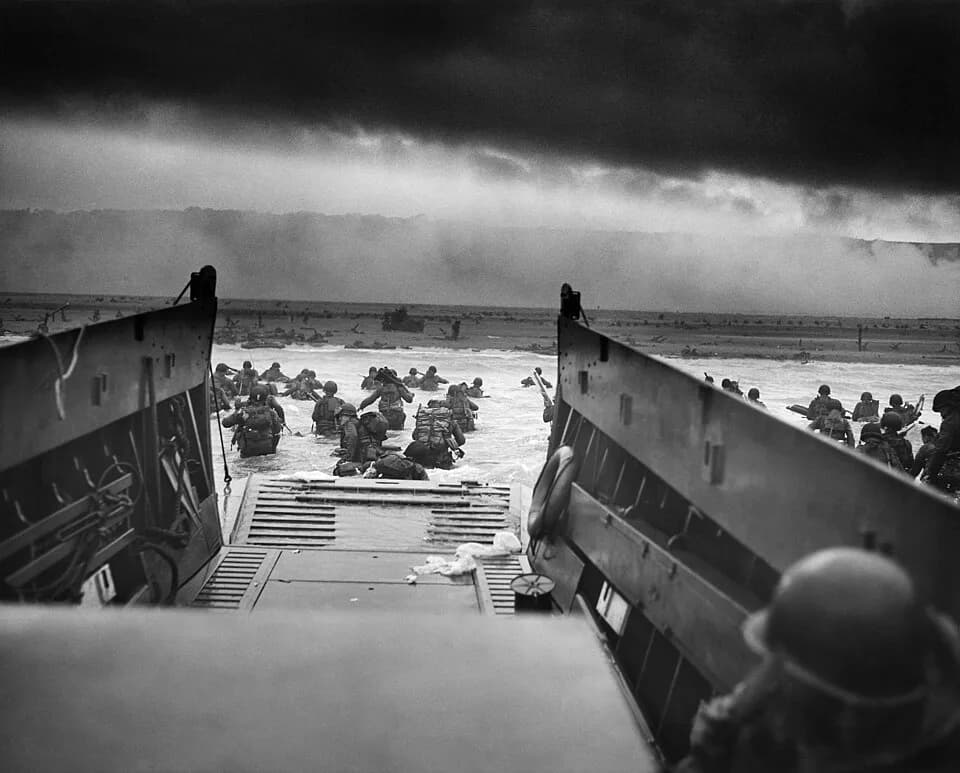
Operation Overlord
Operation Overlord was the code name for the Battle of Normandy, the largest amphibious operation in history. From the D-Day landings to the liberation of Paris, this 80-day campaign opened the second front in Europe and marked the beginning of the end for Nazi Germany.
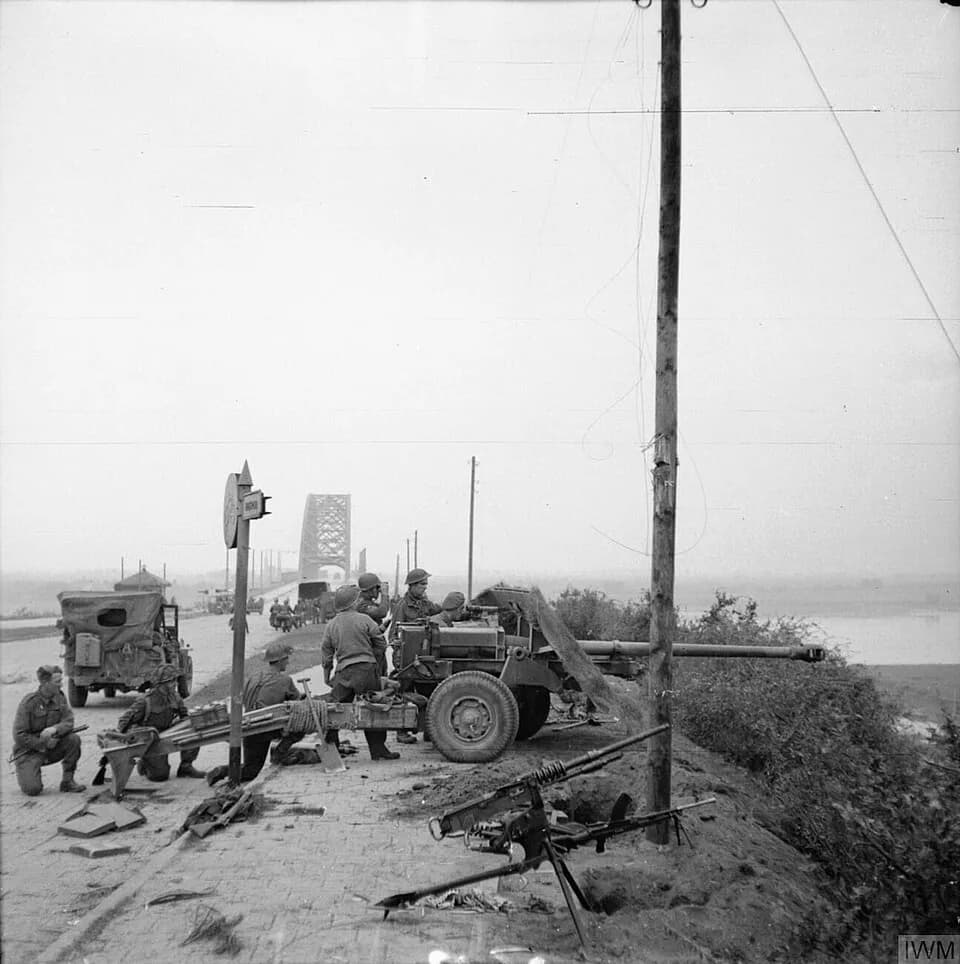
Operation Market Garden
Operation Market Garden was the largest airborne operation in history, aiming to capture a series of bridges in the Netherlands to allow Allied armor to bypass the Siegfried Line and invade Germany. Its failure at Arnhem prolonged the war by several months.
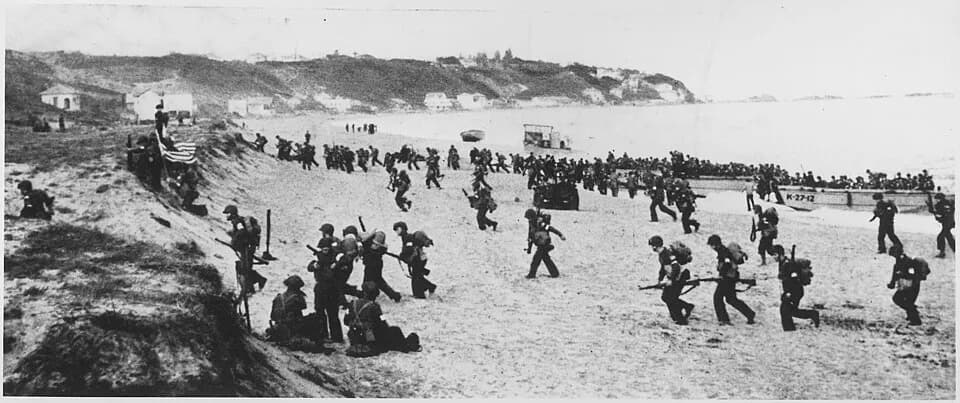
Operation Torch
Operation Torch was the Allied landing in French North Africa on November 8, 1942, the first major engagement of American forces against the Axis. This operation marked the beginning of the liberation of the Mediterranean basin and forged the Anglo-American alliance that would lead to victory in Europe.
