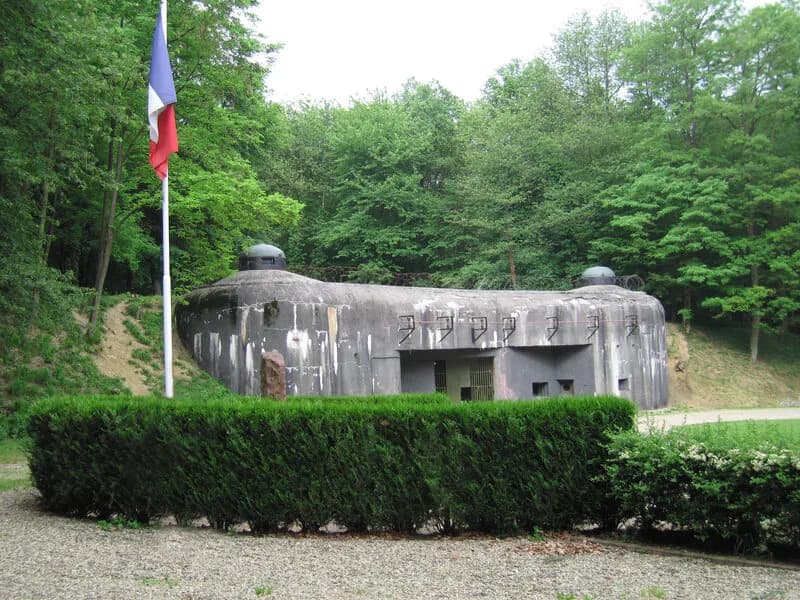
The Maginot Line was a massive system of fortifications built along France's eastern border in the 1930s, designed to deter a German invasion but ultimately bypassed through the Ardennes in May 1940. The works never gave way: they were made irrelevant by a breakthrough where the French staff judged the ground impassable to armour.
The origins of the Maginot Line are rooted in the traumatic experience of World War I and the desperate French desire to ensure that the devastation of 1914-1918 would never be repeated on French soil. During the Great War, northeastern France had been the primary battlefield of the Western Front, and the four years of trench warfare had left entire regions utterly devastated, with millions of French soldiers killed or wounded. The industrial heartland of northern France, with its coal mines, steel mills, and factories, had been occupied by Germany for most of the war, crippling the French economy. After the Armistice, French military and political leaders were haunted by the vulnerability of their eastern frontier and the catastrophic human cost of defending it through manpower alone. Marshal Philippe Pétain, the hero of Verdun, championed a defensive doctrine that emphasized fortifications and firepower over offensive maneuver, arguing that the next war would again be won by the defense. The debate between advocates of fortification and proponents of mobile warfare continued throughout the 1920s, but the fortification school prevailed, supported by the demographic reality that France, with roughly forty million inhabitants, could not match Germany's population of sixty-five million in a war of attrition. André Maginot, the Minister of War who lent his name to the project, was himself a decorated veteran who had been severely wounded at Verdun. He championed the fortification bill through the French parliament in 1929, securing initial funding of 3.3 billion francs, an enormous sum that would grow substantially as construction progressed. The strategic rationale rested on three pillars: protecting France's vital industrial regions in Alsace and Lorraine; serving as a force multiplier, allowing a smaller garrison to hold the eastern frontier while mobile reserves could be deployed elsewhere; and channeling any German attack through Belgium, where it could be met by the main French field army advancing to pre-planned positions.
The principles of the Maginot Line reflected the finest military engineering of the interwar period, combining deep underground construction with interlocking fields of fire and self-sufficient defensive positions capable of sustained resistance. The line was not a single continuous wall but rather a sophisticated system of interconnected fortifications arranged in depth. The primary fortifications, known as ouvrages, were massive underground complexes built of steel-reinforced concrete several meters thick, buried deep enough to resist the heaviest aerial bombs and artillery shells known at the time. The largest ouvrages, called gros ouvrages, could garrison up to a thousand troops and featured multiple combat blocks connected by underground galleries extending several kilometers. These galleries contained barracks, kitchens, ammunition magazines, power generators, ventilation systems, and even narrow-gauge electric railways to transport men and supplies between combat positions. The combat blocks protruding above ground were equipped with retractable armored turrets mounting artillery pieces, anti-tank guns, and machine guns, designed to be raised for firing and lowered for protection. The interlocking fire principle was central to the defensive concept. Each ouvrage was positioned to provide covering fire for its neighbors, creating overlapping fields of fire that would subject any attacker to devastating crossfire. Between the major ouvrages, smaller fortifications called petits ouvrages and casemates provided additional firepower. In front of the main line, an extensive network of anti-tank obstacles, including rails driven vertically into the ground, concrete dragon's teeth, and anti-tank ditches, was designed to slow armored vehicles and channel them into kill zones covered by anti-tank guns. The defensive zone extended several kilometers in depth, with forward observation posts, infantry fighting positions, and barbed wire entanglements forming the outermost layer. The entire system was supported by underground telephone networks and dedicated power stations. The Maginot Line was also designed for comfort and sustainability, recognizing that garrison troops needed adequate living conditions to maintain morale during extended sieges. Air filtration systems protected against poison gas, a major concern given World War I experience, and the deep underground installations maintained a constant temperature regardless of surface conditions.
The application of the Maginot Line during the war was both a technical success and a strategic catastrophe, a paradox that has fascinated military historians ever since. Construction of the line began in 1930 and continued throughout the decade, with the main fortifications along the Franco-German border from Switzerland to Luxembourg substantially completed by 1936. The line was extended with lighter fortifications along the Franco-Italian border in the Alps, where the terrain naturally favored defense. However, the critical stretch along the Franco-Belgian border was never fortified to the same standard, partly due to cost constraints, partly because Belgium was an ally whose cooperation was expected, and partly because extending heavy fortifications to the sea would have created diplomatic tensions by appearing to abandon Belgium to German invasion. When war broke out in September 1939, the Maginot Line garrisons took up their positions and the fortifications performed their intended function during the Phoney War, deterring any German attempt to attack directly across the Franco-German border. The decisive moment came in May 1940 with the German invasion of France. The Wehrmacht's main effort, Fall Gelb, was precisely the scenario the Maginot Line was designed to prevent, but it exploited the line's most critical weakness: the Ardennes sector. Seven Panzer divisions under generals Guderian, Reinhardt, and Hoth thrust through the supposedly impassable Ardennes forests and crossed the Meuse River at Sedan and Dinant on May 13-15, 1940, achieving the breakthrough that unhinged the entire Allied defensive position. The Maginot Line itself was never frontally breached. German forces that did attack the line directly, particularly in the Saar sector, were repulsed with losses. When the line was finally overcome, it was because the German advance through Belgium and the Ardennes had rendered it strategically irrelevant by encircling it from behind. Several ouvrages continued to resist even after the French armistice on June 22, 1940, with some garrisons surrendering only on direct orders from the French command and others holding out until July 1. On the Italian front, the Alpine fortifications performed brilliantly, repulsing Mussolini's opportunistic invasion of June 1940 with minimal losses despite being heavily outnumbered.
The results of the Maginot Line strategy must be assessed on multiple levels, from the purely tactical to the broadly strategic, to arrive at a balanced judgment. On a tactical and engineering level, the Maginot Line was an unqualified success. The fortifications performed exactly as designed, resisting all direct attacks and providing their garrisons with excellent protection. Where the line was attacked frontally, it held firm. The Alpine fortifications defeated the Italian offensive of June 1940 despite being outnumbered more than five to one in some sectors, demonstrating the enormous force-multiplier effect of well-designed modern fortifications. The material investment was substantial but not unreasonable given the stakes: the total cost of approximately five billion francs represented roughly the cost of equipping and maintaining several armored divisions over the same period. On a strategic level, however, the Maginot Line failed in its ultimate purpose of protecting France from German invasion. The critical failure was not in the line itself but in the broader strategic concept of which it was a part. The French high command assumed that by fortifying the Franco-German border, they could force Germany to attack through Belgium, where the Allied field armies would meet and defeat the invader. This assumption proved correct in its prediction but catastrophically wrong in its confidence that the Allies could handle the resulting battle. The German breakthrough at Sedan, through the weakly defended Ardennes sector, demonstrated that the Maginot Line had created a false sense of security that discouraged the flexible thinking needed to respond to unexpected developments. The psychological impact of the Maginot Line was profoundly negative in the long run. The enormous investment in static defense encouraged a defensive mentality throughout the French military establishment, from the highest levels of command down to junior officers. This Maginot mentality, as critics termed it, inhibited the development of offensive doctrine, mechanized formations, and the aggressive leadership culture that characterized the Wehrmacht. French military spending that went to the Maginot Line could arguably have been better invested in armored divisions, modern aircraft, and radio communications. The line's existence also complicated diplomatic relations with Belgium, which declared neutrality in 1936, partly because the Maginot Line seemed to indicate that France intended to fight any future war on Belgian rather than French soil.
The analysis of the Maginot Line offers enduring lessons about the relationship between technology, strategy, and military thinking that remain relevant to defense planning today. The most commonly cited lesson, that the Maginot Line was a waste of resources representing outdated military thinking, is actually an oversimplification that does not withstand careful historical scrutiny. The Maginot Line was not the product of stupid generals fighting the last war, but rather a carefully considered response to specific strategic, demographic, and geographic realities facing interwar France. The true failure was not in building the line but in failing to integrate it into a flexible overall strategy. The Maginot Line should have been one element of a comprehensive defensive system that included strong mobile reserves, modern armored formations, and adequate fortification of the Ardennes sector. Instead, it became the centerpiece of French strategy, absorbing resources and attention that should have been devoted to developing the mobile forces needed to respond to a breakthrough. The French generals who planned the defense of 1940 correctly anticipated that Germany would attack through Belgium but catastrophically underestimated the possibility of a major armored thrust through the Ardennes. This failure of imagination, not the Maginot Line itself, was the real cause of France's defeat. The broader lesson concerns the danger of what modern military theorists call the Maginot mentality: an excessive reliance on any single defensive technology or concept at the expense of flexibility and adaptability. Every generation faces its own version of the Maginot dilemma, the temptation to invest heavily in a fixed defensive solution that addresses known threats while potentially creating vulnerability to novel ones. The nuclear deterrent of the Cold War, missile defense systems, and cybersecurity firewalls have all been compared to the Maginot Line in this regard. The line also illustrates the importance of the human element in warfare. The finest fortifications are useless if the strategic and operational doctrine governing their employment is flawed. The French garrison troops in the Maginot Line performed their duties admirably, but their courage and competence were rendered irrelevant by decisions made far above their level. Finally, the Maginot Line serves as a reminder that military preparedness must account for political and diplomatic realities. The decision not to extend the line along the Belgian border was driven by political considerations that ultimately proved fatal to the entire defensive concept.
The Maginot Line was never frontally breached. German forces that attacked it directly in the Saar sector were repulsed with losses. The Wehrmacht bypassed the line in May 1940 by thrusting through the Ardennes at Sedan and Dinant (May 13-15), encircling the defenses from the rear. Several ouvrages continued to resist after the armistice of June 22, 1940, with some garrisons holding out until July 1.
The initial funding secured by André Maginot in parliament in 1929 amounted to 3.3 billion francs, an enormous sum that grew considerably as construction progressed. The total cost reached approximately 5 billion francs — roughly equivalent to equipping and maintaining several armored divisions over the same period.
The 'Maginot mentality' refers, in modern military theory, to excessive reliance on a fixed defensive solution at the expense of flexibility. The Maginot Line, designed to protect Alsace-Lorraine, was not extended to the Belgian border for political and budgetary reasons, leaving the 1940 defense vulnerable. This principle applies today to cybersecurity, missile defense systems, and other strategic domains.
Information cross-checked against Wikipedia and reference historical works.
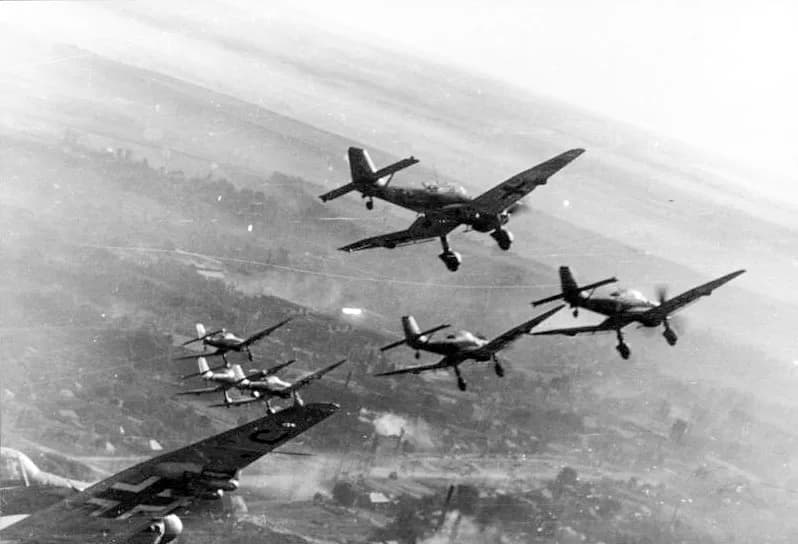
Blitzkrieg
Blitzkrieg, or lightning war, is a German military doctrine combining armour, aircraft and motorised infantry to break through enemy lines and rapidly encircle opposing forces. Applied in Poland in 1939 and then in France in 1940, it brought down a country in six weeks and reshaped modern warfare before stalling on the Eastern Front.
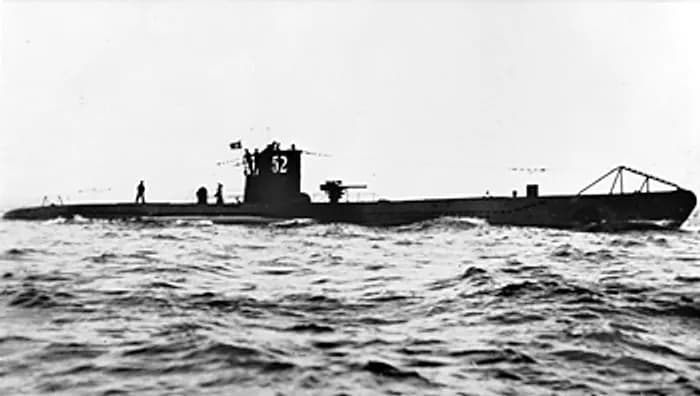
Submarine Warfare
The German submarine war, waged by the Kriegsmarine's U-boats, aimed to cut Britain's transatlantic supply lines, threatening the island's very survival during the Battle of the Atlantic. The reversal came in 1943, with the breaking of Enigma, shipborne radar and long-range escort vessels.
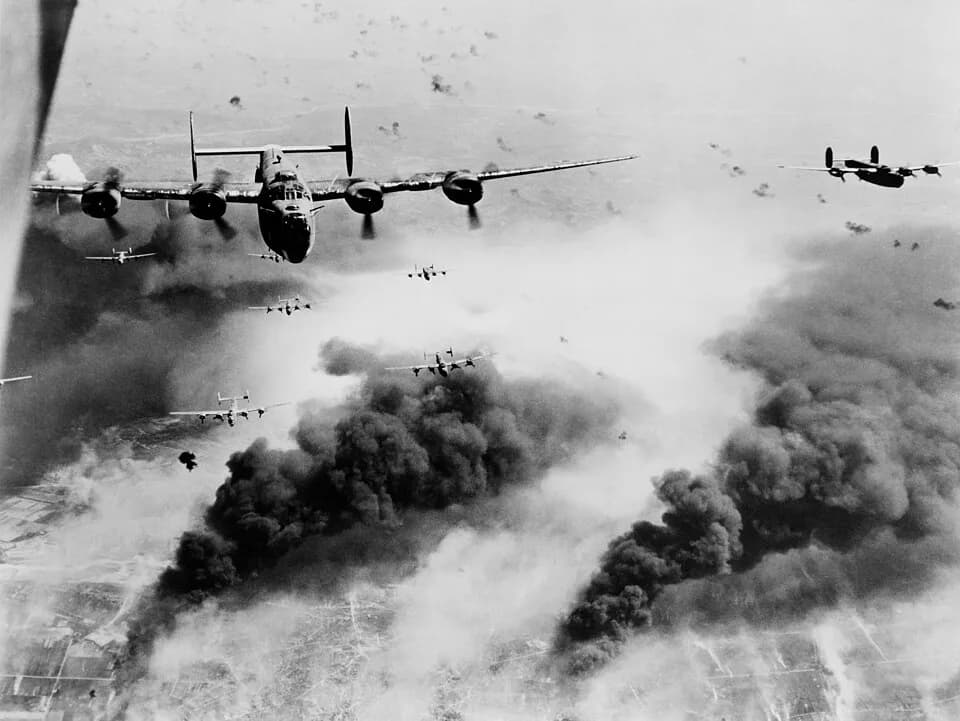
Strategic Bombing
Allied strategic bombing aimed to destroy the industrial and military apparatus of Nazi Germany through massive air raids, mixing American daylight precision bombing with British night-time area bombing. Waged from 1940 to 1945, it diverted a considerable share of German production toward air defence, at the cost of heavy civilian casualties.
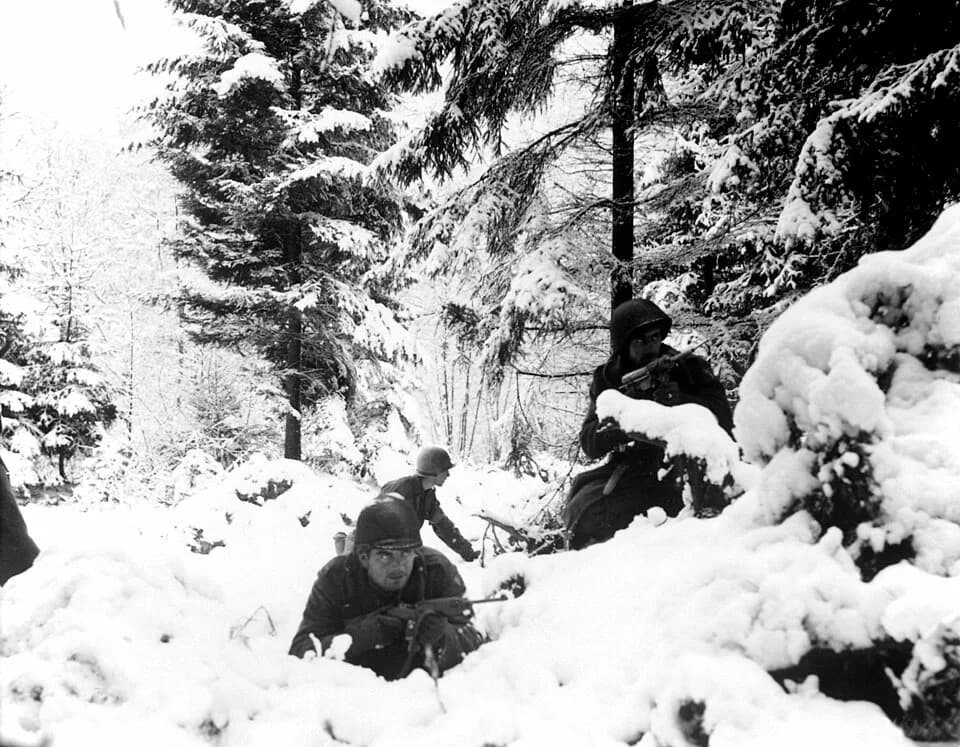
Defense in Depth
The Soviet defence in depth organised successive defensive zones across tens of kilometres, in order to absorb German armoured breakthroughs, exhaust the attacker and set up decisive counter-offensives. Applied at Kursk in 1943, it rested on minefield belts, anti-tank ditches and dug-in artillery, prepared months before the assault.
