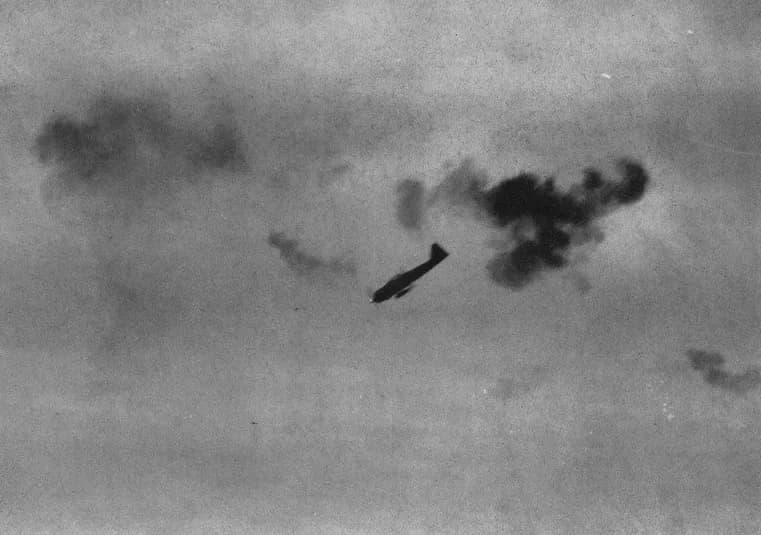
Kamikazes were Japanese pilots who deliberately crashed their aircraft into Allied ships during the final phase of the Pacific war, one of the most desperate and psychologically devastating tactics of the conflict. Used from October 1944 onward, they sank dozens of vessels, above all off Okinawa.
The origins of the kamikaze strategy emerged from the desperate military situation facing Japan in the autumn of 1944, when the tide of the Pacific War had turned irreversibly against the Empire. The term kamikaze, meaning divine wind, referenced the legendary typhoons of 1274 and 1281 that destroyed Mongol invasion fleets heading for Japan, and its adoption for suicide attacks carried profound cultural and spiritual significance. By mid-1944, Japan had lost the bulk of its experienced naval aviators in the devastating Battle of the Philippine Sea in June, known to Americans as the Great Marianas Turkey Shoot, where Japanese carrier aviation was effectively destroyed as a fighting force. The remaining pilots were largely inexperienced, having received abbreviated training due to fuel shortages and the urgency of wartime production. Vice Admiral Takijiro Onishi, arriving in the Philippines in October 1944 to command the First Air Fleet, confronted a stark reality: his few hundred remaining aircraft and poorly trained pilots had virtually no chance of successfully attacking the massive American fleet through conventional means. Onishi proposed organizing special attack units whose pilots would deliberately crash their bomb-laden aircraft into American warships, reasoning that a determined pilot guiding his aircraft to the target was far more accurate than a conventional bomb release. The concept was not entirely new; individual Japanese pilots had made spontaneous suicide dives throughout the war, and the military culture of bushido, with its emphasis on self-sacrifice and death before dishonor, had long prepared the psychological ground. The first officially organized kamikaze unit, the Shimpu Special Attack Corps, was established on October 19, 1944, with twenty-four volunteer pilots drawn from the 201st Naval Air Group. The volunteers were reportedly enthusiastic, though the voluntariness of kamikaze service remains a matter of historical debate, with evidence suggesting significant social pressure and coercion in many cases. The cultural context of wartime Japan, where surrender was considered the ultimate disgrace and where the Emperor was revered as a living deity, created an environment in which young men could be convinced that sacrificing their lives was not only their duty but their highest honor.
The principles of kamikaze warfare were rooted in a grim calculus of military efficiency that sought to maximize damage to the enemy fleet at the lowest possible cost in aircraft and training time. The fundamental tactical principle was devastatingly simple: a pilot who intended to die with his aircraft did not need the extensive training required for conventional bombing, torpedo attacks, or aerial combat. A kamikaze pilot needed only basic flying skills and enough navigation ability to reach the target area, where he would select a ship and dive into it at maximum speed. This drastically reduced the training pipeline from over two years for a competent naval aviator to mere weeks or months for a kamikaze pilot. The targeting doctrine prioritized aircraft carriers as the most valuable targets, followed by battleships, cruisers, transports, and destroyers, in that order of preference. In practice, however, kamikaze pilots often struck whatever ship presented the most accessible target, and destroyers on picket duty frequently bore the brunt of attacks simply because they were the first ships the attackers encountered. The attack profiles varied considerably. High-altitude approaches allowed pilots to build speed in their terminal dive, achieving velocities that made interception extremely difficult. Low-level approaches, skimming the wave tops to avoid radar detection, sacrificed impact speed for surprise. Some attacks combined both methods, with pilots approaching at low altitude before pulling up for a final diving attack. The Japanese also developed purpose-built kamikaze weapons, most notably the Yokosuka MXY-7 Ohka, a rocket-powered guided bomb carried beneath a twin-engine Betty bomber and released within range of the target. The Ohka could reach speeds exceeding 900 kilometers per hour in its terminal dive, making it virtually impossible to intercept. However, the slow and vulnerable mother aircraft often were shot down before reaching release point. Another principle was the use of massed attacks, called kikusui or floating chrysanthemum operations, which concentrated hundreds of aircraft in coordinated waves to overwhelm the American combat air patrol and antiaircraft defenses. The largest of these operations, Kikusui No. 1, launched on April 6, 1945, during the Battle of Okinawa, sent 355 kamikaze aircraft and 341 conventional aircraft against the American fleet in a single day.
The application of kamikaze tactics began in earnest during the Battle of Leyte Gulf in October 1944 and escalated dramatically through the final year of the Pacific War. On October 25, 1944, the first organized kamikaze attack struck the escort carrier USS St. Lo off the coast of Samar, penetrating the flight deck and igniting the bomb and torpedo magazine, sinking the ship with the loss of 113 crew members. This initial success validated the concept in the eyes of the Japanese high command and led to a rapid expansion of the kamikaze program. During the Philippines campaign from October 1944 to January 1945, kamikaze attacks sank sixteen ships and damaged approximately eighty-seven others, causing widespread alarm throughout the Allied naval command. The attacks forced the US Navy to fundamentally reconsider its defensive tactics and combat formations. Admiral Chester Nimitz established expanded radar picket lines of destroyers positioned far from the main fleet to provide early warning of incoming attacks, though these picket ships themselves became prime targets. The Battle of Okinawa, from April to June 1945, represented the climax of the kamikaze campaign. Over the course of the battle, the Japanese launched ten major kikusui operations involving nearly 1,500 kamikaze sorties, supplemented by hundreds of additional individual attacks. The devastation was enormous. The destroyer USS Leutze was struck and severely damaged. The carrier USS Bunker Hill was hit by two kamikazes within thirty seconds on May 11, killing 393 crew members. The destroyer USS Callaghan became the last major warship sunk by a kamikaze on July 29, 1945. In total during the Okinawa campaign, kamikazes sank thirty-six ships and damaged 368 others, killing nearly 5,000 American sailors and wounding an equal number. Beyond aircraft, the Japanese employed other suicide weapons. The kaiten were manned torpedoes that carried a pilot who would guide the weapon into an enemy ship. The shinyo were explosive motorboats designed to ram enemy vessels in harbors and coastal waters. The fukuryu were suicide divers equipped with explosive charges on poles who would swim beneath enemy landing craft. Perhaps the most dramatic non-aviation kamikaze mission was the sortie of the super-battleship Yamato on April 7, 1945, sent on a one-way mission to Okinawa with only enough fuel for the outbound voyage, where it was intercepted and sunk by American carrier aircraft with the loss of over 3,000 crew.
The results of the kamikaze campaign were significant in terms of material damage and human cost, though ultimately insufficient to alter the outcome of the war. In total, kamikaze attacks sank approximately 47 Allied ships and damaged around 300 others during the course of the conflict. The human toll was staggering on both sides. An estimated 3,800 kamikaze pilots died in their attacks, along with approximately 7,000 naval personnel involved in other suicide operations including kaiten, shinyo, and conventional escorts. On the Allied side, kamikaze attacks killed approximately 7,000 sailors and wounded nearly 12,000 more, making them the single deadliest threat faced by the US Navy during the war. The psychological impact far exceeded the material damage. American sailors developed a particular dread of kamikaze attacks, which were qualitatively different from any other threat they faced. Unlike conventional air attacks where the attacker intended to survive, a kamikaze pilot was already dead and would press home his attack regardless of defensive fire, damage to his aircraft, or his own wounds. This knowledge created intense psychological strain among crews who knew that the only way to stop a kamikaze was to destroy the aircraft completely before it reached the ship. Cases of combat fatigue and psychological breakdown increased dramatically among naval personnel exposed to sustained kamikaze attacks, particularly during the protracted Okinawa campaign. The strategic impact of the kamikaze campaign was paradoxical. On one hand, it failed to achieve its primary objective of destroying enough American ships to prevent the invasion of the Japanese home islands or to force a negotiated peace. The American fleet, backed by the enormous productive capacity of US industry, could replace damaged ships and absorb losses that would have been catastrophic for any other navy. On the other hand, the terrifying casualty projections for an invasion of Japan, heavily influenced by the kamikaze experience at Okinawa, contributed directly to the decision to use atomic weapons. The naval casualties at Okinawa, combined with the army's horrific losses ashore, convinced American military planners that Operation Downfall, the planned invasion of Japan, could cost between 250,000 and one million American casualties, making the atomic alternative seem comparatively humane despite its horrific nature.
The analysis of the kamikaze phenomenon requires examination through multiple lenses: military, psychological, cultural, and ethical, revealing one of the most complex and disturbing aspects of the Second World War. From a purely military perspective, the kamikaze strategy represented a rational, if extreme, response to an impossible tactical situation. By late 1944, Japan's conventional air power was effectively broken, with insufficient trained pilots, declining aircraft quality, and overwhelming American air superiority. The kamikaze approach maximized the combat value of poorly trained pilots and aging aircraft by eliminating the most difficult part of an air attack, the return flight and survival of the pilot, while converting each aircraft into a precision-guided munition. The hit rate of kamikaze attacks, estimated between 14 and 19 percent depending on the source, was significantly higher than the success rate of conventional Japanese air attacks by that stage of the war. However, the strategy contained a fundamental flaw: it was inherently unsustainable. Each successful attack consumed an irreplaceable pilot, and Japan's capacity to train even minimally qualified pilots and produce aircraft was declining rapidly under the weight of American strategic bombing and submarine blockade. The cultural and psychological dimensions of the kamikaze phenomenon are deeply complex. Western observers often interpreted kamikaze attacks as evidence of fanaticism or mass insanity, but this view oversimplifies the motivations of the young men involved. Many kamikaze pilots were university students, intellectuals, and thoughtful individuals who left behind letters and diaries revealing a complex mix of patriotism, filial duty, resignation, and genuine anguish. Some wrote of their desire to protect their families and homeland, others of their sense of duty to fallen comrades, and many expressed private doubts even as they accepted their fate. The system of peer pressure, military authority, and cultural expectation made refusal effectively impossible, raising profound questions about the nature of volunteering in such circumstances. The ethical dimension remains deeply troubling. The deliberate sacrifice of young lives as weapons raises fundamental moral questions that transcend cultural context. Vice Admiral Onishi himself acknowledged the moral weight of what he had created, committing ritual suicide on August 16, 1945, the day after Japan's surrender, leaving a note apologizing to the spirits of the dead pilots. The legacy of the kamikaze remains sensitive in Japan, where they are simultaneously mourned as tragic victims and honored as patriots at the controversial Yasukuni Shrine. For military strategists, the kamikaze experience demonstrated that even the most technologically advanced fleet remains vulnerable to determined suicide attacks, a lesson that retains chilling relevance in the era of modern terrorism.
Vice Admiral Takijiro Onishi established the first official kamikaze unit on October 19, 1944, after the Battle of the Philippine Sea (June 1944) destroyed most of Japanese naval aviation. Facing inexperienced pilots and aging aircraft unable to effectively attack the American fleet by conventional means, Onishi concluded that only suicide attacks could inflict sufficient losses to halt the invasion of Japan.
In total, kamikaze attacks sank approximately 47 Allied ships and damaged around 300 others. Approximately 3,800 kamikaze pilots died in their attacks. On the Allied side, kamikazes killed approximately 7,000 American sailors and wounded nearly 12,000, making them the deadliest threat to the US Navy during the war. The Okinawa campaign alone (April-June 1945) saw ten major kikusui operations with nearly 1,500 sorties.
The Yokosuka MXY-7 Ohka was a rocket-powered guided bomb specifically designed for kamikaze attacks. Carried beneath a twin-engine Betty bomber and released within range of the target, the Ohka could reach speeds exceeding 900 km/h in its terminal dive, making it virtually impossible to intercept. Its main drawback was the vulnerability of the slow mother aircraft, which were often shot down before reaching the release point.
Information cross-checked against Wikipedia and reference historical works.
Blitzkrieg
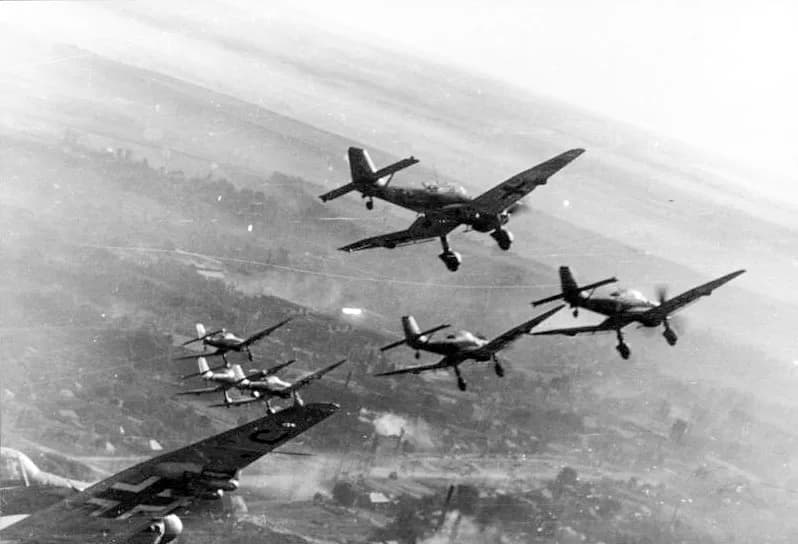
Blitzkrieg, or lightning war, is a German military doctrine combining armour, aircraft and motorised infantry to break through enemy lines and rapidly encircle opposing forces. Applied in Poland in 1939 and then in France in 1940, it brought down a country in six weeks and reshaped modern warfare before stalling on the Eastern Front.
Submarine Warfare
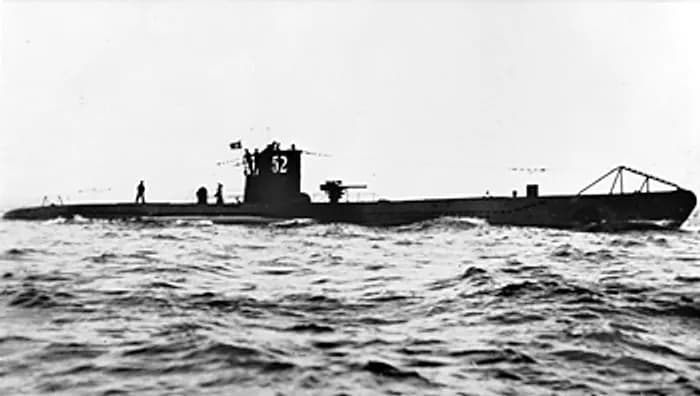
The German submarine war, waged by the Kriegsmarine's U-boats, aimed to cut Britain's transatlantic supply lines, threatening the island's very survival during the Battle of the Atlantic. The reversal came in 1943, with the breaking of Enigma, shipborne radar and long-range escort vessels.
Strategic Bombing
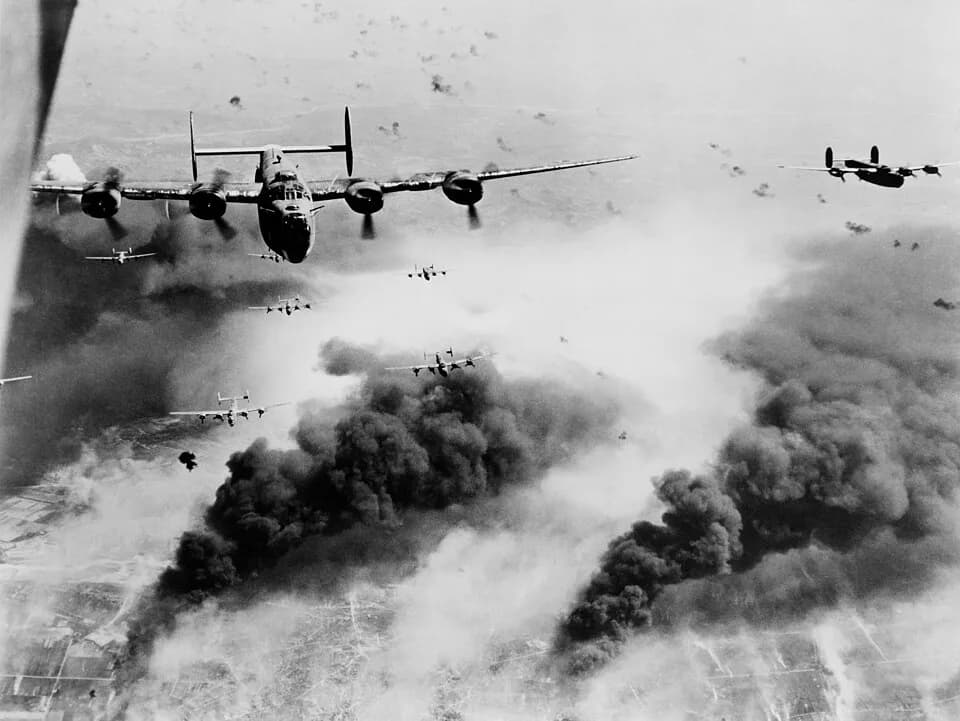
Allied strategic bombing aimed to destroy the industrial and military apparatus of Nazi Germany through massive air raids, mixing American daylight precision bombing with British night-time area bombing. Waged from 1940 to 1945, it diverted a considerable share of German production toward air defence, at the cost of heavy civilian casualties.
Defense in Depth
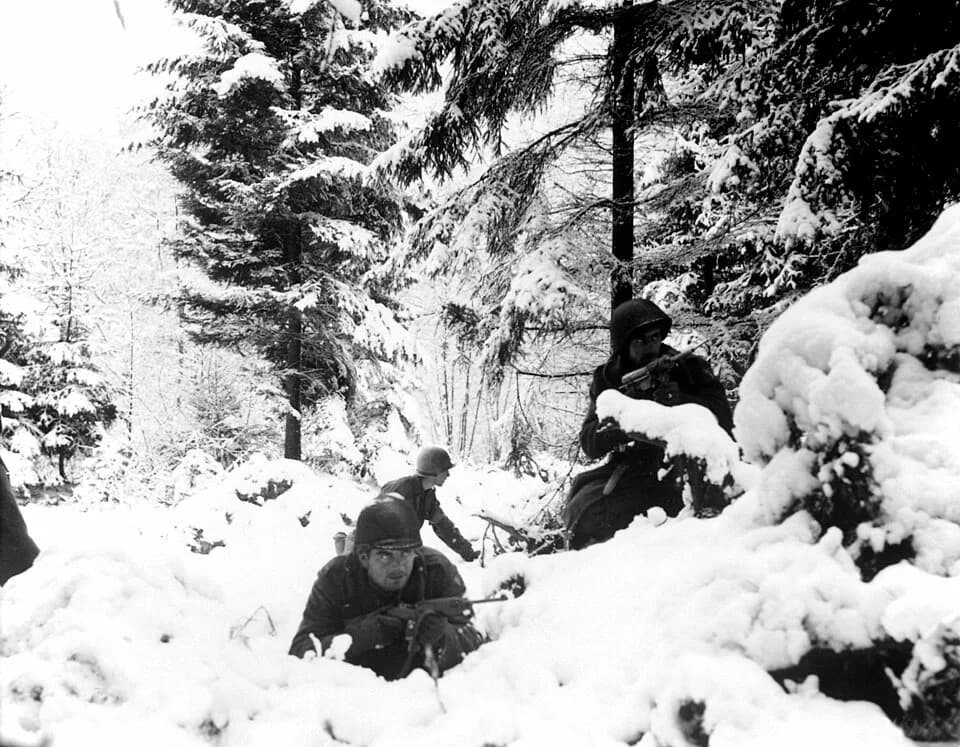
The Soviet defence in depth organised successive defensive zones across tens of kilometres, in order to absorb German armoured breakthroughs, exhaust the attacker and set up decisive counter-offensives. Applied at Kursk in 1943, it rested on minefield belts, anti-tank ditches and dug-in artillery, prepared months before the assault.
